
Europe Animal Protein Market: Can Traditional Animal Proteins Maintain Their Dominance in a Changing Food Landscape?
Growing demand for high-protein diets, expanding sports nutrition consumption, strong food processing industries, and rising health awareness are fueling the growth of the European animal protein market through 2034.

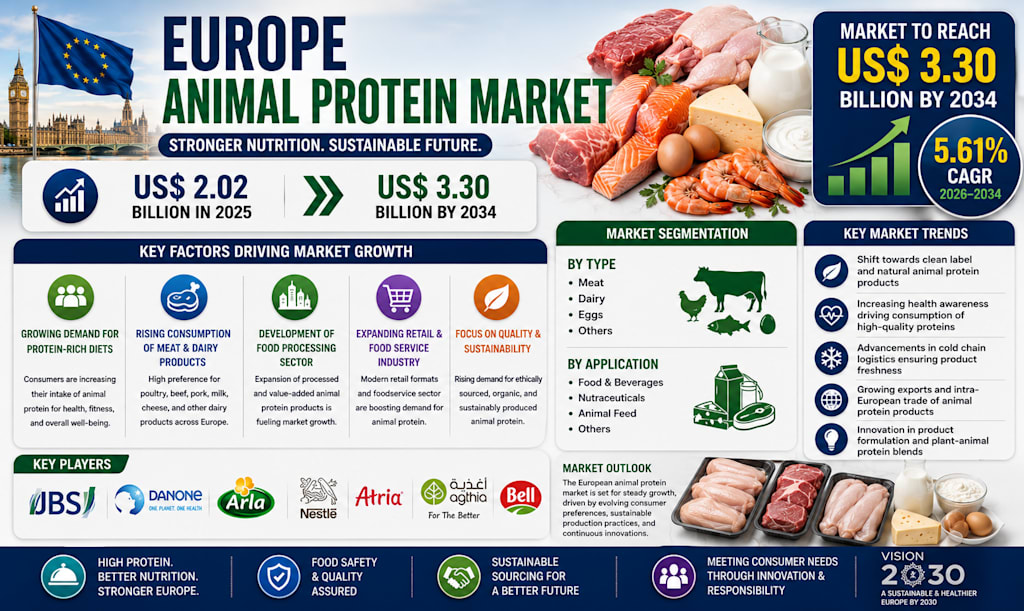
Europe's food and nutrition industry is undergoing a period of transformation. Consumers are increasingly focused on health, fitness, wellness, and balanced nutrition, leading to rising demand for protein-rich foods and beverages. While plant-based alternatives continue to gain attention, animal proteins remain deeply rooted in European dietary habits and continue to occupy a dominant position across food, beverage, supplement, and clinical nutrition categories.
Animal proteins are widely valued for their complete amino acid profiles, high biological value, excellent digestibility, and broad applications across multiple industries. From dairy products and meat-based foods to sports supplements and medical nutrition, animal proteins continue to play a critical role in supporting consumer health and food innovation.
According to Renub Research, the Europe Animal Protein Market is expected to grow from US$ 2.02 billion in 2025 to US$ 3.30 billion by 2034, registering a CAGR of 5.61% between 2026 and 2034. Growing demand for high-protein diets, increased consumption of meat and dairy products, expansion of the food processing industry, and rising adoption of protein-enriched products are among the key factors driving market growth.

Understanding Animal Proteins and Their Importance
Animal proteins are proteins derived from animal-based sources such as meat, poultry, fish, eggs, and dairy products. Unlike many plant proteins, animal proteins are considered complete proteins because they contain all nine essential amino acids required by the human body.
These proteins support muscle growth, tissue repair, immune function, metabolism, and overall health. Their superior digestibility and nutritional profile have made them a preferred ingredient across numerous food and nutrition categories.
Animal proteins are commonly used in fresh and processed meats, dairy products, cheese, yogurt, ready meals, sports nutrition products, infant formulas, medical nutrition products, and dietary supplements.
Europe has a long history of consuming animal-based foods, and many traditional cuisines continue to rely heavily on meat, dairy, seafood, and eggs. Despite the emergence of alternative protein sources, animal proteins remain a cornerstone of the region’s food culture.
Growing Health Awareness Fuels Demand for Protein-Rich Diets
One of the most significant growth drivers for the European animal protein market is increasing health consciousness.
Consumers today are more aware than ever of the relationship between nutrition and long-term health. Protein has become one of the most sought-after nutrients because of its role in muscle maintenance, weight management, satiety, and overall wellness.
As more individuals adopt active lifestyles, participate in fitness activities, and engage in regular exercise, demand for protein-rich foods continues to rise.
High-protein diets have become increasingly popular among consumers seeking to improve body composition, maintain muscle mass, and support recovery after physical activity. Animal proteins are often preferred because they provide complete amino acid profiles and are easily absorbed by the body.
The growing focus on preventive healthcare and healthy aging is further encouraging protein consumption across all age groups. Older adults increasingly recognize the importance of adequate protein intake for preserving muscle strength and mobility, contributing to rising demand throughout Europe.
Fitness Culture Continues to Expand Across Europe
The popularity of fitness and wellness lifestyles has transformed consumer nutrition habits throughout Europe.
Gym memberships, recreational sports participation, endurance training, and personal fitness programs continue to grow. This trend has created strong demand for convenient protein solutions that support muscle development and recovery.
Consumers increasingly seek foods and beverages fortified with protein, including protein shakes, yogurts, snack bars, ready-to-drink beverages, and meal replacement products.
Sports nutrition brands frequently rely on whey protein, casein, egg protein, and collagen due to their superior nutritional quality and effectiveness.
As active lifestyles become more mainstream, protein consumption is moving beyond athletes and bodybuilders to include everyday consumers seeking healthier diets and improved physical performance.
Strong Food Processing Industry Supports Market Expansion
Europe possesses one of the most advanced food processing sectors in the world.
The region is home to leading food manufacturers that continuously develop innovative products designed to meet changing consumer preferences. Animal proteins play a central role in many of these innovations.
Manufacturers use animal proteins in a wide variety of products including sausages, processed meats, cheeses, yogurts, desserts, bakery products, beverages, ready meals, and nutritional supplements.
Growing demand for convenience foods has created additional opportunities for protein-enriched products. Consumers increasingly seek nutritious foods that fit busy lifestyles without requiring extensive preparation.
Advancements in food processing technologies have also improved product quality, safety, shelf life, and nutritional value, making animal protein products more attractive and accessible to consumers.
The combination of innovation, convenience, and nutritional benefits continues to support strong market growth across Europe.
Product Innovation Drives Consumer Interest
Innovation remains a critical factor shaping the future of the animal protein market.
Food manufacturers are increasingly introducing premium, organic, clean-label, and protein-fortified products designed to appeal to health-conscious consumers.
Consumers are demanding greater transparency regarding ingredients, sourcing practices, and nutritional content. In response, companies are investing in product development initiatives focused on quality, functionality, and sustainability.
Innovative product launches include protein-enriched dairy beverages, high-protein snacks, functional yogurts, protein bars, meal replacement products, and specialized nutrition solutions targeting different consumer groups.
In November 2024, Arla Foods Ingredients introduced Lacprodan HYDRO. Power, a specialized whey protein developed using controlled hydrolysis technology. This innovation highlights how companies continue advancing animal protein applications to meet evolving consumer needs.
Foodservice and Hospitality Industry Strengthens Demand
Europe’s extensive hospitality and foodservice sector remains a major contributor to animal protein consumption.
Restaurants, hotels, cafés, catering services, fast-food chains, and institutional foodservice providers rely heavily on meat, poultry, fish, dairy products, and eggs for menu development.
The region's strong tourism industry further increases demand for animal protein products across various cuisines. Visitors frequently seek authentic local dining experiences that often feature traditional animal-based ingredients.
Large-scale events, festivals, conferences, and corporate catering services also generate significant demand for protein-rich foods.
As tourism activity continues growing and hospitality services expand, demand for animal proteins is expected to remain strong across the continent.
Animal Protein Supplements Experience Strong Growth
One of the fastest-growing segments within the market is animal protein supplements.
Consumers increasingly incorporate protein powders, shakes, and nutritional supplements into their daily routines to support fitness goals, recovery, and healthy aging.
Whey protein remains particularly popular because of its rapid absorption and complete amino acid profile. Casein protein, egg protein, and collagen supplements also enjoy strong demand among consumers seeking specialized health benefits.
Older adults represent an increasingly important customer segment as they seek nutritional solutions that help preserve muscle mass and mobility.
The growth of e-commerce and specialty nutrition retailers has further improved access to protein supplements, supporting category expansion throughout Europe.
Egg Protein Market Continues to Expand
Egg protein has emerged as a highly attractive ingredient within the European animal protein sector.
Its complete amino acid profile, digestibility, and functional properties make it valuable across multiple applications.
Food manufacturers utilize egg proteins in bakery products, confectionery items, nutritional supplements, and convenience foods. Egg proteins also provide important emulsifying and foaming properties that support food production processes.
The growing popularity of high-protein diets continues to drive demand for egg protein powders and liquid egg products among fitness enthusiasts and health-conscious consumers.
Gelatin Protein Maintains Broad Industrial Applications
Animal-derived gelatin proteins continue to play an important role within Europe’s food, pharmaceutical, and cosmetics industries.
Gelatin serves as a gelling, stabilizing, and thickening agent in confectionery products, desserts, dairy applications, capsules, and personal care products.
Growing demand for convenience foods and functional nutrition products continues to support gelatin consumption. Additionally, collagen and gelatin products have gained popularity among consumers interested in skin, joint, and overall wellness benefits.
Although plant-based alternatives have emerged, gelatin retains strong market relevance due to its unique functional characteristics.
Challenges Facing the Europe Animal Protein Market
Despite favorable growth prospects, the industry faces several challenges.
Growing Popularity of Plant-Based Alternatives
One of the most significant challenges comes from the increasing adoption of plant-based proteins.
Consumers concerned about sustainability, animal welfare, environmental impact, and personal health are increasingly exploring alternatives such as soy protein, pea protein, and other plant-derived ingredients.
Flexitarian, vegetarian, and vegan dietary patterns are becoming more common, particularly among younger consumers.
Food manufacturers are investing heavily in alternative protein development, creating additional competition for traditional animal protein products.
Regulatory and Environmental Pressures
Europe maintains some of the world's most stringent regulations regarding food safety, animal welfare, environmental protection, and sustainable agriculture.
Compliance with these standards often increases production costs for farmers, processors, and manufacturers.
Concerns regarding greenhouse gas emissions, water consumption, land use, and environmental sustainability continue to influence policy decisions and consumer attitudes.
Companies must increasingly balance productivity, profitability, and sustainability to remain competitive within the evolving regulatory landscape.
Germany Leads the European Market
Germany represents one of Europe's largest animal protein markets.
Strong consumer demand for meat, dairy, and protein-enriched products supports market growth. The country also benefits from a highly developed food processing industry and strong awareness regarding food quality and traceability.
The popularity of fitness culture has further increased protein consumption, while innovations in sustainable production continue strengthening the market.
Germany remains a key center for animal protein innovation and manufacturing within Europe.
United Kingdom Market Benefits from Diverse Consumption Trends
The United Kingdom's animal protein market is characterized by diverse dietary preferences and strong demand for convenience products.
Meat, poultry, fish, dairy, and protein supplements remain widely consumed. A robust sports nutrition sector further supports demand for whey protein and other animal-derived ingredients.
While vegetarian and plant-based diets continue gaining popularity, animal proteins remain an essential component of the country's food landscape.
France Maintains Strong Culinary Demand
France continues to be one of Europe's most important markets for animal protein products.
The country's rich culinary heritage supports strong consumption of meat, cheese, dairy products, and seafood. Consumers place significant emphasis on quality, authenticity, and locally sourced products.
Demand for premium and organic animal protein products remains particularly strong among French consumers.
Russia Supports Growth Through Domestic Production
Russia's animal protein market benefits from strong domestic production and growing consumer demand.
Meat, poultry, and dairy products remain central components of daily diets. Government initiatives supporting agricultural development and food self-sufficiency continue strengthening the market.
Urbanization and rising incomes are also encouraging greater consumption of processed and convenience-oriented animal protein products.
Future Outlook
The future of the Europe animal protein market remains positive despite growing competition from alternative proteins.
Rising health awareness, expanding sports nutrition consumption, product innovation, and strong demand from food processing and hospitality sectors are expected to support long-term growth.
Manufacturers that focus on sustainability, quality, transparency, and nutritional value will be best positioned to meet evolving consumer expectations.
As protein continues to play a central role in consumer nutrition, animal proteins are expected to maintain their importance across food, beverage, supplement, and clinical nutrition applications.
Final Thoughts
The European animal protein market continues to demonstrate resilience and adaptability in a rapidly changing food environment. While plant-based alternatives are gaining momentum, animal proteins remain deeply embedded in European dietary traditions and modern nutrition strategies.
With the market projected to grow from US$ 2.02 billion in 2025 to US$ 3.30 billion by 2034, opportunities remain substantial for producers, processors, ingredient suppliers, and nutrition companies. Businesses that successfully combine innovation, sustainability, and nutritional excellence will be best positioned to capitalize on the market's continued expansion over the coming decade
About the Creator
Enjoyed the story? Support the Creator.
Subscribe for free to receive all their stories in your feed.
Comments
There are no comments for this story
Be the first to respond and start the conversation.