
Does Warren Buffett Still Own Silver? The Story of Berkshire’s 129.7 Million Ounces
Berkshire Hathaway bought a mountain of silver at $5 an ounce, then sold it far too soon. What Buffett got right about supply deficits, and what today’s silver buyer can learn from his early exit.

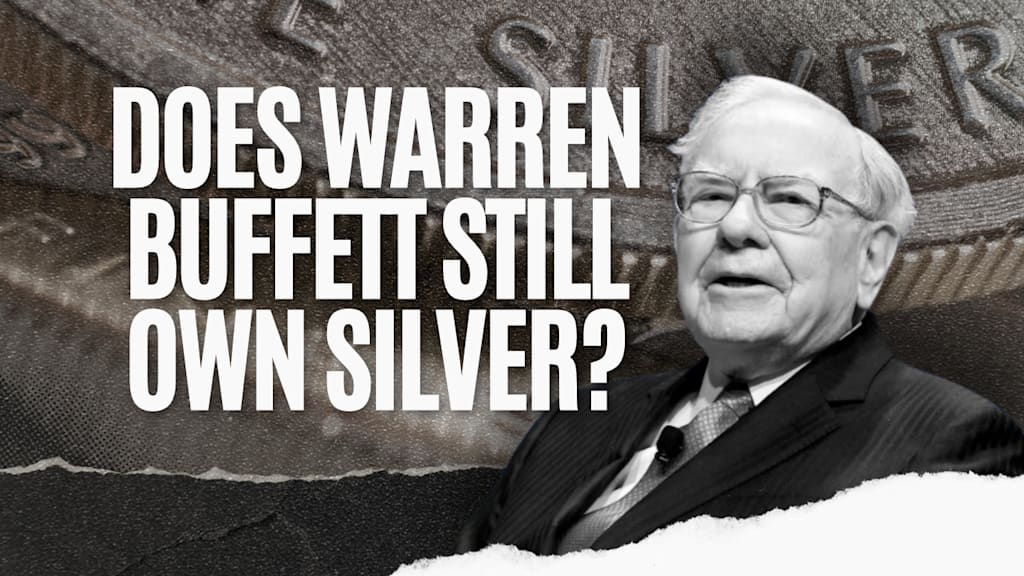
In the winter of 1998, the most famous stock picker alive did something that left Wall Street scratching its head: he bought a mountain of silver. Berkshire Hathaway quietly accumulated 129.7 million ounces over roughly six months in 1997 and early 1998, paying around $5 an ounce. But no, Warren Buffett does not still own it. Berkshire sold the position within a decade, and it has not disclosed any silver holding since. Buffett himself summed it up at the 2006 annual meeting: “I bought it very early. I sold it very early.” The story of why he bought, and why he let go, holds lessons that matter more to a silver saver today than the simple yes or no.
Why Berkshire Hathaway Bought Silver When Nobody Else Wanted It
Silver in the late 1990s was a forgotten asset. The dot-com boom was roaring, the dollar was strong, and precious metals were dismissed as relics. Then came Berkshire’s announcement in February 1998.
Buffett’s reasoning was refreshingly plain. Year after year, the world had been consuming more silver than miners and recyclers were producing, and the gap was being filled by drawing down above-ground stockpiles. Berkshire concluded that the balance between supply and demand would likely be restored only by a higher price. In other words, he was not betting on inflation, war or panic. He was reading the inventory numbers.
That is precisely the habit a modern silver buyer can borrow. The above-ground stocks Buffett watched were mostly held in London and in the exchange depositories of New York. Today, anyone can follow the same kind of data through Money Metals' COMEX silver inventory tracker, which shows how much registered and eligible silver sits in COMEX-approved vaults and how those totals shift over time. In 1998, that sort of information took a team of analysts to assemble. In 2026, it is a few clicks away.
What Buffett’s Silver Bet Teaches About Supply, Demand and Vault Stocks
Berkshire’s purchase was large enough to move the market. Much of the metal was reportedly taken in London, where it soaked up available bars and pushed silver lease rates sharply higher in early 1998. A single buyer had exposed how thin the free-floating supply of physical silver really was.
Several factors from that episode still apply.
1. Deficits do not last forever, but they can last a long time. The Silver Institute’s World Silver Survey 2026 reports that demand exceeded supply in 2025 for a fifth consecutive year. Mine production rose about 3% to 846.6 million ounces, and the open question for long-term holders is whether mine output can keep pace with industrial users and investors pulling from the same pool.
2. Visible inventory is smaller than it looks. Total vault stocks include metal committed to ETFs, pledged as collateral or simply not for sale. When a big buyer shows up, the true float gets tested quickly.
3. Being right on direction is not the same as being right on timing. Silver did eventually go far higher than $5. It climbed toward $50 in 2011 and, according to the Silver Institute, peaked above $121 on January 29, 2026. Berkshire, having sold years earlier, captured none of that.
4. The price of “early” is patience. Buffett was right about the deficit but impatient with the result, and he admitted as much. As a rough illustration, 129.7 million ounces at about $53.73 (the price Fortune reported on October 28, 2026) would be worth close to $7 billion, versus roughly $650 million paid.
A Simple Framework Borrowed From Berkshire’s Experience
You do not need Berkshire’s balance sheet to apply its logic. A cautious, long-term silver buyer can use a few straightforward rules.
Buy for a reason you can write down. Buffett’s reason was a persistent supply deficit. Yours might be protection from currency debasement or a desire to hold something outside the banking system. Write it down and revisit it before selling.
Watch the inventory, not the noise. Track registered and eligible silver, delivery activity, and the broad supply and demand picture. Understanding the purpose COMEX serves helps you read those numbers without overreacting to every daily swing.
Size the position so you can hold it. Silver is volatile. Hold an amount that lets you sleep through a 30% drop without being forced to sell.
Decide your exit conditions in advance. If your reason for owning silver still holds, a higher price alone is not a reason to sell.
Hold physical metal you control. Berkshire owned real bars, not paper promises. For an individual, that means coins, rounds or bars in your own possession or in segregated storage.
Misconceptions About Buffett and Precious Metals
“Buffett hates gold and silver.” He has been famously skeptical of gold, describing it as an unproductive asset. Yet he bought silver when he saw a clear supply and demand case. His objection has always been to owning something purely in the hope that someone else will pay more, not to owning metal with a fundamental story behind it.
“If Buffett sold, silver must be a bad investment.” Buffett himself said he sold too early. A great investor’s exit is not a verdict on the asset, especially when the underlying deficit he identified kept running for years afterward.
“Only big institutions can profit from inventory trends.” In reality, individual savers have advantages Berkshire did not. They can buy in small amounts over time, avoid moving the market, and hold for decades without answering to shareholders at an annual meeting.
Berkshire’s Silver Lesson: Deficits Reward Patient Holders
Warren Buffett no longer owns silver, and by his own admission he sold far too soon. Berkshire Hathaway’s 129.7 million ounce purchase was built on a sound reading of supply deficits and dwindling vault stocks, the same kind of evidence silver buyers can track today through COMEX inventory data and the Silver Institute’s annual surveys. The lesson for a careful buyer is not to copy Buffett’s trade but to finish it: own real metal for a clear reason, keep watching the inventory, and give that reason the time it needs.
About the Creator
Stefan Gleason
Stefan Gleason is President and CEO of Money Metals, the company recently named "Best Overall Online Precious Metals Dealer" by Investopedia. A graduate of the University of Florida, Gleason is a seasoned business leader and investor.
Enjoyed the story? Support the Creator.
Subscribe for free to receive all their stories in your feed.
Comments
There are no comments for this story
Be the first to respond and start the conversation.