
Dietary Supplements Market to Reach US$ 356.83 Billion by 2033 as Preventive Healthcare and Personalized Nutrition Drive Global Demand
Growing health awareness, aging populations, e-commerce expansion, and product innovation are transforming the global dietary supplements industry through 2033.

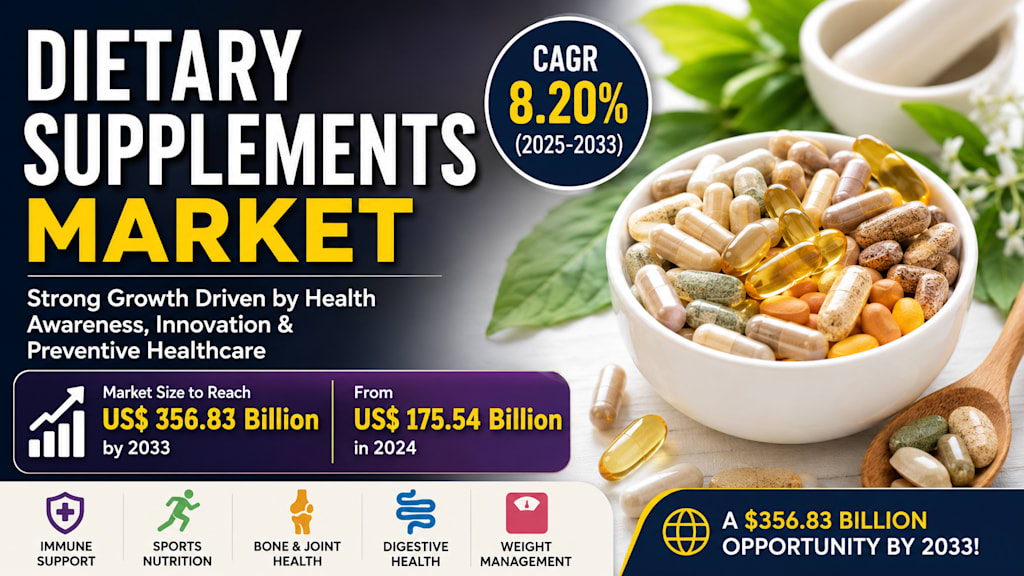
Dietary Supplements Market Poised for Strong Growth Through 2033
The global dietary supplements industry is entering a transformative phase as consumers increasingly prioritize preventive healthcare, wellness, and personalized nutrition. Once considered a niche category, dietary supplements have become a mainstream component of daily health routines across developed and emerging economies alike.
According to Renub Research, the Dietary Supplements Market is projected to increase from US$ 175.54 Billion in 2024 to US$ 356.83 Billion by 2033, growing at a CAGR of 8.20% during 2025–2033. This remarkable expansion reflects changing consumer lifestyles, increased awareness of nutrition, rising chronic disease prevalence, and technological innovation within the supplement industry.
As people seek proactive ways to maintain health and improve quality of life, dietary supplements are becoming an essential part of modern wellness strategies.
Understanding Dietary Supplements
Dietary supplements are products designed to enhance nutritional intake and support overall health. They contain ingredients such as vitamins, minerals, amino acids, herbs, botanicals, enzymes, probiotics, and fatty acids.
Available in various forms—including tablets, capsules, powders, liquids, soft gels, and gummies—these products help consumers bridge nutritional gaps while supporting specific health goals such as immunity, digestion, bone health, athletic performance, and weight management.
Unlike pharmaceuticals, supplements are generally used to promote wellness rather than treat diseases. However, growing scientific validation is increasing consumer confidence and driving adoption worldwide.
Health Awareness Continues to Fuel Demand
One of the most powerful drivers of market growth is rising health consciousness among consumers.
People are becoming increasingly aware of the relationship between nutrition and long-term health outcomes. The COVID-19 pandemic accelerated this trend, encouraging millions to focus on immune support, wellness, and disease prevention.
Consumers today are more likely to invest in supplements that support:
Immune health
Cardiovascular wellness
Cognitive performance
Energy levels
Bone strength
Healthy aging
This shift toward preventive healthcare is creating sustained demand across multiple supplement categories, particularly vitamins, minerals, probiotics, and herbal formulations.
Aging Populations Create New Opportunities
Global demographic changes are also reshaping the industry.
As populations age across North America, Europe, Japan, and several emerging economies, the need for nutritional support continues to grow. Older adults increasingly seek products that promote:
Joint health
Bone density
Cognitive function
Heart health
Mobility
Healthy aging
Dietary supplements provide a convenient solution for addressing age-related nutritional deficiencies and maintaining quality of life.
Manufacturers are responding by developing targeted formulations specifically designed for seniors, creating a lucrative growth segment within the market.
Fitness Culture Expands the Sports Nutrition Segment
The growing popularity of fitness, sports, and active lifestyles has significantly increased demand for nutritional supplements.
Consumers ranging from professional athletes to casual gym-goers are turning to supplements for:
Muscle recovery
Protein intake
Endurance support
Weight management
Performance enhancement
Protein powders, amino acids, energy supplements, and recovery products continue to experience strong sales globally.
The rise of fitness influencers, health-focused social media communities, and digital wellness platforms has further strengthened consumer engagement and awareness.
Personalized Nutrition Becomes a Major Industry Trend
The concept of personalized nutrition is rapidly transforming the supplement market.
Rather than using generic products, consumers increasingly seek customized solutions tailored to their:
Age
Gender
Lifestyle
Health conditions
Dietary preferences
Genetic profiles
Advances in health technology, wearable devices, and nutritional analytics are enabling companies to develop individualized supplement programs.
This trend is creating new opportunities for innovation and helping brands build stronger relationships with consumers.
E-Commerce Revolutionizes Supplement Distribution
Online retail has become one of the most influential growth drivers in the dietary supplements industry.
Digital platforms provide consumers with:
Extensive product selections
Competitive pricing
Detailed ingredient information
Customer reviews
Personalized recommendations
Subscription services
The convenience of online shopping has significantly expanded market accessibility, especially in remote and underserved regions.
E-commerce also enables brands to communicate directly with consumers, gather valuable feedback, and build loyalty through personalized experiences.
As digital adoption continues to increase worldwide, online platforms are expected to remain a major contributor to future market growth.
Product Innovation Accelerates Market Expansion
Innovation remains central to the success of dietary supplement manufacturers.
Companies are continuously introducing new products featuring:
Clean-label ingredients
Plant-based formulations
Organic components
Functional nutrition
Improved bioavailability
Novel delivery formats
Consumers increasingly prefer convenient supplement formats such as gummies, ready-to-drink beverages, and powdered nutritional blends.
Innovative products addressing emerging health trends continue to attract new customer segments and strengthen market competitiveness.
Herbal and Natural Supplements Gain Popularity
Demand for herbal and botanical supplements continues to rise globally.
Consumers are increasingly seeking natural alternatives that align with holistic wellness philosophies. Popular ingredients include:
Turmeric
Ashwagandha
Ginseng
Echinacea
Green tea extracts
Adaptogenic herbs
The growing preference for natural and plant-based solutions is particularly strong in markets such as India, Germany, and the United States.
As consumers become more ingredient-conscious, transparency and sustainability are becoming essential competitive advantages for manufacturers.
Challenges Facing the Industry
Despite strong growth prospects, the dietary supplements market faces several important challenges.
Quality Control Concerns
Maintaining product quality remains a significant issue.
Variations in raw materials, manufacturing standards, and testing procedures can affect product consistency, potency, and safety. These concerns can negatively impact consumer trust and industry reputation.
Manufacturers must invest in rigorous quality assurance programs and adhere to Good Manufacturing Practices (GMP) to ensure product reliability.
Regulatory Gaps
The regulatory landscape for dietary supplements varies considerably across countries.
In many regions, supplement regulations are less stringent than pharmaceutical standards, creating opportunities for misleading claims and inconsistent product quality.
Stronger regulatory oversight and standardized global guidelines will be critical to protecting consumers and supporting sustainable market growth.
Regional Market Insights
India
India is emerging as one of the fastest-growing dietary supplement markets.
Factors supporting growth include:
Rising health awareness
Urbanization
Preventive healthcare adoption
Growing fitness culture
Expanding middle-class population
Herbal and plant-based supplements enjoy strong consumer acceptance due to cultural familiarity and traditional wellness practices.
Germany
Germany remains one of Europe's most mature supplement markets.
Consumers increasingly utilize supplements for healthy aging, wellness maintenance, and chronic disease prevention. Vitamins, proteins, and combination supplements continue to dominate demand.
Mexico
The Mexican market is witnessing growing demand for immune-support and wellness products. Increased disposable income and health awareness are helping expand adoption rates across multiple demographic groups.
Saudi Arabia
Saudi Arabia's dietary supplements industry is benefiting from rising healthcare awareness, wellness initiatives, and lifestyle changes. Growing fitness participation and preventive healthcare practices continue to support market expansion.
Future Outlook
The future of the dietary supplements market appears exceptionally promising.
Growing consumer awareness, scientific advancements, digital transformation, and personalized nutrition trends are expected to reshape the industry over the next decade.
Companies that focus on innovation, transparency, product quality, and customer engagement will be best positioned to capitalize on emerging opportunities.
As consumers increasingly prioritize health optimization and preventive care, dietary supplements are likely to become an even more integral component of everyday wellness routines worldwide.
10 Recent Company Developments in the Dietary Supplements Industry
1. Danone Nutricia
Introduced Fortimel® PlantBased Energy, a plant-based oral nutritional supplement designed to support recovery from disease-related malnutrition.
2. The Vitamin Shoppe
Launched Whole Health Rx GLP-1 Support, targeting consumers using GLP-1 weight-management medications.
3. Kyowa Hakko
Expanded IMMUSE postbiotic ingredient availability into the Mexican market through collaboration with Quifaest.
4. Awshad
Released CalmaGummies, featuring full-spectrum hemp extract aimed at improving relaxation and sleep quality.
5. Life Time
Expanded its LTH supplement portfolio with NOURISH, a drinkable multivitamin and greens powder.
6. Fenix Health Science
Enhanced its Omega and Neuro product lines with formulations supporting cognitive health and Omega-3 absorption.
7. Amway Corporation
Continued strengthening its Nutrilite portfolio with science-backed nutritional solutions and personalized wellness initiatives.
8. Abbott Nutrition
Expanded research-driven nutrition offerings focused on immunity, healthy aging, and specialized nutritional support.
9. Bayer AG
Increased investment in consumer health products emphasizing preventive healthcare and daily nutritional supplementation.
10. Herbalife Nutrition
Advanced personalized nutrition programs and digital wellness solutions supporting active lifestyle consumers.
Final Thoughts
The dietary supplements market is no longer simply about vitamins and minerals—it has evolved into a comprehensive wellness ecosystem driven by preventive healthcare, personalized nutrition, digital commerce, and scientific innovation. With the market forecast to grow from US$ 175.54 Billion in 2024 to US$ 356.83 Billion by 2033, the industry is positioned for substantial expansion. Companies that prioritize quality, transparency, innovation, and consumer trust will be the primary beneficiaries of this global health and wellness revolution.
About the Creator
Enjoyed the story? Support the Creator.
Subscribe for free to receive all their stories in your feed.
Comments
There are no comments for this story
Be the first to respond and start the conversation.