
Diagnostic Imaging Market Expected to Reach US$68.81 Billion by 2034 as AI-Powered Technologies Transform Healthcare Diagnostics
Rising demand for early disease detection, increasing chronic disease prevalence, and rapid adoption of artificial intelligence are accelerating growth across the global diagnostic imaging industry.

Modern healthcare relies heavily on accurate and timely diagnosis. As chronic diseases become more prevalent and healthcare systems focus increasingly on preventive medicine, diagnostic imaging has become one of the most essential tools in clinical decision-making.
From identifying fractures and tumors to detecting cardiovascular diseases and neurological disorders, imaging technologies allow physicians to visualize internal structures with remarkable precision. Advances in artificial intelligence, automation, and high-resolution imaging are further enhancing diagnostic capabilities, enabling healthcare providers to deliver faster and more accurate care.
At the same time, healthcare organizations around the world are investing heavily in imaging infrastructure, modern radiology departments, and specialized diagnostic centers to improve patient outcomes and expand access to advanced diagnostic services.
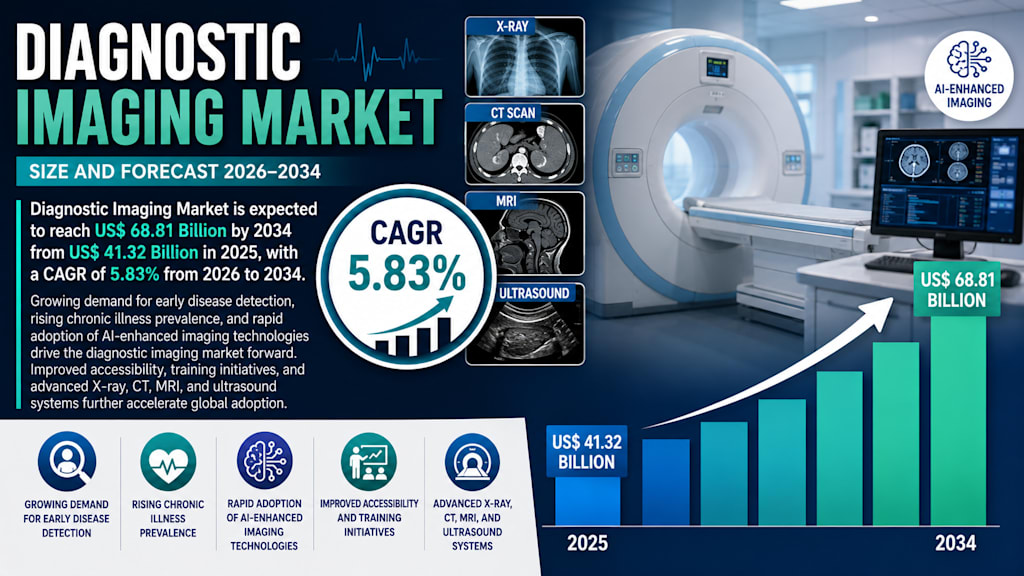
According to Renub Research, the global Diagnostic Imaging Market is projected to grow from US$41.32 billion in 2025 to US$68.81 billion by 2034, expanding at a compound annual growth rate (CAGR) of 5.83% between 2026 and 2034. Growth is being driven by rising demand for early disease detection, increasing chronic illness prevalence, AI-enhanced imaging technologies, and expanding healthcare infrastructure worldwide.
Understanding Diagnostic Imaging
Diagnostic imaging refers to the use of advanced technologies to create visual representations of the body's internal structures. These images help healthcare professionals diagnose diseases, monitor treatment progress, and guide medical procedures.
Common imaging modalities include X-ray, computed tomography (CT), magnetic resonance imaging (MRI), ultrasound, and nuclear imaging technologies such as positron emission tomography (PET). Each modality serves specific clinical purposes and provides unique diagnostic insights.
These imaging techniques are widely used across hospitals, diagnostic centers, outpatient clinics, and specialty healthcare facilities. Over the years, continuous technological advancements have improved image quality, reduced scan times, enhanced patient comfort, and increased diagnostic accuracy.
Today, diagnostic imaging plays a central role in nearly every area of medicine, making it one of the most important segments of the global healthcare industry.
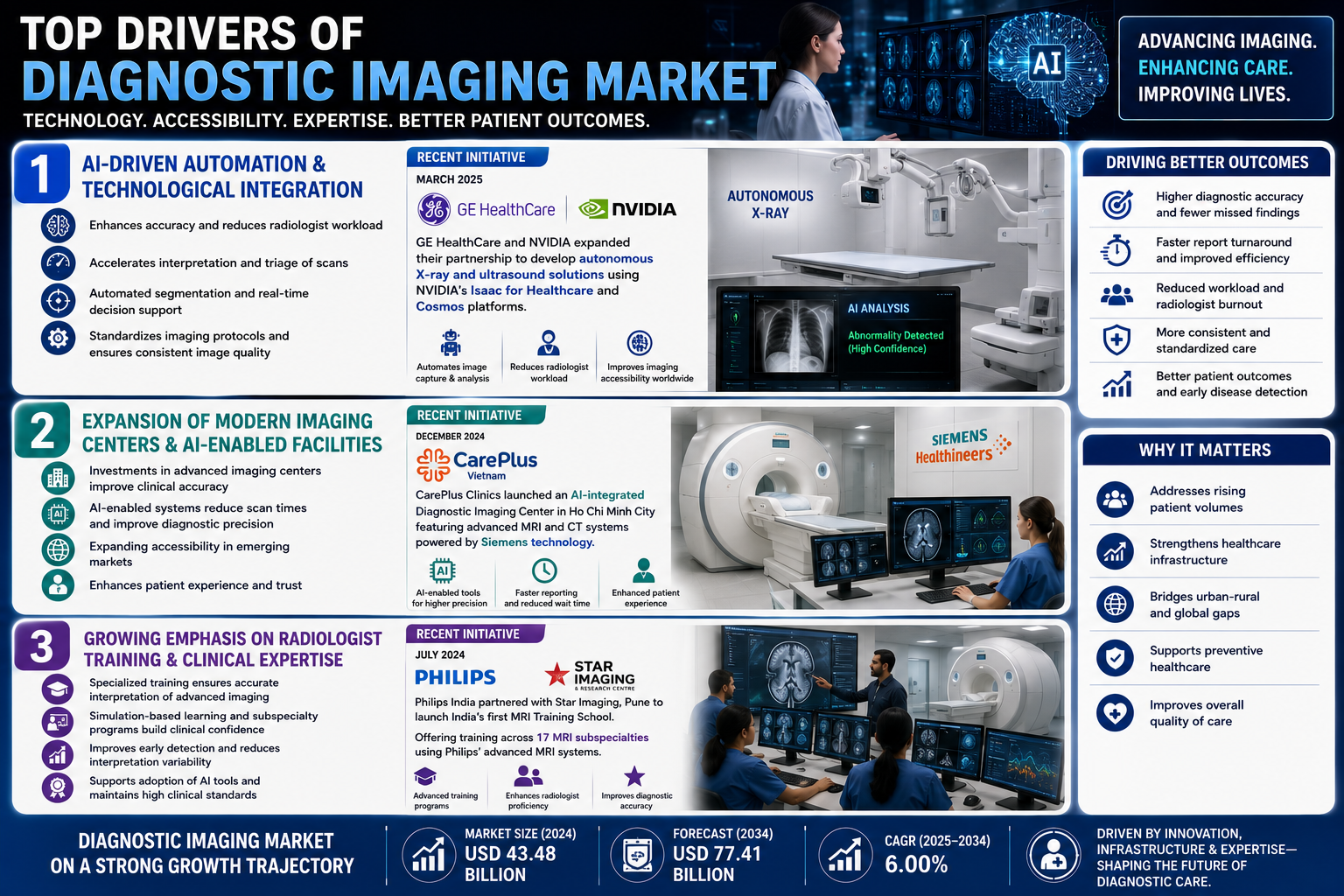
Why the Diagnostic Imaging Market Is Growing
Several powerful factors are contributing to the continued expansion of the global diagnostic imaging industry.
Growing Demand for Early Disease Detection
Healthcare systems increasingly emphasize early diagnosis as a critical strategy for improving patient outcomes and reducing long-term treatment costs.
Early detection allows physicians to identify diseases before symptoms become severe, enabling faster intervention and more effective treatment. Diagnostic imaging technologies are often the first step in detecting conditions such as cancer, cardiovascular diseases, neurological disorders, and musculoskeletal injuries.
As public awareness regarding preventive healthcare grows, demand for routine screening and diagnostic imaging services continues to increase worldwide. This trend is expected to remain one of the strongest drivers of market growth throughout the forecast period.
Rising Burden of Chronic Diseases
The growing prevalence of chronic illnesses is significantly increasing demand for diagnostic imaging procedures.
Conditions such as cancer, heart disease, diabetes, neurological disorders, and orthopedic problems often require repeated imaging for diagnosis, treatment planning, and ongoing monitoring. As populations age and lifestyle-related diseases become more common, healthcare providers are performing larger volumes of imaging studies than ever before.
The increasing need for accurate disease management is creating sustained demand for advanced imaging systems across hospitals and diagnostic centers globally.
Expansion of Healthcare Infrastructure
Governments and private healthcare organizations are investing heavily in healthcare infrastructure development.
New hospitals, diagnostic centers, specialty clinics, and radiology facilities are being established in both developed and emerging economies. These investments are improving patient access to advanced imaging services while supporting overall market growth.
Emerging markets are particularly important contributors to expansion as healthcare systems modernize and seek to improve diagnostic capabilities across underserved regions.
Artificial Intelligence Is Transforming Medical Imaging
Artificial intelligence has become one of the most significant technological developments in diagnostic imaging.
Improving Diagnostic Accuracy
AI-powered systems can analyze medical images with remarkable speed and precision.
Machine learning algorithms assist radiologists by identifying abnormalities, highlighting areas of concern, and reducing the risk of missed diagnoses. These technologies are particularly valuable in detecting subtle findings that may be difficult to identify through manual interpretation alone.
By improving diagnostic consistency and reducing human error, AI is helping healthcare providers achieve better clinical outcomes.
Enhancing Workflow Efficiency
Radiology departments worldwide face increasing imaging volumes and growing workloads.
AI-driven automation helps streamline workflows by performing tasks such as image segmentation, case prioritization, quality control, and report generation. These capabilities allow radiologists to focus more on complex cases while improving overall productivity.
Automation also reduces reporting delays, enabling faster diagnoses and more timely treatment decisions for patients.
Supporting Global Imaging Accessibility
Artificial intelligence is also helping address healthcare disparities by making advanced diagnostic capabilities more accessible.
In regions experiencing shortages of skilled radiologists, AI-assisted interpretation tools can support healthcare providers and improve diagnostic confidence. Combined with cloud-based technologies and teleradiology services, AI is expanding access to quality imaging services worldwide.
These innovations are expected to play a critical role in future healthcare delivery models.
Investments in Modern Imaging Centers Are Accelerating Adoption
Healthcare organizations are increasingly investing in next-generation imaging facilities designed to improve patient care and diagnostic accuracy.
High-Resolution Imaging Technologies
Modern imaging centers are equipped with advanced MRI, CT, PET, ultrasound, and digital radiography systems capable of producing highly detailed images.
Improved image quality allows clinicians to detect diseases earlier and develop more personalized treatment strategies. Faster scanning speeds also reduce patient discomfort while increasing operational efficiency.
These technological improvements are contributing to greater confidence in imaging-based diagnoses across multiple medical specialties.
AI-Integrated Diagnostic Facilities
New imaging centers increasingly incorporate artificial intelligence into daily clinical operations.
AI-enabled systems assist with image interpretation, workflow optimization, patient scheduling, and reporting processes. This integration improves both operational performance and patient experiences while supporting more accurate diagnoses.
The growing adoption of AI-integrated facilities demonstrates how technology is reshaping the future of diagnostic imaging.
Growing Focus on Radiology Training and Workforce Development
As imaging technologies become more advanced, healthcare systems are placing greater emphasis on workforce training and professional development.
Addressing Skill Gaps
Advanced imaging systems require specialized expertise to operate effectively and interpret results accurately.
Many countries are investing in radiology education programs, simulation-based training, and subspecialty certification initiatives to strengthen workforce capabilities. These programs help healthcare professionals stay current with evolving technologies and clinical best practices.
Enhanced training ultimately improves diagnostic quality and patient outcomes.
Supporting AI Adoption
The successful integration of artificial intelligence also depends on skilled professionals who understand both imaging science and emerging technologies.
Training initiatives are increasingly incorporating AI-focused education to help radiologists effectively utilize advanced diagnostic tools while maintaining clinical oversight and judgment.
This combination of human expertise and technological innovation is expected to define the future of diagnostic imaging.
Key Imaging Modalities Driving Market Growth
Several imaging technologies continue to serve as major contributors to overall market expansion.
X-Ray Imaging
X-ray remains the most widely used diagnostic imaging modality worldwide.
Its affordability, speed, and accessibility make it indispensable for evaluating fractures, chest conditions, infections, and emergency injuries. Advances in digital radiography and AI-enhanced image processing are improving both efficiency and diagnostic performance.
As healthcare providers seek cost-effective imaging solutions, X-ray technology continues to play a foundational role within modern healthcare systems.
Ultrasound Imaging
Ultrasound offers real-time visualization without exposing patients to ionizing radiation.
Its portability, affordability, and versatility make it valuable across numerous clinical applications, including obstetrics, cardiology, emergency medicine, and primary care. Innovations such as handheld devices and AI-assisted imaging are further expanding its accessibility and clinical utility.
The growing emphasis on point-of-care diagnostics continues to strengthen demand for ultrasound technologies.
CT and MRI Systems
Computed tomography and magnetic resonance imaging provide highly detailed anatomical information essential for diagnosing complex medical conditions.
These technologies are widely used in oncology, neurology, cardiovascular care, and orthopedic medicine. Ongoing advancements in image quality, scan speed, and AI integration are improving diagnostic accuracy while enhancing patient experiences.
CT and MRI remain among the most important investment areas for hospitals and imaging centers worldwide.
Challenges Facing the Industry
Despite strong growth prospects, several challenges continue to impact market development.
Shortage of Skilled Professionals
A global shortage of radiologists and imaging technologists remains one of the industry's most pressing concerns.
As imaging volumes continue increasing, many healthcare systems struggle to recruit and retain qualified professionals capable of managing growing workloads. Rural and underserved regions face particularly significant workforce shortages.
While artificial intelligence can support efficiency, expert human interpretation remains essential for delivering accurate diagnoses and high-quality patient care.
High Equipment Costs
Advanced imaging systems require substantial financial investment.
MRI, CT, PET-CT, and hybrid imaging technologies often involve significant acquisition, installation, maintenance, and operational expenses. Budget limitations can delay equipment upgrades and restrict access in developing regions.
Reducing costs through innovation, financing programs, and portable imaging solutions will be important for expanding global access to advanced diagnostics.
Regional Market Outlook
United States
The United States remains one of the world's largest diagnostic imaging markets due to extensive healthcare infrastructure, strong technological adoption, and high utilization rates.
Imaging procedures are routinely used across hospitals, outpatient facilities, and diagnostic centers to support clinical decision-making and improve patient outcomes. Continued investments in AI, digital health, and radiology modernization are expected to support further growth.
Germany
Germany possesses one of Europe's most advanced imaging infrastructures.
According to OECD data referenced in the report, Germany performs more than 150 MRI examinations per 1,000 people annually, among the highest rates in Europe. Strong government support, universal healthcare coverage, and advanced radiology programs contribute to widespread imaging adoption.
China
China continues expanding its diagnostic imaging capabilities through major investments in healthcare infrastructure and medical technology.
Growing deployment of CT, MRI, ultrasound, and AI-assisted imaging systems is improving access to diagnostic services while supporting national healthcare modernization initiatives.
Saudi Arabia
Saudi Arabia's Vision 2030 healthcare transformation strategy is driving significant investment in diagnostic imaging technologies.
Expansion of radiology services, standardized imaging protocols, and increased adoption of advanced modalities are strengthening diagnostic capabilities throughout the country.
Competitive Landscape
The global diagnostic imaging market features several leading medical technology companies focused on innovation, artificial intelligence integration, and advanced imaging solutions.
Major industry participants include FUJIFILM VisualSonics Inc., Canon Medical Systems Corporation, Bruker Corporation, PerkinElmer Inc., Hitachi, Hologic, RadNet, and Koninklijke Philips. These organizations continue investing in advanced imaging systems, AI-powered diagnostic tools, and strategic partnerships aimed at improving healthcare outcomes worldwide.
Final Thoughts
Diagnostic imaging has become one of the most critical pillars of modern healthcare. The ability to detect diseases earlier, guide treatment decisions more accurately, and improve patient outcomes makes imaging technologies indispensable across virtually every medical specialty.
Artificial intelligence, automation, and digital transformation are further accelerating the industry's evolution, enabling healthcare providers to deliver faster, more precise, and more accessible diagnostic services.
With the global Diagnostic Imaging Market projected to grow from US$41.32 billion in 2025 to US$68.81 billion by 2034, the sector is poised for sustained expansion. As healthcare systems continue prioritizing early detection, preventive care, and technological innovation, diagnostic imaging will remain at the forefront of modern medicine for years to come.
About the Creator
Enjoyed the story? Support the Creator.
Subscribe for free to receive all their stories in your feed.
Comments
There are no comments for this story
Be the first to respond and start the conversation.