
Diabetes Drug Innovation Is Transforming Global Healthcare as Demand for Advanced Therapies Continues to Rise
Rising Diabetes Prevalence, Breakthrough Drug Developments, and Expanding Access to Treatment Are Driving Growth in the Global Diabetes Drugs Market

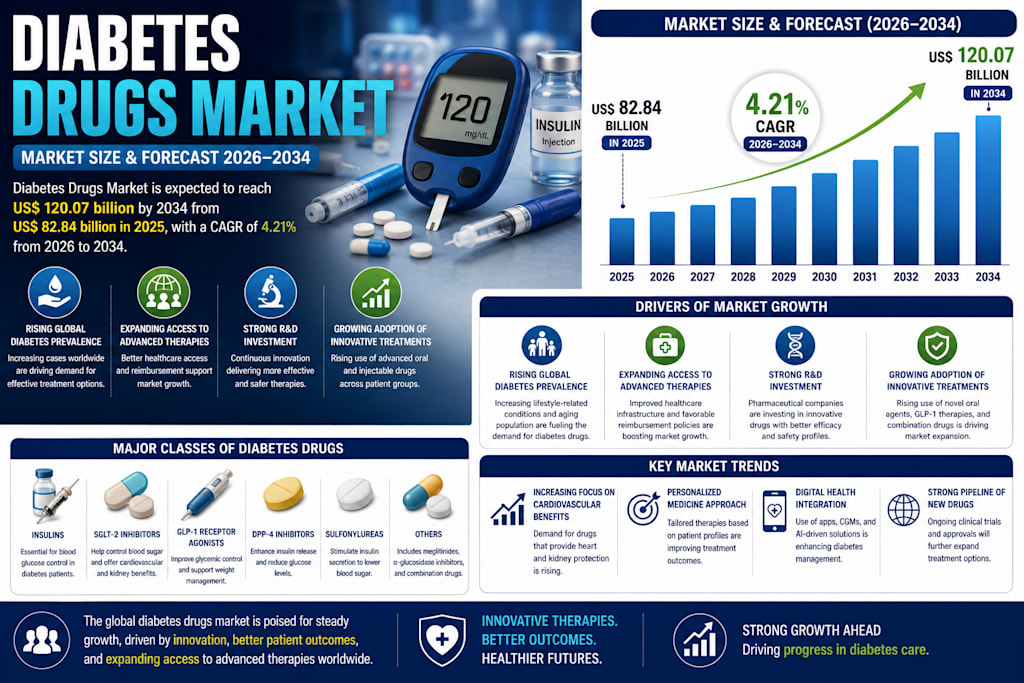
Diabetes has become one of the most significant public health challenges of the twenty-first century. Affecting hundreds of millions of people worldwide, the disease continues to place enormous pressure on healthcare systems, economies, and patients. As the prevalence of diabetes rises due to aging populations, sedentary lifestyles, urbanization, and increasing obesity rates, demand for effective treatment options is growing rapidly.
Fortunately, the pharmaceutical industry is responding with remarkable innovation. New classes of diabetes medications are transforming treatment outcomes by helping patients achieve better blood glucose control while also addressing associated health concerns such as obesity and cardiovascular disease. From advanced insulin formulations to breakthrough therapies like GLP-1 receptor agonists and SGLT-2 inhibitors, the diabetes treatment landscape is evolving faster than ever before.
According to Renub Research, the Diabetes Drugs Market is expected to reach US$ 120.07 billion by 2034, growing from US$ 82.84 billion in 2025, at a CAGR of 4.21% between 2026 and 2034. Rising diabetes prevalence, expanding access to advanced therapies, increasing healthcare awareness, and strong pharmaceutical research investments are key factors supporting this growth.
As healthcare providers increasingly focus on personalized treatment and long-term disease management, diabetes medications are becoming more effective, accessible, and patient-friendly than ever before.

Diabetes Continues to Be a Global Health Challenge
Diabetes is a chronic metabolic disorder characterized by elevated blood glucose levels caused by insufficient insulin production, impaired insulin function, or both.
The disease is primarily classified into Type 1 diabetes and Type 2 diabetes. While Type 1 diabetes requires lifelong insulin therapy, Type 2 diabetes is often managed through lifestyle modifications, oral medications, injectable therapies, and insulin when necessary.
Poorly managed diabetes can lead to severe complications affecting the heart, kidneys, eyes, nerves, and blood vessels. Consequently, effective drug therapy remains essential for maintaining blood sugar control and reducing long-term health risks.
As awareness regarding diabetes management continues to improve, patients are increasingly seeking modern treatment solutions that offer greater convenience and better clinical outcomes.
Rising Diabetes Prevalence Is Driving Drug Demand
One of the most important growth drivers in the diabetes drugs market is the rising number of people diagnosed with the disease.
Urbanization, changing dietary habits, reduced physical activity, and increasing obesity rates have contributed significantly to the global diabetes epidemic.
Healthcare systems worldwide are also becoming more effective at identifying diabetes earlier through screening programs and improved diagnostic tools. Earlier diagnosis often leads to earlier treatment initiation, increasing overall demand for diabetes medications.
The growing prevalence of Type 2 diabetes is particularly significant because it accounts for the majority of diabetes cases globally.
As more individuals require lifelong treatment and disease management, pharmaceutical companies continue developing innovative therapies capable of addressing diverse patient needs.
Innovation Is Reshaping Diabetes Treatment
Innovation has become one of the strongest forces driving growth in the diabetes drugs market.
Pharmaceutical companies are investing heavily in research and development to create therapies that improve efficacy, reduce side effects, and enhance patient convenience.
One of the most exciting developments involves GLP-1 receptor agonists, a class of drugs that help regulate blood sugar while also promoting weight loss.
In June 2023, Pfizer announced the continuation of clinical development for its oral GLP-1 receptor agonist candidate designed for adults living with Type 2 diabetes and obesity. The development reflects growing industry interest in oral alternatives that offer the benefits of injectable therapies while improving convenience and patient adherence.
The emergence of long-acting insulins, dual-action receptor agonists, and innovative metabolic therapies is transforming treatment standards worldwide.
These advances are helping patients achieve better glucose control while simultaneously addressing cardiovascular and metabolic health risks.
Regulatory Approvals Are Expanding Treatment Access
Regulatory approvals continue to play a crucial role in expanding patient access to advanced diabetes therapies.
When innovative treatments receive approval, healthcare providers gain access to new tools capable of addressing complex treatment challenges.
In March 2023, Sanofi India received marketing authorization from the Central Drugs Standard Control Organization for Soliqua in a pre-filled pen format. This combination therapy offers patients an additional treatment option when single-drug regimens fail to provide adequate glycemic control.
Regulatory momentum not only increases treatment availability but also encourages competition, which can improve affordability and accessibility.
As more countries strengthen healthcare infrastructure and expand reimbursement programs, access to advanced diabetes therapies is expected to improve significantly.
New Drug Classes Are Expanding Treatment Options
The diabetes treatment landscape is becoming increasingly diverse due to the introduction of new therapeutic classes.
Historically, treatment options were limited to traditional oral medications and insulin therapy. Today, patients benefit from a much broader range of choices designed to address specific clinical needs.
Drug classes such as GLP-1 receptor agonists, SGLT-2 inhibitors, DPP-4 inhibitors, and newer thiazolidinedione variants offer physicians greater flexibility when developing personalized treatment plans.
An important example occurred in February 2023 when Akums Drugs and Pharmaceuticals Limited introduced Lobeglitazone for Type 2 diabetes treatment in India. The launch demonstrated how domestic pharmaceutical innovation can improve affordability and expand access to modern therapies.
The availability of multiple treatment options enables healthcare providers to tailor therapies according to patient characteristics, disease progression, and overall health status.
GLP-1 Therapies Continue to Gain Attention
Among all emerging diabetes treatments, GLP-1 receptor agonists have attracted exceptional attention from healthcare providers, investors, and patients.
These medications help lower blood glucose levels by stimulating insulin secretion, reducing appetite, slowing gastric emptying, and promoting weight loss.
The dual benefits of glycemic control and weight management have made GLP-1 therapies particularly attractive for patients with Type 2 diabetes and obesity.
In March 2024, Eli Lilly partnered with Amazon Pharmacy to expand distribution of its GLP-1 medications, including Mounjaro and Zepbound, increasing accessibility for patients seeking advanced treatment options.
The growing popularity of GLP-1 therapies continues to reshape competitive dynamics within the diabetes drugs market.
Biosimilars Are Improving Affordability
The emergence of biosimilar medications is creating new opportunities for patients who previously struggled with treatment costs.
Biosimilars provide comparable efficacy and safety to original biologic drugs while offering more affordable pricing.
In July 2025, Biocon Biologics received FDA approval for Kirsty, the first interchangeable biosimilar to NovoLog insulin aspart. The approval represented an important step toward expanding patient access to cost-effective insulin therapies.
Similarly, in January 2024, Glenmark Pharmaceuticals introduced Lirafit, a biosimilar version of liraglutide in India, making GLP-1 therapy more affordable for local patients.
As biosimilar adoption increases, affordability challenges may gradually decline, supporting broader treatment access worldwide.
Insulin Continues to Dominate Treatment
Despite the emergence of newer therapies, insulin remains one of the most important segments within the diabetes drugs market.
Insulin therapy is essential for individuals with Type 1 diabetes and remains critical for many patients with advanced Type 2 diabetes.
Modern insulin formulations offer improved pharmacokinetic profiles, allowing for better blood glucose management and greater flexibility.
Long-acting insulin analogs, rapid-acting insulins, and ultra-long-duration products continue enhancing treatment outcomes.
The insulin segment is expected to maintain a significant share of the global market throughout the forecast period.
Oral Therapies Remain Highly Popular
Oral diabetes medications continue to play a major role in treatment strategies, particularly for patients with Type 2 diabetes.
Many patients prefer oral therapies because they are convenient, easy to administer, and often associated with better adherence.
The development of advanced oral formulations capable of delivering enhanced efficacy has strengthened this segment considerably.
The growing interest in oral GLP-1 therapies highlights the industry's ongoing efforts to combine convenience with clinical effectiveness.
As pharmaceutical innovation continues, oral therapies are expected to remain a vital component of diabetes management.
Regional Markets Continue Expanding
The United States remains the largest diabetes drugs market globally.
High disease prevalence, strong healthcare spending, advanced regulatory pathways, and rapid adoption of innovative therapies contribute to market leadership. Demand for GLP-1 receptor agonists, SGLT-2 inhibitors, and combination therapies continues rising due to strong physician confidence and positive clinical outcomes.
Germany maintains a strong position within Europe thanks to its advanced healthcare infrastructure, comprehensive reimbursement systems, and evidence-based treatment approaches. Rising obesity rates and an aging population continue supporting long-term demand.
China represents one of the fastest-growing markets due to its large diabetic population and expanding healthcare access. Government initiatives supporting early diagnosis and chronic disease management are increasing medication utilization across urban and rural regions.
Saudi Arabia is also experiencing significant growth driven by high diabetes prevalence, expanding healthcare investments, and increasing adoption of advanced therapeutic classes.
Challenges Facing the Industry
Despite strong growth prospects, several challenges continue affecting the diabetes drugs market.
One major concern involves treatment affordability.
Advanced therapies such as GLP-1 receptor agonists, SGLT-2 inhibitors, and combination injectables often carry high costs that can limit access, particularly in low- and middle-income regions. Even in developed markets, insurance limitations and high co-payments may create barriers to treatment continuity.
Safety considerations also remain important.
Some diabetes medications may cause side effects such as gastrointestinal discomfort, hypoglycemia, fluid retention, or weight gain. Long-term safety monitoring remains essential for newer drug classes to ensure continued confidence among healthcare providers and patients.
Addressing these challenges through innovation, affordability initiatives, and personalized treatment strategies will be critical for sustaining future growth.
Final Thoughts
The global diabetes drugs market is entering a new era characterized by innovation, personalized medicine, and expanding treatment access.
According to Renub Research, the market is expected to grow from US$ 82.84 billion in 2025 to US$ 120.07 billion by 2034, reflecting rising demand for effective therapies capable of addressing the growing global diabetes burden.
Breakthrough drug classes, expanding regulatory approvals, increasing biosimilar adoption, and stronger healthcare infrastructure are transforming the way diabetes is managed worldwide.
As pharmaceutical companies continue investing in research and development, patients can expect safer, more effective, and more convenient treatment options in the years ahead.
The future of diabetes care is not only about controlling blood sugar—it is about improving quality of life, reducing complications, and empowering millions of people to live healthier lives despite chronic disease.
About the Creator
Enjoyed the story? Support the Creator.
Subscribe for free to receive all their stories in your feed.
Comments
There are no comments for this story
Be the first to respond and start the conversation.