
Cosmetic Surgery Is Entering a New Era of Personalization, Technology, and Global Demand
Growing Aesthetic Awareness, Minimally Invasive Procedures, and Advanced Medical Technologies Are Driving the Cosmetic Surgery Market

The global cosmetic surgery industry is experiencing unprecedented growth as individuals increasingly prioritize appearance, self-confidence, and personal wellness. What was once considered a luxury reserved for celebrities and high-income individuals has evolved into a mainstream healthcare and lifestyle sector serving millions of people worldwide.
Advances in medical technology, greater social acceptance, and the growing popularity of minimally invasive treatments have transformed the cosmetic surgery landscape. Today's patients have access to a wider range of safer, more personalized procedures that deliver natural-looking results with shorter recovery times than ever before.
The rise of social media, digital imaging technologies, and changing beauty standards has also played a major role in shaping consumer behavior. From facial rejuvenation and body contouring to injectable treatments and skin enhancement procedures, aesthetic medicine has become an important part of modern self-care and wellness routines.
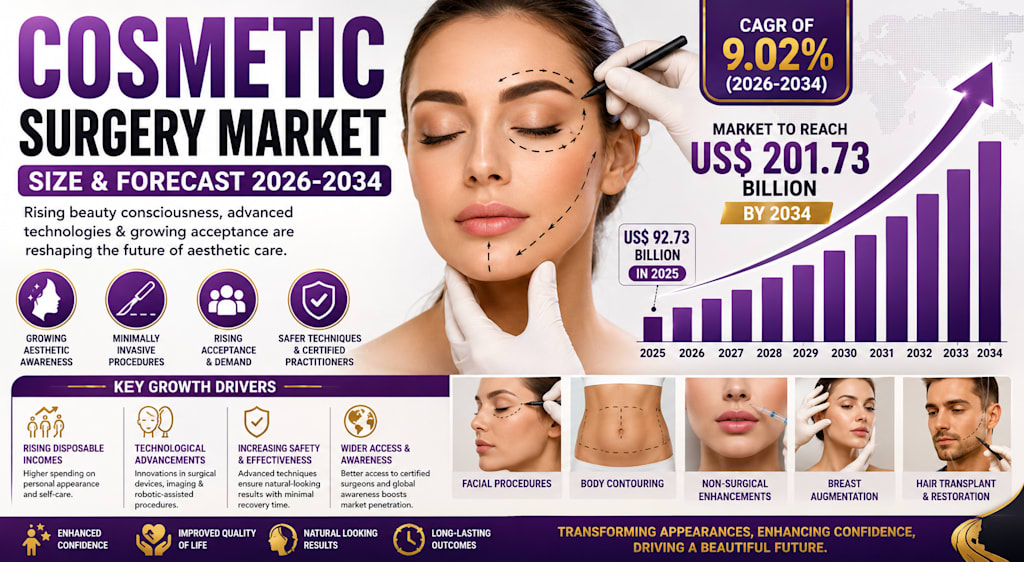
According to Renub Research, the Cosmetic Surgery Market is projected to grow from US$ 92.73 billion in 2025 to US$ 201.73 billion by 2034, expanding at a CAGR of 9.02% between 2026 and 2034. Rising aesthetic awareness, expanding minimally invasive procedures, increasing acceptance of cosmetic enhancements, and continuous technological advancements are driving strong market growth worldwide.
As innovation continues transforming patient experiences, cosmetic surgery is becoming more accessible, precise, and personalized than ever before.
Cosmetic Surgery Has Evolved Beyond Traditional Beauty Standards
Cosmetic surgery refers to medical procedures designed to improve or enhance physical appearance rather than treat medical conditions.
The field includes both surgical and non-surgical treatments aimed at modifying facial features, body contours, skin quality, and other aesthetic characteristics.
Popular surgical procedures include rhinoplasty, breast augmentation, facelifts, liposuction, eyelid surgery, and body contouring treatments. Non-surgical options include dermal fillers, botulinum toxin injections, laser treatments, skin resurfacing procedures, and chemical peels.
Modern cosmetic procedures increasingly focus on subtle enhancements that preserve natural appearance while addressing patient concerns.
This shift toward personalization and natural-looking outcomes has broadened the industry's appeal across different age groups and demographics.
As societal attitudes continue evolving, cosmetic procedures are increasingly viewed as part of overall wellness and self-confidence rather than purely cosmetic interventions.
Minimally Invasive Treatments Are Driving Market Expansion
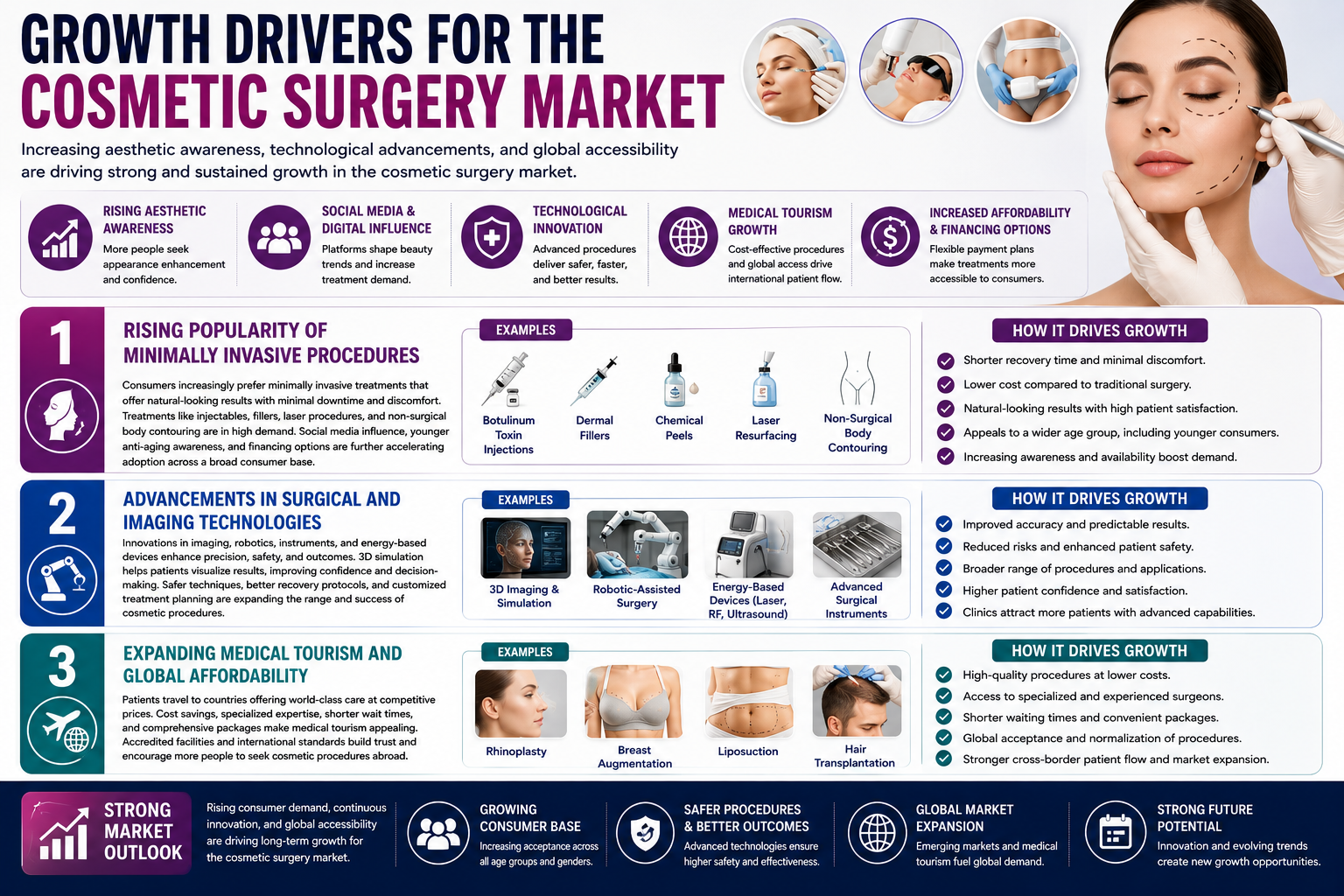
One of the strongest growth drivers in the cosmetic surgery market is the rising popularity of minimally invasive procedures.
Many consumers seek aesthetic improvements but prefer treatments that involve limited downtime, lower risks, and faster recovery periods.
Procedures such as botulinum toxin injections, dermal fillers, laser resurfacing, chemical peels, radiofrequency skin tightening, and non-surgical body contouring have become increasingly popular because they offer visible results without the need for major surgery.
These treatments appeal particularly to working professionals and younger consumers who desire aesthetic enhancement while maintaining busy lifestyles.
Advancements in treatment techniques have also improved safety, precision, and patient comfort.
As awareness regarding minimally invasive options continues increasing, demand is expected to remain strong across global markets.
Social Media Is Influencing Consumer Demand
Social media platforms have become one of the most influential factors shaping modern beauty trends.
Consumers are constantly exposed to curated images, beauty influencers, celebrities, and digital content that emphasize physical appearance.
Photo-editing tools, beauty filters, and image-enhancement applications have also influenced perceptions of facial symmetry, skin quality, and body aesthetics.
As a result, many individuals are increasingly motivated to pursue cosmetic treatments that help align their appearance with personal beauty goals.
Younger demographics, in particular, are becoming more comfortable discussing aesthetic procedures and exploring preventive cosmetic treatments.
While social media contributes to growing demand, it has also encouraged consumers to seek more natural-looking enhancements rather than dramatic transformations.
This trend is reshaping treatment preferences across the industry.
Technology Is Transforming Cosmetic Surgery
Technological innovation has become one of the most important forces driving the cosmetic surgery market.
Modern imaging systems now allow patients to visualize potential results before undergoing procedures.
Three-dimensional simulation technologies help improve treatment planning while enabling surgeons and patients to establish realistic expectations.
Advanced surgical instruments, robotic-assisted procedures, enhanced anesthesia protocols, and improved recovery techniques have significantly increased safety and precision.
Energy-based devices utilizing ultrasound, radiofrequency, and laser technologies have expanded the range of available non-surgical treatments.
These innovations provide more predictable outcomes while reducing risks and improving patient satisfaction.
As clinics continue investing in advanced technologies, cosmetic procedures are becoming increasingly sophisticated and personalized.
Anti-Aging Treatments Continue to Gain Popularity
The global population is aging, and many consumers are seeking ways to maintain a youthful appearance.
This trend has created strong demand for anti-aging procedures focused on facial rejuvenation, skin tightening, wrinkle reduction, and body contouring.
Injectable treatments remain particularly popular because they offer quick results with minimal downtime.
Laser therapies, collagen-stimulating treatments, and regenerative aesthetic procedures are also experiencing increasing demand.
Consumers are no longer waiting until significant aging signs appear before pursuing treatment. Instead, many individuals are adopting preventive aesthetic strategies at earlier ages.
This shift toward proactive anti-aging care is expected to remain a major growth driver throughout the forecast period.
Medical Tourism Is Expanding Global Opportunities
Medical tourism has become an increasingly important component of the cosmetic surgery industry.
Patients frequently travel internationally to access specialized expertise, shorter waiting times, and more affordable treatment options.
Countries offering high-quality cosmetic procedures at competitive prices have become major destinations for international patients.
Many healthcare providers now offer comprehensive packages that include consultation, surgery, accommodation, transportation, and post-procedure care.
Improvements in international accreditation standards and patient safety protocols have strengthened confidence in cross-border cosmetic surgery services.
As cosmetic procedures become more globally accessible, medical tourism is expected to contribute significantly to future market growth.
Female Consumers Continue to Lead Demand
Women remain the largest consumer segment within the cosmetic surgery market.
Procedures focused on facial rejuvenation, breast enhancement, body contouring, and skin improvement continue to generate substantial demand.
Social expectations, beauty standards, and increasing awareness of available treatment options contribute to high participation rates among female consumers.
At the same time, women are increasingly seeking personalized treatments tailored to individual goals rather than standardized beauty ideals.
This trend toward customization is encouraging providers to offer more comprehensive consultation and treatment planning services.
As disposable incomes increase and social acceptance continues growing, female participation is expected to remain a major market driver.
Male Cosmetic Procedures Are Growing Rapidly
Although women continue to dominate the market, male participation is expanding significantly.
Men are increasingly pursuing treatments designed to enhance appearance, maintain youthful features, and improve self-confidence.
Popular procedures include hair restoration, eyelid surgery, rhinoplasty, liposuction, jawline enhancement, and injectable treatments.
Growing awareness of grooming, professional appearance, and personal wellness has contributed to increasing demand among male consumers.
Social acceptance of male cosmetic procedures has also improved substantially in recent years.
This emerging demographic represents a major growth opportunity for the industry moving forward.
The United States Remains the Largest Market
The United States continues to lead the global cosmetic surgery industry.
High disposable incomes, advanced healthcare infrastructure, widespread acceptance of aesthetic procedures, and strong innovation capabilities support market leadership.
Popular treatments include breast augmentation, liposuction, facelifts, botulinum toxin injections, dermal fillers, and body contouring procedures.
The country also serves as a major center for cosmetic surgery research, medical device development, and technological innovation.
Flexible financing options and extensive availability of board-certified specialists further contribute to strong market demand.
Germany Maintains Strong European Growth
Germany represents one of Europe's most established cosmetic surgery markets.
High healthcare standards, strong regulatory oversight, and increasing demand for minimally invasive treatments continue supporting market expansion.
The country's aging population contributes significantly to demand for facial rejuvenation and anti-aging procedures.
At the same time, younger consumers are increasingly embracing preventive aesthetic treatments designed to maintain appearance over the long term.
Germany's emphasis on patient safety and clinical quality helps strengthen consumer confidence in cosmetic procedures.
China Is Becoming a Global Cosmetic Surgery Powerhouse
China has emerged as one of the fastest-growing cosmetic surgery markets in the world.
Rapid urbanization, rising disposable incomes, strong beauty culture influences, and widespread social media engagement have contributed to remarkable growth.
Younger consumers drive significant demand for facial contouring, skin rejuvenation, injectable treatments, and body enhancement procedures.
The country's expanding healthcare infrastructure and growing investment in aesthetic medicine are further accelerating market development.
Despite concerns regarding unregulated providers, China's large population and increasing acceptance of cosmetic procedures position it as a major driver of global industry growth.
Saudi Arabia Continues Expanding Aesthetic Healthcare
Saudi Arabia's cosmetic surgery market is experiencing rapid growth due to rising income levels, changing cultural attitudes, and growing interest in personal appearance.
Procedures such as rhinoplasty, body contouring, skin rejuvenation, and facial enhancements are becoming increasingly popular.
Government healthcare modernization initiatives and investments in medical tourism are supporting market development.
Growing social media influence and exposure to global beauty trends are also contributing to increased consumer interest in aesthetic procedures.
Challenges Continue to Affect Market Growth
Despite strong growth prospects, several challenges remain.
One of the most significant barriers is cost.
Cosmetic procedures often involve substantial expenses, including surgeon fees, facility costs, anesthesia charges, and follow-up care. Because most cosmetic treatments are considered elective, insurance coverage is generally unavailable, limiting access for many consumers.
Safety concerns also remain important.
Poorly performed procedures, underqualified practitioners, and inadequate regulatory oversight in some regions can lead to complications such as infections, scarring, asymmetry, or unsatisfactory outcomes.
The shortage of highly trained cosmetic surgeons in certain markets further contributes to concerns regarding quality and patient safety.
Addressing these issues will be essential for sustaining long-term market growth and consumer confidence.
Recent Industry Innovations Highlight Market Momentum
The cosmetic surgery industry continues witnessing significant innovation.
In June 2023, Galderma received FDA approval for Restylane Eyelight, a dermal filler specifically designed to improve under-eye appearance. The approval strengthened the company's position within the highly competitive cosmetic injectables segment.
In March 2023, Establishment Labs announced new partnerships across Europe and Japan to support the launch of Mia Femtech, a minimally invasive breast enhancement procedure designed to be completed in approximately fifteen minutes.
These developments illustrate the industry's continued focus on innovation, convenience, and patient-centered treatment approaches.
Final Thoughts
The cosmetic surgery market is entering a new era characterized by technological innovation, growing accessibility, and increasing consumer acceptance.
According to Renub Research, the Cosmetic Surgery Market is projected to grow from US$ 92.73 billion in 2025 to US$ 201.73 billion by 2034, reflecting strong global demand for both surgical and minimally invasive aesthetic procedures.
Advancements in imaging technologies, minimally invasive treatments, personalized care, and medical tourism are reshaping the industry while making cosmetic enhancements more accessible to a broader population.
As consumers increasingly prioritize self-confidence, wellness, and appearance, cosmetic surgery will continue evolving as a dynamic and influential segment of the global healthcare and lifestyle economy.
The future of aesthetic medicine is becoming safer, smarter, and more personalized—and cosmetic surgery is at the center of that transformation.
About the Creator
Enjoyed the story? Support the Creator.
Subscribe for free to receive all their stories in your feed.
Comments
There are no comments for this story
Be the first to respond and start the conversation.