
Convenience Food Is Transforming the Way the World Eats in an Era of Speed and Innovation
Busy Lifestyles, Product Innovation, and Expanding Ready-to-Eat Options Are Driving the Global Convenience Food Market

Modern lifestyles are changing the way people prepare and consume food. As work schedules become more demanding, urban populations continue to grow, and consumers seek greater convenience in their daily routines, the demand for quick and accessible meal solutions is rising rapidly. This shift has propelled convenience foods from a supplementary option into a central component of the global food industry.
From frozen meals and ready-to-eat snacks to microwaveable dishes and instant beverages, convenience foods have become essential for millions of consumers worldwide. Food manufacturers are responding by investing heavily in innovation, healthier formulations, improved packaging, and advanced preparation technologies that enhance both taste and convenience.
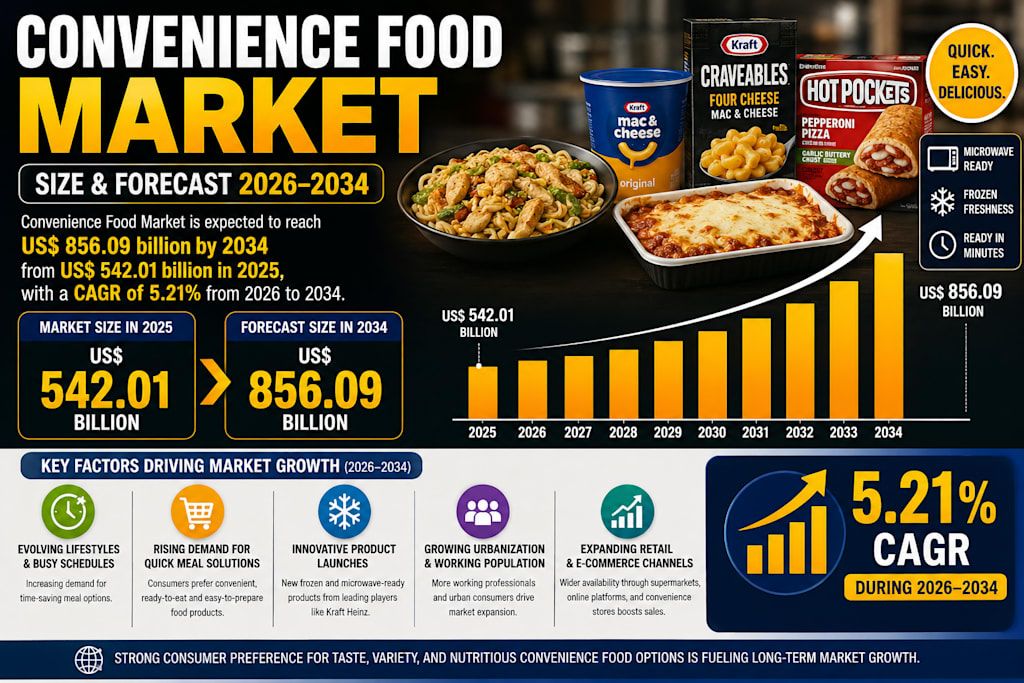
According to Renub Research, the Global Convenience Food Market is projected to grow from US$ 542.01 billion in 2025 to US$ 856.09 billion by 2034, registering a compound annual growth rate (CAGR) of 5.21% between 2026 and 2034. Product innovation, evolving lifestyles, increasing demand for quick meal solutions, and expanding distribution networks are among the key factors driving market growth.
As consumers continue prioritizing convenience without compromising quality, the convenience food industry is becoming one of the most dynamic sectors within the global food market.
The Growing Importance of Convenience Foods
Convenience foods are products designed to minimize the time, effort, and skills required for meal preparation.
These products include ready-to-eat meals, frozen foods, canned goods, packaged snacks, instant beverages, and heat-and-eat meal solutions.
Their primary appeal lies in their ability to provide quick, accessible, and reliable food options for consumers with increasingly busy schedules.
Over the years, convenience foods have evolved significantly.
Modern products are no longer focused solely on speed. Manufacturers now emphasize flavor, nutrition, portion control, ingredient transparency, and sustainability.
Advances in food science and packaging technologies have enabled companies to improve shelf life while maintaining product quality.
As lifestyles continue changing across both developed and emerging markets, convenience foods are becoming a fundamental part of contemporary eating habits.
Fast-Paced Lifestyles Are Driving Consumer Demand
One of the strongest drivers behind the convenience food market is the increasing pace of modern life.
Consumers today often balance demanding careers, family responsibilities, education, and social commitments. As a result, many have limited time available for traditional meal preparation.
Convenience foods provide a practical solution by reducing cooking time while offering consistent quality and accessibility.
Working professionals, students, urban residents, and dual-income households represent particularly important consumer groups.
The rise of smaller households and single-person living arrangements has further strengthened demand for portion-controlled meal solutions.
Consumers increasingly seek products that fit seamlessly into their schedules without sacrificing taste or variety.
As time becomes an increasingly valuable resource, convenience foods are expected to remain highly attractive across multiple demographics.
Innovation Is Transforming the Industry
Innovation has become one of the most powerful growth engines within the convenience food market.
Manufacturers are continuously introducing new products, technologies, and formats designed to improve consumer experiences.
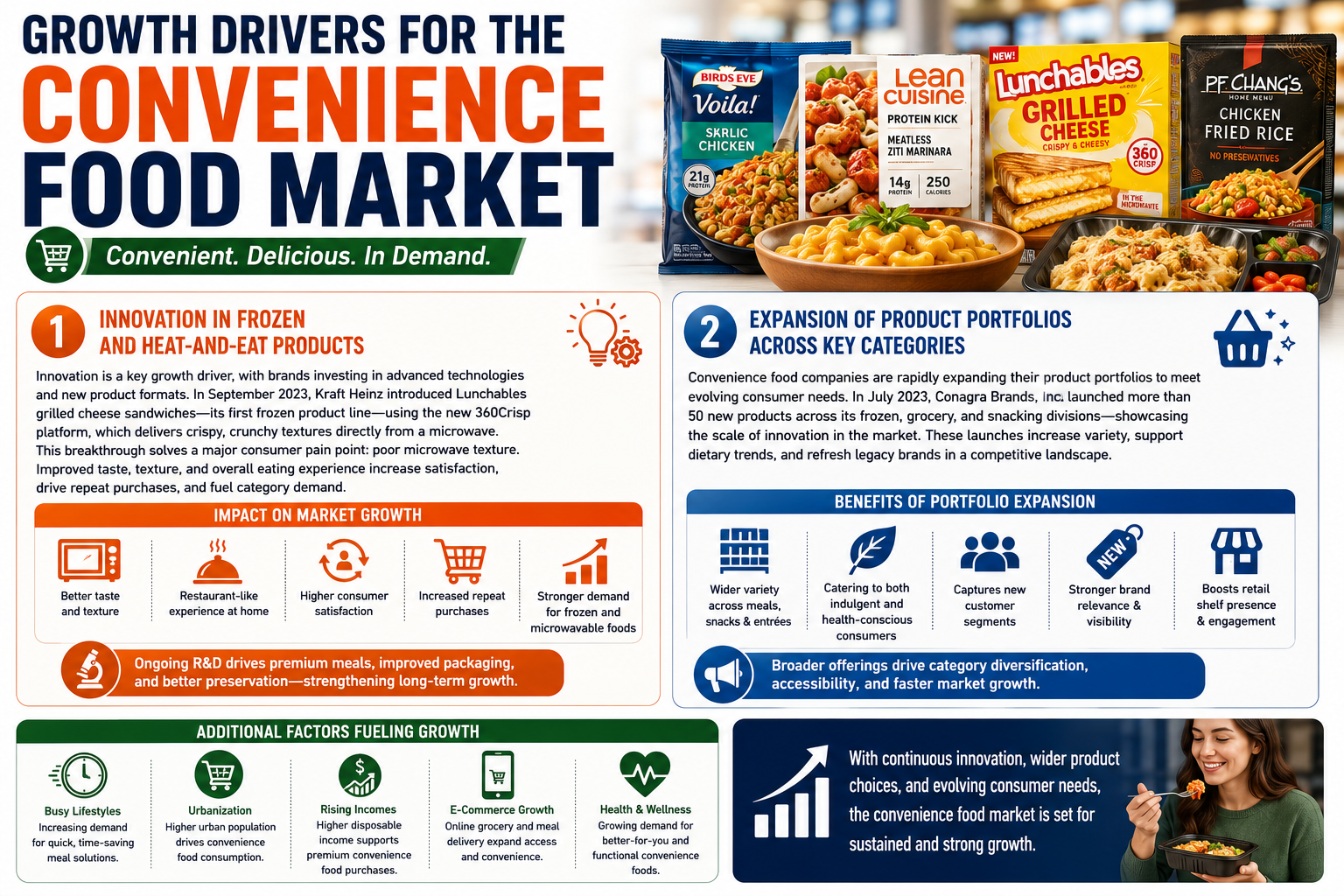
A notable example occurred in September 2023 when Kraft Heinz launched Lunchables Grilled Cheese Sandwiches, its first frozen product line utilizing the company's innovative 360Crisp microwave platform, designed to deliver crispy textures directly from a microwave.
This innovation addresses a long-standing challenge associated with microwave foods: achieving restaurant-quality texture and taste.
Consumers increasingly expect convenience foods to provide experiences comparable to freshly prepared meals.
As a result, companies are investing heavily in advanced preparation technologies, premium ingredients, and enhanced packaging solutions.
Innovation is helping transform convenience foods from basic meal replacements into desirable dining options.
Product Portfolio Expansion Is Accelerating Growth
Major food manufacturers are aggressively expanding their product portfolios to meet evolving consumer preferences.
Consumers today seek variety, personalization, and products that align with specific dietary needs and lifestyle choices.
Manufacturers are responding by introducing new offerings across frozen foods, ready meals, snacks, plant-based alternatives, and health-focused categories.
In July 2023, Conagra Brands introduced more than 50 new products across its frozen, grocery, and snack divisions, demonstrating the scale of innovation occurring throughout the industry.
These product launches help companies attract new consumers, strengthen brand loyalty, and remain competitive in a rapidly evolving market.
Retailers also benefit from broader assortments that increase consumer engagement and encourage repeat purchases.
As consumer preferences continue diversifying, portfolio expansion will remain a key growth strategy.
Strategic Partnerships Are Creating New Opportunities
Collaborations and joint ventures are becoming increasingly important within the convenience food industry.
Strategic partnerships enable companies to combine expertise, optimize production capabilities, improve distribution networks, and accelerate innovation.
A notable example occurred in April 2023 when Nestlé partnered with private equity firm PAI Partners to establish a joint venture focused on Nestlé's European frozen pizza business.
Such partnerships allow organizations to specialize more effectively while expanding their market reach.
They also help companies adapt more quickly to regional consumer preferences and regulatory requirements.
As competition intensifies, strategic collaborations are expected to play a growing role in shaping the future of the convenience food market.
Frozen Foods Continue to Lead Growth
Frozen foods represent one of the largest and fastest-growing segments within the convenience food market.
Advancements in freezing technologies have significantly improved product quality, taste, texture, and nutritional value.
Consumers increasingly view frozen meals as viable alternatives to freshly prepared foods.
Frozen products also offer important advantages including extended shelf life, reduced food waste, and convenient storage.
Manufacturers continue introducing premium frozen meals, international cuisines, and health-focused options that appeal to diverse consumer groups.
The popularity of frozen foods is expected to remain strong as consumers seek flexible meal solutions that combine convenience with quality.
Ready-to-Eat Foods Are Becoming Mainstream
Ready-to-eat foods are experiencing substantial growth due to their unmatched convenience.
These products require little or no preparation and are particularly attractive to consumers with busy lifestyles.
Ready-to-eat meals, snacks, salads, sandwiches, and packaged foods are widely available through supermarkets, convenience stores, and online channels.
Improvements in packaging and preservation technologies have enhanced freshness and quality, making ready-to-eat products more appealing than ever.
Consumers increasingly appreciate the ability to enjoy complete meals without spending time cooking or cleaning.
As urbanization and workforce participation continue increasing, ready-to-eat foods are expected to capture a larger share of the market.
Healthier Convenience Foods Are Gaining Popularity
Health-conscious consumers are reshaping the convenience food landscape.
Traditional convenience foods have often been criticized for containing excessive amounts of sodium, preservatives, artificial additives, and unhealthy fats.
In response, manufacturers are introducing healthier formulations that emphasize clean-label ingredients, reduced sodium, higher protein content, and improved nutritional profiles.
Plant-based convenience foods, organic ready meals, and wellness-focused snack options are becoming increasingly common.
In May 2024, Nestlé introduced Vital Pursuit, a new line of portion-controlled frozen meals designed specifically for consumers using GLP-1 weight-management medications and individuals pursuing healthier lifestyles.
Such innovations demonstrate how manufacturers are adapting to changing health and wellness trends.
As consumers continue prioritizing nutrition, healthier convenience foods will play an increasingly important role in market growth.
Online Retail Is Transforming Distribution
Digital commerce is significantly influencing the convenience food industry.
Consumers increasingly purchase groceries and meal solutions through online platforms that offer convenience, variety, and home delivery services.
E-commerce provides access to a broader range of products than many physical stores can accommodate.
Online grocery services, meal subscriptions, and rapid-delivery platforms are expanding convenience food accessibility across urban and suburban markets.
Manufacturers and retailers continue investing in digital capabilities to improve customer experiences and strengthen distribution networks.
As online shopping becomes increasingly integrated into daily life, e-commerce will remain a key driver of convenience food market expansion.
Regional Markets Continue to Expand
United States
The United States remains the largest convenience food market globally, supported by busy lifestyles, strong retail infrastructure, and continuous product innovation. Frozen meals, microwaveable foods, and ready-to-eat snacks remain particularly popular.
Germany
Germany's market benefits from demand for premium convenience foods, clean-label products, and innovative packaging solutions. Consumers increasingly seek healthier and more sustainable meal options.
China
Rapid urbanization, rising disposable incomes, and expanding e-commerce platforms are driving significant growth in China's convenience food market. Younger consumers and working professionals are major contributors to demand.
Saudi Arabia
Changing lifestyles, expanding modern retail infrastructure, and increasing workforce participation are supporting convenience food adoption across Saudi Arabia.
Challenges Facing the Industry
Despite strong growth prospects, the convenience food market faces several challenges.
Health Perceptions
Many consumers continue associating convenience foods with excessive processing, artificial ingredients, and lower nutritional value.
Manufacturers must continue investing in healthier formulations and transparent labeling to overcome these perceptions.
Supply Chain Pressures
Ingredient price volatility, transportation costs, labor shortages, and packaging expenses create ongoing challenges for manufacturers.
Cold-chain logistics requirements further increase operational complexity, particularly within frozen and refrigerated categories.
Successfully managing these challenges will be essential for maintaining profitability and ensuring long-term growth.
Final Thoughts
Convenience foods have become an integral part of modern life, offering practical solutions for consumers seeking speed, flexibility, and accessibility in their meal choices.
According to Renub Research, the Global Convenience Food Market is expected to grow from US$ 542.01 billion in 2025 to US$ 856.09 billion by 2034, reflecting strong demand driven by innovation, urbanization, and changing consumer lifestyles.
As manufacturers continue developing healthier products, smarter packaging, and premium meal experiences, convenience foods will play an increasingly important role in shaping the future of food consumption.
The future of convenience food is no longer just about saving time—it is about delivering quality, nutrition, innovation, and value in a world where convenience has become essential.
About the Creator
Enjoyed the story? Support the Creator.
Subscribe for free to receive all their stories in your feed.
Comments
There are no comments for this story
Be the first to respond and start the conversation.