
Clinical Chemistry Analyzer Market to Reach US$ 21.66 Billion by 2034 as Demand for Early Disease Detection Surges
Clinical Chemistry Analyzer Market to Reach US$ 21.66 Billion by 2034 as Demand for Early Disease Detection Surges

Clinical Chemistry Analyzers Become the Backbone of Modern Diagnostics
Healthcare systems worldwide are undergoing a major transformation as early disease detection, preventive healthcare, and precision medicine become top priorities. At the center of this evolution is a critical diagnostic technology that often operates behind the scenes but plays a vital role in patient care—the clinical chemistry analyzer.
From identifying diabetes and liver disorders to monitoring kidney function and cardiovascular health, clinical chemistry analyzers have become indispensable tools for healthcare providers worldwide. These sophisticated laboratory systems enable medical professionals to obtain fast, accurate, and reliable test results, helping physicians make informed treatment decisions.
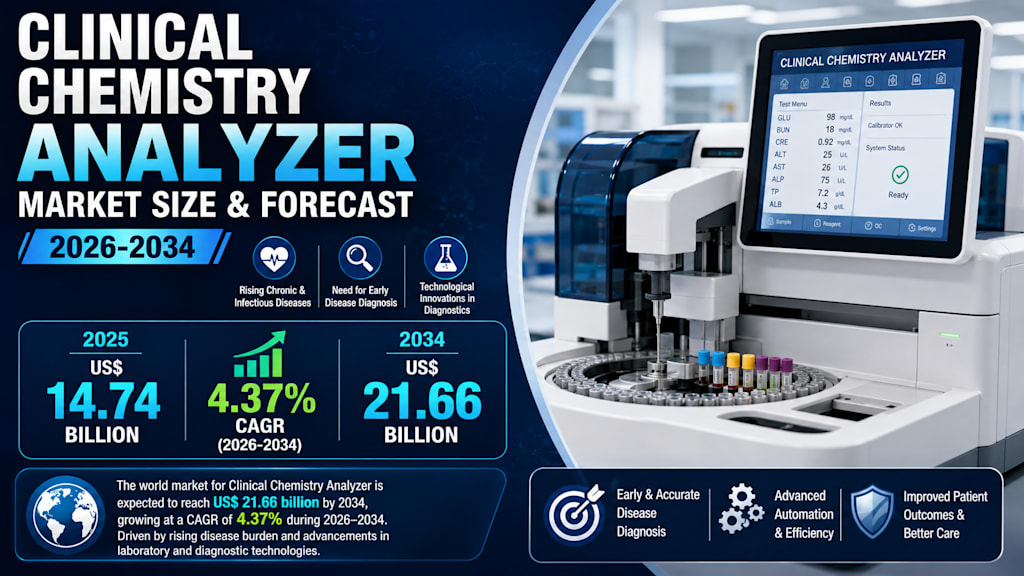
According to Renub Research, the global Clinical Chemistry Analyzer Market is expected to grow from US$ 14.74 billion in 2025 to US$ 21.66 billion by 2034, expanding at a compound annual growth rate (CAGR) of 4.37% between 2026 and 2034. The market's growth is largely driven by increasing chronic disease prevalence, growing demand for early diagnosis, laboratory automation, and continuous technological advancements in diagnostic healthcare.
As healthcare providers continue prioritizing efficient and accurate diagnostics, clinical chemistry analyzers are becoming one of the most important investments in modern laboratory infrastructure.
Why Clinical Chemistry Analyzers Matter More Than Ever
Clinical chemistry analyzers are automated laboratory instruments designed to measure chemical substances in biological samples such as blood, serum, plasma, and urine.
These systems perform a wide range of biochemical tests that help detect, diagnose, and monitor numerous health conditions. Commonly analyzed parameters include:
- Glucose levels
- Electrolytes
- Proteins
- Lipids
- Hormones
- Enzymes
- Liver function markers
- Kidney function indicators
Healthcare professionals rely on these analyzers to identify diseases such as diabetes, cardiovascular disorders, liver disease, kidney dysfunction, metabolic conditions, and infectious illnesses.
Modern analyzers utilize advanced technologies including photometric testing, enzymatic analysis, and ion-selective electrode methods to deliver highly accurate results with remarkable speed.
The increasing complexity of healthcare demands has made automated testing essential, and clinical chemistry analyzers are helping laboratories process thousands of samples efficiently while maintaining quality standards.
Rising Burden of Chronic Diseases Continues to Drive Demand
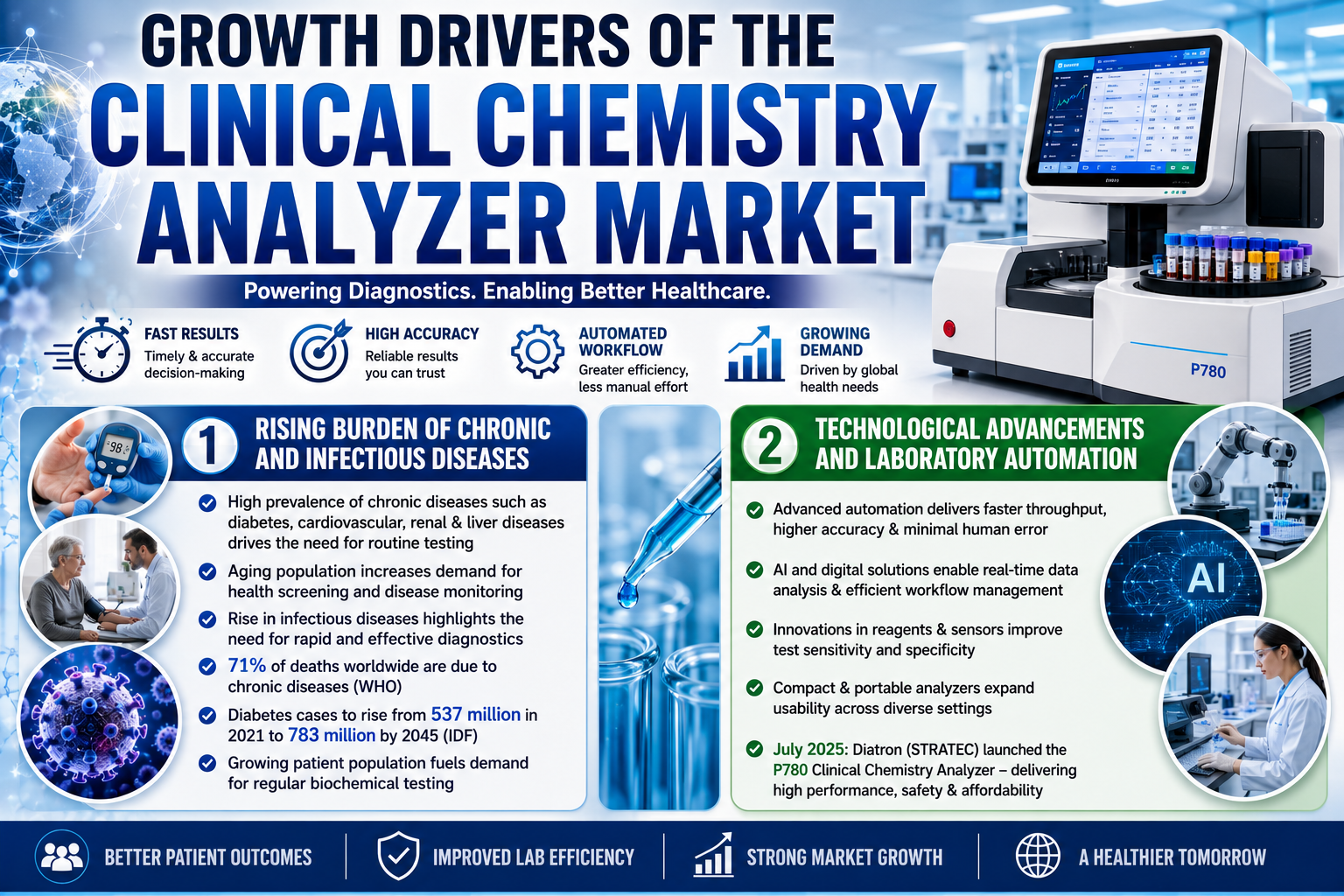
One of the strongest growth drivers for the clinical chemistry analyzer market is the increasing prevalence of chronic diseases worldwide.
Conditions such as diabetes, cardiovascular disease, kidney disorders, and liver disease require ongoing monitoring through laboratory testing. Clinical chemistry analyzers provide the biochemical insights necessary to track disease progression and evaluate treatment effectiveness.
According to global health estimates, chronic diseases account for approximately 71% of deaths worldwide. Additionally, the number of people living with diabetes is projected to rise significantly in the coming decades, creating sustained demand for diagnostic testing services.
The growing elderly population is another important factor supporting market growth. Older adults generally require more frequent health assessments and disease monitoring, increasing laboratory workloads and the need for high-throughput testing systems.
As healthcare systems focus on managing chronic diseases more effectively, clinical chemistry analyzers are expected to remain central to diagnostic workflows across hospitals and laboratories worldwide.
Early Diagnosis Is Becoming a Healthcare Priority
Healthcare providers increasingly recognize that early diagnosis can dramatically improve treatment outcomes and reduce long-term healthcare costs.
Governments, healthcare organizations, and insurers are promoting preventive care initiatives that encourage routine health screenings and regular laboratory testing.
Clinical chemistry analyzers play a critical role in these efforts by enabling healthcare providers to identify potential health problems before symptoms become severe.
Routine testing helps detect:
- Diabetes risk factors
- Liver abnormalities
- Kidney dysfunction
- Electrolyte imbalances
- Cardiovascular disease indicators
- Metabolic disorders
Early intervention often leads to more successful treatment outcomes while reducing the financial burden associated with advanced-stage disease management.
This shift toward preventive healthcare is creating consistent demand for laboratory testing services and supporting long-term growth in the clinical chemistry analyzer market.
Laboratory Automation Is Reshaping Diagnostic Services
Automation has become one of the most transformative trends within modern healthcare laboratories.
Traditional laboratory processes often required extensive manual intervention, increasing the risk of errors and limiting testing capacity. Today's automated clinical chemistry analyzers have significantly improved laboratory efficiency by reducing human involvement and accelerating sample processing.
Modern automated systems offer:
- Faster turnaround times
- Improved accuracy
- Enhanced workflow efficiency
- Reduced operational errors
- Higher sample throughput
- Better data management capabilities
Large laboratories can now process thousands of tests daily while maintaining consistent quality standards.
Automation is particularly valuable in regions experiencing rising patient volumes and increasing demand for diagnostic services. By improving productivity and reducing operational bottlenecks, automated analyzers help healthcare facilities meet growing testing requirements without compromising accuracy.
Artificial Intelligence Is Enhancing Diagnostic Performance
The integration of artificial intelligence and digital technologies is creating new opportunities within the clinical chemistry analyzer market.
AI-powered systems can assist laboratories by analyzing test data more efficiently, identifying patterns, and supporting clinical decision-making processes.
Advanced software platforms are helping laboratories:
- Improve workflow management
- Monitor instrument performance
- Reduce downtime
- Enhance quality control
- Accelerate result interpretation
Digital connectivity also enables seamless integration with laboratory information systems, improving data accessibility and reporting efficiency.
As healthcare becomes increasingly data-driven, AI-enhanced analyzers are expected to play an even greater role in optimizing laboratory operations and improving diagnostic accuracy.
Product Innovation Continues to Strengthen Market Growth
Leading manufacturers are continuously introducing new technologies designed to improve performance, efficiency, and laboratory productivity.
In April 2024, Mindray launched several advanced solutions for clinical chemistry laboratories, including the BS-1000M Chemistry Analyzer, capable of performing up to 1,200 tests per hour with integrated ion-selective electrode functionality. The company also introduced its M680 and M980 integrated chemistry and immunoassay systems targeting mid-volume laboratories and growing healthcare facilities.
Other major product developments include:
- Beckman Coulter's DxC 500 AU platform
- Siemens Healthineers Atellica CH and CI Series
- HORIBA Medical Pentra C400
- Roche cobas pro Integrated Solutions
- Roche cobas Mass Spec Solution
These innovations reflect ongoing efforts to increase laboratory efficiency while supporting the growing complexity of modern diagnostic testing requirements.
Expanding Healthcare Infrastructure Supports Market Expansion
Healthcare infrastructure development is creating substantial opportunities for clinical chemistry analyzer manufacturers.
Many developing countries are investing heavily in hospitals, diagnostic centers, and laboratory networks to improve healthcare accessibility and quality.
New healthcare facilities require advanced diagnostic equipment capable of supporting increasing patient volumes and expanding testing demands.
At the same time, developed nations are modernizing laboratory infrastructure by replacing aging equipment with automated systems that improve productivity and accuracy.
The growth of private diagnostic chains has also contributed significantly to market expansion. These organizations often prioritize advanced laboratory technologies to differentiate services and improve operational efficiency.
Government healthcare initiatives focused on preventive care and early disease detection are further increasing demand for diagnostic testing capabilities worldwide.
Reagents Market Benefits from Growing Testing Volumes
The reagents segment remains a crucial component of the clinical chemistry analyzer ecosystem.
Reagents are specialized chemicals used during diagnostic testing to identify and measure specific analytes within biological samples.
Because reagents are consumed during each testing procedure, increasing diagnostic volumes directly support demand within this segment.
Factors driving reagent consumption include:
- Rising chronic disease prevalence
- Expanding laboratory networks
- Increased preventive health screening
- Growing hospital testing volumes
- Adoption of automated analyzers
Manufacturers continue developing more stable and ready-to-use reagent formulations that improve workflow efficiency while maintaining testing accuracy.
As global testing volumes continue to rise, the reagents market is expected to remain an important contributor to overall industry growth.
Specialized Testing Segments Show Strong Potential
Several specialized testing categories are emerging as important growth areas within the market.
Liver Panel Testing
The increasing incidence of liver diseases such as hepatitis, fatty liver disease, cirrhosis, and alcohol-related liver conditions is driving demand for liver panel analyzers.
Healthcare providers increasingly rely on biochemical testing to support early diagnosis and ongoing monitoring of liver health.
Lipid Profile Testing
Growing rates of cardiovascular disease, obesity, and diabetes are boosting demand for lipid profile testing.
Clinical chemistry analyzers help evaluate cholesterol levels, triglycerides, and other cardiovascular risk factors, supporting preventive healthcare strategies aimed at reducing heart disease prevalence.
Renal and Metabolic Testing
Kidney disease and metabolic disorders continue to create strong demand for biochemical testing services. Increasing awareness regarding preventive healthcare has further encouraged routine screening and monitoring programs.
Regional Markets Continue to Expand
United States
The United States remains one of the largest and most technologically advanced markets for clinical chemistry analyzers.
Strong healthcare spending, widespread laboratory automation, favorable reimbursement policies, and high adoption of innovative diagnostic technologies continue supporting market growth. Investments in precision medicine and preventive care are further strengthening demand.
United Kingdom
The UK's National Health Service (NHS) and growing focus on preventive healthcare contribute significantly to market expansion.
Laboratory modernization initiatives and increasing demand for disease screening programs continue driving adoption of automated analyzer systems across healthcare facilities.
India
India is emerging as one of the fastest-growing markets due to rising healthcare awareness, increasing disease burden, and expanding diagnostic infrastructure.
Government healthcare initiatives and private-sector investments are improving access to advanced diagnostic technologies throughout urban and semi-urban regions.
Saudi Arabia
Saudi Arabia's Vision 2030 healthcare reforms are accelerating investments in laboratory modernization and diagnostic capabilities.
Growing emphasis on preventive healthcare, disease screening, and healthcare digitization continues to support demand for advanced clinical chemistry analyzers.
Challenges Continue to Influence Market Dynamics
Despite positive growth prospects, several challenges remain.
High Equipment Costs
Advanced clinical chemistry analyzers require substantial capital investment. Costs associated with equipment acquisition, installation, maintenance, calibration, and reagent consumption can limit adoption among smaller laboratories and healthcare facilities, particularly in developing regions.
Skilled Workforce Requirements
Operating and maintaining sophisticated analyzer systems requires trained laboratory professionals.
Many healthcare facilities face shortages of qualified personnel capable of managing calibration, quality control, troubleshooting, and advanced laboratory workflows. This skills gap remains an ongoing concern for healthcare systems globally.
Final Thoughts
The clinical chemistry analyzer market is playing an increasingly important role in supporting modern healthcare delivery. As healthcare providers prioritize early diagnosis, preventive care, and efficient disease management, demand for advanced laboratory testing solutions continues to rise.
According to Renub Research, the market is projected to grow from US$ 14.74 billion in 2025 to US$ 21.66 billion by 2034, reflecting sustained demand driven by chronic disease management, laboratory automation, technological innovation, and expanding healthcare infrastructure.
While challenges related to costs and workforce availability persist, ongoing advancements in automation, artificial intelligence, and diagnostic technologies are expected to strengthen market opportunities over the coming decade.
As healthcare systems worldwide continue pursuing faster, more accurate, and more accessible diagnostics, clinical chemistry analyzers will remain one of the most critical technologies shaping the future of laboratory medicine and patient care.
About the Creator
Enjoyed the story? Support the Creator.
Subscribe for free to receive all their stories in your feed.
Comments
There are no comments for this story
Be the first to respond and start the conversation.