
Clinical Chemistry Analyzer Market Expands as Demand for Early Disease Detection and Laboratory Automation Surges
Rising cases of chronic diseases, healthcare modernization, and advanced diagnostic technologies are driving steady growth in the global clinical chemistry analyzer industry.

Modern healthcare depends heavily on accurate and timely diagnosis. Before a physician can recommend treatment, monitor a chronic illness, or assess a patient’s health status, laboratory testing often provides the critical information needed to make informed decisions.
At the heart of many diagnostic laboratories around the world are clinical chemistry analyzers—advanced automated systems that perform thousands of biochemical tests every day. These machines play a crucial role in detecting diseases, monitoring treatment outcomes, and supporting preventive healthcare initiatives.
As healthcare systems increasingly focus on early diagnosis, disease prevention, and laboratory efficiency, demand for clinical chemistry analyzers continues to grow. The combination of rising chronic disease prevalence, expanding healthcare infrastructure, and ongoing technological innovation is creating strong momentum across the market.
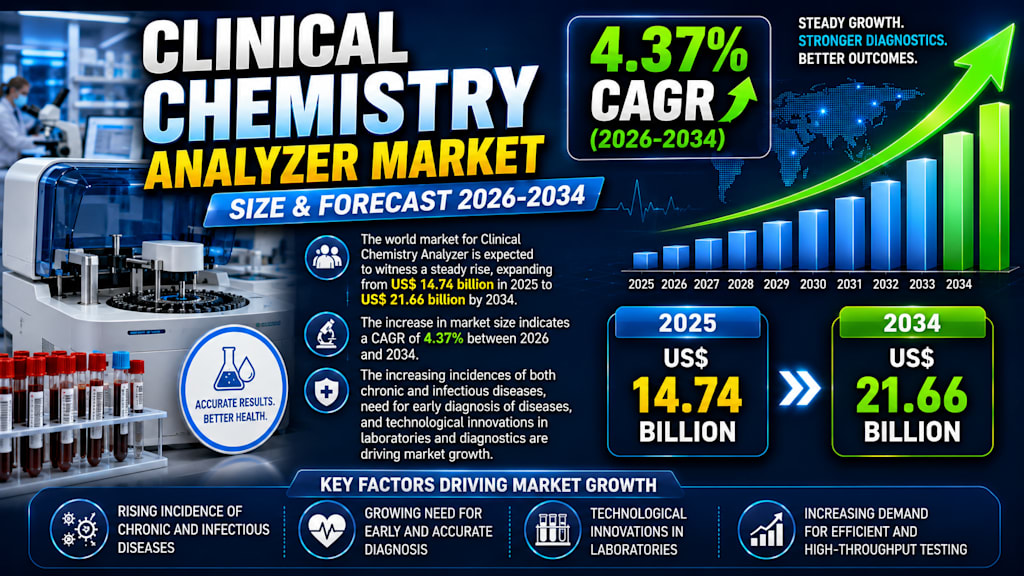
According to recent industry projections, the global Clinical Chemistry Analyzer Market is expected to grow from US$14.74 billion in 2025 to US$21.66 billion by 2034, registering a compound annual growth rate (CAGR) of 4.37% between 2026 and 2034. This steady expansion reflects the growing importance of laboratory diagnostics in modern healthcare delivery.
The Critical Role of Clinical Chemistry Analyzers
Clinical chemistry analyzers are automated laboratory instruments designed to measure chemical substances found in biological fluids such as blood, plasma, serum, and urine.
These devices evaluate numerous biomarkers, including glucose, enzymes, proteins, lipids, electrolytes, hormones, and metabolic compounds. The information generated helps healthcare providers diagnose and monitor a wide variety of medical conditions, including diabetes, kidney disease, liver disorders, cardiovascular illnesses, thyroid dysfunction, and metabolic abnormalities.
Modern analyzers utilize advanced testing methods such as photometric analysis, enzymatic reactions, and ion-selective electrode technologies to deliver highly accurate and reliable results.
Unlike traditional laboratory processes that required extensive manual intervention, today's systems are largely automated, enabling laboratories to perform large volumes of tests quickly while reducing the risk of human error.
As healthcare providers increasingly prioritize efficiency and accuracy, clinical chemistry analyzers have become indispensable tools across hospitals, diagnostic laboratories, and research institutions worldwide.
Chronic Diseases Continue to Drive Testing Demand
One of the most significant factors fueling market growth is the rising global burden of chronic diseases.
Conditions such as diabetes, cardiovascular disease, kidney disorders, liver disease, and metabolic syndromes require ongoing monitoring and regular laboratory testing. Clinical chemistry analyzers play a central role in managing these conditions by providing physicians with accurate biochemical data that supports diagnosis and treatment decisions.
The scale of the challenge is substantial.
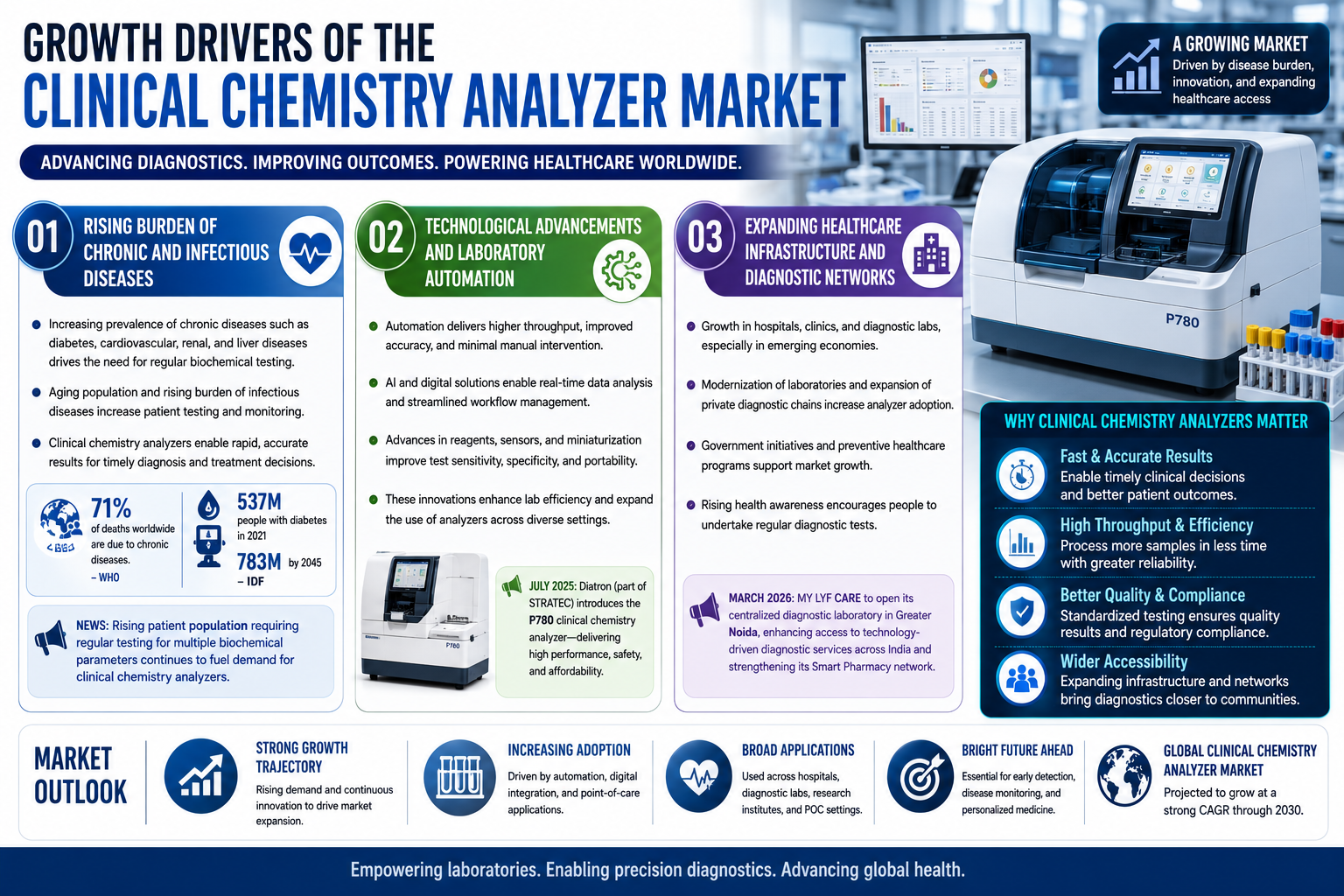
According to data referenced within industry research, approximately 71% of deaths worldwide are linked to chronic diseases. Additionally, the International Diabetes Federation estimates that the number of individuals living with diabetes could increase from 537 million in 2021 to 783 million by 2045.
These trends are generating continuous demand for laboratory testing services, creating favorable conditions for growth within the clinical chemistry analyzer market.
At the same time, aging populations in many countries are increasing the need for routine health screenings, preventive care programs, and disease management services, all of which rely heavily on laboratory diagnostics.
Infectious Diseases Highlight the Need for Fast Diagnostics
Beyond chronic illnesses, infectious diseases continue to create demand for rapid and reliable diagnostic solutions.
Outbreaks of viral, bacterial, and emerging infectious diseases have reinforced the importance of efficient laboratory testing capabilities. Healthcare providers increasingly require technologies capable of delivering accurate results quickly so they can make timely treatment decisions and support public health responses.
Clinical chemistry analyzers help laboratories process large testing volumes efficiently while maintaining high levels of accuracy.
The lessons learned from recent global health crises have encouraged healthcare systems to strengthen diagnostic infrastructure, contributing to greater investment in advanced laboratory technologies.
As preparedness and disease surveillance remain priorities for governments and healthcare organizations, demand for automated diagnostic systems is expected to remain strong.
Automation Is Transforming Modern Laboratories
Laboratory automation has become one of the most influential trends shaping the clinical chemistry analyzer industry.
Today's analyzers are designed to handle increasing workloads while minimizing manual intervention. Automation enables laboratories to process larger numbers of samples, improve turnaround times, and reduce operational costs.
Advanced analyzers now incorporate intelligent software systems that manage workflow optimization, quality control, data analysis, and instrument performance monitoring. These capabilities improve efficiency while helping laboratories maintain compliance with regulatory standards.
Artificial intelligence and digital technologies are further enhancing analyzer performance. Real-time data processing allows laboratories to identify trends, improve decision-making, and streamline operations.
Technological advances in sensor technologies and reagent development are also improving test sensitivity and specificity, enabling more accurate detection of disease markers.
Meanwhile, the introduction of compact and portable analyzers is expanding diagnostic capabilities beyond traditional laboratory settings, supporting healthcare delivery in remote locations and resource-limited environments.
New Product Launches Reflect Industry Innovation
The clinical chemistry analyzer market continues to benefit from significant innovation among leading diagnostic technology companies.
In April 2024, Mindray introduced several major products, including the BS-1000M Chemistry Analyzer, designed for mid-sized laboratories and capable of processing up to 1,200 tests per hour with integrated ion-selective electrode functionality. The company also launched its M680 and M980 integrated chemistry and immunoassay solutions to support growing healthcare facilities.
Other notable developments include:
- Expansion of the Beckman Coulter DxC 500 AU platform for routine chemistry testing.
- Continued growth of Roche's cobas pro Integrated Solutions installation base.
- Launch of Roche's cobas Mass Spec Solution, which later received the "Best New Clinical Diagnostics Instrumentation" award at ADLM 2025.
- Planned commercial expansion of Siemens Healthineers' Atellica CH and CI Series systems.
- Introduction of HORIBA Medical's Pentra C400 platform for medium-sized laboratories.
These product launches demonstrate the industry's focus on improving efficiency, scalability, automation, and diagnostic performance.
Expanding Healthcare Infrastructure Supports Growth
Healthcare infrastructure development is another major contributor to market expansion.
Developing countries are investing heavily in new hospitals, diagnostic centers, laboratories, and healthcare facilities. These investments are increasing demand for modern laboratory equipment capable of supporting growing patient populations.
At the same time, developed healthcare systems are upgrading aging laboratory infrastructure to improve efficiency and accommodate increasing testing volumes.
Private diagnostic chains are also expanding rapidly, providing affordable testing services to broader populations and contributing to increased demand for automated analyzers.
Government initiatives promoting preventive healthcare and routine health screening programs further support market growth by encouraging more frequent diagnostic testing.
For example, MY LYF CARE announced the establishment of a centralized diagnostic laboratory in Greater Noida, India, in March 2026, aimed at improving healthcare accessibility and strengthening diagnostic capabilities through technology-driven solutions.
Reagents Remain a Critical Revenue Driver
While analyzers often receive the most attention, reagents represent one of the most important segments within the market.
Reagents are specialized chemicals used to identify and measure specific analytes in biological samples. Every diagnostic test performed by a clinical chemistry analyzer depends on reagents, making them essential to laboratory operations.
The growing volume of diagnostic testing worldwide has created steady demand for reagents, generating recurring revenue opportunities for manufacturers.
Advances in reagent technology are improving laboratory efficiency through enhanced stability, ready-to-use formulations, and improved performance characteristics.
As healthcare systems continue expanding diagnostic services, reagent consumption is expected to rise alongside analyzer adoption.
Specialized Testing Areas Continue Expanding
Certain diagnostic applications are experiencing particularly strong growth.
Liver Panel Testing
The rising prevalence of liver diseases, including hepatitis, fatty liver disease, cirrhosis, and alcohol-related liver conditions, is driving demand for liver function testing.
Clinical chemistry analyzers support liver panel testing by measuring biomarkers such as ALT, AST, bilirubin, and alkaline phosphatase, enabling physicians to diagnose and monitor liver disorders effectively.
Lipid Profile Testing
Cardiovascular disease remains one of the leading causes of death globally, increasing demand for lipid profile analysis.
Clinical chemistry analyzers help measure cholesterol levels, including LDL, HDL, and triglycerides, providing essential information for assessing cardiovascular risk. Growing awareness of preventive healthcare and regular health screenings continues to support expansion within this segment.
Regional Markets Reveal Strong Opportunities
United States
The United States remains one of the most advanced markets for clinical chemistry analyzers.
Strong healthcare infrastructure, widespread adoption of laboratory automation, favorable reimbursement systems, and significant investment in precision medicine continue to support growth. High prevalence of chronic diseases further reinforces demand for diagnostic testing.
In August 2025, QuidelOrtho launched its Certified Analyzer Program to expand access to reliable diagnostic testing among rural and community hospitals through certified VITROS analyzers.
United Kingdom
The UK's National Health Service (NHS) remains a major driver of laboratory testing demand.
Growing emphasis on preventive healthcare, disease screening programs, and laboratory modernization initiatives is encouraging adoption of advanced diagnostic technologies across the country.
India
India is experiencing particularly rapid growth due to rising healthcare awareness, increasing chronic disease prevalence, and significant expansion of diagnostic infrastructure.
Investments in hospitals, pathology chains, and laboratory automation are supporting adoption, while private-sector healthcare expansion continues to create new opportunities.
In October 2025, FUJIFILM India expanded its diagnostics portfolio with the launch of the FW500 Clinical Chemistry Analyzer, further strengthening the country's diagnostic capabilities.
Saudi Arabia
Healthcare reforms associated with Vision 2030 are driving modernization efforts across Saudi Arabia's healthcare system.
Investments in laboratory infrastructure, preventive healthcare initiatives, and digital transformation are supporting increased demand for advanced clinical chemistry analyzers.
Challenges Facing the Market
Despite strong growth drivers, several challenges remain.
One of the most significant barriers is cost. Advanced analyzer systems require substantial investment not only for equipment acquisition but also for installation, maintenance, calibration, reagents, and personnel training. These expenses can be difficult for smaller laboratories and resource-constrained healthcare facilities to manage.
Another challenge is the need for skilled professionals.
Operating clinical chemistry analyzers requires expertise in calibration, quality control, maintenance, and data interpretation. Many developing regions face shortages of qualified laboratory personnel, limiting adoption and creating operational difficulties.
Laboratory information system integration and maintenance complexity can also create additional challenges, particularly for smaller healthcare facilities with limited technical resources.
Looking Ahead
The future of the clinical chemistry analyzer market remains highly promising.
Increasing disease prevalence, aging populations, expanding healthcare infrastructure, and ongoing technological innovation are creating a strong foundation for sustained growth. Automation, artificial intelligence, digital diagnostics, and advanced reagent technologies are expected to continue improving laboratory performance and expanding access to diagnostic services.
As healthcare systems place greater emphasis on preventive medicine and early disease detection, laboratory diagnostics will become even more central to patient care.
With the global market projected to grow from US$14.74 billion in 2025 to US$21.66 billion by 2034, clinical chemistry analyzers are positioned to remain among the most essential technologies in modern healthcare.
Final Thoughts
Clinical chemistry analyzers may operate behind the scenes, but their impact on healthcare is profound. Every day, these systems help clinicians diagnose diseases, monitor treatments, guide medical decisions, and improve patient outcomes.
As healthcare continues evolving toward more personalized, preventive, and data-driven models, the role of laboratory diagnostics will only become more important. Advances in automation and diagnostic technology are enabling faster, more accurate, and more accessible testing than ever before.
For healthcare providers, laboratories, and technology innovators, the clinical chemistry analyzer market represents not only a growing business opportunity but also a vital component of improving global health outcomes in the years ahead.
About the Creator
Enjoyed the story? Support the Creator.
Subscribe for free to receive all their stories in your feed.
Comments
There are no comments for this story
Be the first to respond and start the conversation.