
China Toys Market Set to Reach US$46.72 Billion by 2034 as Educational Toys, Smart Play Experiences, and E-Commerce Fuel Growth
Rising disposable incomes, growing urbanization, and increasing demand for educational and technology-enabled toys are driving strong expansion across China's toy industry.

Introduction: China's Toy Industry Evolves Beyond Traditional Play
China has long been recognized as one of the world's largest toy manufacturing centers, supplying products to consumers across the globe. Today, however, the country's toy market is not only a manufacturing powerhouse but also one of the fastest-growing consumer markets for toys and children's products.
Changing parenting styles, increasing disposable incomes, urbanization, and growing awareness of early childhood development are reshaping purchasing behavior across China. Parents are becoming more selective in their toy choices, increasingly prioritizing educational value, creativity, and cognitive development alongside entertainment.
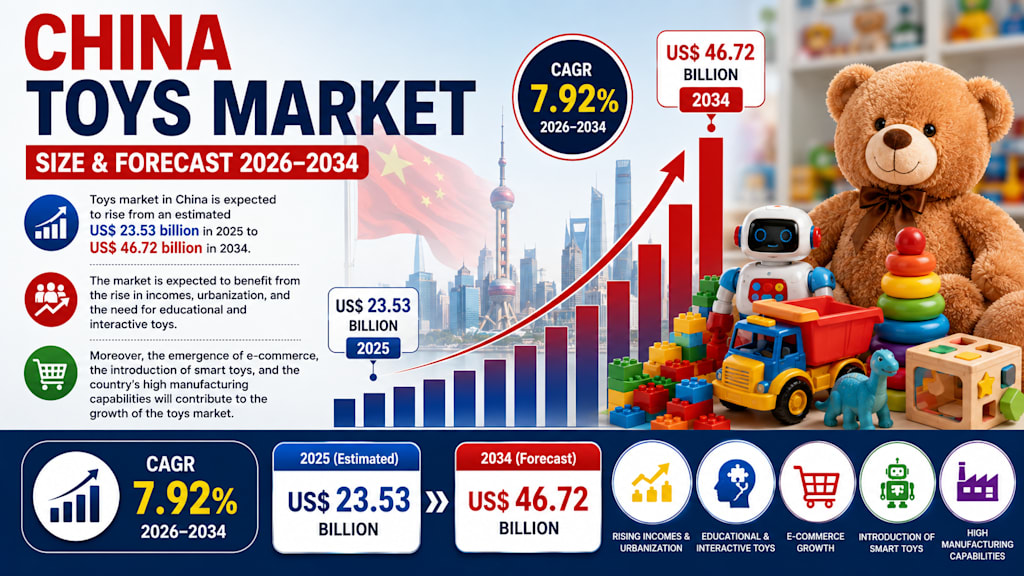
According to Renub Research, the China Toys Market is projected to grow from US$ 23.53 billion in 2025 to US$ 46.72 billion by 2034, registering a compound annual growth rate (CAGR) of 7.92% between 2026 and 2034. Rising demand for educational toys, expansion of e-commerce platforms, increasing urbanization, and growing adoption of smart toys are expected to support long-term market growth.
As technology and education become increasingly integrated into children's play experiences, China's toy industry is entering a new phase of innovation and expansion.
Toys Continue to Play an Important Role in Child Development
Toys have evolved significantly beyond their traditional role as simple entertainment products. Modern toys contribute to various aspects of child development, including creativity, cognitive growth, social interaction, problem-solving abilities, and emotional development.
The Chinese toy market encompasses a wide range of products, including action figures, dolls, stuffed toys, puzzles, board games, construction sets, educational toys, smart toys, and STEM-based learning products. Parents increasingly view toys as tools that can support learning while keeping children engaged.
This shift in perception has encouraged manufacturers to develop products that combine fun with educational value.
As awareness regarding childhood development continues growing, demand for innovative and skill-building toys is expected to increase throughout China.
Rising Disposable Incomes Are Supporting Consumer Spending
One of the strongest growth drivers for the Chinese toys market is the continued increase in household incomes.
Economic development and the expansion of China's middle class have significantly improved purchasing power across urban and suburban regions. Parents are increasingly willing to invest in high-quality toys that contribute to their children's learning and overall development.
Higher disposable incomes have also enabled consumers to purchase premium and branded products, including internationally recognized toy brands.
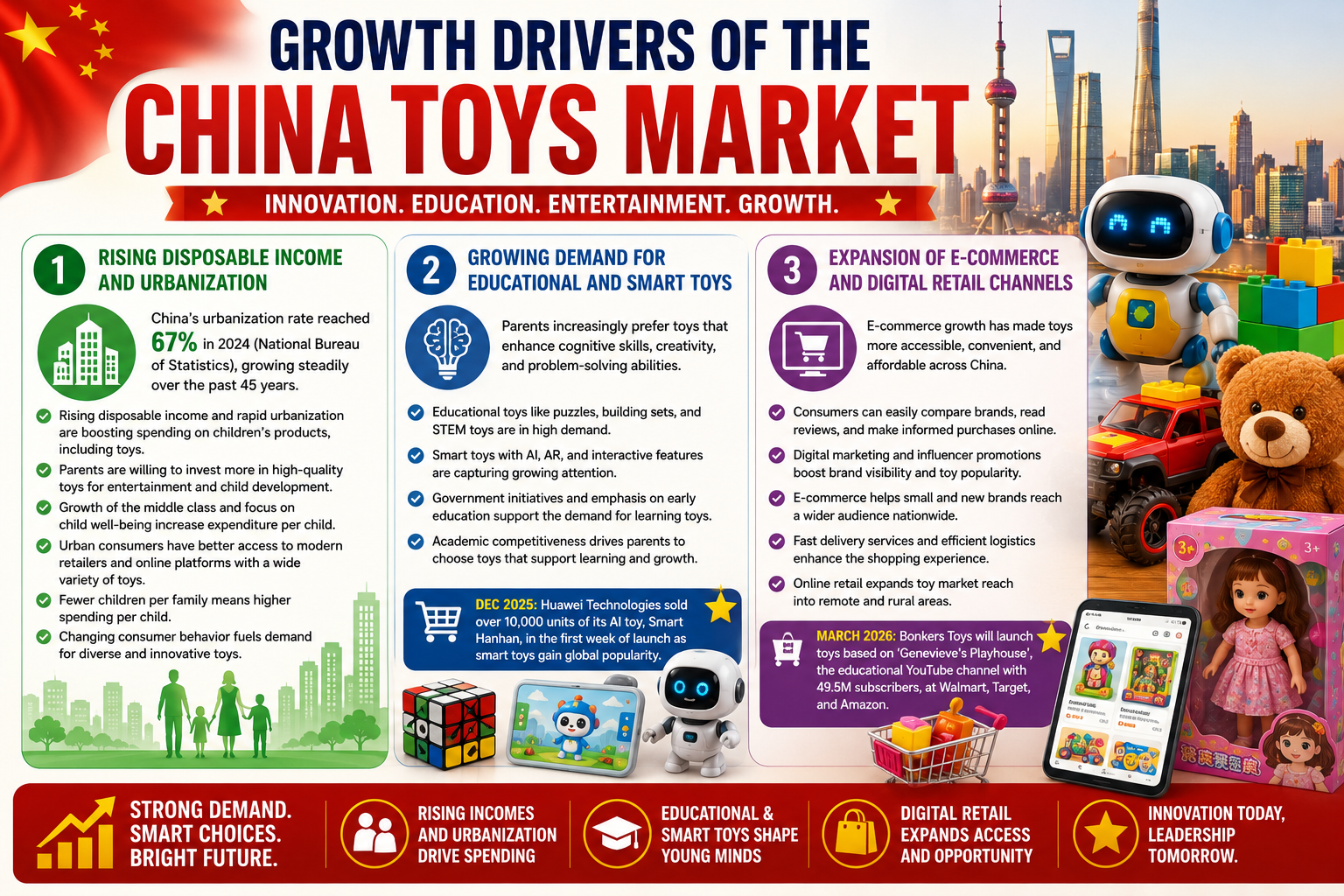
The report notes that China's urbanization rate reached approximately 67% in 2024, reflecting the country's ongoing transformation and the increasing concentration of consumers within urban areas.
Urban families generally have greater access to modern retail channels, educational products, and digital shopping platforms, all of which contribute to stronger toy market demand.
Educational Toys Are Becoming a Preferred Choice
Educational toys represent one of the fastest-growing segments within China's toy industry.
Parents increasingly seek products that help improve cognitive skills, creativity, problem-solving abilities, and academic readiness. Learning-oriented toys such as puzzles, building blocks, science kits, construction sets, and STEM-focused products are gaining widespread popularity, particularly among urban families.
China's highly competitive educational environment has encouraged many parents to invest in toys that support early learning and intellectual development.
Educational institutions and early learning centers are also incorporating interactive toys into teaching programs, further boosting demand.
As parents continue prioritizing child development, educational toys are expected to remain one of the most important growth categories within the market.
Smart Toys Are Transforming Children's Play Experiences
Technology is playing an increasingly significant role in shaping the future of the toy industry.
Smart toys equipped with artificial intelligence, voice interaction, sensors, augmented reality, and digital learning capabilities are becoming more popular among both children and parents. These products offer personalized experiences while combining entertainment with educational content.
The report highlights Huawei's Smart Hanhan artificial intelligence toy, which reportedly sold more than 10,000 units during its first week following launch, demonstrating strong consumer interest in technology-enabled play experiences.
Smart toys appeal to modern families seeking innovative ways to engage children while supporting learning outcomes.
As technology continues advancing, smart toys are expected to become an increasingly influential segment within the Chinese market.
E-Commerce Continues to Expand Market Accessibility
China's highly developed e-commerce ecosystem has transformed how consumers purchase toys.
Online platforms allow parents to browse extensive product catalogs, compare prices, read customer reviews, and access products from both domestic and international brands. The convenience of online shopping has significantly increased market accessibility, particularly for consumers living outside major metropolitan areas.
Digital marketing, influencer promotions, livestream shopping, and targeted advertising have further strengthened toy sales across online channels.
The report notes the growing availability of educational toys inspired by digital content creators, highlighting how online entertainment and e-commerce increasingly intersect within the toy industry.
As China's digital retail infrastructure continues evolving, e-commerce is expected to remain a major driver of market growth.
Board Games Are Experiencing Renewed Popularity
The board games segment is witnessing steady expansion as families seek alternatives to excessive screen time.
Board games encourage critical thinking, strategic decision-making, communication skills, and family interaction. Parents increasingly appreciate these benefits and actively encourage children to participate in offline group activities.
Both traditional Chinese games and internationally recognized board games have contributed to the segment's growth.
Educational institutions are also integrating board games into learning activities to promote teamwork and problem-solving skills.
As concerns regarding digital overexposure continue rising, board games are expected to maintain strong consumer appeal.
Dolls and Stuffed Toys Remain Popular Among Young Children
Dolls and stuffed toys continue to represent a significant portion of China's toy market.
These products help support imaginative play, emotional development, and social interaction among young children. Character-based toys, plush collectibles, and interactive dolls remain especially popular among families with younger children.
Manufacturers increasingly focus on product quality, safety, and innovative features such as sound effects and movement capabilities.
Gift-giving traditions also contribute significantly to demand within this category.
As manufacturers introduce more interactive and technologically enhanced products, the dolls and stuffed toys segment is expected to continue expanding.
Action Figures Benefit from Entertainment Franchises
Action figures have become increasingly popular due to the influence of movies, television series, video games, and digital media content.
Consumers often seek toys based on favorite superheroes, gaming characters, animated figures, and licensed entertainment properties. The growing popularity of collectibles has also expanded demand beyond children to include teenagers and adult enthusiasts.
Licensed merchandise continues driving growth because consumers value authenticity and brand recognition.
Social media platforms and online communities further support collector culture by promoting new product launches and limited-edition releases.
This segment is expected to remain an important contributor to overall market growth.
Specialty Toy Stores Continue to Offer Unique Value
Despite the rapid growth of e-commerce, specialty toy stores remain important distribution channels.
These stores provide hands-on product demonstrations, expert guidance, interactive shopping experiences, and access to premium or educational products that may not be readily available elsewhere.
Parents often prefer specialty stores when purchasing higher-value toys because they can evaluate product quality directly.
Specialty retailers also emphasize authentic products and personalized customer service, helping differentiate themselves from online competitors.
Their continued focus on customer experience is expected to support long-term relevance within the market.
Girls' Toys Segment Is Evolving Rapidly
The girls' toys segment is undergoing significant transformation as consumer preferences evolve.
While traditional categories such as dolls, craft kits, and role-play toys remain popular, parents increasingly seek products that encourage creativity, science learning, and problem-solving regardless of gender stereotypes.
Educational toys, coding kits, STEM-focused products, and gender-neutral play experiences are becoming more common within this category.
At the same time, character-based products and visually appealing designs continue attracting strong consumer interest.
Manufacturers are responding by expanding product diversity and personalization options.
Major Cities Continue Driving Market Expansion
Beijing
Beijing remains one of China's most important toy markets due to strong purchasing power, high educational awareness, and widespread demand for premium products.
Parents frequently invest in educational and smart toys that support academic development and intellectual growth. Strict quality standards and strong consumer awareness further shape purchasing behavior.
Shanghai
Shanghai's market is characterized by strong demand for premium, innovative, and internationally recognized brands.
Consumers often prioritize product quality, educational value, and technological innovation. The city's advanced retail infrastructure and global outlook contribute to strong market performance.
Tianjin
Tianjin continues experiencing steady growth driven by urbanization, rising incomes, and increasing awareness of child development.
Educational toys, puzzles, and value-oriented products remain particularly popular among local consumers.
Guangdong
Guangdong serves as both a major manufacturing hub and one of China's largest consumer markets for toys.
The region benefits from strong industrial capabilities, extensive product availability, and rapid adoption of emerging toy trends and technologies.
Challenges Continue to Affect the Industry
Despite strong growth prospects, several challenges remain.
Safety concerns continue representing a major issue for manufacturers. Parents increasingly scrutinize product quality, material safety, durability, and compliance with regulatory standards. Manufacturers must invest heavily in quality control and testing procedures to maintain consumer trust.
Intense competition also places pressure on profit margins. Domestic and international companies compete aggressively on pricing, innovation, branding, and product quality.
Additionally, rapidly changing consumer preferences require continuous investment in research, development, and product innovation.
Successfully balancing affordability, quality, and innovation will remain critical for long-term success.
Leading Companies Shaping the Market
The China toys market includes a mix of global brands and established industry leaders focused on innovation, licensing, educational products, and digital integration.
Major companies highlighted in the report include Mattel Inc., Hasbro Inc., LEGO, Spin Master Corp., VTech, Manhattan Associates, Funko, and JAKKS Pacific. These organizations continue investing in product development, smart toy technologies, educational content, and omnichannel retail strategies to strengthen their market positions.
Their ongoing innovation is helping shape the future of China's rapidly evolving toy industry.
Final Thoughts
The China toys market is entering a period of strong and sustained growth driven by rising disposable incomes, urbanization, educational priorities, and technological innovation.
With the market projected to grow from US$ 23.53 billion in 2025 to US$ 46.72 billion by 2034, toys are becoming increasingly important not only as entertainment products but also as tools for learning, creativity, and child development. Educational toys, smart toys, and e-commerce expansion are creating significant opportunities for manufacturers and retailers alike.
Although challenges related to safety standards and competitive pressures remain, the long-term outlook for the industry remains highly positive. As Chinese consumers continue prioritizing quality, innovation, and developmental value, the country's toy market is expected to remain one of the most dynamic and influential sectors within the global toy industry
About the Creator
Enjoyed the story? Support the Creator.
Subscribe for free to receive all their stories in your feed.
Comments
There are no comments for this story
Be the first to respond and start the conversation.