
China’s Snack Food Industry Is Evolving Through Innovation, Convenience, and Premium Consumer Experiences
Urbanization, E-Commerce Growth, and Demand for Healthier Snacks Are Transforming China’s Dynamic Snack Food Market

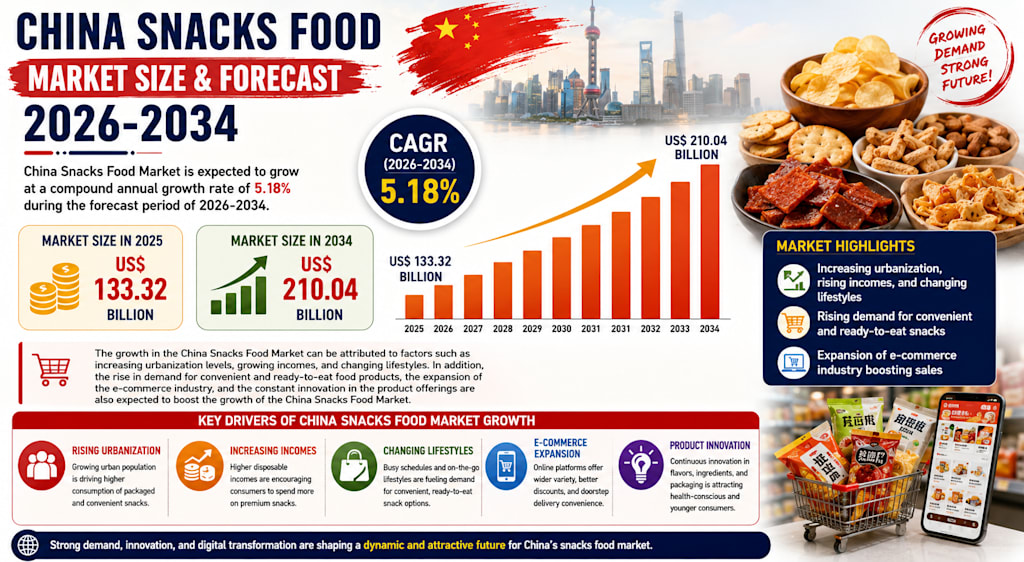
China's snack food industry is experiencing a remarkable transformation as changing lifestyles, rising disposable incomes, and rapid urbanization reshape consumer eating habits. Once dominated by traditional regional treats, the market now features an exciting mix of local specialties, international products, premium offerings, and health-focused innovations that appeal to a broad range of consumers.
Snack foods have become an essential part of daily life for millions of Chinese consumers. Whether enjoyed during work breaks, while commuting, during social gatherings, or as convenient meal substitutes, snacks continue to gain popularity across all age groups. The country's expanding retail network, thriving e-commerce ecosystem, and growing appetite for product experimentation are further accelerating market growth.
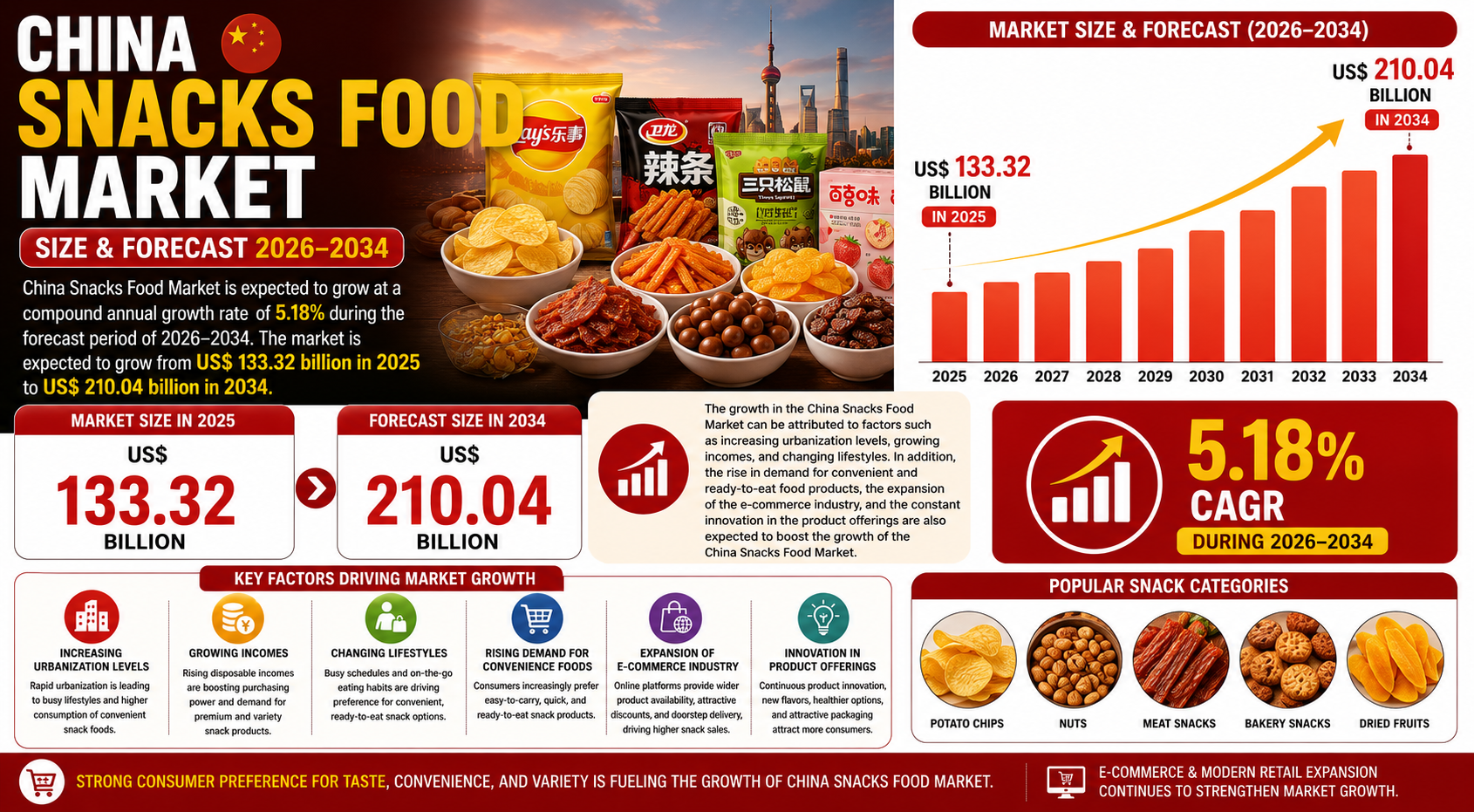
According to Renub Research, the China Snacks Food Market is projected to grow from US$ 133.32 billion in 2025 to US$ 210.04 billion by 2034, registering a compound annual growth rate (CAGR) of 5.18% between 2026 and 2034. Urbanization, changing lifestyles, product innovation, rising incomes, and expanding digital retail channels are among the primary factors fueling market expansion.
As Chinese consumers continue seeking convenience, variety, and healthier food options, the country's snack food industry is entering a new phase of innovation and growth.
Snack Foods Have Become a Daily Lifestyle Choice
Snack foods are convenient products designed for consumption between regular meals.
The category includes cookies, crackers, chips, nuts, confectionery products, dried fruits, instant snacks, pretzels, traditional regional specialties, and numerous ready-to-eat items.
One of the biggest advantages of snack foods is their convenience.
Consumers can easily carry them, store them, and consume them almost anywhere.
In China, snack consumption has expanded significantly due to increasingly busy schedules, urban living patterns, and growing exposure to global food trends.
Modern consumers are no longer purchasing snacks solely to satisfy hunger. They increasingly view snacks as enjoyable experiences that provide flavor variety, convenience, comfort, and even nutritional benefits.
This shift is helping transform snack foods into an important component of everyday consumption habits.
Urbanization Is Reshaping Food Consumption Patterns
One of the strongest growth drivers behind China's snack food market is rapid urbanization.
According to China's National Bureau of Statistics, the country's urbanization rate reached approximately 67% in 2024, continuing a decades-long trend of migration toward urban centers.
Urban lifestyles are often characterized by longer working hours, faster-paced routines, and reduced time for meal preparation.
As a result, consumers increasingly rely on convenient food solutions that fit seamlessly into busy schedules.
Working professionals, students, and young consumers represent particularly important customer groups for snack manufacturers.
The rise of single-person households has also contributed to growing snack consumption.
Many consumers seek convenient food products that require little preparation while offering satisfying flavors and portion-controlled formats.
As urban populations continue expanding, demand for snack foods is expected to remain strong.
E-Commerce Is Revolutionizing Snack Food Distribution
The rapid growth of e-commerce has become one of the most important factors supporting snack food market expansion.
Chinese consumers are among the world's most active online shoppers, and digital platforms have transformed how food products are discovered and purchased.
Online retail channels offer access to an extensive range of snack products, including both domestic and international brands.
Consumers benefit from product reviews, personalized recommendations, promotional discounts, and convenient home delivery services.
Digital platforms also enable smaller brands to reach national audiences without relying exclusively on traditional retail distribution networks.
Social commerce, live-streaming sales events, and influencer marketing campaigns have become particularly effective tools for driving snack food purchases.
As digital retail infrastructure continues advancing, online sales are expected to remain a major contributor to market growth.
Retail Expansion Is Increasing Product Accessibility
In addition to e-commerce, China's expanding retail infrastructure is supporting wider snack food consumption.
Supermarkets, hypermarkets, convenience stores, and specialty food retailers have significantly increased product availability across both urban and rural regions.
Convenience stores are especially important because they cater to consumers seeking quick and accessible food options.
Their strategic locations near residential communities, office districts, transportation hubs, and educational institutions make them ideal channels for snack food sales.
Modern retail environments also encourage impulse purchases through attractive product displays and promotional campaigns.
As China's retail ecosystem continues developing, consumers gain access to a broader variety of snack products than ever before.
Product Innovation Is Driving Consumer Interest
Innovation remains one of the most powerful growth drivers within China's snack food market.
Manufacturers continuously introduce new flavors, ingredients, textures, and packaging concepts designed to attract consumers and differentiate products.
Chinese consumers increasingly enjoy experimenting with unique and unconventional flavor combinations.
Traditional Chinese ingredients are often blended with modern snack formats to create products that balance familiarity with novelty.
Manufacturers are also introducing limited-edition products, seasonal flavors, and region-specific offerings designed to generate excitement and encourage repeat purchases.
Innovation extends beyond flavor development.
Companies are increasingly investing in packaging improvements, sustainability initiatives, and premium product positioning to strengthen brand appeal.
As consumer expectations continue evolving, innovation will remain central to market competitiveness.
Premium Snacks Are Gaining Popularity
Premiumization has become a major trend throughout China's food and beverage industry.
Consumers with rising disposable incomes increasingly seek higher-quality products that offer superior ingredients, distinctive flavors, and attractive packaging.
Premium snack foods often emphasize authenticity, craftsmanship, health benefits, or exclusive formulations.
These products appeal particularly to middle- and high-income consumers who are willing to pay more for enhanced quality and unique experiences.
The trend is especially visible in categories such as premium cookies, gourmet chips, imported snacks, and organic food products.
As consumer purchasing power continues increasing, premium snack segments are expected to experience sustained growth.
Health-Conscious Consumers Are Influencing Product Development
Growing awareness regarding nutrition and wellness is reshaping consumer preferences within the snack food market.
Many consumers are actively seeking healthier alternatives to traditional snacks that contain excessive sugar, salt, or unhealthy fats.
Manufacturers are responding by introducing products with improved nutritional profiles.
Low-sugar, high-protein, high-fiber, organic, and reduced-fat snack options are becoming increasingly common.
A notable example occurred in January 2024 when Mars China introduced a low-glycemic-index version of Snickers containing functional fibers and approximately 40% less sugar while maintaining familiar taste characteristics.
This development highlights how manufacturers are adapting to changing consumer priorities.
As wellness trends continue influencing purchasing behavior, healthier snack categories are expected to gain additional market share.
Plant-Based and Functional Snacks Are Emerging
Consumers are increasingly interested in products that provide functional benefits beyond basic nutrition.
Protein-rich snacks, energy bars, digestive health products, and plant-based alternatives are gaining popularity.
In January 2025, PepsiCo began production at its new oat-processing facility in Jiangsu, manufacturing oat-based protein bars designed to serve consumers seeking balanced nutrition and plant-based ingredients.
These products appeal to consumers focused on fitness, weight management, and overall wellness.
Functional snacks represent an important growth opportunity as consumers increasingly seek foods that support specific health goals.
Cookies Continue to Represent a Major Product Category
Cookies remain one of the largest segments within China's snack food market.
Categories such as molded cookies, rolled cookies, drop cookies, and bar cookies continue attracting strong consumer demand.
Molded cookies are particularly popular among younger consumers because of their distinctive shapes, textures, and attractive packaging.
Rolled cookies are increasingly viewed as premium products often consumed alongside tea or coffee and frequently purchased as gifts during festivals and celebrations.
Continuous innovation within cookie categories helps maintain strong consumer interest.
Organic Potato Chips Are Experiencing Growth
Organic potato chips represent one of the fastest-growing health-focused snack categories.
Consumers increasingly associate organic products with higher quality, fewer artificial ingredients, and better nutritional value.
The premium positioning of organic potato chips appeals particularly to middle- and upper-income consumers seeking healthier alternatives to conventional snack products.
As awareness regarding food quality continues increasing, organic snack categories are expected to expand further.
Regional Markets Are Driving Demand
Beijing
Beijing's large population, high purchasing power, and fast-paced lifestyle create strong demand for both traditional and modern snack foods. Health-conscious consumers increasingly seek organic and low-calorie snack options.
Shanghai
Shanghai remains one of China's most influential snack markets due to its openness to international food trends, premium products, innovative packaging, and digital commerce adoption.
Tianjin
Tianjin's growing middle class, expanding retail infrastructure, and increasing awareness of packaged food products continue supporting steady snack market growth.
Guangdong
Guangdong's strong economy, rich culinary traditions, high living standards, and international market exposure make it one of China's most dynamic snack food regions.
Challenges Facing the Industry
Growing Health Concerns
Consumers are becoming increasingly aware of the health implications associated with excessive consumption of products high in sugar, sodium, and unhealthy fats.
Manufacturers face pressure to reformulate products while maintaining flavor, affordability, and consumer appeal.
Intense Market Competition
China's snack food market is highly competitive, featuring numerous domestic and international brands.
Companies must continuously innovate while managing pricing pressures and maintaining customer loyalty in an increasingly crowded marketplace.
Final Thoughts
China's snack food industry is undergoing a period of rapid evolution driven by urbanization, digital commerce, innovation, and changing consumer preferences.
According to Renub Research, the China Snacks Food Market is expected to grow from US$ 133.32 billion in 2025 to US$ 210.04 billion by 2034, reflecting strong demand for convenient, innovative, and increasingly health-conscious snack options.
As manufacturers continue introducing premium products, healthier alternatives, and engaging consumer experiences, China's snack food market is positioned for sustained long-term growth.
The future of snacking in China will be defined not only by convenience but also by innovation, nutrition, personalization, and a consumer culture that increasingly values both enjoyment and wellness.
About the Creator
Enjoyed the story? Support the Creator.
Subscribe for free to receive all their stories in your feed.
Comments
There are no comments for this story
Be the first to respond and start the conversation.