
China Energy Drinks Market Surges as Urban Lifestyles and Gaming Culture Fuel Demand
From esports arenas to office desks, energy drinks are becoming an essential part of China's fast-paced consumer economy

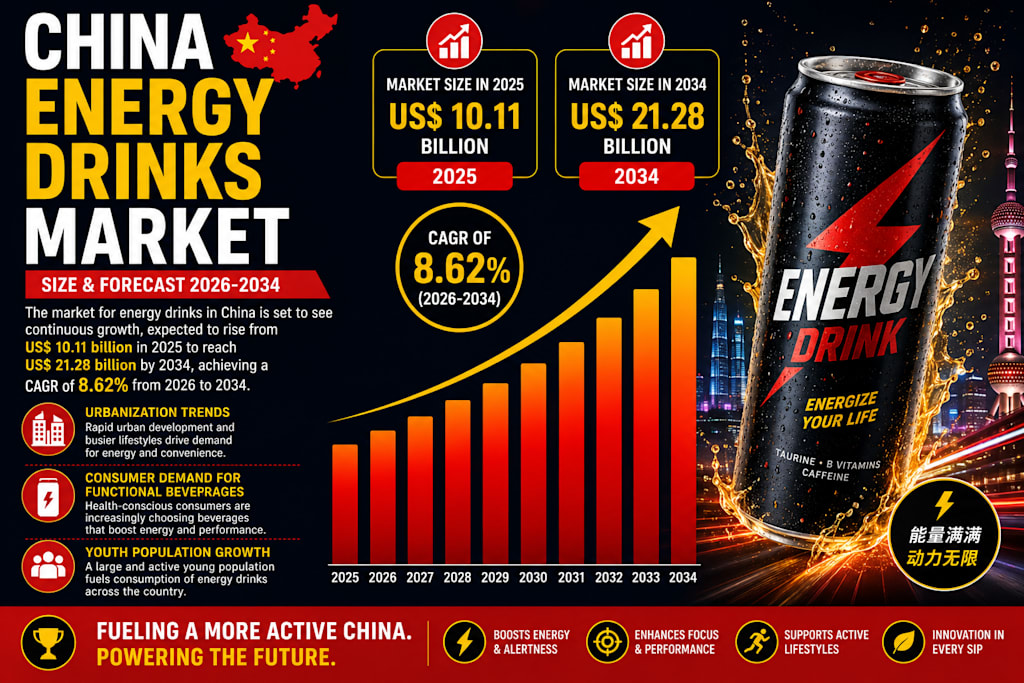
China's energy drinks market is entering a remarkable phase of expansion, driven by rapid urbanization, evolving consumer lifestyles, and growing demand for functional beverages. As modern consumers seek convenient ways to stay energized and productive, energy drinks have become a popular solution for students, professionals, gamers, and athletes alike.
According to Renub Research, the China Energy Drinks Market is expected to grow from US$ 10.11 billion in 2025 to US$ 21.28 billion by 2034, registering a CAGR of 8.62% between 2026 and 2034. Rising urban populations, increasing work pressure, a growing youth demographic, and continuous product innovation are among the major factors fueling this impressive growth trajectory.
As one of the world's largest consumer markets, China presents enormous opportunities for both domestic and international beverage companies. However, competition is intensifying as brands race to capture the attention of a generation that values convenience, performance, and lifestyle-oriented products.
Understanding the Growing Appeal of Energy Drinks
Energy drinks are specially formulated beverages designed to provide a temporary boost in energy, alertness, and concentration. Most products contain ingredients such as:
- Caffeine
- Taurine
- B Vitamins
- Sugar or sweeteners
- Amino acids
- Herbal extracts
These beverages are marketed as solutions for fatigue, mental focus, and physical performance enhancement.
In China, energy drinks have become increasingly popular among people facing demanding schedules and competitive environments. Whether preparing for university entrance examinations, working extended hours, participating in esports competitions, or managing busy professional careers, consumers often turn to energy drinks as a quick source of stimulation.
The accessibility and affordability of these products have further accelerated their adoption. Today, energy drinks can be found in supermarkets, convenience stores, vending machines, and online retail platforms throughout the country. Their widespread availability, combined with aggressive marketing campaigns and strong brand recognition, continues to drive consumption.
Urbanization Is Reshaping Consumer Habits
One of the most significant factors supporting growth in China's energy drinks market is the country's rapid urbanization.
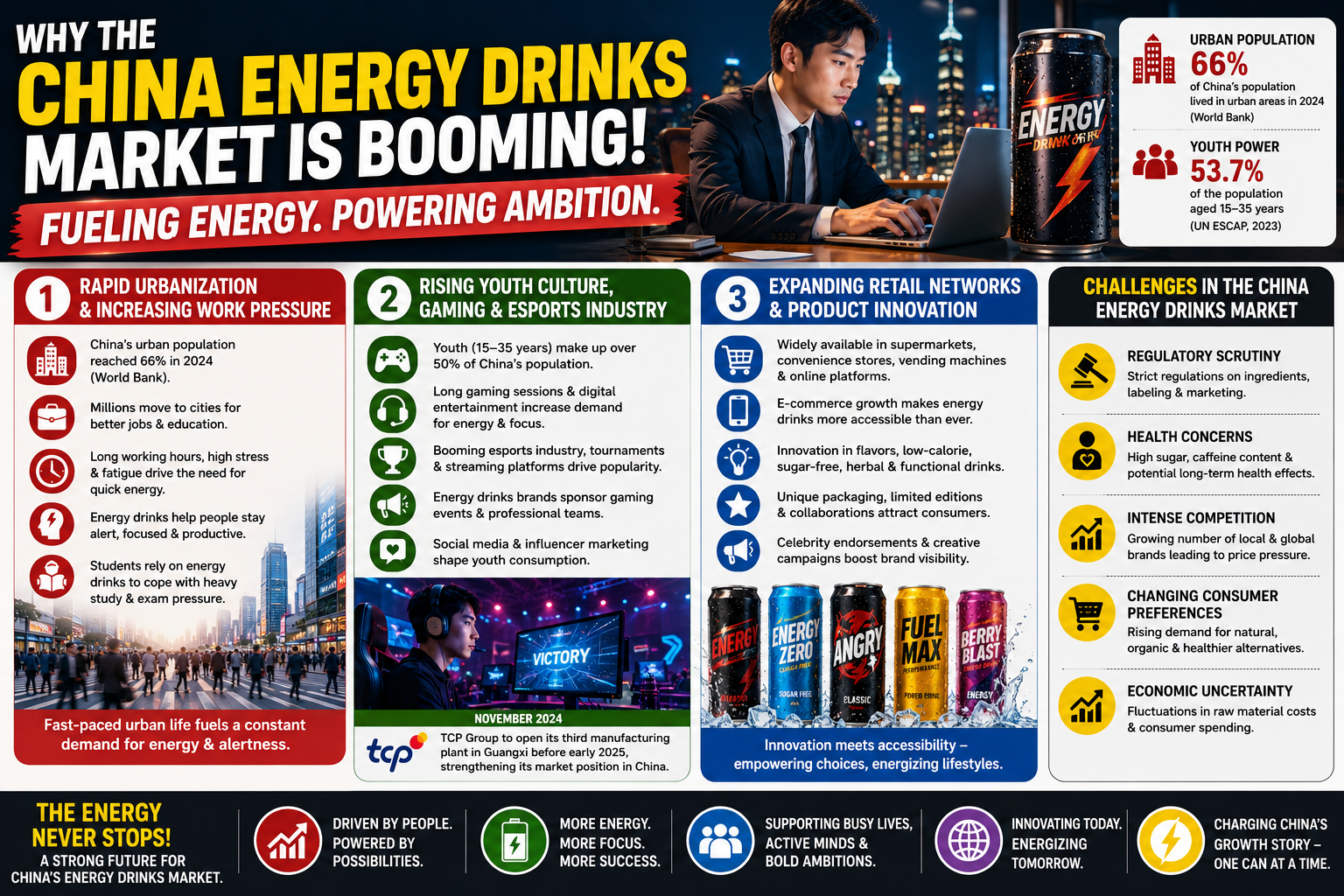
According to World Bank data referenced in industry research, approximately 66% of China's population lived in urban areas in 2024. The migration of millions of people from rural communities to cities has transformed lifestyles, work patterns, and consumption behaviors.
Urban residents often face:
- Longer working hours
- Higher academic pressures
- Increased commuting times
- Competitive professional environments
- Faster-paced daily routines
These conditions create strong demand for products that help maintain alertness and productivity.
Corporate employees frequently rely on energy drinks during extended workdays, while factory workers and service-sector employees often use them to combat fatigue during long shifts. Similarly, students preparing for highly competitive examinations increasingly consume energy drinks to sustain concentration during intensive study sessions.
China's well-known "overwork culture" in many metropolitan regions has further reinforced demand for functional beverages that promise quick and convenient energy enhancement.
As urbanization continues to expand across second-tier and third-tier cities, the consumer base for energy drinks is expected to grow even further.
Esports and Gaming Culture Are Powering Consumption
Few industries have influenced China's energy drinks market as dramatically as gaming and esports.
China is home to one of the world's largest gaming communities, with millions of young consumers spending significant amounts of time on online gaming, streaming platforms, and digital entertainment.
Research cited in the market report indicates that individuals between the ages of 15 and 35 represent a substantial share of China's population, making youth culture a powerful force within the consumer economy.
Energy drinks have become closely associated with gaming culture because consumers often perceive them as tools that can improve:
- Focus
- Reaction speed
- Mental alertness
- Endurance during extended gaming sessions
Esports tournaments, professional gaming teams, and streaming platforms have become highly effective marketing channels for beverage brands.
Manufacturers increasingly sponsor:
- Esports competitions
- Professional gamers
- Gaming influencers
- Streaming events
- Online entertainment platforms
These partnerships help brands connect directly with younger audiences while reinforcing their image as performance-enhancing products.
Social media has further amplified this trend by allowing energy drink companies to engage consumers through influencer marketing, digital campaigns, and interactive promotions.
A notable example of market confidence emerged in November 2024 when TCP Group announced plans to establish its third manufacturing facility in Guangxi as part of its broader strategy to strengthen its position within China's energy drinks sector.
Product Innovation Is Expanding Consumer Appeal
Innovation has become one of the most important competitive strategies in China's energy drinks market.
Today's consumers are no longer satisfied with traditional high-sugar formulations. Instead, they increasingly seek products that align with health-conscious lifestyles while still delivering functional benefits.
Manufacturers are responding by introducing:
- Sugar-free energy drinks
- Low-calorie formulations
- Herbal energy beverages
- Vitamin-enriched products
- Functional wellness drinks
- Customized flavors
These innovations allow companies to attract new customer segments while differentiating themselves in an increasingly crowded marketplace.
Packaging innovation also plays a critical role. Eye-catching designs, limited-edition products, and personalized branding campaigns help companies stand out on retail shelves and online marketplaces.
Celebrity endorsements remain particularly influential in China, where consumer purchasing decisions are often shaped by entertainment personalities, athletes, and digital influencers.
As competition intensifies, continuous innovation will likely remain essential for maintaining market relevance and consumer engagement.
Retail Expansion Supports Market Growth
The strength of China's retail infrastructure is another major factor contributing to energy drink consumption.
Consumers can easily purchase energy drinks through multiple channels, including:
- Hypermarkets
- Supermarkets
- Convenience stores
- Food service outlets
- Online retailers
- Vending machines
The rapid growth of e-commerce has significantly expanded access, particularly among younger consumers who prefer digital shopping experiences.
Online platforms enable beverage brands to:
- Launch new products quickly
- Reach broader audiences
- Gather consumer feedback
- Conduct targeted marketing campaigns
Meanwhile, convenience stores continue to serve as one of the most important distribution channels due to their accessibility and extended operating hours.
The combination of physical and digital retail channels ensures that energy drinks remain readily available across urban and semi-urban markets.
Convenience Stores Remain a Key Sales Channel
Convenience stores play an especially important role in China's energy drinks ecosystem.
Located throughout city centers, transportation hubs, residential neighborhoods, and business districts, convenience stores provide consumers with immediate access to beverages whenever needed.
Several factors contribute to strong sales performance:
- High visibility near checkout counters
- Refrigerated display units
- Impulse purchasing behavior
- Extended operating hours
- Proximity to workplaces and schools
Many stores operate 24 hours a day, making them ideal locations for consumers working night shifts, studying late, or traveling.
Strategic partnerships between beverage manufacturers and convenience store chains also help promote new products and enhance brand visibility.
As urban populations continue expanding, convenience stores are expected to remain a crucial component of the market's growth strategy.
Packaging Trends Are Influencing Consumer Preferences
Packaging plays a significant role in shaping purchasing decisions within the energy drinks market.
PET Bottles Lead the Market
PET bottles remain the most popular packaging format due to:
- Affordability
- Portability
- Re-sealable caps
- Lightweight design
- Wide availability
These characteristics make PET bottles particularly attractive for students, office workers, and travelers. Despite environmental concerns related to plastic waste, manufacturers are increasingly exploring recyclable and eco-friendly alternatives.
Canned Energy Drinks Maintain Premium Appeal
Energy drinks sold in cans continue to attract consumers seeking premium products.
Cans offer:
- Longer shelf life
- Strong branding opportunities
- Better cooling performance
- Enhanced visual appeal
Younger consumers, especially gamers and professionals, often associate canned energy drinks with international brands and lifestyle-oriented marketing. However, higher pricing can limit adoption among cost-sensitive consumers.
Health Concerns Present New Challenges
Despite strong market growth, energy drink manufacturers face increasing scrutiny regarding health and wellness.
Many traditional energy drinks contain high levels of sugar and caffeine, which have been associated with:
- Insomnia
- Anxiety
- Increased heart rate
- Palpitations
- Potential cardiovascular concerns
As Chinese consumers become more health conscious, there is growing demand for healthier alternatives.
Manufacturers are under pressure to reformulate products by:
- Reducing sugar content
- Lowering caffeine levels
- Using natural ingredients
- Improving nutritional profiles
At the same time, regulators are paying closer attention to product labeling, advertising practices, and marketing directed toward younger consumers. Stricter oversight could influence future growth strategies within the industry.
Competition Is Intensifying Across the Market
China's energy drinks sector has become highly competitive, with both international giants and domestic manufacturers competing aggressively for market share.
Companies face challenges such as:
- Price wars
- Marketing expenses
- Brand differentiation difficulties
- Low consumer loyalty
- Functional beverage competition
Consumers frequently switch brands based on pricing, promotions, convenience, and product availability.
In addition to traditional energy drinks, brands must now compete with:
- Sports drinks
- Functional waters
- Nutritional beverages
- Wellness-focused drinks
As market saturation increases, successful companies will need to invest heavily in branding, innovation, and customer engagement strategies to maintain a competitive advantage.
Regional Markets Driving Growth
Beijing
As China's political and educational center, Beijing maintains a highly developed energy drinks market. The city's demanding work culture, large student population, and strong purchasing power support consistent demand. Premium and health-focused products perform particularly well among consumers.
Shanghai
Shanghai's position as a global financial hub makes it one of the most dynamic energy drink markets in the country. Long working hours, an active nightlife scene, and a large population of young professionals contribute to strong consumption levels.
Jiangsu
Jiangsu benefits from rapid industrial development and rising disposable incomes. Demand is fueled by manufacturing workers, logistics professionals, and students, creating opportunities for both domestic and international brands.
Fujian
Economic growth, expanding trade activity, and a young workforce continue supporting demand in Fujian. Convenience stores, supermarkets, and online retail channels play important roles in market development across the province.
Final Thoughts
China's energy drinks market is experiencing significant momentum as urbanization, youth culture, esports, and functional beverage trends reshape consumer preferences.
With the market projected to expand from US$ 10.11 billion in 2025 to US$ 21.28 billion by 2034, energy drinks are expected to remain an important part of China's fast-moving consumer goods sector.
While health concerns and intense competition present challenges, the industry's ability to innovate and adapt will determine its long-term success. Companies that balance performance, convenience, wellness, and sustainability are likely to emerge as leaders in the next phase of market growth.
As China's consumers continue embracing active, digitally connected lifestyles, the demand for functional beverages that enhance focus, energy, and productivity shows little sign of slowing down.
About the Creator
Enjoyed the story? Support the Creator.
Subscribe for free to receive all their stories in your feed.
Comments
There are no comments for this story
Be the first to respond and start the conversation.