
Children’s Wear Market: Fashion, Comfort, and Digital Retail Are Shaping the Future of Kids’ Apparel
Expected to grow from US$ 291.33 billion in 2025 to US$ 493.03 billion by 2034, the children’s wear market is evolving through rising incomes, fashion trends, and e-commerce expansion.

A Rapidly Evolving Market Driven by Modern Parenting Trends
The children’s wear market has transformed into one of the most dynamic segments within the global apparel industry. What was once a purely functional category—focused on durability and affordability—has now become a vibrant, trend-driven market shaped by fashion, comfort, sustainability, and digital innovation.
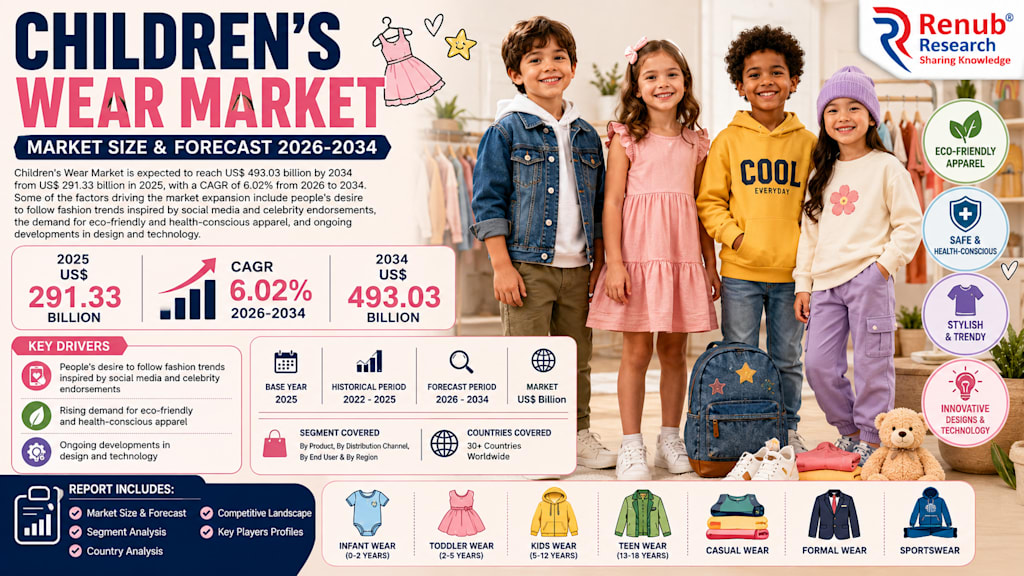
According to the latest insights, the children’s wear market is projected to expand from US$ 291.33 billion in 2025 to US$ 493.03 billion by 2034, growing at a CAGR of 6.02% from 2026 to 2034.
This growth reflects a deeper shift in consumer behavior. Today’s parents are more informed, style-conscious, and quality-focused than ever before. They seek clothing that balances comfort, safety, durability, and aesthetics—while also aligning with broader lifestyle values such as sustainability and ethical production.
Children’s wear is no longer just about dressing kids—it is about expressing identity, ensuring comfort, and embracing modern parenting ideals.
Industry Overview: A Blend of Style, Safety, and Functionality
The children’s wear industry encompasses clothing for infants, toddlers, preschoolers, and school-age children. It includes a wide range of categories such as casual wear, school uniforms, sportswear, festive attire, and seasonal collections.
One of the most defining characteristics of this market is the need to balance multiple priorities. Parents look for clothing that is comfortable, skin-friendly, and safe, while also being stylish and durable. This has driven innovation in fabric selection, design, and manufacturing processes.
Natural and breathable materials such as cotton and organic blends are increasingly preferred, particularly for infants and toddlers. Safety standards related to dyes, fasteners, and fabric treatments are also critical, ensuring that products meet regulatory requirements and parental expectations.
At the same time, fashion has become a major influence. Mini-me collections, character-themed clothing, and trend-driven designs are gaining popularity, reflecting the growing impact of media, celebrities, and social platforms.
The result is a market that is both functional and fashionable—meeting the needs of parents while appealing to the preferences of children.
Rising Disposable Income Is Expanding Market Opportunities
One of the strongest growth drivers for the children’s wear market is the increase in disposable income, particularly in emerging economies. As household incomes rise, parents are willing to spend more on quality clothing for their children.
This shift is especially evident in urban areas, where dual-income households have greater purchasing power. Parents increasingly view children’s clothing as an investment—not just in comfort, but also in appearance and social identity.
The expanding middle class in regions such as Asia-Pacific, Latin America, and the Middle East is further fueling demand. Consumers in these markets are seeking a wider variety of products, from everyday wear to premium and branded collections.
This trend is also driving growth in niche segments such as eco-friendly clothing. Parents are becoming more conscious of environmental impact and are willing to pay a premium for sustainable products.
Fashion and Media Influence Are Reshaping Demand
Fashion is playing an increasingly important role in the children’s wear market. Social media, digital platforms, and celebrity culture have exposed parents and children to global fashion trends, influencing purchasing decisions.
Mini-me fashion—where children’s clothing mirrors adult styles—has become particularly popular. Character-themed apparel, inspired by movies, cartoons, and popular culture, also drives strong demand.
Children themselves are becoming more involved in choosing their clothing, especially as they grow older. This shift is encouraging brands to create designs that appeal directly to young consumers while still meeting parental expectations.
Seasonal collections, collaborations with entertainment franchises, and limited-edition releases are further boosting engagement. These strategies create excitement and urgency, encouraging repeat purchases and brand loyalty.
E-Commerce and Omnichannel Retail Are Driving Accessibility
The rise of e-commerce has revolutionized how children’s wear is bought and sold. Online platforms offer convenience, variety, and competitive pricing, making them highly attractive to busy parents.
Consumers can browse a wide range of brands, compare prices, and access detailed size guides—all from the comfort of their homes. Easy return policies and customer reviews further enhance the shopping experience.
Omnichannel retail is also gaining traction, combining the strengths of online and offline shopping. Parents can explore products online and visit stores for fitting and tactile experiences, creating a seamless purchasing journey.
Mobile commerce and social shopping are additional growth drivers, particularly in urban and semi-urban regions. These channels make children’s wear more accessible, expanding the market’s reach and boosting overall sales.
Challenges: Fast Fashion Cycles and Price Sensitivity
Despite its strong growth, the children’s wear market faces several challenges that require careful management.
One of the most significant issues is the rapid pace of fashion cycles. Trends change quickly, making it difficult for retailers to predict demand accurately. Managing inventory across multiple sizes, styles, and age groups adds to the complexity.
Children also outgrow clothing quickly, which increases pressure on retailers to maintain high inventory turnover. Overstocking can lead to discounting and waste, while stockouts can result in lost sales and customer dissatisfaction.
Price sensitivity is another challenge. While parents seek quality and style, budget constraints often influence purchasing decisions. This creates intense competition among brands, ranging from fast fashion retailers to premium labels.
To succeed in this environment, companies must strike a balance between affordability, quality, and differentiation. Innovation, branding, and efficient supply chain management are critical to maintaining competitiveness.
Regional Insights: Growth Across Global Markets
The United States remains a leading market for children’s wear, driven by strong consumer spending, fashion awareness, and digital adoption. Parents in the U.S. prioritize comfort, safety, and style, creating demand for both everyday and premium apparel.
The United Kingdom is another mature market, characterized by high consumer awareness and a preference for quality and sustainability. UK consumers are increasingly seeking eco-friendly and durable clothing options.
India is one of the fastest-growing markets, supported by a large young population, rising incomes, and increasing urbanization. E-commerce platforms are playing a key role in expanding access to branded and fashionable clothing.
The United Arab Emirates represents a growing market driven by high disposable incomes and a cosmopolitan population. Demand for premium and branded children’s wear is particularly strong in this region.
Recent Developments Highlight Innovation
Recent developments in the children’s wear market demonstrate the industry’s focus on innovation and differentiation.
In July 2025, Paragon introduced FreshFeet, a line of kids’ shoes featuring Dual Fit Tech technology designed to adapt to children’s growing feet. This innovation addresses a key challenge in children’s footwear by extending product usability.
In April 2025, Rag & Bon launched its Miramar children’s collection, combining the look of denim with the comfort of sweatpants. This reflects the growing demand for versatile, comfortable clothing.
In March 2025, Vogue Williams introduced the Gen kidswear brand through major online platforms, focusing on durability, adaptability, and playful design.
Reebok also launched a Sesame Street-inspired sneaker collection, highlighting the continued popularity of character-themed products in driving consumer engagement.
These developments show how brands are blending functionality, comfort, and creativity to capture consumer interest.
Market Segmentation: A Broad and Diverse Category
The children’s wear market is segmented by product category, consumer group, and distribution channel.
Apparel remains the dominant segment, followed by footwear and accessories. Within apparel, categories range from everyday wear to formal and seasonal clothing.
Consumer groups include infants, toddlers, preschoolers, and school-age children, each with distinct needs and preferences. This segmentation requires brands to offer a wide variety of sizes, styles, and features.
Distribution channels include both offline and online platforms. While physical stores provide fitting and immediate purchase options, online channels offer convenience and broader product selection.
This diversity makes the market highly competitive but also creates opportunities for innovation and specialization.
The Future Outlook: Sustainability, Personalization, and Innovation
The future of the children’s wear market will be shaped by several key trends.
Sustainability is expected to play an increasingly important role, with more brands adopting eco-friendly materials and ethical production practices. Parents are becoming more conscious of environmental impact, influencing purchasing decisions.
Personalization will also gain importance. Customized clothing, tailored recommendations, and subscription services are likely to enhance customer engagement and loyalty.
Technological advancements in design, manufacturing, and retail will continue to drive innovation. From smart fabrics to digital shopping experiences, the industry is evolving rapidly.
As these trends converge, the children’s wear market will become more dynamic, responsive, and consumer-centric.
Final Thoughts
The children’s wear market is no longer just about clothing—it is about lifestyle, identity, and innovation. With projected growth from US$ 291.33 billion in 2025 to US$ 493.03 billion by 2034, the sector is poised for a strong and sustained expansion.
Driven by rising incomes, evolving fashion trends, and digital transformation, the market offers significant opportunities for brands that can adapt to changing consumer expectations.
For businesses, the key to success lies in understanding modern parenting needs, embracing sustainability, and leveraging technology to deliver value. For consumers, it means access to better, more stylish, and more comfortable clothing for the next generation.
About the Creator
Enjoyed the story? Support the Creator.
Subscribe for free to receive all their stories in your feed.
Comments
There are no comments for this story
Be the first to respond and start the conversation.