
Cataract Surgery Devices Market Set to Reach US$12.78 Billion by 2034 as Aging Populations and Advanced Eye Care Technologies Drive Growth
Rising cataract prevalence, expanding access to ophthalmic care, and technological innovations in surgical devices are fueling steady growth across the global cataract surgery devices industry.

Introduction: Restoring Vision Through Modern Surgical Innovation
Vision is one of the most important senses, yet millions of people worldwide experience vision impairment caused by cataracts every year. As populations age and life expectancy continues to increase, cataracts have become one of the leading causes of visual impairment and blindness globally.
Fortunately, advances in ophthalmic technology have transformed cataract surgery into one of the safest and most successful medical procedures available today. Modern cataract surgery devices enable surgeons to remove cloudy lenses with exceptional precision and replace them with advanced artificial lenses that restore vision and improve quality of life.
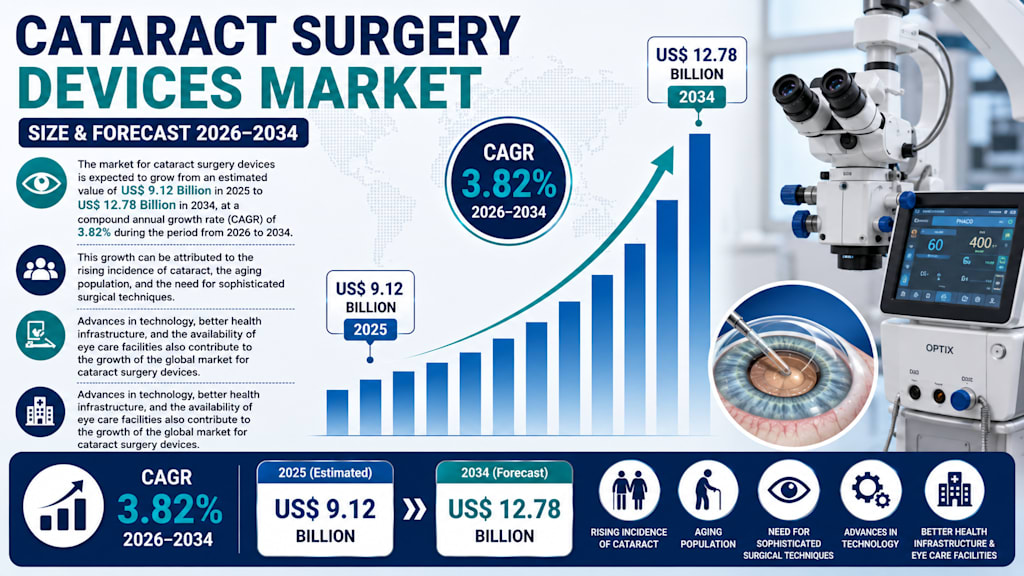
According to Renub Research, the Global Cataract Surgery Devices Market is expected to grow from US$ 9.12 billion in 2025 to US$ 12.78 billion by 2034, registering a compound annual growth rate (CAGR) of 3.82% between 2026 and 2034. Rising cataract prevalence, a rapidly aging global population, advances in surgical technology, and improved healthcare infrastructure are driving market expansion.
As governments, healthcare providers, and medical device manufacturers continue prioritizing vision care, cataract surgery devices are expected to remain essential tools in the global fight against preventable blindness.
Understanding Cataracts and Modern Surgical Treatment
A cataract is a medical condition in which the natural lens of the eye becomes cloudy, causing blurred vision, reduced visual clarity, and, in severe cases, blindness. Cataracts typically develop gradually and are most commonly associated with aging.
Cataract surgery is currently the only effective long-term treatment. During the procedure, the cloudy lens is removed and replaced with an artificial intraocular lens (IOL), restoring vision and improving visual performance. Modern cataract surgery relies on a range of sophisticated devices and technologies designed to enhance precision, safety, and patient outcomes.
These technologies include phacoemulsification systems, femtosecond lasers, surgical microscopes, fluid management systems, and advanced intraocular lenses.
Today, cataract surgery is performed millions of times annually worldwide and is widely regarded as one of the most successful surgical procedures in modern medicine.
Aging Populations Continue to Fuel Market Demand
One of the strongest drivers of the cataract surgery devices market is the rapid growth of the global elderly population.
Cataracts are strongly associated with aging and occur more frequently among individuals over the age of 60. As life expectancy continues increasing worldwide, the number of people requiring cataract treatment is rising significantly.
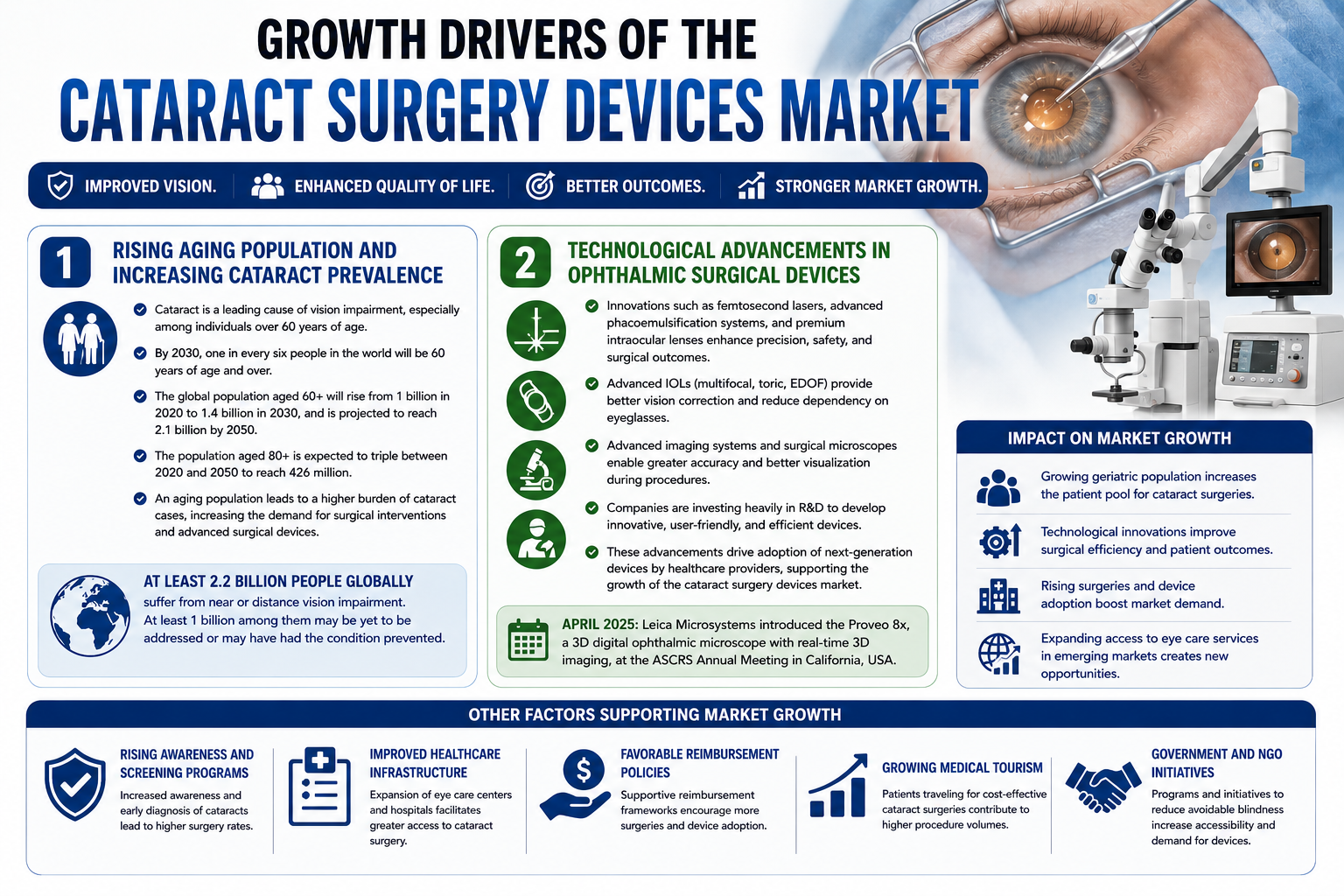
The report highlights that by 2030, one in every six people globally will be aged 60 years or older, with the population of older adults expected to reach 1.4 billion people. By 2050, this figure is projected to increase to 2.1 billion, while the population aged 80 years and older is expected to triple to approximately 426 million people.
This demographic shift is creating substantial demand for ophthalmic services and cataract surgery procedures.
As populations continue aging across developed and emerging economies, the need for advanced cataract surgery devices is expected to grow steadily.
Vision Impairment Remains a Major Global Health Challenge
The increasing prevalence of vision impairment is another major factor supporting market growth.
According to data highlighted in the report, approximately 2.2 billion people worldwide live with near or distance vision impairment, and at least 1 billion cases could potentially have been prevented or remain untreated. Cataracts account for a substantial portion of these cases.
Untreated cataracts can significantly affect daily activities, independence, mobility, and overall quality of life.
As awareness regarding eye health and preventive care continues improving, more individuals are seeking early diagnosis and treatment for cataracts.
The growing recognition of vision care as a public health priority is expected to drive continued investment in cataract treatment technologies.
Technological Innovation Is Transforming Eye Surgery
Continuous innovation in ophthalmic surgical devices is significantly improving cataract treatment outcomes.
Modern technologies allow surgeons to perform procedures with greater precision, enhanced safety, and faster recovery times. Innovations such as femtosecond lasers, advanced phacoemulsification systems, and premium intraocular lenses have revolutionized cataract surgery over the past decade.
Advanced imaging systems and digital surgical microscopes also help surgeons visualize anatomical structures more clearly, improving procedural accuracy.
The report highlights Leica Microsystems' introduction of the Proveo 8x 3D digital ophthalmic microscope, which offers real-time three-dimensional imaging capabilities designed to enhance surgical precision.
As manufacturers continue investing in research and development, future innovations are expected to further improve patient outcomes and surgical efficiency.
Expanding Healthcare Infrastructure Supports Market Growth
Improving healthcare infrastructure worldwide is making cataract treatment more accessible to larger populations.
Many countries are investing in hospitals, specialty eye care centers, surgical facilities, and public health programs focused on preventing blindness and improving vision care. These investments are increasing the availability of cataract surgery services, particularly in developing economies.
Government initiatives aimed at early diagnosis and treatment are encouraging patients to seek medical attention before vision impairment becomes severe.
The report notes that the World Health Organization launched the SPECS 2030 initiative to help countries improve access to vision care services and support global eye health objectives.
As healthcare accessibility improves, demand for cataract surgery devices is expected to increase substantially.
Intraocular Lenses Represent a Critical Market Segment
The intraocular lens (IOL) segment remains one of the most important components of the cataract surgery devices market.
After the cloudy natural lens is removed, an intraocular lens is implanted to restore visual function. Advances in lens technology have significantly improved patient outcomes and expanded treatment options.
Premium IOLs, including multifocal, toric, and extended depth-of-focus lenses, allow patients to achieve clearer vision at various distances while reducing dependence on eyeglasses.
Growing awareness regarding the benefits of premium lenses is contributing to increased adoption.
As cataract surgery volumes continue rising, demand for advanced intraocular lens technologies is expected to remain strong.
Femtosecond Lasers Continue Gaining Popularity
The femtosecond laser segment is experiencing significant growth due to its ability to improve surgical precision and consistency.
These lasers utilize ultra-short pulses to perform critical steps of cataract surgery with exceptional accuracy. Compared with traditional manual techniques, femtosecond laser-assisted procedures offer enhanced reproducibility and may improve surgical outcomes.
The technology assists surgeons in creating precise incisions, fragmenting cataracts, and improving intraocular lens positioning.
Although femtosecond laser systems involve substantial investment costs, healthcare providers increasingly recognize their value in delivering advanced patient care.
As demand for minimally invasive procedures continues growing, adoption of femtosecond laser technologies is expected to increase.
Hospitals Remain the Largest End Users
Hospitals continue to represent the largest end-user segment within the cataract surgery devices market.
Large hospitals typically possess advanced surgical infrastructure, highly trained ophthalmologists, and access to sophisticated equipment such as phacoemulsification systems, femtosecond lasers, and surgical microscopes.
Government hospitals also play an important role in providing affordable cataract treatment to broad patient populations.
The increasing number of cataract procedures being performed worldwide continues driving demand for advanced surgical technologies within hospital settings.
As healthcare systems expand their ophthalmic capabilities, hospitals are expected to remain key contributors to market growth.
Ophthalmic Clinics Continue Expanding Their Role
Specialized ophthalmic clinics are becoming increasingly important within the cataract surgery ecosystem.
These facilities focus exclusively on eye care services and often provide faster treatment, shorter waiting times, and highly specialized patient care. Many clinics invest heavily in advanced surgical technologies to maintain competitive advantages and improve patient experiences.
The growth of outpatient surgery models has further strengthened the position of ophthalmic clinics.
Patients increasingly appreciate the convenience and efficiency offered by specialized eye care centers.
As private healthcare investment continues increasing, ophthalmic clinics are expected to perform a growing share of cataract surgeries globally.
Regional Markets Continue to Expand
United States
The United States remains one of the largest cataract surgery devices markets globally due to advanced healthcare infrastructure, strong insurance coverage, and widespread adoption of innovative surgical technologies.
The report highlights Alcon's launch of the UNITY Vitreoretinal Cataract System and UNITY Cataract System, featuring advanced technologies designed to improve efficiency and surgical outcomes.
United Kingdom
The United Kingdom market continues growing due to increasing cataract incidence and strong support from the National Health Service (NHS).
Private healthcare providers also contribute to market expansion by offering faster access to treatment and advanced surgical solutions. The report notes that Optegra introduced a "drop-free" cataract surgery technique across its UK facilities in 2025.
India
India represents one of the most important growth markets due to its large population, significant cataract burden, and government-supported blindness prevention programs.
The expansion of eye care facilities and medical tourism is further supporting demand for cataract surgery technologies.
Saudi Arabia
Saudi Arabia is witnessing strong growth through healthcare modernization initiatives and increased investment in specialized eye care services.
The report highlights Alcon's opening of its first Experience Center in Jeddah along with partnerships designed to strengthen ophthalmic surgical training.
Challenges Continue to Affect Market Growth
Despite favorable growth prospects, several challenges remain.
One major concern is the high cost of advanced surgical technologies. Sophisticated devices such as femtosecond laser systems and premium intraocular lenses require substantial investment, which can limit adoption in cost-sensitive healthcare environments.
Another challenge is the shortage of skilled ophthalmologists and specialized surgical professionals in certain regions.
Advanced cataract surgery techniques require extensive training and expertise. In some developing and rural areas, limited access to qualified healthcare professionals restricts procedure availability and technology adoption.
Addressing workforce shortages and improving access to training will be essential for sustaining long-term market growth.
Leading Companies Driving Innovation
The cataract surgery devices market includes several major medical technology companies focused on advancing ophthalmic care and surgical outcomes.
Key companies highlighted in the report include Alcon Inc., Johnson & Johnson, Carl Zeiss Meditec AG, Bausch & Lomb Inc., Topcon Corporation, STAAR Surgical Company, Glaukos Corporation, and Abbott Laboratories. These organizations continue investing in surgical technologies, intraocular lenses, imaging systems, and advanced ophthalmic solutions.
Their innovations are helping shape the future of vision restoration and eye care worldwide.
Final Thoughts
The global cataract surgery devices market is positioned for steady growth as aging populations, increasing cataract prevalence, and technological innovation continue driving demand for advanced ophthalmic solutions.
With the market projected to grow from US$ 9.12 billion in 2025 to US$ 12.78 billion by 2034, cataract surgery devices will remain essential tools in restoring vision and improving quality of life for millions of patients worldwide. Advances in intraocular lenses, femtosecond laser systems, imaging technologies, and minimally invasive surgical techniques are creating significant opportunities throughout the industry
About the Creator
Enjoyed the story? Support the Creator.
Subscribe for free to receive all their stories in your feed.
Comments
There are no comments for this story
Be the first to respond and start the conversation.