
Carpet Market Growth Gains Momentum as Construction, Interior Design, and Sustainable Flooring Trends Drive Global Demand
Rising residential construction, increasing consumer focus on home décor, and innovations in eco-friendly carpet manufacturing are shaping the future of the global carpet industry.

Flooring plays a critical role in defining the comfort, functionality, and aesthetic appeal of residential and commercial spaces. Among the many flooring solutions available today, carpets continue to maintain a strong presence due to their versatility, comfort, insulation benefits, and ability to enhance interior environments. As consumers increasingly invest in home improvement and businesses focus on creating welcoming spaces, carpets remain an essential component of modern interior design.
The global carpet industry has evolved significantly over the past decade. Manufacturers are introducing innovative materials, sustainable production techniques, and customized designs that appeal to changing consumer preferences. At the same time, rapid urbanization, expanding construction activities, and rising disposable incomes are contributing to growing demand for flooring solutions worldwide.
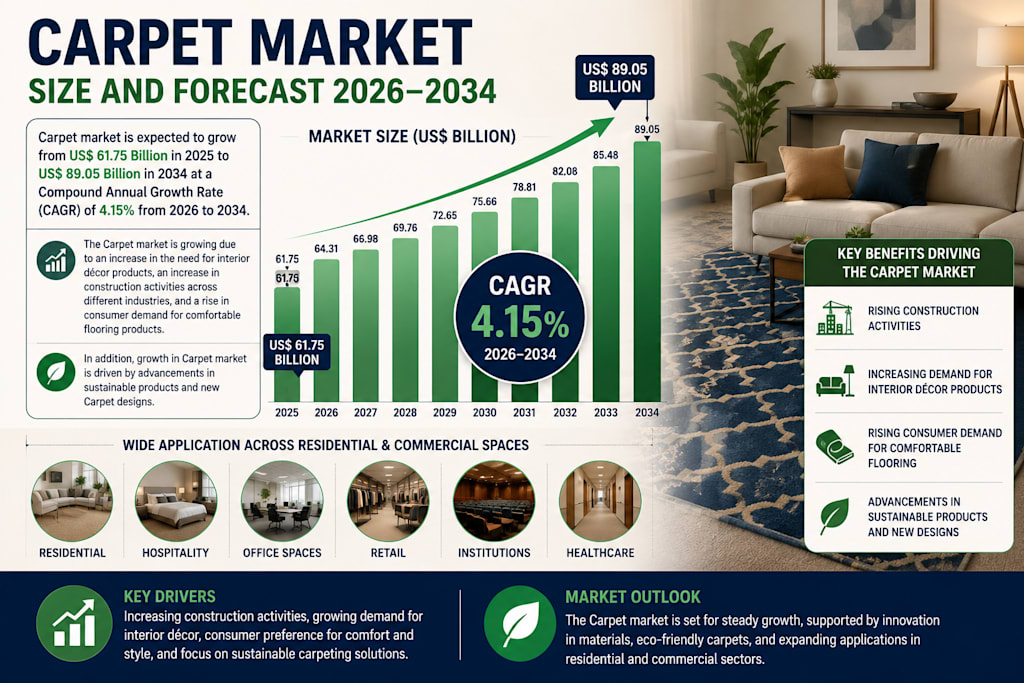
According to Renub Research, the global Carpet Market is expected to grow from US$ 61.75 billion in 2025 to US$ 89.05 billion by 2034, expanding at a compound annual growth rate (CAGR) of 4.15% between 2026 and 2034. This growth reflects increasing demand from residential, commercial, and hospitality sectors, alongside continued innovation in carpet manufacturing and design.
Carpets Continue to Play a Vital Role in Interior Spaces
Carpets have long been valued for their ability to provide comfort, warmth, and visual appeal. Made from natural fibers such as wool or synthetic materials including nylon, polyester, polypropylene, and acrylic, carpets are widely used in homes, offices, hotels, educational institutions, and retail environments.
Unlike hard flooring surfaces, carpets create a softer and more comfortable walking experience. They also contribute to noise reduction, thermal insulation, and improved indoor aesthetics. Available in countless styles, textures, colors, and patterns, carpets offer homeowners and designers extensive flexibility when creating personalized spaces.
As interior design continues to gain importance among consumers, carpets remain a preferred choice for enhancing both residential and commercial environments. Their ability to combine functionality with decorative appeal has helped sustain strong demand across global markets.
Construction Growth Is Driving Carpet Demand
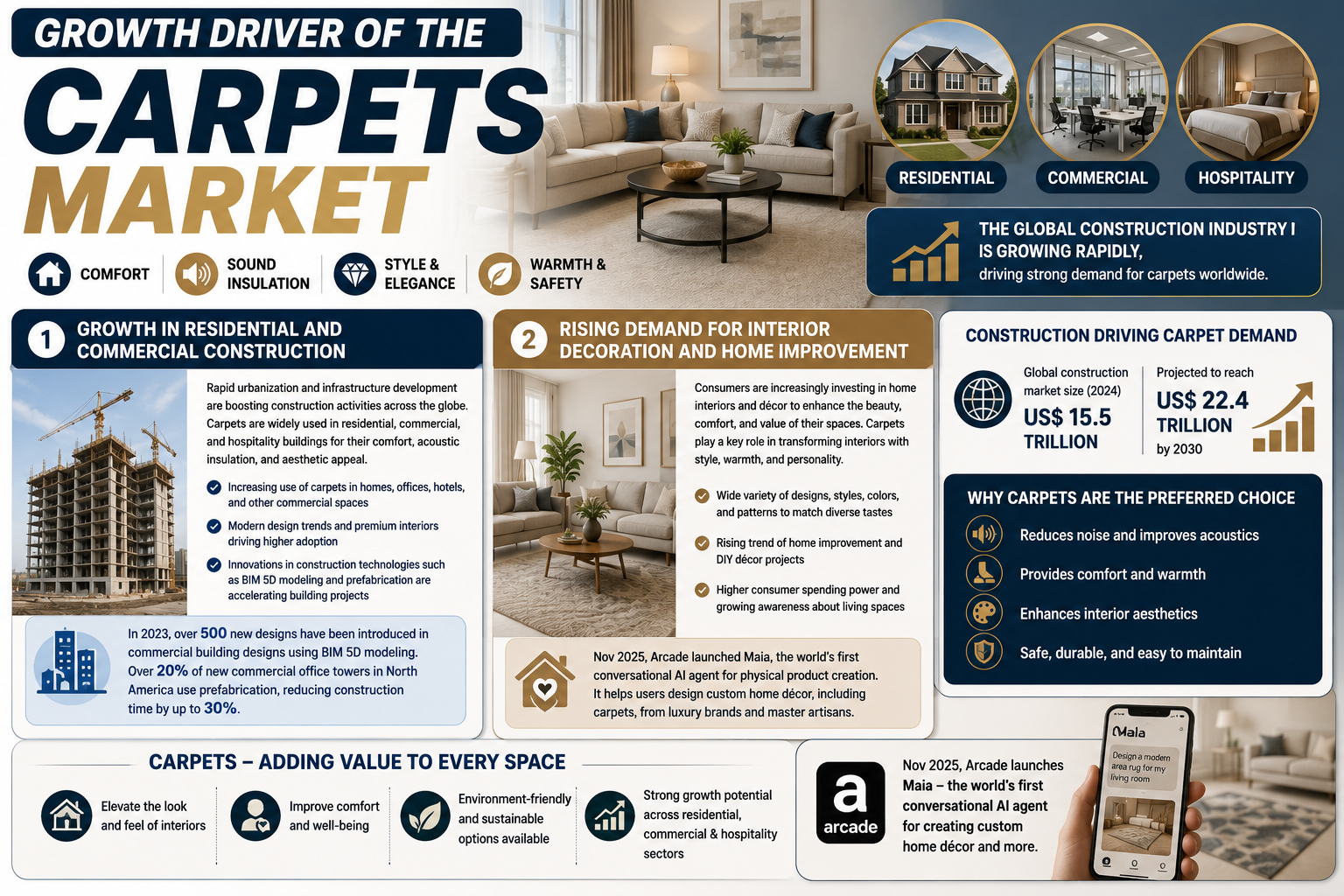
One of the most significant drivers of the carpet market is the ongoing expansion of the global construction industry.
Rapid urbanization and population growth are fueling the development of residential housing, office buildings, hotels, educational facilities, healthcare centers, and commercial complexes. Each of these environments requires flooring solutions that combine durability, comfort, and visual appeal.
In residential properties, carpets are commonly installed in bedrooms, living rooms, and family spaces to create comfortable and inviting interiors. In commercial settings, carpets provide sound insulation, enhance aesthetics, and contribute to professional workplace environments.
Modern architectural trends increasingly emphasize interior comfort and design sophistication, further supporting carpet adoption. The integration of advanced construction technologies and contemporary design concepts has also increased the demand for premium flooring products.
As construction activities continue expanding globally, carpets are expected to remain a key component of interior finishing and building design.
Home Improvement Trends Are Supporting Market Expansion
Consumer interest in home improvement and interior decoration has emerged as another important growth driver for the carpet industry.
Homeowners today are investing more in creating attractive, comfortable, and personalized living environments. Social media platforms, design websites, and home renovation television programs have inspired consumers to focus on interior aesthetics like never before.
Carpets provide an accessible way to transform living spaces without requiring extensive renovations. Their ability to introduce texture, color, warmth, and style makes them popular choices among homeowners seeking cost-effective design upgrades.
The growing do-it-yourself home improvement movement has further accelerated carpet demand. Consumers increasingly view carpets as decorative elements that contribute to overall home value and comfort.
Rising disposable incomes in both developed and emerging markets are also enabling consumers to invest in higher-quality flooring solutions, supporting continued industry growth.
Technology Is Transforming Carpet Manufacturing
Technological advancements are reshaping how carpets are designed, manufactured, and marketed.
Modern production techniques have enabled manufacturers to create carpets that offer superior durability, stain resistance, moisture protection, and long-term performance. These improvements have expanded the suitability of carpets across a broader range of residential and commercial applications.
Advanced fiber technologies have significantly improved product quality while reducing maintenance requirements. Manufacturers are also utilizing sophisticated design software and digital production systems to create highly customized carpet patterns and textures.
Automation and manufacturing efficiency improvements have helped reduce production costs while maintaining consistent product quality. As a result, consumers have access to a wider range of innovative flooring solutions at competitive prices.
Technology-driven innovation continues to strengthen the market by enhancing product performance and expanding design possibilities.
Sustainability Is Becoming a Key Industry Focus
Environmental responsibility is increasingly influencing purchasing decisions across the flooring industry.
Consumers today are more conscious of the environmental impact associated with the products they buy. In response, carpet manufacturers are investing heavily in sustainable materials, recycling programs, and environmentally friendly production methods.
Many modern carpets incorporate recycled fibers and renewable materials while reducing waste generated during manufacturing. Eco-friendly carpets appeal to environmentally conscious consumers who seek products that align with their sustainability goals.
The industry is also focusing on reducing carbon emissions, improving resource efficiency, and promoting circular economy initiatives. Sustainable manufacturing practices are becoming important competitive differentiators among leading carpet brands.
As environmental awareness continues increasing worldwide, demand for sustainable flooring products is expected to grow significantly.
Woven Carpets Maintain Their Premium Appeal
The woven carpet segment continues to attract consumers seeking luxury, durability, and craftsmanship.
Woven carpets are produced using traditional weaving techniques in which the carpet pile and backing are created simultaneously. This manufacturing process results in highly durable products characterized by intricate designs and exceptional quality.
Often made from wool, nylon, or blended fibers, woven carpets are widely used in premium residential and commercial environments. Their luxurious appearance and long lifespan make them popular choices for upscale interiors.
As consumers increasingly seek high-quality products that combine aesthetics with performance, woven carpets are expected to maintain strong market demand.
Tufted Carpets Lead Mass-Market Adoption
Tufted carpets represent one of the largest segments within the global carpet market.
Produced using specialized tufting machines, these carpets offer an efficient and cost-effective manufacturing solution while maintaining attractive design characteristics. The process enables manufacturers to produce carpets in a wide variety of styles, colors, and textures.
Tufted carpets are widely used in homes, offices, hotels, retail centers, and public buildings because of their affordability and versatility. Advances in synthetic fiber technology have further improved their durability and performance.
The combination of cost-effectiveness and design flexibility continues to support widespread adoption of tufted carpet products globally.
Nylon Carpets Continue to Dominate Commercial Applications
Nylon remains one of the most widely used materials in carpet manufacturing due to its exceptional durability and performance characteristics.
Nylon carpets are highly resistant to wear, making them ideal for high-traffic environments such as offices, hotels, airports, and educational facilities. Their resilience allows them to maintain their appearance even under demanding usage conditions.
The material also offers excellent color retention, stain resistance, and ease of maintenance. Technological improvements have enhanced both the sustainability and recyclability of nylon fibers, strengthening their appeal among environmentally conscious consumers.
Given their long-lasting performance and practical benefits, nylon carpets are expected to remain a leading choice for commercial flooring applications.
Commercial Buildings Are Creating Strong Demand
The commercial sector represents one of the most important end-use markets for carpets.
Office buildings, hotels, shopping centers, conference facilities, educational institutions, and airports all rely on carpets to enhance comfort, aesthetics, and acoustic performance. Carpet flooring helps reduce noise levels while creating professional and welcoming environments.
Modular carpet systems have become particularly popular in commercial spaces because they simplify installation, maintenance, and replacement processes. Businesses appreciate the flexibility these systems provide when managing large facilities.
As commercial construction and workplace modernization projects continue expanding globally, demand for commercial carpeting solutions is expected to remain strong.
Regional Markets Continue Expanding
United States
The United States remains one of the world's largest carpet markets. Strong residential construction activity, home renovation trends, and commercial development projects continue supporting demand. Consumers increasingly seek carpets that combine durability, comfort, and sustainability.
United Kingdom
The United Kingdom market continues growing as homeowners invest in interior improvements and businesses focus on enhancing commercial spaces. Sustainable carpet products manufactured from recycled materials are gaining popularity among environmentally conscious consumers.
India
India plays a major role in the global carpet industry due to its longstanding heritage of carpet production and export. Domestic demand is also increasing as rising incomes, urbanization, and growing interest in interior decoration support market expansion.
Saudi Arabia
Saudi Arabia's growing tourism, hospitality, and infrastructure sectors are creating significant opportunities for carpet manufacturers. Carpets remain an integral element of both traditional and contemporary interior design throughout the country.
Challenges Facing the Carpet Industry
Despite positive growth prospects, the carpet market faces several challenges.
Competition from alternative flooring solutions such as hardwood, laminate, vinyl, and ceramic tiles continues to influence consumer preferences. These materials are often perceived as easier to clean and maintain, particularly in kitchens, bathrooms, and high-traffic areas.
Maintenance concerns also remain a challenge for carpet manufacturers. Consumers may worry about dust accumulation, allergens, stains, and cleaning requirements associated with carpet flooring.
To address these concerns, manufacturers are developing stain-resistant, antimicrobial, and easy-maintenance carpet products designed to improve convenience and performance. Continued innovation will be essential for maintaining competitiveness within the broader flooring market.
Market Forecast: Steady Growth Through 2034
According to Renub Research, the global Carpet Market is projected to increase from US$ 61.75 billion in 2025 to US$ 89.05 billion by 2034, representing a CAGR of 4.15% during the forecast period from 2026 to 2034. Growth will be supported by rising construction activity, expanding home improvement trends, growing commercial infrastructure investments, and continued innovation in sustainable carpet solutions.
As consumers continue prioritizing comfort, aesthetics, and environmental responsibility, carpets are expected to remain an important component of interior design worldwide.
Final Thoughts
The global carpet industry is adapting successfully to changing consumer preferences, evolving design trends, and increasing sustainability expectations. Modern carpets offer far more than simple floor coverings; they contribute to comfort, energy efficiency, noise reduction, and overall interior aesthetics.
With Renub Research forecasting market growth from US$ 61.75 billion in 2025 to US$ 89.05 billion by 2034, the industry remains positioned for steady expansion. Advances in manufacturing technology, eco-friendly materials, and customized design solutions will continue shaping the future of the market.
About the Creator
Enjoyed the story? Support the Creator.
Subscribe for free to receive all their stories in your feed.
Comments
There are no comments for this story
Be the first to respond and start the conversation.