
Cardiac Bio Implant Devices Market Expected to Reach US$79.21 Billion by 2034 as Advanced Biomaterials Transform Cardiovascular Care
Rising cardiovascular disease prevalence, breakthroughs in tissue engineering, and growing demand for minimally invasive cardiac treatments are driving strong growth across the global cardiac bio implant devices industry.

Cardiovascular disease continues to be one of the most significant healthcare challenges worldwide, responsible for millions of deaths annually and creating enormous pressure on healthcare systems. As the global burden of heart-related conditions rises, healthcare providers are increasingly turning to advanced implantable technologies that offer improved outcomes, enhanced durability, and greater compatibility with the human body.
Among the most promising innovations in modern cardiology are cardiac bio implant devices. These advanced medical technologies include bioengineered heart valves, pacemakers, implantable cardioverter defibrillators (ICDs), tissue-based implants, and other cardiac support systems designed to work seamlessly within the body's biological environment.
Unlike conventional devices, cardiac bio implants utilize advanced biomaterials and regenerative technologies to improve healing, reduce rejection risks, and enhance long-term performance. Their growing adoption reflects the broader healthcare industry's movement toward personalized medicine, minimally invasive treatment approaches, and improved patient outcomes.
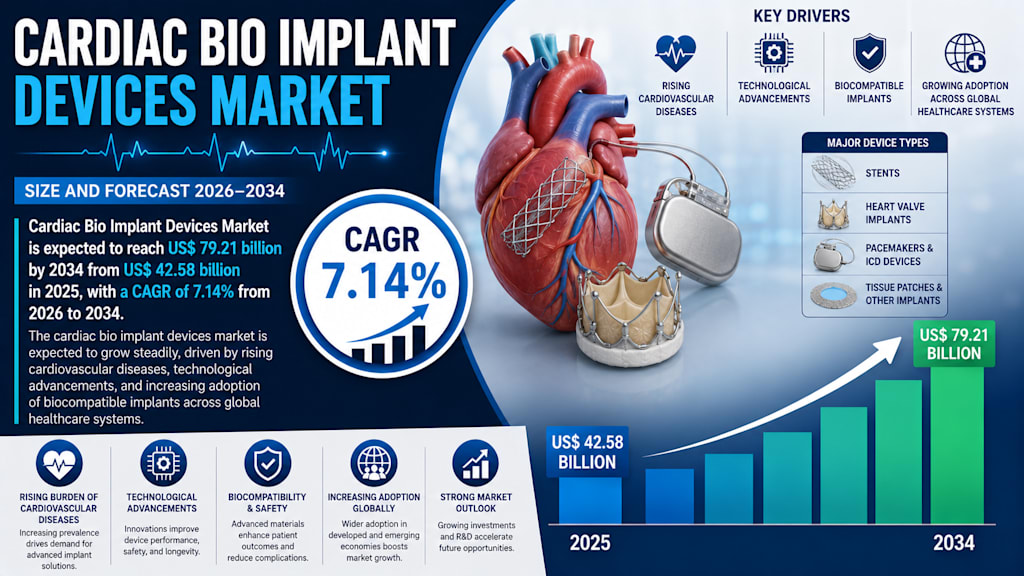
According to Renub Research, the global Cardiac Bio Implant Devices Market is expected to grow from US$42.58 billion in 2025 to US$79.21 billion by 2034, expanding at a compound annual growth rate (CAGR) of 7.14% between 2026 and 2034. Increasing cardiovascular disease prevalence, continuous technological innovation, and expanding clinical applications are expected to drive sustained market growth throughout the forecast period.
Understanding Cardiac Bio Implant Devices
Cardiac bio implant devices are advanced medical implants designed to support, repair, or restore cardiac function while maintaining high levels of biocompatibility with human tissues.
These devices include a wide range of technologies such as pacemakers, implantable cardioverter defibrillators, cardiac resynchronization therapy devices, bioengineered heart valves, and tissue-based implants. They are used to treat conditions including arrhythmias, heart failure, myocardial ischemia, and structural heart disorders.
A major advantage of bio implant technologies is their ability to integrate more effectively with biological tissues compared to traditional materials. This improved compatibility can reduce inflammation, minimize rejection risks, and enhance overall treatment outcomes.
As advancements in biomaterials and regenerative medicine continue accelerating, cardiac bio implants are becoming increasingly sophisticated and effective.
Why the Market Is Growing Rapidly
Several important factors are fueling growth across the cardiac bio implant devices industry.
Rising Global Burden of Cardiovascular Diseases
The growing prevalence of cardiovascular disease remains the most significant driver of market expansion.
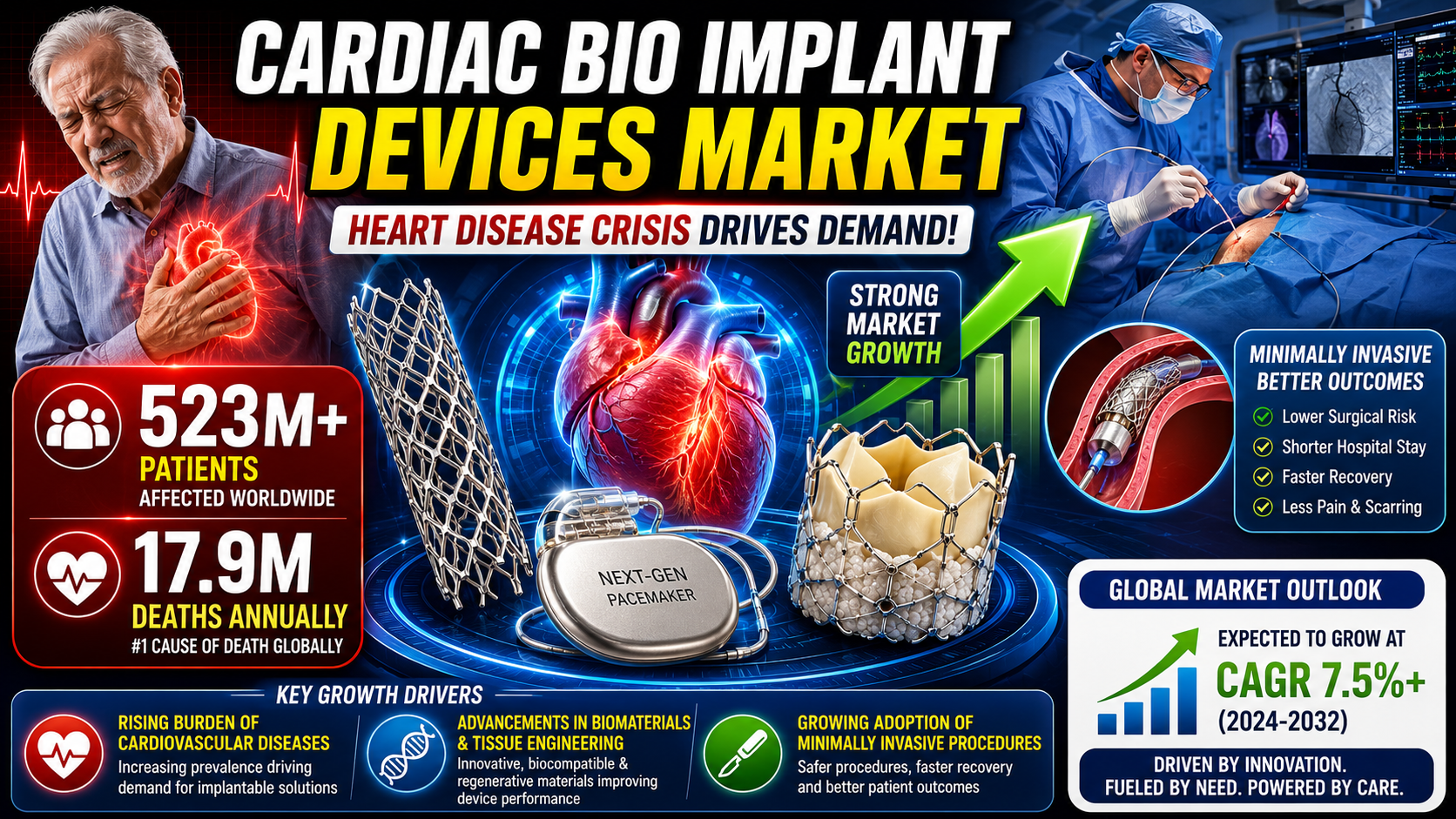
According to data cited in the report, cardiovascular diseases affect more than 523 million people globally and are responsible for approximately 17.9 million deaths annually, making them the leading cause of mortality worldwide. In 2022 alone, cardiovascular diseases accounted for approximately 19.8 million deaths, representing nearly 32% of all global fatalities.
The increasing incidence of coronary artery disease, heart failure, arrhythmias, and valvular disorders is creating strong demand for advanced implantable treatment solutions.
As populations age and risk factors such as obesity, hypertension, diabetes, and sedentary lifestyles become more prevalent, healthcare providers are expected to perform increasing numbers of cardiac implant procedures.
Growing Dependence on Implantable Cardiac Technologies
Implantable devices play a critical role in managing many cardiovascular conditions.
According to the report, more than 55% of heart patients rely on implantable cardiac devices for survival and recovery. These technologies help regulate heart rhythms, improve cardiac function, and reduce the risk of life-threatening complications.
As awareness of advanced treatment options increases, demand for implantable solutions continues expanding across both developed and emerging healthcare markets.
Increasing Focus on Long-Term Patient Outcomes
Healthcare providers are increasingly prioritizing treatment approaches that deliver durable, long-term benefits.
Bio implant devices offer improved compatibility with human tissues, reduced complication rates, and enhanced healing compared to many traditional alternatives. These advantages support broader adoption as healthcare systems seek to improve patient outcomes while reducing long-term healthcare costs.
The growing emphasis on value-based healthcare is expected to further strengthen demand for advanced cardiac implant technologies.
Biomaterial Innovation Is Transforming Cardiac Care
Technological innovation remains one of the strongest growth drivers within the industry.
Advanced Biocompatible Materials
Recent advances in biomaterial science have significantly improved the performance of cardiac implants.
Modern devices utilize highly biocompatible materials designed to integrate naturally with surrounding tissues while minimizing immune system responses. These innovations help reduce complications and improve long-term device functionality.
Improved material characteristics such as flexibility, durability, and resistance to degradation are enabling manufacturers to develop more reliable and effective implants.
Bioresorbable Technologies
Bioresorbable materials represent one of the most exciting developments in cardiac implant technology.
These materials are designed to gradually dissolve or integrate into the body after serving their intended therapeutic purpose. Such innovations reduce the need for long-term foreign material presence while supporting natural healing processes.
The development of bioresorbable cardiac devices is expected to create significant future growth opportunities across multiple treatment categories.
Regenerative Medicine Applications
Advancements in regenerative medicine are expanding the capabilities of cardiac bio implants.
Researchers are increasingly exploring tissue-engineered solutions that support cardiac repair and regeneration. These technologies have the potential to improve treatment outcomes while addressing limitations associated with traditional implant materials.
The integration of regenerative medicine principles is helping shape the next generation of cardiovascular therapies.
Minimally Invasive Procedures Are Accelerating Adoption
The healthcare industry continues shifting toward less invasive treatment approaches.
Reduced Surgical Risks
Minimally invasive procedures offer significant benefits compared to traditional open-heart surgery.
Patients typically experience reduced surgical trauma, shorter hospital stays, lower infection risks, and faster recovery times. These advantages make minimally invasive approaches particularly attractive for elderly patients and individuals with complex medical conditions.
Cardiac bio implant devices are increasingly being utilized within these procedures, supporting broader adoption across healthcare systems worldwide.
Improved Patient Experience
Patient preferences are increasingly influencing treatment decisions.
Many individuals prefer procedures that minimize discomfort and reduce recovery periods. The combination of advanced implant technologies and minimally invasive techniques helps improve overall patient satisfaction while supporting better clinical outcomes.
As healthcare providers continue emphasizing patient-centered care, demand for minimally invasive cardiac solutions is expected to increase further.
Technological Support for Precision Procedures
Advancements in imaging technologies, catheter-based systems, and procedural planning tools are improving the precision of implant placement.
These innovations enhance procedural success rates while reducing complications and improving device performance. The continued evolution of minimally invasive techniques is expected to remain a key driver of market growth.
Personalized Medicine Is Creating New Opportunities
The growing focus on individualized treatment approaches is influencing the future of cardiac implants.
Customized Implant Solutions
Innovations in 3D printing and biofabrication technologies are enabling the development of customized implants tailored to individual patient anatomy.
Personalized solutions offer the potential for improved fit, enhanced functionality, and better clinical outcomes. As these technologies mature, they are expected to play an increasingly important role in cardiovascular care.
The trend toward personalization reflects a broader shift within healthcare toward precision medicine and patient-specific treatment strategies.
Data-Driven Treatment Planning
Advanced diagnostics and digital health technologies are helping physicians make more informed treatment decisions.
Improved patient data analysis supports optimal device selection and procedural planning, increasing the likelihood of successful outcomes while minimizing complications.
The integration of data-driven decision-making continues strengthening the value proposition of advanced cardiac implant technologies.
Key Device Categories Driving Market Growth
Several product segments contribute significantly to overall market expansion.
Pacemakers
Pacemakers remain among the most widely used cardiac bio implant devices.
These systems help regulate abnormal heart rhythms and improve quality of life for patients suffering from arrhythmias. Advances in miniaturization, battery performance, and wireless connectivity continue improving device functionality and patient outcomes.
Implantable Cardioverter Defibrillators (ICDs)
ICDs play a critical role in preventing sudden cardiac death among high-risk patients.
These devices continuously monitor heart rhythms and deliver life-saving therapy when dangerous arrhythmias occur. Ongoing technological improvements are enhancing both safety and effectiveness.
Cardiac Resynchronization Therapy (CRT)
CRT devices help improve heart function in patients with heart failure by coordinating ventricular contractions.
Growing awareness of heart failure management strategies and increasing diagnosis rates are supporting continued demand within this segment.
Challenges Facing the Industry
Despite strong growth prospects, several challenges remain.
High Development and Treatment Costs
The development of advanced cardiac bio implants requires substantial investment in research, testing, clinical validation, and manufacturing.
Additionally, implant procedures often involve specialized equipment and highly trained healthcare professionals, contributing to elevated treatment costs. These factors may limit accessibility in resource-constrained healthcare systems.
Complex Regulatory Requirements
Cardiac implant devices must undergo rigorous testing and regulatory review before receiving approval.
Extensive clinical trials, comprehensive documentation requirements, and long evaluation timelines can delay product commercialization and increase development costs.
Although these regulations are essential for patient safety, they remain a significant challenge for manufacturers.
Need for Extensive Clinical Validation
Because cardiac implants directly impact patient survival and quality of life, manufacturers must demonstrate long-term safety and effectiveness through robust clinical evidence.
Generating this data requires significant time and financial investment, potentially slowing innovation and market entry for new technologies.
Regional Market Outlook
United States
The United States remains one of the world's largest markets for cardiac bio implant devices.
Advanced healthcare infrastructure, high healthcare spending, strong research capabilities, and widespread adoption of innovative medical technologies continue supporting market growth. Favorable reimbursement systems and increasing preference for minimally invasive procedures further strengthen demand.
United Kingdom
The United Kingdom is experiencing growing adoption of advanced cardiac implant technologies as healthcare providers focus on improving patient outcomes and reducing long-term treatment costs.
Government support for medical innovation and strong collaboration between healthcare institutions and industry participants are contributing to market expansion.
India
India represents a rapidly growing market driven by a significant cardiovascular disease burden.
According to the report, cardiovascular diseases account for approximately 27% of total deaths in India, while nearly 2.87 million deaths were attributed to cardiovascular conditions in 2021. Rising disease prevalence, growing healthcare access, and increasing awareness of advanced treatment options are supporting market growth.
United Arab Emirates
The UAE continues investing heavily in healthcare modernization and advanced cardiac care services.
Expanding healthcare infrastructure, increasing medical tourism, and growing adoption of innovative medical technologies are contributing to strong market potential within the region.
Competitive Landscape
The cardiac bio implant devices market includes numerous global healthcare and medical technology companies focused on innovation and advanced cardiovascular therapies.
Key industry participants include Abbott Laboratories, Thermo Fisher Scientific, Quest Diagnostics, Agilent Technologies, Illumina, Inc., Natera Inc., Eurofins Scientific, and F. Hoffmann-La Roche. These organizations continue investing in biomaterials research, regenerative medicine technologies, and advanced implant development to strengthen their competitive positions.
Final Thoughts
Cardiac bio implant devices are transforming cardiovascular care by combining advanced biomaterials, regenerative technologies, and innovative treatment approaches to improve patient outcomes. Their ability to provide long-term therapeutic benefits while supporting minimally invasive procedures makes them an increasingly important component of modern healthcare.
As cardiovascular disease prevalence continues rising globally, healthcare systems will require more effective, durable, and patient-friendly treatment solutions. Technological advancements in tissue engineering, personalized medicine, and implant design are expected to create substantial opportunities for future growth.
With the global Cardiac Bio Implant Devices Market projected to grow from US$42.58 billion in 2025 to US$79.21 billion by 2034, the industry appears well-positioned for sustained expansion. Continued innovation, increasing clinical adoption, and growing investment in cardiovascular healthcare will likely ensure that cardiac bio implants remain at the forefront of next-generation heart care.
About the Creator
Enjoyed the story? Support the Creator.
Subscribe for free to receive all their stories in your feed.
Comments
There are no comments for this story
Be the first to respond and start the conversation.