
Cardiac Arrhythmia Monitoring Devices Market Expected to Reach US$13.28 Billion by 2034 as Wearable ECG Technology Transforms Heart Care
Rising cases of atrial fibrillation and other cardiac rhythm disorders, combined with advances in wearable monitoring and artificial intelligence, are driving strong growth across the global arrhythmia monitoring devices industry.

Cardiovascular diseases remain the leading cause of death worldwide, placing enormous pressure on healthcare systems to improve early diagnosis and long-term patient management. Among the most common cardiovascular conditions are cardiac arrhythmias—abnormal heart rhythms that can significantly increase the risk of stroke, heart failure, and sudden cardiac death if left undetected.
As awareness of these conditions grows, healthcare providers are increasingly relying on advanced monitoring technologies to identify rhythm abnormalities earlier and manage patients more effectively. Traditional short-duration monitoring methods are rapidly being supplemented by wearable ECG devices, mobile telemetry systems, implantable monitors, and cloud-connected platforms capable of tracking heart rhythms continuously.
The convergence of artificial intelligence, remote monitoring, and digital healthcare infrastructure is creating a new era in cardiac care. These innovations are helping physicians detect arrhythmias faster while providing patients with more convenient and personalized monitoring options.
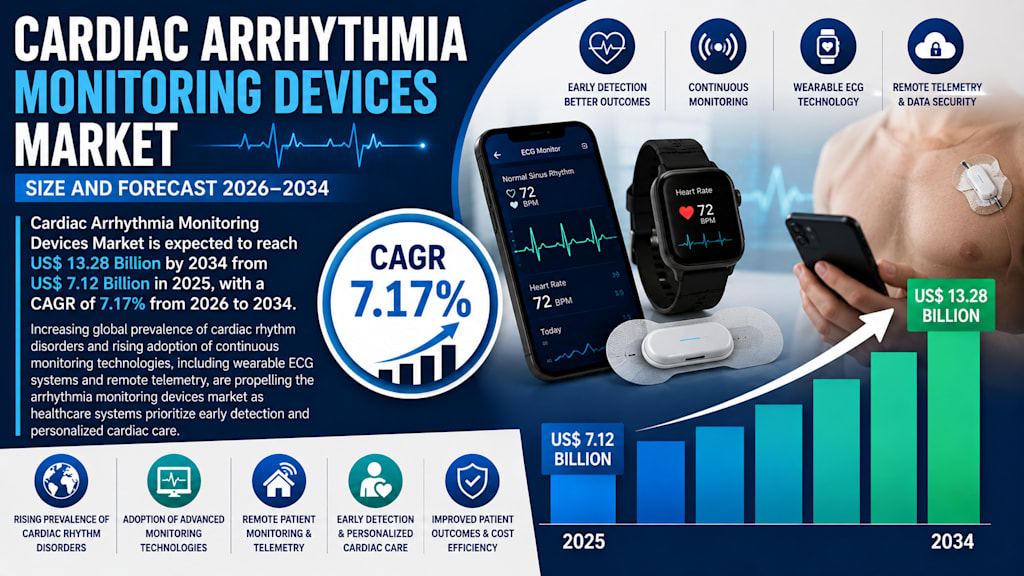
According to Renub Research, the global Cardiac Arrhythmia Monitoring Devices Market is expected to grow from US$7.12 billion in 2025 to US$13.28 billion by 2034, expanding at a compound annual growth rate (CAGR) of 7.17% between 2026 and 2034. Increasing prevalence of cardiac rhythm disorders and growing adoption of continuous monitoring technologies are expected to remain the primary drivers of market growth.
Understanding Cardiac Arrhythmia Monitoring Devices
Cardiac arrhythmia monitoring devices are specialized medical technologies designed to detect, record, and analyze irregular heart rhythms.
These devices help physicians diagnose conditions such as atrial fibrillation, bradycardia, tachycardia, ventricular fibrillation, and premature contractions. Depending on the patient's condition, monitoring may be performed continuously or intermittently over varying periods.
Common arrhythmia monitoring technologies include Holter monitors, implantable loop recorders, mobile cardiac telemetry systems, wearable ECG patches, and traditional electrocardiogram (ECG) devices.
The information collected by these systems allows healthcare professionals to identify abnormal cardiac activity, evaluate treatment effectiveness, and make more informed clinical decisions. As technology continues to evolve, monitoring devices are becoming smaller, more accurate, and increasingly integrated into digital healthcare ecosystems.
Why the Market Is Growing Rapidly
Several important trends are contributing to the strong expansion of the cardiac arrhythmia monitoring devices market.
Rising Prevalence of Cardiac Rhythm Disorders
One of the most significant drivers of market growth is the increasing incidence of cardiac arrhythmias worldwide.
Atrial fibrillation remains one of the most common rhythm disorders and is associated with a significantly higher risk of stroke and other cardiovascular complications. Aging populations, sedentary lifestyles, obesity, diabetes, and hypertension continue to increase the number of individuals at risk.
As healthcare systems place greater emphasis on preventive cardiology and early intervention, demand for reliable monitoring technologies is rising rapidly. Physicians increasingly recognize the importance of long-term rhythm tracking to detect intermittent arrhythmias that may otherwise remain undiagnosed.
This growing patient population is expected to create sustained demand for advanced monitoring solutions over the coming decade.
Growing Focus on Early Detection
Early diagnosis has become a major priority in cardiovascular care.
Many arrhythmias occur sporadically and may not be detected during routine clinical examinations. Continuous monitoring technologies allow clinicians to identify abnormal heart rhythms before they lead to serious complications.
Earlier diagnosis enables faster treatment decisions, improved patient outcomes, and reduced healthcare costs associated with emergency interventions and hospitalization.
Healthcare providers are increasingly incorporating long-term monitoring into standard cardiac care pathways, supporting broader adoption of advanced monitoring devices.
Expansion of Home-Based Cardiac Care
The shift toward home healthcare and remote patient monitoring is creating significant opportunities for the market.
Patients increasingly prefer monitoring solutions that allow them to remain at home while maintaining continuous communication with healthcare providers. Wearable devices and cloud-connected monitoring platforms support this model by transmitting cardiac data in real time.
This approach improves convenience, enhances patient engagement, and reduces the need for frequent hospital visits while still enabling effective clinical oversight.
The growing adoption of telehealth services is expected to further accelerate demand for remote cardiac monitoring technologies.
Wearable Technology Is Revolutionizing Cardiac Monitoring
Wearable devices have become one of the most transformative innovations within the arrhythmia monitoring market.
Extended Monitoring Improves Detection Rates
Traditional monitoring methods often capture cardiac activity for only short periods, limiting their ability to detect intermittent rhythm abnormalities.
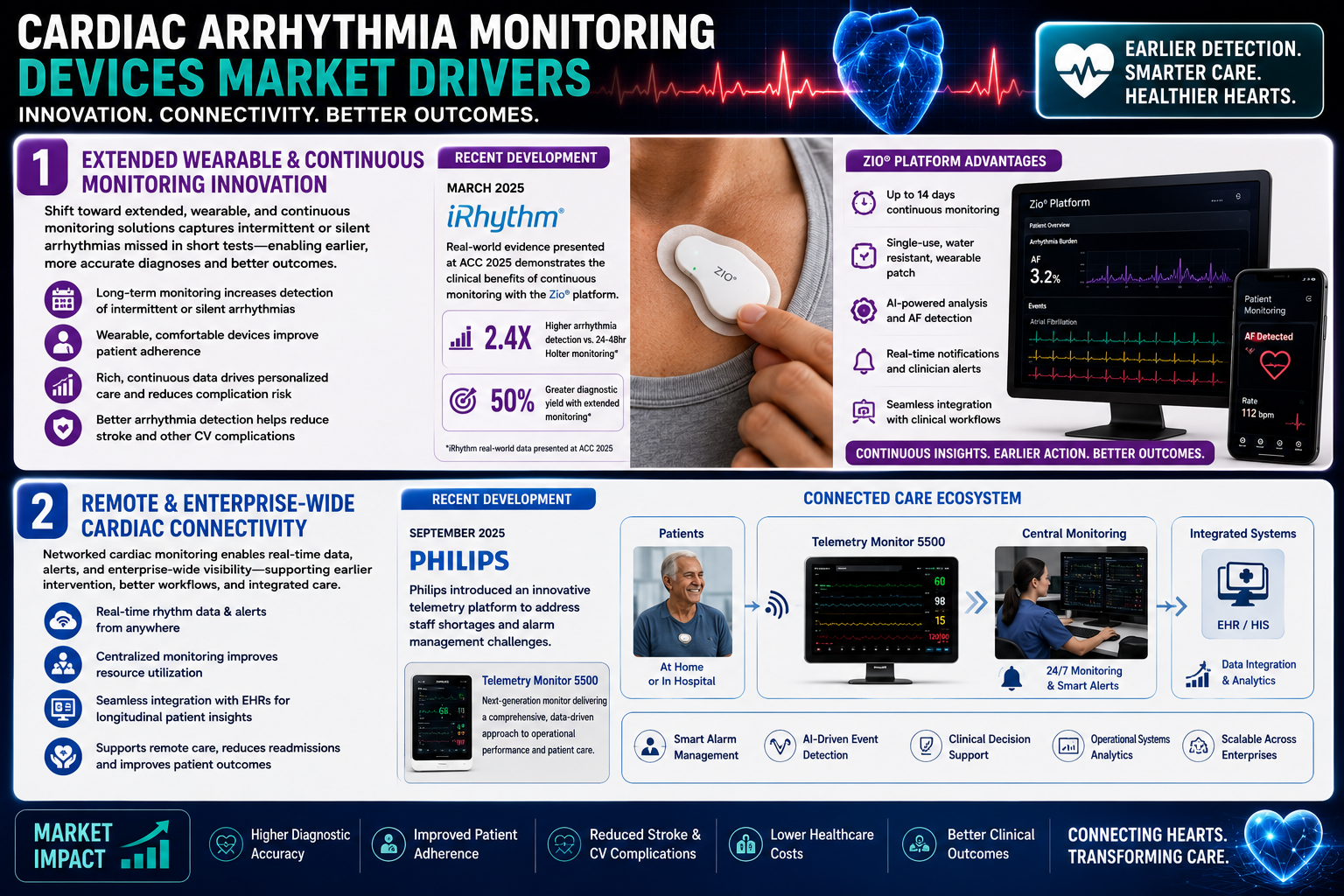
Modern wearable ECG systems allow patients to be monitored continuously for days or even weeks. This extended observation period significantly improves the likelihood of identifying irregular heart rhythms that might otherwise go unnoticed.
Longer monitoring durations provide clinicians with more comprehensive data and support more accurate diagnoses. As a result, healthcare providers increasingly view extended monitoring as an essential component of effective arrhythmia management.
Improved Patient Comfort and Compliance
Wearable devices are designed to be lightweight, discreet, and comfortable for everyday use.
Unlike traditional Holter monitors, many modern systems are compact enough to be worn continuously without disrupting normal activities. This improved user experience encourages better patient compliance and supports higher-quality diagnostic data collection.
Greater patient acceptance is helping expand the use of wearable monitoring across both clinical and consumer health settings.
Real-Time Data Collection
Many wearable monitoring systems now offer real-time connectivity and automated reporting capabilities.
Healthcare providers can receive immediate alerts when abnormal cardiac activity is detected, allowing for faster intervention and more proactive patient management. These capabilities are particularly valuable for high-risk individuals requiring close observation.
The integration of real-time monitoring is strengthening the role of wearable technologies within modern cardiovascular care.
Artificial Intelligence Is Enhancing Diagnostic Precision
Artificial intelligence is becoming increasingly important in arrhythmia monitoring and interpretation.
Faster and More Accurate ECG Analysis
AI-powered algorithms can analyze large volumes of ECG data quickly and efficiently.
These systems help identify abnormal rhythm patterns, reduce false-positive results, and support clinical decision-making. Automated interpretation also reduces the workload on healthcare professionals while improving diagnostic consistency.
As monitoring durations become longer and data volumes continue increasing, AI is becoming essential for managing information efficiently.
Expanding Access to Cardiac Screening
Artificial intelligence also helps extend cardiac screening capabilities beyond specialized cardiology centers.
Primary care providers and community healthcare facilities can utilize AI-assisted systems to perform high-quality rhythm assessments without requiring extensive specialist involvement. This improves accessibility and supports earlier detection in underserved populations.
The ability to scale screening programs more effectively represents one of AI's most promising contributions to cardiac healthcare.
Supporting Preventive Cardiology
AI-driven analytics enable healthcare providers to identify subtle patterns that may indicate elevated cardiovascular risk.
These insights support preventive care strategies and help clinicians intervene before serious complications develop. As preventive medicine becomes increasingly important, AI-powered monitoring tools are expected to play a larger role in patient management.
Remote Connectivity Is Reshaping Cardiac Care
Remote monitoring technologies are changing how healthcare providers manage cardiac patients.
Telemetry and Cloud-Based Monitoring
Modern telemetry systems enable continuous transmission of cardiac data from patients to healthcare providers.
This connectivity allows clinicians to monitor multiple patients simultaneously while receiving real-time alerts regarding significant rhythm abnormalities. Cloud-based platforms further simplify data storage, analysis, and long-term tracking.
These capabilities improve efficiency while enabling more personalized care strategies.
Enterprise-Wide Cardiac Networks
Large healthcare systems increasingly implement centralized cardiac monitoring programs that connect multiple facilities through integrated platforms.
This approach improves resource utilization, supports coordinated care delivery, and enhances operational performance. Enterprise-wide monitoring solutions are becoming particularly valuable as healthcare organizations seek to manage growing patient populations efficiently.
The trend toward interconnected healthcare networks is expected to support continued investment in advanced monitoring technologies.
Key Device Categories Driving Market Growth
Several monitoring technologies contribute significantly to overall market expansion.
ECG Monitors
Electrocardiogram monitors remain the foundation of arrhythmia detection and diagnosis.
Modern ECG systems include portable devices, wearable patches, mobile applications, and hospital-based equipment. Advances in wireless connectivity, cloud integration, and AI-assisted interpretation continue improving their clinical value.
The increasing emphasis on continuous rhythm monitoring is strengthening demand across both healthcare and consumer markets.
Holter Monitors
Holter monitors provide continuous ECG recording over extended periods, typically ranging from 24 hours to several days.
These devices are widely used to detect intermittent arrhythmias and evaluate treatment effectiveness. Improvements in comfort, battery life, and data analysis capabilities continue enhancing their utility.
Holter monitoring remains one of the most commonly utilized diagnostic approaches within cardiac rhythm management.
Implantable Monitors
Implantable loop recorders offer long-term cardiac monitoring for patients experiencing infrequent or difficult-to-diagnose symptoms.
These devices can continuously track cardiac activity for months or even years, making them valuable for detecting rare arrhythmias and unexplained cardiac events.
Growing clinical acceptance and technological advancements are supporting expansion within this segment.
Mobile Cardiac Telemetry
Mobile cardiac telemetry systems provide continuous monitoring combined with real-time data transmission.
These technologies are particularly effective for high-risk patients requiring immediate clinical oversight. Their ability to detect and report abnormalities automatically makes them an increasingly important component of modern cardiac care programs.
Challenges Facing the Industry
Despite strong growth prospects, several challenges continue to affect market expansion.
Regulatory and Reimbursement Complexity
Obtaining regulatory approval for innovative monitoring technologies can be a lengthy and expensive process.
AI-powered systems, wearable devices, and cloud-connected platforms must satisfy strict safety, performance, and cybersecurity requirements. Variations in regulatory frameworks across different countries further complicate commercialization efforts.
In addition, reimbursement policies for remote monitoring services vary significantly, potentially limiting adoption in certain healthcare systems.
Data Security and Interoperability Concerns
As cardiac monitoring becomes increasingly digital, protecting patient data has become a critical priority.
Healthcare organizations must ensure secure transmission, storage, and management of sensitive cardiac information. At the same time, integrating monitoring platforms with electronic health records can present technical challenges.
Addressing cybersecurity and interoperability concerns will remain essential for maximizing the value of connected healthcare solutions.
Regional Market Outlook
United States
The United States remains one of the largest arrhythmia monitoring markets globally.
According to data referenced in the report, more than 12.1 million Americans are expected to be living with atrial fibrillation by 2050. The country's advanced healthcare infrastructure, strong adoption of digital health technologies, and emphasis on preventive cardiology continue supporting market growth.
Germany
Germany's robust healthcare system and comprehensive reimbursement structure support widespread use of arrhythmia monitoring technologies.
Growing adoption of wearable ECG devices, Holter monitors, and AI-powered analytics is helping improve diagnostic precision and patient outcomes throughout the country.
China
China is experiencing strong market growth due to increasing cardiovascular disease prevalence and substantial healthcare modernization efforts.
Government investments in healthcare infrastructure, telemedicine expansion, and digital health technologies are accelerating adoption of advanced cardiac monitoring solutions.
Saudi Arabia
Saudi Arabia continues expanding its cardiac care capabilities through investments aligned with Vision 2030.
Growing awareness of cardiovascular health, increased use of telehealth services, and modernization of healthcare facilities are creating favorable conditions for arrhythmia monitoring technologies.
Competitive Landscape
The global cardiac arrhythmia monitoring devices market includes several major medical technology companies competing through innovation, digital health integration, and advanced monitoring solutions.
Leading industry participants include Abbott Laboratories, GE HealthCare, Koninklijke Philips N.V., Medtronic PLC, Asahi Kasei Corporation, Boston Scientific Corporation, iRhythm Technologies, and Nihon Kohden. These organizations continue investing in wearable technologies, artificial intelligence, remote monitoring platforms, and next-generation cardiac diagnostics to strengthen their positions within the growing market.
Final Thoughts
Cardiac arrhythmia monitoring is becoming an increasingly important component of modern cardiovascular care. The ability to detect rhythm disorders earlier, monitor patients remotely, and deliver personalized treatment strategies is transforming how clinicians manage heart health.
Advances in wearable ECG devices, artificial intelligence, cloud connectivity, and telehealth integration are making monitoring solutions more accurate, accessible, and patient-friendly than ever before.
With the global Cardiac Arrhythmia Monitoring Devices Market projected to grow from US$7.12 billion in 2025 to US$13.28 billion by 2034, the industry is positioned for sustained expansion. As healthcare systems continue prioritizing preventive cardiology and digital transformation, arrhythmia monitoring technologies will play an increasingly vital role in improving cardiovascular outcomes worldwide.
About the Creator
Enjoyed the story? Support the Creator.
Subscribe for free to receive all their stories in your feed.
Comments
There are no comments for this story
Be the first to respond and start the conversation.