
Canada Wearable Devices Market Size to Hit USD 19.1 Billion by 2034
The Canada wearable devices market size reached USD 4.6 Billion in 2025. Looking forward, IMARC Group expects the market to reach USD 19.1 Billion by 2034, exhibiting a growth rate (CAGR) of 16.63% during 2026-2034.

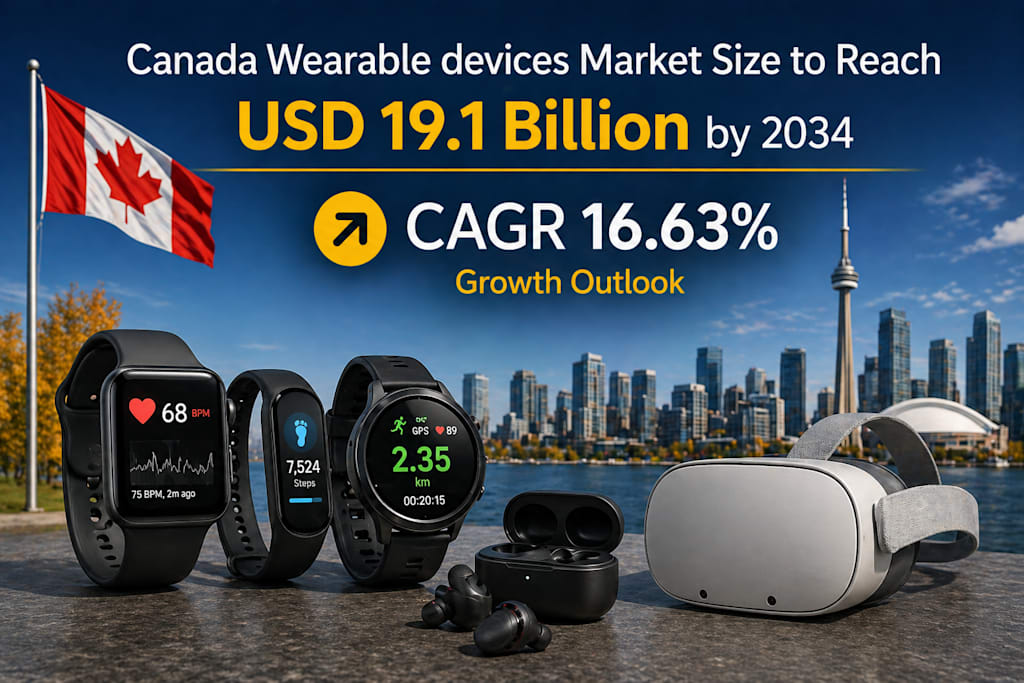
Canada Wearable Devices Market Size, Growth, and Forecast (2026–2034)
The Canada wearable devices market is witnessing rapid expansion as consumers increasingly adopt smart technologies to monitor health, fitness, and daily activities. In 2026, the market reflects a growing shift toward connected devices that provide real-time insights and convenience.
The market reached a value of USD 4.6 Billion in 2025 and is projected to grow to USD 19.1 Billion by 2034, expanding at a compound annual growth rate (CAGR) of 16.63% during 2026–2034. This strong growth highlights the increasing importance of wearable technology in modern lifestyles.
Wearable devices include products such as smartwatches, fitness trackers, smart glasses, and health monitoring devices. These devices are designed to enhance convenience, improve health awareness, and support connected living.
Request a Sample Report with Latest 2026 Data & Forecasts:
Key Trends Shaping the Canada Wearable Devices Market
Several important trends are influencing the development of the wearable devices industry:
• Increasing demand for health monitoring and fitness tracking devices
• Growing integration of wearables with smartphones and mobile applications
• Rising adoption of advanced sensors and real-time analytics
• Expansion of smartwatches with multifunctional capabilities
• Increasing focus on personalized health insights and data tracking
These trends reflect a shift toward smarter and more connected consumer experiences.
Major Growth Drivers in the Canada Wearable Devices Industry
The growth of the market is supported by several key factors.
One of the primary drivers is the rising consumer demand for health monitoring, as individuals seek to track vital signs and maintain overall well-being.
Another important factor is the growing focus on fitness and wellness, encouraging the use of wearable devices for activity tracking and performance monitoring.
Technological advancements are also contributing to market growth by improving device functionality, accuracy, and user experience.
Additionally, the increased integration of wearables with smartphones is enhancing convenience and connectivity.
The popularity of digital health solutions and remote monitoring is further supporting market expansion.
Role of Technology in Wearable Devices
Technology plays a central role in shaping the wearable devices market.
Advancements in sensors and data analytics are enabling accurate health monitoring.
Artificial intelligence is improving personalized insights and recommendations.
Connectivity technologies are enhancing device integration with other digital platforms.
Battery efficiency and design innovations are improving usability and comfort.
These technological developments are driving innovation and adoption.
Investment Opportunities in the Canada Wearable Devices Market
The rapid growth of the market is creating strong investment opportunities.
Companies are investing in research and development, product innovation, and digital health solutions to remain competitive. There is also growing interest in advanced wearable technologies and smart health devices.
Investments in healthcare technology and connected ecosystems are supporting market expansion.
Collaborations between technology companies, healthcare providers, and app developers are driving innovation.
With continued growth expected through 2034, the market offers significant long-term potential.
Challenges Impacting the Canada Wearable Devices Industry
Despite rapid growth, the market faces several challenges.
One of the key issues is data privacy and security concerns, particularly with health-related information.
Another challenge is device affordability, which may limit adoption among some consumers.
Rapid technological changes can also create challenges in maintaining product relevance.
Additionally, ensuring accuracy and reliability of health data remains important.
Future Outlook (2026–2034)
Looking ahead, the Canada wearable devices market is expected to continue its strong expansion as technology adoption increases.
Between 2026 and 2034, the demand for smart, connected, and health-focused wearable devices is likely to grow significantly. Consumers will continue to rely on these devices for monitoring health and improving lifestyle choices.
Technological advancements will further shape the market. The integration of AI, advanced sensors, and digital health platforms will enhance functionality and user experience.
The continued focus on wellness and preventive healthcare will support market development.
Overall, the market is poised for strong growth, driven by innovation, connectivity, and health awareness.
Conclusion
The Canada wearable devices market is evolving rapidly, supported by increasing health awareness, technological advancements, and growing demand for connected devices. With projected growth from 2026 to 2034, the market is expected to remain a key segment of the technology and healthcare industries.
While challenges such as data privacy and affordability persist, ongoing innovation and investment are likely to support long-term growth. As consumer lifestyles continue to evolve, wearable devices will play a crucial role in enhancing health and convenience.
About the Creator
Jackson Watson
I'm a market research analyst at Imarc group company delivering data-driven insights, industry analysis, and customized research solutions. We support businesses with market sizing, competitive analysis, and strategic decision-making.
Enjoyed the story? Support the Creator.
Subscribe for free to receive all their stories in your feed.
Comments
There are no comments for this story
Be the first to respond and start the conversation.