
Canada Watch Market: How Are Smartwatches and Luxury Timepieces Reshaping Canada’s Watch Industry?
Growing smartwatch adoption, rising demand for luxury watches, expanding e-commerce channels, and increasing consumer interest in wearable technology are driving the evolution of Canada’s watch market through 2034.

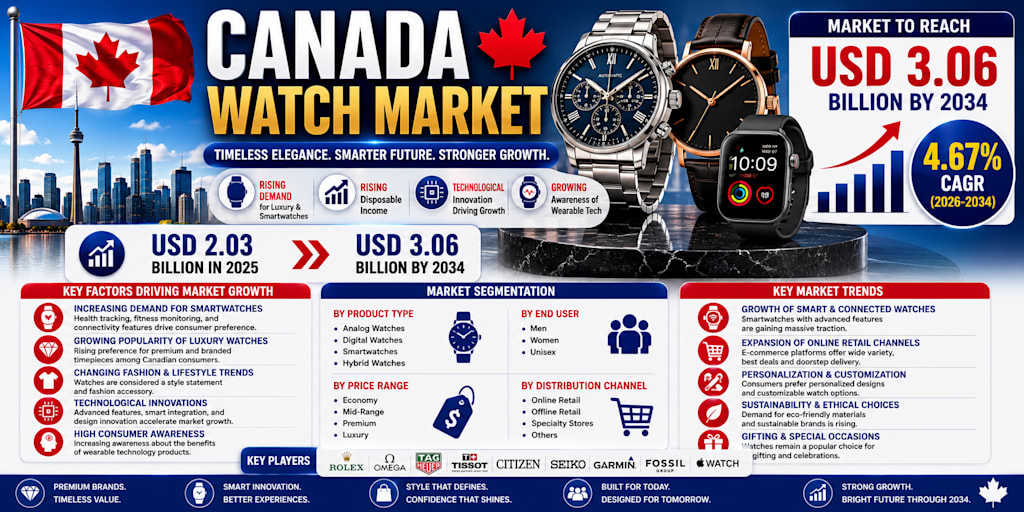
For generations, watches have served as more than simple timekeeping devices. They have represented style, status, craftsmanship, and personal identity. While smartphones have changed how people access information, watches remain highly relevant in Canada due to their blend of practicality, fashion appeal, and increasingly sophisticated technology.
The Canadian watch industry is experiencing a significant transformation as smartwatches and wearable technologies gain popularity among consumers seeking health tracking, connectivity, and convenience. At the same time, traditional luxury and mechanical watches continue attracting buyers who appreciate craftsmanship, heritage, and exclusivity.
This dual demand for advanced technology and timeless elegance is creating a dynamic marketplace that offers opportunities across multiple product categories and consumer segments.
According to Renub Research, the Canada Watch Market is expected to grow from US$ 2.03 billion in 2025 to US$ 3.06 billion by 2034, registering a CAGR of 4.67% between 2026 and 2034. Rising demand for smartwatches, growing popularity of luxury watches, changing fashion trends, technological innovation, and increasing consumer awareness regarding wearable technology are expected to support market expansion throughout the forecast period.

Understanding the Canadian Watch Industry
A watch is a wearable device designed primarily to display time while often providing additional features such as alarms, calendars, fitness tracking, and communication functions.
The market broadly consists of three major categories: quartz watches, mechanical watches, and electronic watches. Quartz watches remain popular due to their affordability and accuracy. Mechanical watches appeal to consumers who appreciate traditional craftsmanship and engineering excellence. Electronic watches, including smartwatches, combine timekeeping with advanced digital functionality.
Although smartphones have reduced the need for watches as primary timekeeping tools, watches continue to thrive because they serve as fashion accessories, status symbols, and increasingly, personal technology devices.
In Canada, consumer interest spans a wide range of products, from affordable everyday watches to premium luxury collections and sophisticated smartwatches designed for health and lifestyle management.
Smartwatch Adoption Continues to Accelerate
One of the most important drivers of growth within the Canadian watch market is the rapid adoption of smartwatches.
Consumers increasingly seek wearable devices capable of delivering multiple functions beyond telling time. Modern smartwatches provide health monitoring, fitness tracking, sleep analysis, smartphone connectivity, GPS navigation, messaging capabilities, and productivity tools.
Growing awareness regarding health and wellness has significantly increased consumer interest in these devices. Canadians appreciate the ability to monitor heart rates, physical activity levels, calorie expenditure, sleep quality, and overall fitness progress directly from their wrists.
Advancements in software, mobile applications, and sensor technologies continue enhancing the user experience and increasing smartwatch functionality.
In February 2025, the OnePlus Watch 3 became available in Canada, featuring enhanced fitness tracking capabilities, extended battery life, and a rotating crown that improves user interaction. Such innovations continue attracting consumers and supporting overall market growth.
Health and Wellness Trends Support Wearable Technology
Canada's increasing focus on health and wellness has become a major catalyst for smartwatch adoption.
Consumers are becoming more proactive in managing their physical and mental well-being. Smartwatches offer convenient access to health data that helps users monitor activity levels, track fitness goals, and make informed lifestyle decisions.
Features such as sleep monitoring, heart rate tracking, stress management tools, and exercise analytics have become highly desirable among health-conscious consumers.
The integration of health monitoring with smartphone ecosystems further enhances the value proposition of smartwatches.
As wellness trends continue influencing purchasing behavior, wearable technology is expected to remain one of the fastest-growing segments within Canada's watch industry.
Luxury Watches Continue to Attract Affluent Consumers
While smartwatches are driving technological innovation, luxury watches continue to enjoy strong demand across Canada.
Luxury watches are widely viewed as symbols of achievement, prestige, and personal success. Consumers often purchase these timepieces not only for their functionality but also for their craftsmanship, heritage, and exclusivity.
High-income consumers increasingly seek products that combine artistic design, engineering excellence, and long-term value. Limited-edition collections and heritage brands are particularly attractive because they offer uniqueness and collectability.
Luxury watches are also frequently purchased as gifts during weddings, anniversaries, graduations, and other important milestones.
The growing perception of luxury watches as investment assets further strengthens demand within this segment. Many collectors view premium timepieces as valuable long-term holdings that can appreciate over time.
As disposable incomes continue rising, luxury watches are expected to contribute significantly to market growth.
Watches Remain Powerful Fashion Statements
Fashion continues to play a critical role in shaping consumer demand.
Watches are widely regarded as essential accessories that complement personal style and enhance appearance. Consumers often select watches based on fashion preferences, lifestyle choices, and professional needs.
Manufacturers regularly introduce new collections featuring innovative designs, premium materials, customizable straps, and limited-edition collaborations.
Consumers increasingly seek products that reflect their individuality while maintaining functionality and quality.
The growing influence of social media, celebrity endorsements, and fashion trends further contributes to watch purchases across multiple demographics.
As fashion preferences continue evolving, watch manufacturers are expected to invest heavily in design innovation and product differentiation.
E-Commerce Is Transforming Watch Retail
The rapid expansion of e-commerce has fundamentally changed how Canadians purchase watches.
Online platforms provide consumers with access to extensive product selections, competitive pricing, customer reviews, and convenient delivery options. Consumers can easily compare brands, evaluate features, and make informed purchasing decisions from home.
International luxury brands have expanded their digital presence, making premium watches more accessible to Canadian consumers.
At the same time, traditional retailers continue playing an important role by offering hands-on product experiences, personalized service, and professional consultations.
Many watch companies have adopted omnichannel strategies that seamlessly integrate online and offline shopping experiences.
This combination of digital convenience and physical retail engagement continues supporting market growth.
Product Innovation Continues to Drive Consumer Interest
Innovation remains one of the most important competitive factors within the Canadian watch industry.
Manufacturers continually introduce new products featuring advanced technologies, enhanced materials, improved battery performance, and expanded functionality.
Smartwatch brands regularly release software updates and hardware improvements that encourage consumers to upgrade existing devices.
Traditional watchmakers also continue innovating by incorporating advanced materials, improved movements, and contemporary design elements into their collections.
In September 2024, Apple introduced the Apple Watch Series 10, featuring a slimmer design and one of the largest and most advanced displays ever incorporated into an Apple Watch. Such developments highlight the pace of innovation shaping the modern watch industry.
Electronic Watches Lead Market Growth
Electronic watches, particularly smartwatches, represent the fastest-growing segment of the Canadian watch market.
Consumers increasingly appreciate the convenience of accessing notifications, health metrics, fitness information, and communication tools through wearable devices.
These products appeal to a broad demographic range, including professionals, students, fitness enthusiasts, and older adults interested in health monitoring.
The combination of utility, connectivity, and convenience continues driving demand for electronic watches across Canada.
Retailers, electronics stores, brand outlets, and online platforms play important roles in expanding consumer access to these products.
Mechanical Watches Maintain Strong Niche Appeal
Despite the rapid growth of smartwatches, mechanical watches continue to occupy a respected position within the market.
Many consumers appreciate mechanical watches because of their craftsmanship, engineering complexity, and historical significance.
Collectors often view these watches as expressions of artistry and tradition rather than simple timekeeping devices.
Premium mechanical watches frequently feature intricate movements, hand-finished components, and limited production runs that enhance their exclusivity.
This segment remains particularly attractive to affluent consumers and enthusiasts who value timeless design and long-term ownership.
Men's Watches Continue to Dominate Sales
The men's watch segment remains one of the largest categories within the Canadian market.
Many consumers view watches as important symbols of professionalism, style, and personal identity. Product offerings range from casual and sports watches to luxury and smartwatches.
Smartwatches have become increasingly popular among men because of their practical functionality and health-tracking capabilities.
At the same time, traditional analog watches continue to perform strongly in formal, professional, and luxury settings.
Manufacturers continue introducing new designs and collections that appeal to diverse consumer preferences and lifestyle requirements.
Convenience Stores Support Affordable Watch Sales
Convenience stores represent a smaller but important distribution channel within the Canadian watch market.
These outlets primarily focus on affordable digital and analog watches designed for everyday use. Consumers often purchase watches from convenience stores when they need quick replacements or low-cost options.
While luxury products are not commonly sold through this channel, convenience stores provide broad accessibility and support overall market penetration.
Their extensive geographic presence across Canada contributes to steady sales of entry-level watch products.
Challenges Facing the Canada Watch Market
Competition from Smartphones and Wearable Alternatives
One of the primary challenges facing the watch industry is competition from smartphones and other digital devices.
Many consumers rely on smartphones for timekeeping, communication, and information access, reducing the necessity of traditional watches.
Smartwatches have helped address this issue by offering additional features and functionality. However, they also face competition from fitness bands and other wearable technologies that often provide similar capabilities at lower prices.
Manufacturers must continually innovate to maintain relevance and differentiate their products from competing devices.
Dependence on Imported Products
Canada relies heavily on imported watches sourced from countries such as Switzerland, Japan, and China.
This dependence exposes the market to foreign exchange fluctuations, transportation disruptions, tariffs, and supply chain challenges.
Changes in global economic conditions can affect retail pricing and consumer purchasing behavior.
Manufacturers and retailers must carefully manage costs while maintaining product quality and competitiveness.
Ontario Leads National Demand
Ontario represents the largest watch market in Canada.
Major cities such as Toronto and Ottawa generate strong demand across all product categories, including smartwatches, luxury watches, and traditional timepieces.
The province's large population, diverse demographics, and strong economy support broad consumer demand.
Ontario's sophisticated retail infrastructure and growing interest in health-focused technologies further contribute to market growth.
Quebec Values Style and Brand Identity
Quebec remains an important market where style, design, and brand reputation strongly influence purchasing decisions.
Consumers in cities such as Montreal and Quebec City demonstrate high levels of fashion consciousness and appreciation for premium products.
Both classic and modern watch styles perform well, while smartwatches continue gaining popularity due to their convenience and health-related features.
Alberta Supports Premium Watch Sales
Alberta's strong economy and relatively high disposable incomes support demand for both luxury and functional watches.
Consumers often seek durable timepieces suitable for professional environments and outdoor activities.
The province's affluent consumer base contributes significantly to luxury watch sales, while younger buyers continue driving smartwatch adoption.
British Columbia Embraces Smart and Sustainable Products
British Columbia represents one of Canada's most dynamic watch markets.
Consumers demonstrate strong interest in smartwatches, fitness tracking devices, and environmentally responsible products. The region's active outdoor lifestyle supports demand for wearable technologies that offer health and fitness monitoring capabilities.
Growing interest in sustainability and ethical sourcing also influences purchasing decisions throughout the province.
Future Outlook
The future of the Canadian watch market remains highly promising.
Growing adoption of wearable technologies, increasing demand for luxury products, expanding e-commerce infrastructure, and evolving consumer lifestyles are expected to support continued market growth through 2034.
Manufacturers that successfully combine innovation, design, functionality, and sustainability will be best positioned to capture future opportunities.
As watches continue evolving from simple accessories into sophisticated lifestyle products, the industry is expected to remain highly dynamic and competitive.
Final Thoughts
The Canada watch market is entering an exciting period of transformation as technological innovation and traditional craftsmanship converge. Smartwatches are redefining consumer expectations through advanced health monitoring and connectivity features, while luxury and mechanical watches continue to attract consumers seeking prestige, heritage, and long-term value.
With the market projected to grow from US$ 2.03 billion in 2025 to US$ 3.06 billion by 2034, significant opportunities exist for manufacturers, retailers, and technology companies. Businesses that embrace innovation while maintaining strong brand identity and product quality will be best positioned to thrive in Canada's evolving watch industry.
About the Creator
Enjoyed the story? Support the Creator.
Subscribe for free to receive all their stories in your feed.
Comments
There are no comments for this story
Be the first to respond and start the conversation.