
Canada Pharmaceutical Market Size Growth Share Industry Demand & Forecast 2034
Canada Pharmaceutical Market Size Trends, Growth Demand & Forecast 2026-2034

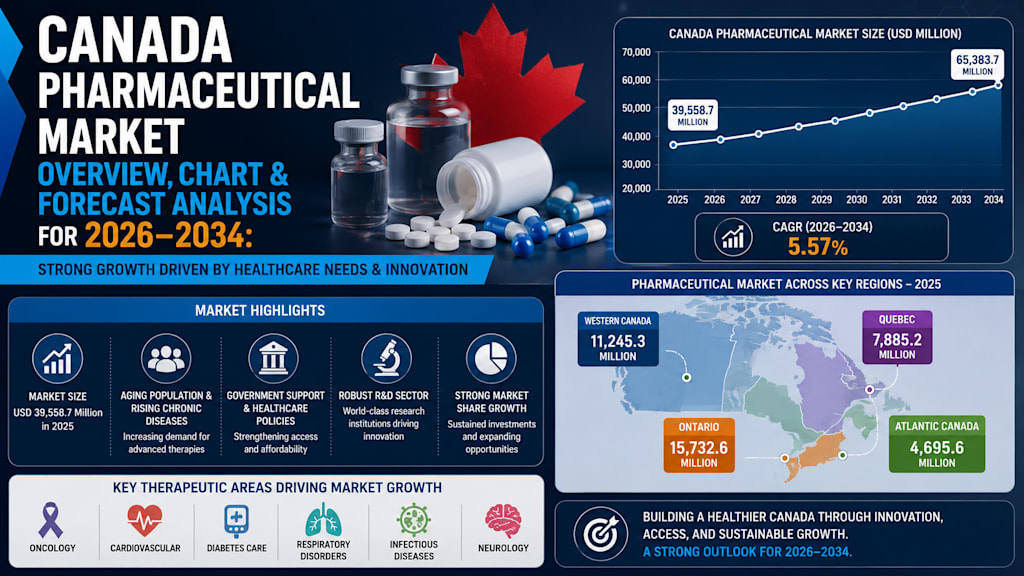
Canada Pharmaceutical Market Size, Share, and Forecast (2026–2034)
The Canada pharmaceutical market plays a significant role in the country's healthcare system by supporting the prevention, diagnosis, and treatment of various medical conditions. According to Market the Canada pharmaceutical market reached a value of USD 39,558.7 million in 2025. The market is projected to reach USD 65,383.7 million by 2034, expanding at a CAGR of 5.57% during 2026–2034.
Several factors are contributing to market growth. Canada's aging population is increasing the demand for medications used to manage chronic diseases and age-related conditions. Rising healthcare expenditure, continuous pharmaceutical research activities, and supportive healthcare policies are also creating favorable conditions for industry expansion. In addition, advancements in drug development and growing access to specialized therapies are influencing market performance across the country.
Key Growth Drivers Shaping the Canada Pharmaceutical Market
One of the primary factors supporting the pharmaceutical industry in Canada is the increasing prevalence of chronic diseases. Conditions such as diabetes, cardiovascular diseases, respiratory disorders, and cancer require long-term treatment and medication management. As a result, demand for prescription medicines continues to rise.
The aging demographic profile of Canada is another important growth driver. Older adults generally require more healthcare services and pharmaceutical products compared to younger populations. This trend is expected to contribute to sustained demand for both traditional and specialized medications.
Government support for healthcare programs also plays an important role. Public healthcare coverage and investments in healthcare infrastructure help improve access to pharmaceutical products. In addition, increased awareness of preventive healthcare and early disease diagnosis supports greater utilization of medications and therapeutic treatments.
Prescription Drug Demand Trends Across Canada
Prescription drugs account for a major portion of pharmaceutical spending in Canada. Demand is increasing across several therapeutic categories, particularly for treatments related to chronic illnesses and complex medical conditions.
Healthcare providers are focusing on disease management strategies that require continuous medication use, which contributes to higher prescription volumes. At the same time, greater access to healthcare services is helping more patients receive appropriate diagnoses and treatment plans.
Digital healthcare solutions are also influencing prescription drug utilization. Telemedicine platforms and electronic prescribing systems have improved communication between healthcare professionals and patients. These technologies help streamline prescription management and support continuity of care, especially for individuals living in remote regions.
The increasing focus on personalized treatment approaches is further shaping prescription drug demand. Healthcare providers are seeking therapies that align with individual patient needs, leading to greater use of targeted pharmaceutical products.
Biologics, Biosimilars, and Specialty Pharmaceuticals: Market Developments
Biologics have become an important segment of the Canadian pharmaceutical industry. These products are widely used in the treatment of complex diseases, including autoimmune disorders, cancer, and rare medical conditions. Their growing adoption reflects the increasing demand for advanced therapeutic options.
At the same time, biosimilars are gaining attention within the healthcare system. Biosimilars offer alternatives to existing biologic medicines and can help improve affordability while maintaining therapeutic effectiveness. As healthcare providers and policymakers seek cost-effective treatment solutions, the adoption of biosimilars is expected to continue increasing.
Specialty pharmaceuticals are also becoming more significant. These products often address conditions that require specialized administration, monitoring, or patient support services. Growth in specialty pharmaceuticals reflects ongoing innovation in drug development and the increasing availability of treatments for complex diseases.
Manufacturers are investing in research programs aimed at expanding therapeutic applications and improving patient outcomes, supporting continued development in these segments.
Pharmaceutical Research, Clinical Trials, and Innovation Trends in Canada
Canada maintains a strong position in pharmaceutical research and development. The country benefits from established research institutions, universities, healthcare organizations, and collaborative partnerships that support scientific advancement.
Clinical trials remain an important component of pharmaceutical innovation. Research activities help evaluate the safety and effectiveness of new therapies while providing patients with access to emerging treatment options. Canada continues to attract clinical trial investments due to its skilled workforce, healthcare infrastructure, and research capabilities.
Innovation is also being supported through advancements in biotechnology, precision medicine, and data-driven healthcare solutions. Researchers are exploring new approaches to disease treatment, including targeted therapies and advanced drug delivery systems.
Collaboration between pharmaceutical companies, academic institutions, and healthcare providers is helping accelerate the development of new medicines. These partnerships contribute to knowledge sharing and support the introduction of innovative therapies into the market.
Regulatory Framework and Drug Approval Landscape
Canada's pharmaceutical industry operates within a structured regulatory environment designed to ensure the safety, quality, and effectiveness of medications. Regulatory oversight plays a critical role in maintaining public confidence in pharmaceutical products.
Drug approval processes involve comprehensive evaluations before products can be introduced to the market. Manufacturers are required to provide scientific evidence regarding product safety, efficacy, and manufacturing standards.
Regulatory agencies also monitor pharmaceutical products after approval to identify potential safety concerns and ensure ongoing compliance. This process helps maintain high standards throughout a product's lifecycle.
In recent years, efforts have been made to improve efficiency within regulatory review processes while maintaining rigorous safety requirements. These developments support timely access to innovative therapies without compromising patient protection.
Challenges in Pricing, Reimbursement, and Supply Chain Operations
Despite positive growth prospects, the Canadian pharmaceutical market faces several challenges. Pricing pressures remain an important issue for manufacturers, healthcare providers, and policymakers. Balancing innovation with affordability continues to be a key consideration across the healthcare system.
Reimbursement policies can also influence market access for pharmaceutical products. Companies must navigate complex reimbursement processes to ensure that patients can access treatments through public and private healthcare programs.
Supply chain management has become another area of focus. Pharmaceutical manufacturers and distributors must maintain stable product availability while addressing challenges related to sourcing, transportation, and inventory management.
In addition, increasing development costs and regulatory requirements can create operational challenges for industry participants. Companies are seeking strategies to improve efficiency while continuing to invest in research and innovation.
Investment Opportunities in the Canada Pharmaceutical Industry
The Canadian pharmaceutical sector offers a range of investment opportunities across research, manufacturing, biotechnology, and specialized healthcare services. Growing demand for advanced therapies is encouraging investment in innovative treatment development.
Biotechnology companies continue to attract attention due to their role in developing new therapeutic solutions. Areas such as biologics, gene-based treatments, and precision medicine are generating interest among investors and industry stakeholders.
Clinical research infrastructure also presents opportunities for growth. Investments in clinical trials and research collaborations can support the development of future pharmaceutical products while strengthening Canada's position in global healthcare innovation.
In addition, digital health technologies are creating opportunities for companies involved in healthcare data management, remote patient monitoring, and pharmaceutical service delivery.
Competitive Landscape and Leading Pharmaceutical Companies in Canada
The Canada pharmaceutical market is characterized by the presence of both multinational pharmaceutical companies and domestic industry participants. Competition is driven by factors such as product development, research capabilities, therapeutic specialization, and market reach.
Companies are focusing on expanding product portfolios, strengthening research initiatives, and forming strategic partnerships to enhance their market positions. Investments in biologics, specialty pharmaceuticals, and innovative treatment platforms remain important areas of activity.
Industry participants are also emphasizing operational efficiency, supply chain resilience, and regulatory compliance to support long-term growth. As healthcare needs continue to evolve, companies are adapting their strategies to address changing patient requirements and emerging treatment opportunities.
Overall, the Canadian pharmaceutical industry is expected to maintain steady growth during the forecast period, supported by demographic trends, ongoing research activities, and increasing demand for advanced healthcare solutions.
About the Creator
Kim Soo hyun
My name is Kim Soo hyun, and I am a research analyst at IMARC Group, specializing in market trends and data analysis to provide insights and support strategic decision-making.
Enjoyed the story? Support the Creator.
Subscribe for free to receive all their stories in your feed.
Comments
There are no comments for this story
Be the first to respond and start the conversation.