
Canada Microgreens Market Size, Share, Trends, and Growth Outlook 2034
Canada Microgreens Market Size Trends, Growth Demand & Forecast 2026-2034

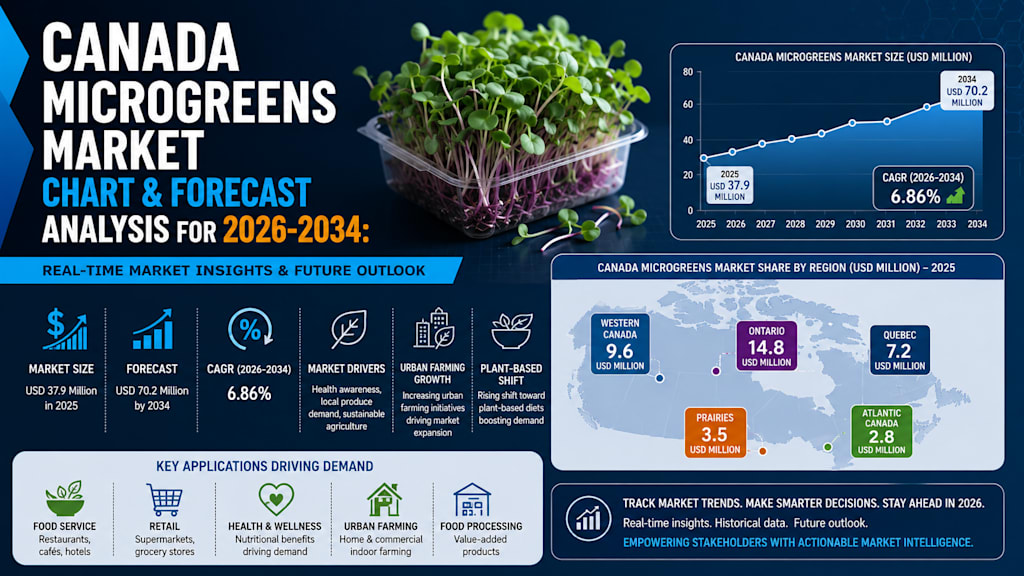
Canada Microgreens Market Size, Share, and Forecast (2026–2034)
The Canada microgreens market is experiencing steady growth as consumers increasingly seek fresh, nutrient-rich foods. Microgreens are young vegetable greens harvested shortly after germination and are widely valued for their flavor, color, and nutritional content. These products are commonly used in salads, sandwiches, soups, and gourmet dishes.
According to market the Canada microgreens market reached a value of USD 37.9 million in 2025. The market is expected to grow to USD 70.2 million by 2034, exhibiting a CAGR of 6.86% during 2026–2034. Growing awareness about healthy eating habits, increasing demand for locally produced food, and expanding urban farming activities are supporting market growth. The adoption of sustainable agricultural practices and the rising popularity of plant-based diets are also creating favorable conditions for the industry.
Key Growth Drivers Shaping the Canada Microgreens Market
Several factors are contributing to the development of the microgreens market in Canada. One of the primary growth drivers is the increasing focus on nutrition among consumers. People are paying greater attention to the quality of food they consume and are actively looking for products that offer vitamins, minerals, and antioxidants.
The demand for locally grown produce is another important factor. Many consumers prefer food products that are cultivated closer to their communities because of perceived freshness and reduced transportation requirements. This trend has encouraged local farms and indoor growers to expand microgreens production.
Support for sustainable agriculture is also contributing to market growth. Microgreens require less land and water compared to many conventional crops, making them an attractive option for producers seeking efficient farming methods. As environmental concerns continue to influence purchasing decisions, the market is expected to benefit from increasing interest in sustainable food production systems.
Consumer Health and Wellness Trends Increasing Demand for Microgreens
Health and wellness trends are playing a significant role in the growing popularity of microgreens. Consumers are increasingly incorporating fresh vegetables into their diets to support overall well-being. Microgreens have gained attention because they can be easily added to various meals while providing nutritional value.
The growing interest in plant-based eating patterns is further supporting demand. Many individuals are choosing diets that emphasize vegetables, fruits, and other plant-derived foods. As a result, products such as microgreens are becoming more common in households seeking diverse and nutritious ingredients.
Younger consumers are also showing interest in functional foods that support healthy lifestyles. The demand for fresh and minimally processed products has encouraged retailers and food suppliers to expand their offerings. This shift in consumer preferences is expected to remain an important factor supporting market growth during the forecast period.
Indoor Farming and Vertical Agriculture Expansion Supporting Market Growth
Indoor farming and vertical agriculture have become increasingly important within the Canadian agricultural sector. These production methods allow growers to cultivate crops in controlled environments, reducing dependence on seasonal weather conditions.
Microgreens are particularly well suited for indoor cultivation because they require relatively small growing areas and short production cycles. This allows producers to harvest crops multiple times throughout the year while maintaining consistent quality.
Urban farming initiatives are also contributing to market expansion. As cities continue to grow, businesses and entrepreneurs are exploring innovative ways to produce fresh food closer to consumers. Indoor farming facilities located in urban areas can reduce transportation distances and improve product availability.
The adoption of controlled-environment agriculture is helping growers manage factors such as temperature, humidity, and lighting more effectively. These capabilities can improve production efficiency and support stable year-round supply.
Commercial Applications of Microgreens in Foodservice, Retail, and Hospitality Sectors
The use of microgreens extends beyond household consumption. Commercial demand from foodservice establishments represents a significant segment of the market. Restaurants often use microgreens to enhance the presentation, texture, and flavor of dishes.
The hospitality industry is also increasing its use of specialty produce to meet changing consumer expectations. Hotels, catering companies, and event service providers frequently incorporate microgreens into menu offerings to provide fresh and visually appealing food options.
Retail distribution channels are expanding as well. Supermarkets, specialty grocery stores, and health-focused retailers are offering a wider variety of microgreens products. Improved availability has made it easier for consumers to purchase these products as part of their regular shopping routines.
The growing presence of microgreens across multiple commercial channels is helping broaden market reach and create new business opportunities for producers.
Technology and Innovation Trends in Microgreens Cultivation
Technology is becoming increasingly important in microgreens production. Growers are adopting advanced cultivation systems that improve efficiency and support consistent crop quality.
LED lighting systems are widely used in indoor farming operations to provide controlled light conditions. These technologies can support plant growth while helping manage energy consumption. Automated irrigation systems are also becoming more common, allowing producers to optimize water use and reduce operational inefficiencies.
Data-driven farming practices are gaining attention as growers seek better control over production environments. Monitoring systems can help track temperature, humidity, and other growing conditions, enabling informed decision-making.
Innovation in packaging is another notable trend. Producers are exploring packaging solutions that help maintain freshness and extend product shelf life. These developments can improve product quality throughout transportation and distribution processes.
Challenges in Production Costs, Supply Chain Management, and Product Shelf Life
Despite positive growth prospects, the industry faces several challenges. Production costs remain a key concern for many growers. Indoor farming operations often require investments in equipment, lighting systems, and climate control technologies.
Supply chain management can also present difficulties. Because microgreens are highly perishable, maintaining freshness throughout transportation and storage is essential. Any disruptions in logistics can affect product quality and increase waste.
Shelf life limitations represent another challenge. Compared to some conventional produce categories, microgreens require careful handling and storage conditions. Producers and retailers must work together to ensure products reach consumers in optimal condition.
Addressing these challenges will remain important for companies seeking long-term growth and operational efficiency within the market.
Investment and Business Opportunities in the Canada Microgreens Market
The expanding market presents several opportunities for businesses and investors. Growing consumer demand for healthy and locally sourced food products is encouraging the establishment of new production facilities and urban farming operations.
Investment opportunities are emerging in controlled-environment agriculture technologies, including automation systems, energy-efficient lighting, and advanced monitoring solutions. These technologies can help improve productivity while supporting sustainable production practices.
Partnerships between growers, retailers, and foodservice providers are also creating opportunities for market expansion. Businesses that can offer reliable supply, product quality, and efficient distribution may strengthen their competitive position.
As awareness of microgreens continues to increase, demand from both consumers and commercial buyers is expected to support future market development.
Competitive Landscape and Leading Companies in the Canada Microgreens Industry
The Canada microgreens market consists of a mix of specialized growers, indoor farming companies, and regional agricultural businesses. Competition is largely based on product quality, freshness, production efficiency, and distribution capabilities.
Many companies are investing in indoor farming infrastructure to improve year-round production and meet growing demand. Businesses are also focusing on sustainable cultivation methods and operational efficiency to strengthen market presence.
Partnerships with retailers, restaurants, and foodservice providers continue to play an important role in market expansion. As the industry develops, companies that successfully balance product quality, supply reliability, and cost management are expected to remain competitive.
With increasing consumer interest in healthy eating, sustainable agriculture, and locally produced food, the Canada microgreens market is expected to maintain steady growth through 2034.
About the Creator
Kim Soo hyun
My name is Kim Soo hyun, and I am a research analyst at IMARC Group, specializing in market trends and data analysis to provide insights and support strategic decision-making.
Enjoyed the story? Support the Creator.
Subscribe for free to receive all their stories in your feed.
Comments
There are no comments for this story
Be the first to respond and start the conversation.