
Canada Bakery Products Market Size Growth Share Trends Demand & Forecast 2034
The Canada bakery products market size reached USD 11,127.6 Million in 2025 market to reach USD 15,648.5 Million by 2034

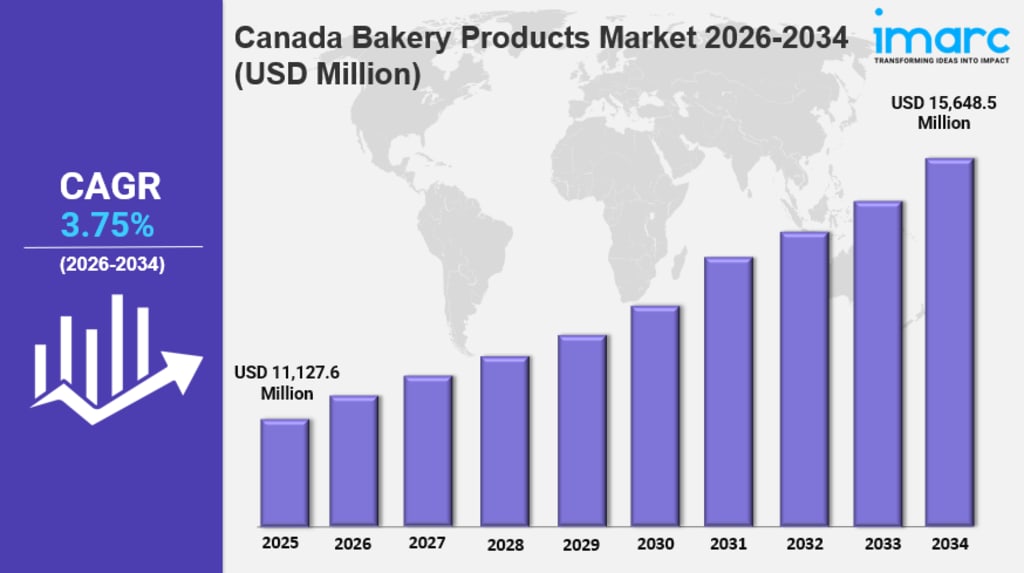
Canada Bakery Products Market Size, Share, and Growth Forecast (2026–2034)
The Canada bakery products market is evolving from a volume-driven category into a more value-focused business, where product differentiation and positioning play a larger role in growth. The market reached USD 11,127.6 million in 2025 and is expected to grow to USD 15,648.5 million by 2034, at a CAGR of 3.75%.
For manufacturers and suppliers, this growth is steady rather than aggressive, which makes execution more important than expansion alone. Demand is being shaped by changing eating habits, particularly the shift toward healthier and more convenient food options. Urban lifestyles and time constraints are pushing consumers toward ready-to-eat bakery products, while at the same time, there is a growing willingness to pay more for quality and perceived health benefits.
Request a Sample Report with Latest 2026 Data & Forecasts:
Product Trends Shaping the Canada Bakery Products Market: Artisan, Health-Focused, and Convenience Segments
Product innovation is becoming a key differentiator in the Canadian bakery market. Artisan-style products, which emphasize traditional baking methods and premium ingredients, are gaining traction among consumers looking for quality over mass production. This trend is particularly strong in urban centers, where smaller batch products are seen as more authentic.
Health-focused bakery items are also expanding. Gluten-free, organic, and high-fiber products are no longer niche—they are becoming part of mainstream demand. For producers, this means rethinking ingredient sourcing and production processes to meet both regulatory standards and consumer expectations.
Convenience remains equally important. Packaged snacks, ready-to-eat items, and portion-controlled bakery products are seeing consistent demand. Businesses that can combine health benefits with convenience are finding it easier to stand out in a competitive market.
Consumer Demand Shifts in Canada’s Bakery Industry: Premiumization and Clean-Label Preferences
Consumer behavior in the bakery segment is shifting toward more informed and selective purchasing. Buyers are paying closer attention to ingredient lists, sourcing, and nutritional value. Clean-label products—those with fewer and more recognizable ingredients—are becoming a preference rather than a differentiator.
Premiumization is another noticeable shift. Consumers are willing to pay higher prices for products that offer better taste, quality, or health benefits. This creates an opportunity for brands to move away from price-based competition and focus on value.
For B2B players, especially ingredient suppliers and manufacturers, these changes require closer collaboration across the supply chain. Transparency, consistency, and product quality are becoming essential factors in maintaining long-term business relationships.
Supply Chain, Raw Material Costs, and Margin Pressures in the Canada Bakery Market
Managing costs is one of the more complex challenges in the bakery industry. Prices of key raw materials such as wheat, sugar, and dairy products can fluctuate due to global supply conditions, directly impacting production costs.
At the same time, energy and transportation costs are adding pressure on margins. For many businesses, passing these costs on to consumers is not always feasible, especially in a price-sensitive segment.
This has led to a stronger focus on operational efficiency. Companies are optimizing production processes, reducing waste, and improving supply chain coordination to maintain profitability. Long-term supplier agreements and local sourcing strategies are also being explored to manage cost volatility more effectively.
Growth Opportunities in Frozen and Packaged Bakery Segments in Canada
Frozen and packaged bakery products are emerging as strong growth areas within the broader market. Frozen products offer longer shelf life and flexibility in distribution, making them attractive for both retailers and foodservice providers.
Packaged bakery items, particularly those designed for on-the-go consumption, are benefiting from changing lifestyles. Single-serve portions and resealable packaging formats are gaining popularity, especially among working professionals and younger consumers.
For businesses, these segments provide scalability. They allow for wider distribution, reduced waste, and better inventory management. Companies that invest in packaging innovation and cold chain logistics can unlock additional value in these categories.
Distribution Channels and Retail Expansion Strategies in the Canada Bakery Products Market
Distribution strategies are becoming more diversified. Traditional retail channels such as supermarkets and hypermarkets continue to dominate, but there is growing importance of convenience stores, specialty outlets, and online platforms.
Retailers are also expanding private-label offerings, which creates both competition and partnership opportunities for manufacturers. For suppliers, working closely with retailers to develop exclusive product lines can help secure long-term contracts.
E-commerce is gradually gaining traction in the bakery segment, particularly for packaged goods. While fresh products still rely heavily on physical stores, digital channels are becoming an important touchpoint for brand visibility and customer engagement.
Competitive Landscape and Key Players in the Canada Bakery Products Industry
The Canadian bakery market includes a mix of large-scale producers and regional players. Companies such as Grupo Bimbo, George Weston Limited, and Canada Bread Company have established strong distribution networks and product portfolios.
At the same time, smaller and local bakeries are competing by focusing on niche segments such as artisan and organic products. This creates a balanced competitive environment where scale and specialization both have a role.
For B2B stakeholders, success in this market depends on adaptability. Companies that can respond quickly to changing consumer preferences, manage costs effectively, and maintain consistent product quality are more likely to build sustainable growth in the Canada bakery products industry.
About the Creator
Kim Soo hyun
My name is Kim Soo hyun, and I am a research analyst at IMARC Group, specializing in market trends and data analysis to provide insights and support strategic decision-making.
Enjoyed the story? Support the Creator.
Subscribe for free to receive all their stories in your feed.
Comments
There are no comments for this story
Be the first to respond and start the conversation.