
Canada Automotive Electronics Market Size, Share, Trends & Forecast 2026–2034
The Canada automotive electronics market size reached USD 17,172.6 Million in 2025. Looking forward, IMARC Group expects the market to reach USD 31,133.1 Million by 2034, exhibiting a growth rate (CAGR) of 6.63% during 2026-2034.

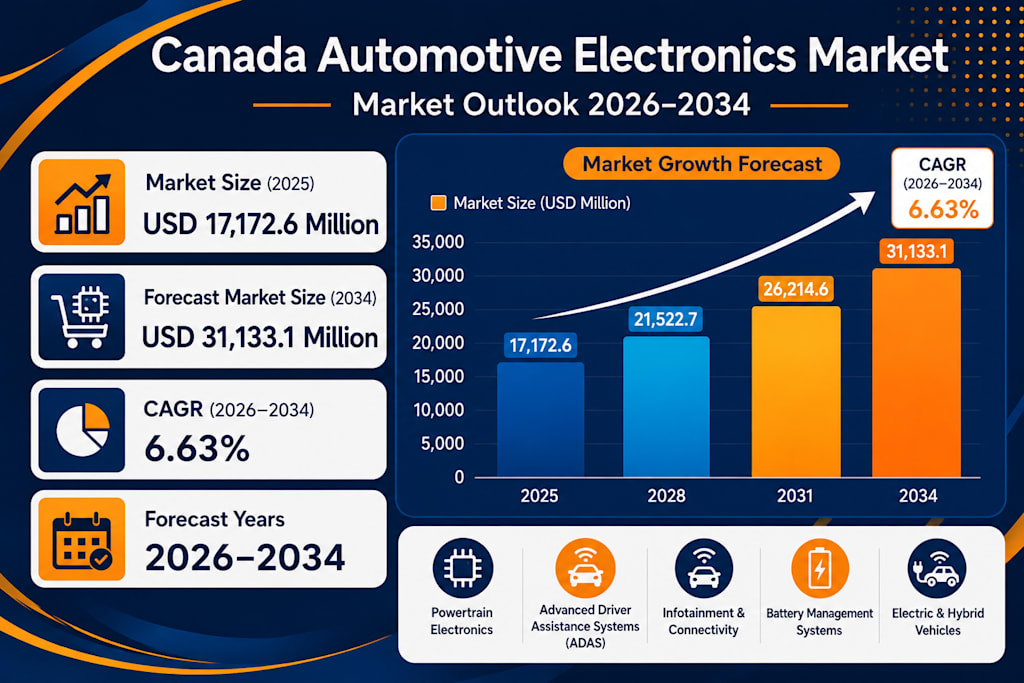
Canada Automotive Electronics Market Size, Growth, and Forecast (2026–2034)
The automotive industry is experiencing one of the most significant technological transformations in its history. Modern vehicles are no longer defined solely by mechanical performance; they increasingly rely on sophisticated electronic systems that enhance safety, connectivity, efficiency, and driving experiences. From advanced driver-assistance systems to intelligent infotainment platforms, automotive electronics are becoming the backbone of next-generation mobility.
In 2026, Canada continues to embrace this technological evolution as consumers, manufacturers, and policymakers prioritize smarter and more sustainable transportation solutions. The growing popularity of electric vehicles, connected cars, and digital mobility services is creating new opportunities for innovation across the automotive ecosystem.
The Canada automotive electronics market reached USD 17,172.6 Million in 2025 and is projected to grow to USD 31,133.1 Million by 2034, exhibiting a compound annual growth rate (CAGR) of 6.63% during 2026–2034. This growth reflects the increasing importance of electronics in modern vehicle design and functionality.
Request a Sample Report with Latest 2026 Data & Forecasts:
Understanding Automotive Electronics
Automotive electronics refer to electronic systems and components integrated into vehicles to improve performance, safety, communication, and convenience. These systems include sensors, control units, navigation technologies, infotainment platforms, battery management systems, and driver-assistance technologies.
As vehicles become increasingly digital, electronics play a critical role in enabling intelligent features that improve both driver and passenger experiences.
Today, many consumers consider technology features just as important as traditional vehicle characteristics such as fuel efficiency and performance.
Key Trends Shaping the Canada Automotive Electronics Market
Several important trends are influencing the market's development:
• Rapid growth in electric vehicle adoption
• Rising demand for advanced driver-assistance systems (ADAS)
• Expansion of connected vehicle technologies
• Increasing integration of Internet of Things (IoT) capabilities
• Growing consumer preference for smart mobility features
These developments are helping redefine how vehicles are designed, manufactured, and operated.
Electric Vehicles Are Driving Electronic Innovation
One of the most influential factors shaping the industry is the accelerating adoption of electric vehicles.
Unlike conventional vehicles, EVs depend heavily on sophisticated electronic systems to manage batteries, optimize energy usage, and monitor vehicle performance. Battery management systems, power electronics, and charging technologies are becoming essential components of modern transportation.
Government initiatives supporting cleaner transportation and reduced emissions are encouraging both manufacturers and consumers to embrace electric mobility solutions.
As EV adoption continues to rise throughout 2026–2034, demand for automotive electronics is expected to grow alongside it.
The Growing Importance of Vehicle Safety
Safety remains a top priority for both regulators and consumers.
Advanced driver-assistance systems have become increasingly common in modern vehicles. Features such as lane departure warnings, adaptive cruise control, automatic emergency braking, and blind-spot monitoring rely on sophisticated sensors and electronic control systems.
These technologies help reduce accident risks and improve overall road safety.
Supportive government regulations and safety standards are encouraging manufacturers to integrate more advanced electronic safety features into vehicles sold across Canada.
Connectivity Is Transforming the Driving Experience
Consumers today expect their vehicles to provide seamless digital experiences similar to those available on smartphones and other connected devices.
Connected vehicle technologies allow drivers to access navigation services, real-time traffic updates, remote diagnostics, entertainment platforms, and over-the-air software updates.
The integration of Internet of Things technology is making vehicles more intelligent and responsive.
These connected systems enhance convenience while providing manufacturers with valuable operational data that can improve vehicle performance and maintenance.
How Artificial Intelligence Is Enhancing Automotive Systems
Artificial intelligence is becoming increasingly important in automotive innovation.
AI-powered systems can process large volumes of data generated by sensors and connected devices to support safer and more efficient driving experiences.
Machine learning algorithms help improve navigation accuracy, predictive maintenance capabilities, and driver-assistance performance.
As artificial intelligence technologies continue advancing, they are expected to become even more integrated into vehicle operations and mobility services.
Investment Opportunities in the Market
The continued expansion of automotive electronics presents significant opportunities for investors and businesses.
Companies are investing heavily in electric vehicle technologies, semiconductor development, connected mobility platforms, and intelligent transportation systems.
There is also growing interest in autonomous driving technologies, advanced sensors, and vehicle software solutions.
Partnerships between automakers, technology providers, and electronics manufacturers are accelerating innovation and creating new growth opportunities across the industry.
With strong demand expected through 2034, the sector offers attractive long-term investment potential.
Challenges Facing the Industry
Despite strong growth prospects, several challenges remain.
The automotive sector continues to face supply chain pressures, particularly involving semiconductor availability and component sourcing.
Rapid technological change requires continuous research and development investment.
Cybersecurity concerns are also becoming increasingly important as connected vehicles generate and exchange larger volumes of data.
Additionally, balancing affordability with advanced technological features remains an ongoing challenge for manufacturers.
Future Outlook (2026–2034)
Looking ahead, the Canada automotive electronics market is expected to maintain steady growth as vehicles become increasingly connected, electrified, and intelligent.
Between 2026 and 2034, demand for advanced safety systems, electric vehicle technologies, IoT-enabled solutions, and digital mobility services is likely to increase significantly. Manufacturers will continue prioritizing innovation to meet evolving consumer expectations and regulatory requirements.
Future developments may include enhanced autonomous driving capabilities, smarter battery technologies, next-generation connectivity platforms, and more sophisticated artificial intelligence applications.
These innovations are expected to reshape transportation and strengthen the role of automotive electronics in the future of mobility.
Conclusion
The Canada automotive electronics market is entering a dynamic period of growth driven by vehicle electrification, advanced safety technologies, connectivity, and consumer demand for intelligent transportation solutions. As automotive innovation accelerates, electronics are becoming central to vehicle performance and user experiences.
Although challenges such as supply chain disruptions and cybersecurity concerns remain, ongoing investment and technological advancement are supporting long-term market development. As the industry evolves through 2026–2034, automotive electronics will continue playing a critical role in shaping the future of transportation across Canada.
About the Creator
Jackson Watson
I'm a market research analyst at Imarc group company delivering data-driven insights, industry analysis, and customized research solutions. We support businesses with market sizing, competitive analysis, and strategic decision-making.
Enjoyed the story? Support the Creator.
Subscribe for free to receive all their stories in your feed.
Comments
There are no comments for this story
Be the first to respond and start the conversation.