
Can India’s Urinary Tract Infection Treatment Market Reach US$ 526 Million as Healthcare Access and Awareness Continue to Improve?
Rising infection prevalence, improved diagnostics, growing healthcare awareness, and expanding treatment accessibility are shaping the future of India’s UTI treatment industry.


Urinary tract infections (UTIs) are among the most common bacterial infections affecting millions of people worldwide each year. Although often considered a routine medical condition, UTIs can significantly impact quality of life, productivity, and overall health if left untreated. In India, changing lifestyles, growing health awareness, improved healthcare access, and advancements in medical diagnostics are transforming how urinary tract infections are identified, managed, and treated.
As awareness regarding infection symptoms and preventive healthcare continues to increase, more patients are seeking timely medical attention. At the same time, healthcare providers are adopting advanced diagnostic technologies and more effective treatment strategies to improve patient outcomes. These developments are creating significant opportunities for pharmaceutical companies, healthcare providers, and diagnostic service providers operating in the urinary tract infection treatment market.
According to Renub Research, the India Urinary Tract Infection Treatment Market is expected to grow from US$ 392.34 million in 2025 to US$ 526.41 million by 2034, expanding at a CAGR of 3.32% between 2026 and 2034. The market’s growth is being supported by rising infection prevalence, increasing healthcare awareness, improved diagnostic capabilities, and expanding access to effective treatment solutions.
The projected growth demonstrates the increasing importance of timely diagnosis, patient education, and accessible healthcare services in addressing one of the most common infectious conditions affecting the population.
Understanding the Burden of Urinary Tract Infections
Urinary tract infections occur when bacteria enter the urinary system and multiply, leading to inflammation and infection. These infections may affect the bladder, urethra, kidneys, or other components of the urinary tract.
Although UTIs can affect individuals of all ages and genders, women are particularly vulnerable due to anatomical factors. Elderly individuals, patients with diabetes, pregnant women, and those with weakened immune systems also face a higher risk of developing infections.
Common symptoms include painful urination, frequent urination, abdominal discomfort, pelvic pain, fever, and cloudy urine. If left untreated, infections can spread to the kidneys and cause serious health complications.
Because of their high prevalence and recurring nature, UTIs continue to represent a major healthcare concern across India.
Rising Prevalence Is Driving Treatment Demand
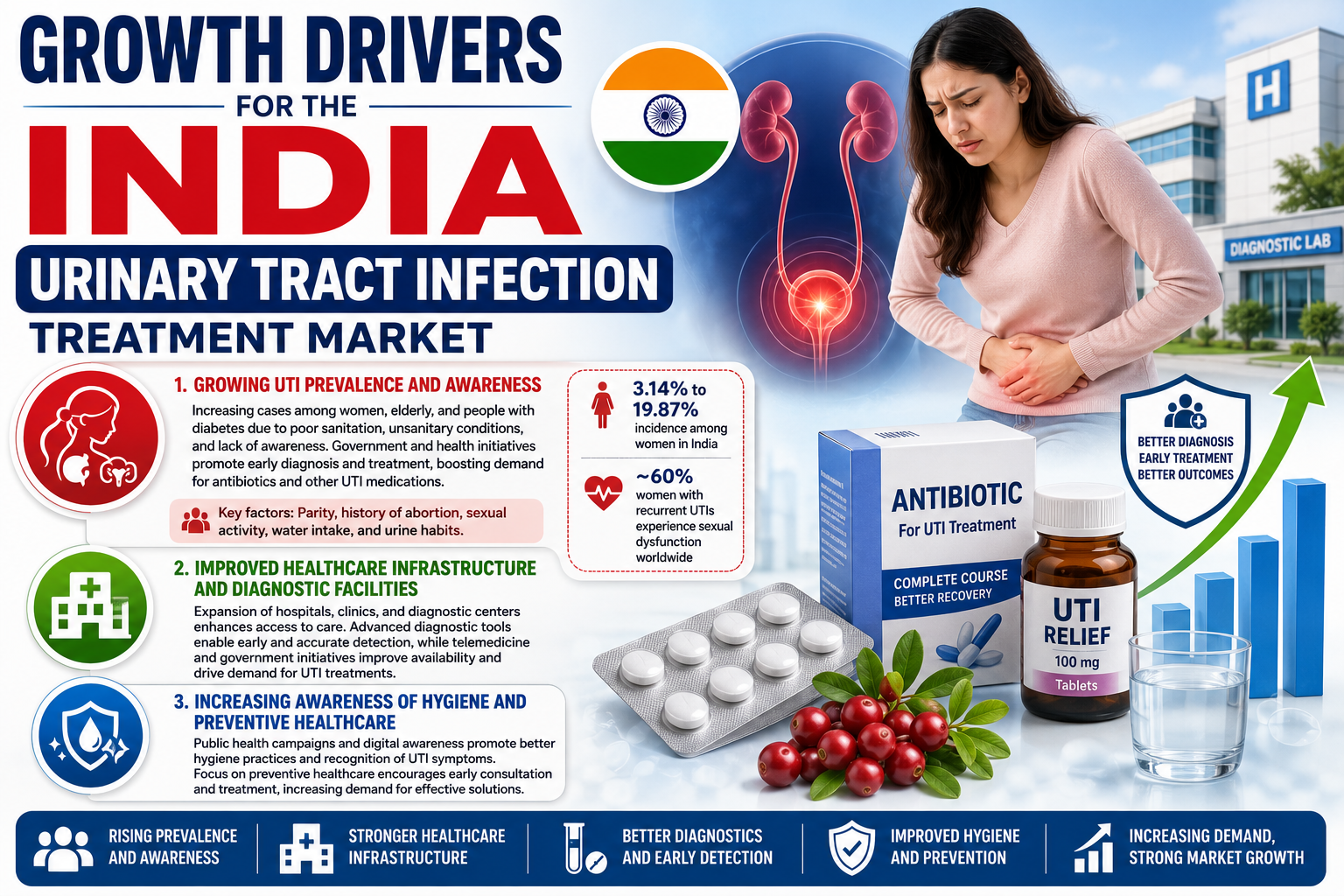
One of the most important factors supporting market growth is the increasing prevalence of urinary tract infections throughout the country.
Several factors contribute to the growing number of cases, including poor sanitation conditions, inadequate hygiene practices, lifestyle changes, increasing diabetes prevalence, and limited awareness regarding infection prevention.
Women remain disproportionately affected by UTIs. According to the report, the incidence among women in India ranges from 3.14% to 19.87%, with factors such as parity, abortion history, sexual activity, water intake, and urinary habits playing important roles in infection risk. The report also notes that approximately 60% of women with recurrent UTIs experience sexual dysfunction, highlighting the broader impact of the condition on overall well-being.
As awareness increases and more individuals seek medical attention for symptoms, demand for treatment solutions continues to expand.
Awareness Is Encouraging Earlier Diagnosis
Historically, many UTI cases in India went undiagnosed or untreated due to limited awareness and social stigma surrounding urinary health issues.
Today, this situation is gradually changing.
Public health campaigns, women's health initiatives, healthcare education programs, and digital health information platforms are helping individuals recognize symptoms and understand the importance of seeking timely treatment.
Patients are increasingly aware that delaying treatment can lead to complications, including kidney infections and chronic urinary issues.
Greater awareness encourages earlier consultations with healthcare providers, leading to faster diagnosis and more effective treatment outcomes.
This trend is expected to continue supporting growth within the UTI treatment market over the coming decade.
Improvements in Healthcare Infrastructure Support Growth
India’s healthcare infrastructure has undergone substantial development in recent years.
The expansion of hospitals, diagnostic centers, clinics, specialty healthcare facilities, and private medical institutions has significantly improved access to healthcare services across both urban and semi-urban regions.
Advanced diagnostic tools now enable healthcare professionals to identify infections more accurately and efficiently than ever before.
Laboratory testing, urine culture analysis, and rapid diagnostic techniques allow physicians to determine the cause of infection and prescribe appropriate treatment regimens.
Improved healthcare accessibility ensures that more patients can receive timely medical attention, reducing the likelihood of complications and supporting better health outcomes.
As healthcare infrastructure continues to expand, demand for UTI treatment solutions is expected to increase further.
Telemedicine Is Expanding Access to Care
The rapid growth of telemedicine is transforming healthcare delivery throughout India.
Digital healthcare platforms now enable patients to consult physicians remotely, receive prescriptions, and access medical guidance without visiting healthcare facilities in person.
This development is particularly beneficial for patients living in rural or underserved areas where access to specialists may be limited.
For common conditions such as urinary tract infections, telemedicine offers a convenient pathway to diagnosis and treatment.
Patients can discuss symptoms, receive professional advice, and obtain medication recommendations quickly and efficiently.
As digital healthcare adoption continues to grow, telemedicine is expected to play an increasingly important role in improving treatment accessibility.
Pharmaceutical Innovation Is Improving Treatment Options
Advancements in pharmaceutical research are contributing to the evolution of UTI treatment strategies.
Traditionally, antibiotics have served as the primary treatment approach for urinary tract infections. However, growing concerns regarding antibiotic resistance have encouraged pharmaceutical companies to develop more targeted and effective therapies.
Manufacturers are investing in research aimed at improving treatment outcomes, minimizing side effects, and addressing resistant bacterial strains.
New formulations, combination therapies, and optimized dosing strategies are helping healthcare providers manage infections more effectively.
The ongoing focus on pharmaceutical innovation is expected to strengthen the market while supporting improved patient outcomes.
Preventive Healthcare Is Becoming a Priority
Preventive healthcare is emerging as a major trend within India's healthcare landscape.
Consumers are increasingly adopting proactive approaches to maintaining their health, focusing on prevention rather than treatment alone.
Public health initiatives promoting sanitation, hygiene, hydration, and infection prevention are helping reduce UTI risk while encouraging early medical intervention when symptoms occur.
Educational campaigns emphasize simple preventive measures such as maintaining proper hydration, practicing good personal hygiene, and seeking timely medical advice when symptoms arise.
As preventive healthcare awareness continues to increase, patients are becoming more engaged in managing their health and reducing infection-related risks.
Antibiotics Remain the Foundation of Treatment
Antibiotic therapy continues to represent the primary treatment approach for urinary tract infections.
The market includes a variety of therapeutic categories including penicillin and combinations, quinolones, cephalosporins, aminoglycoside antibiotics, sulphonamides, azoles, amphotericin B, tetracycline-based treatments, nitrofurans such as nitrofurantoin, and other specialized therapies.
Treatment selection typically depends on factors such as infection severity, bacterial susceptibility, patient medical history, and physician recommendations.
The availability of diverse treatment options enables healthcare providers to tailor therapies according to individual patient needs.
Women’s Health Continues to Influence Market Demand
Women account for a significant share of UTI treatment demand due to their increased susceptibility to infections.
Growing awareness regarding women’s health issues, reproductive health, and preventive care has contributed to greater healthcare utilization among female patients.
Healthcare providers, government organizations, and non-profit groups continue to promote educational initiatives focused on recognizing symptoms and seeking prompt treatment.
As awareness of women’s healthcare needs increases, demand for diagnostic services and treatment solutions is expected to remain strong.
Regional Markets Continue to Expand
Demand for UTI treatment services varies across India’s major states.
Maharashtra remains one of the largest markets due to its advanced healthcare infrastructure, high awareness levels, and widespread availability of diagnostic and treatment services.
Tamil Nadu benefits from strong healthcare networks, public health initiatives, and increasing adoption of preventive healthcare practices.
West Bengal continues to experience steady growth driven by improving healthcare accessibility and expanding awareness programs.
Uttar Pradesh represents a significant growth opportunity due to its large population and ongoing healthcare infrastructure development.
These regional markets collectively contribute to the expansion of the national UTI treatment industry.
Challenges Facing the Industry
Despite positive growth prospects, several challenges continue to affect the market.
One of the most significant concerns is antibiotic resistance. The overuse and misuse of antibiotics have contributed to the emergence of resistant bacterial strains, reducing the effectiveness of standard treatment options.
This issue increases treatment complexity and may require alternative medications that are often more expensive and less widely available.
Limited awareness and healthcare access in certain rural areas also remain challenges. Many individuals may not recognize symptoms or may delay seeking treatment, increasing the risk of complications.
Addressing these challenges requires continued investment in education, healthcare infrastructure, regulatory oversight, and pharmaceutical innovation.
Competitive Landscape
The India urinary tract infection treatment market includes participation from several leading global and domestic pharmaceutical companies.
Major players include AstraZeneca, Bayer AG, GlaxoSmithKline PLC, Johnson & Johnson, Novartis AG, Pfizer, Merck & Co., Inc., Dr. Reddy’s Laboratories Ltd, and Bristol-Myers Squibb Company.
These companies continue investing in research, treatment innovation, and healthcare accessibility initiatives to strengthen their positions within the market.
Final Thoughts
India’s urinary tract infection treatment market is poised for steady growth as rising awareness, improved diagnostics, expanding healthcare infrastructure, and preventive healthcare initiatives encourage more patients to seek timely treatment. While challenges such as antibiotic resistance and rural healthcare accessibility remain important concerns, continued innovation and healthcare investment are helping address these issues.
With the market projected to grow from US$ 392.34 million in 2025 to US$ 526.41 million by 2034, the sector will continue to play an important role in improving patient outcomes and supporting public health objectives across the country.
As healthcare delivery becomes more accessible and awareness continues to improve, the UTI treatment industry is expected to contribute significantly to India’s broader healthcare transformation while helping millions of patients receive timely and effective care
About the Creator
Enjoyed the story? Support the Creator.
Subscribe for free to receive all their stories in your feed.
Comments
There are no comments for this story
Be the first to respond and start the conversation.