
Can Africa’s Confectionery Market Reach USD 9.33 Billion by 2034 as Urbanization and Youthful Consumers Drive Demand?
Rising disposable incomes, expanding retail networks, growing urban populations, and evolving consumer preferences are transforming Africa’s confectionery industry.

Africa's confectionery industry is entering an exciting period of transformation. Once dominated primarily by traditional sweets and affordable sugar confectionery products, the market is now evolving rapidly as urbanization, rising disposable incomes, changing lifestyles, and a growing middle class reshape consumer behavior across the continent.
Consumers throughout Africa are increasingly embracing chocolates, candies, chewing gums, lollipops, cereal bars, and other confectionery products as convenient snacks and affordable indulgences. The growing influence of global food trends, modern retail channels, and innovative product offerings is further accelerating demand across both urban and semi-urban markets.
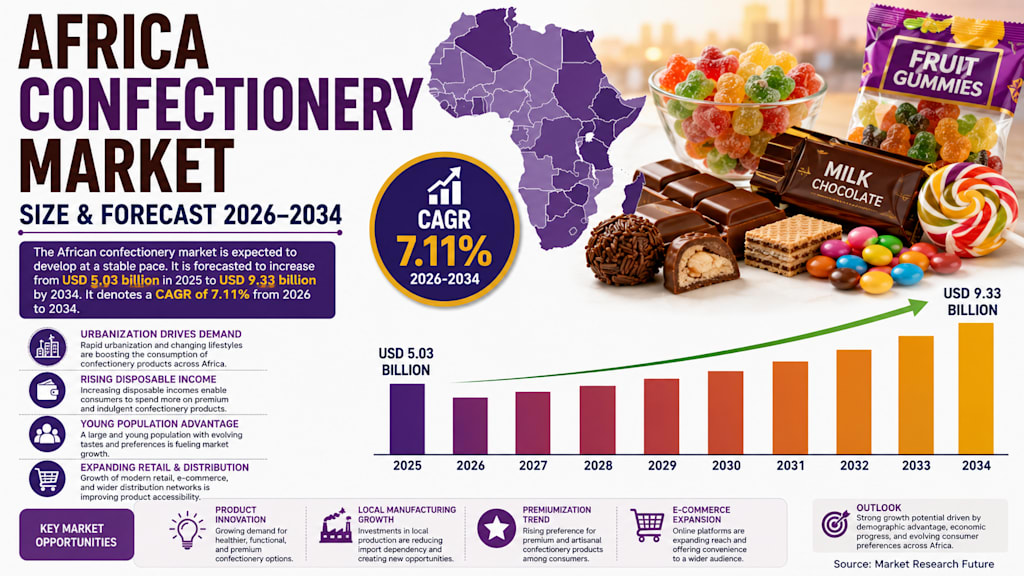
According to Renub Research, the Africa Confectionery Market is expected to grow from USD 5.03 billion in 2025 to USD 9.33 billion by 2034, expanding at a CAGR of 7.11% between 2026 and 2034. This strong growth trajectory highlights the immense opportunities available for confectionery manufacturers operating within one of the world's fastest-growing consumer markets.
Africa's Young Population Is Creating Massive Growth Opportunities
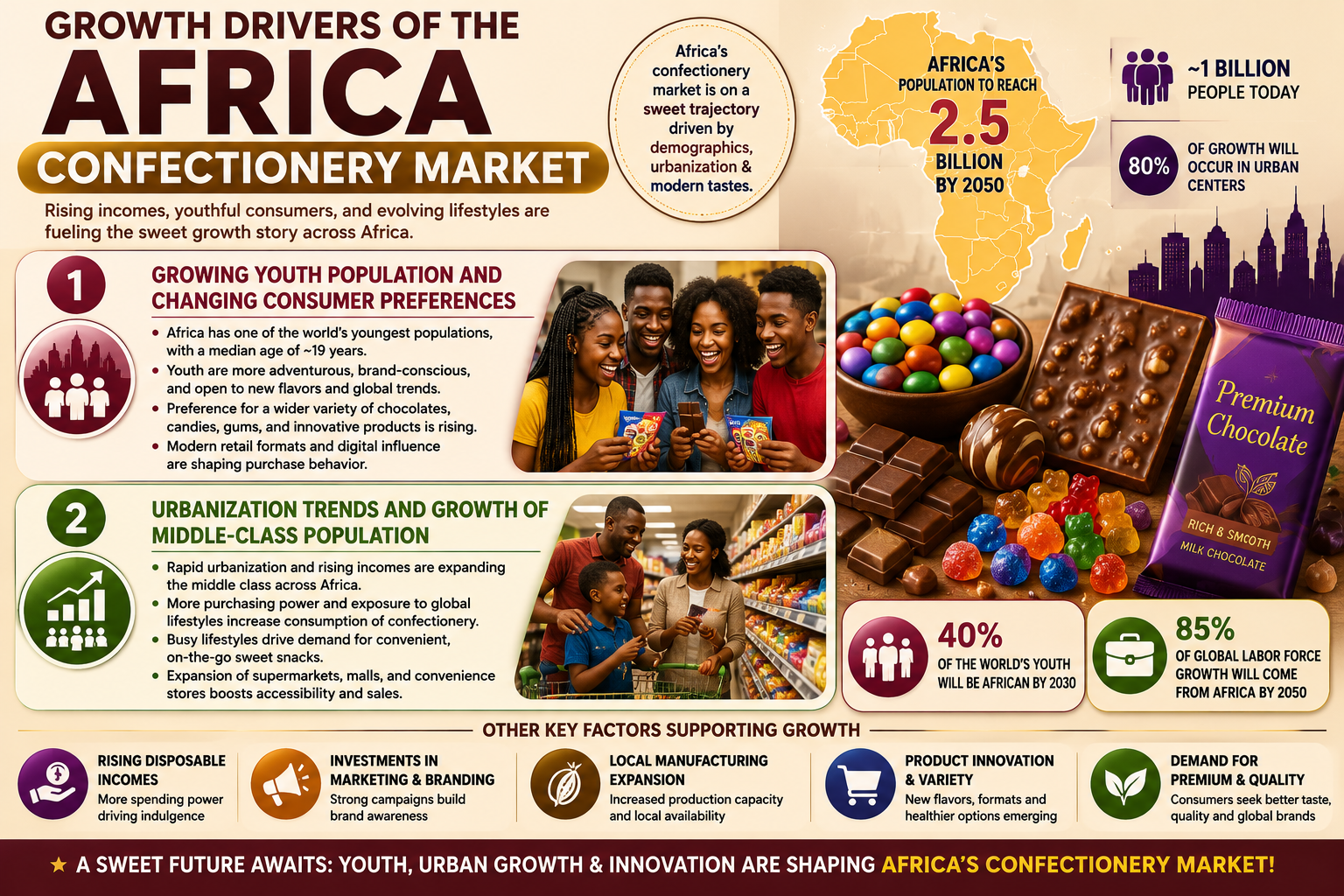
One of the most important drivers behind the expansion of Africa's confectionery market is its rapidly growing and youthful population.
Africa is home to one of the youngest populations globally, with millions of children, teenagers, and young adults representing a significant consumer base for confectionery products. Young consumers are particularly attracted to products that offer exciting flavors, colorful packaging, affordability, and strong brand recognition.
This demographic advantage provides confectionery companies with substantial long-term growth opportunities. Younger consumers often develop brand preferences early in life, creating loyalty that can continue for years.
As population growth continues and younger generations gain greater purchasing power, confectionery demand is expected to rise steadily across the continent.
The combination of population growth and changing consumer habits positions Africa as one of the most promising confectionery markets globally.
Urbanization Is Transforming Consumer Lifestyles
Rapid urbanization is reshaping food consumption patterns throughout Africa.
As more people move into cities, lifestyles become increasingly fast-paced, creating greater demand for convenient snack products that fit busy schedules. Confectionery products benefit directly from this trend because they are affordable, portable, and readily available through multiple retail channels.
Urban consumers are also exposed to a wider variety of international brands and food trends, encouraging experimentation with new products and flavors.
Industry forecasts indicate that Africa's urban population will continue expanding significantly over the coming decades. This urban growth is expected to create a larger customer base for confectionery manufacturers while increasing opportunities for premium and innovative product offerings.
As cities continue to expand, confectionery products are likely to become even more integrated into everyday consumer lifestyles.
Rising Disposable Incomes Are Supporting Market Expansion
Economic development across several African countries is contributing to higher household incomes and stronger consumer spending.
The emergence of a growing middle class has enabled more consumers to purchase discretionary products such as chocolates, candies, gums, and snack bars. While affordability remains important, rising incomes are creating opportunities for both mainstream and premium confectionery products.
Consumers increasingly seek products that offer quality, attractive packaging, and unique flavor experiences.
As purchasing power improves, manufacturers are expanding their product portfolios to include premium chocolates, healthier snacks, and innovative confectionery formats that appeal to evolving consumer preferences.
This gradual shift toward higher-value products is expected to contribute significantly to future market growth.
Changing Consumer Preferences Are Driving Innovation
Consumer preferences across Africa are becoming increasingly sophisticated.
Modern consumers are looking for products that combine affordability with quality, convenience, and variety. International brands, social media exposure, and global food trends are influencing purchasing decisions and encouraging demand for innovative confectionery products.
Manufacturers are responding by introducing new flavors, product formats, packaging designs, and promotional campaigns aimed at attracting younger consumers.
Taste, branding, convenience, and product visibility are becoming increasingly important factors influencing purchase decisions.
The growing popularity of branded confectionery products demonstrates how consumer expectations are evolving beyond basic affordability.
As competition intensifies, innovation will remain critical for attracting and retaining customers.
Retail Expansion Is Improving Product Accessibility
The continued development of Africa's retail infrastructure is significantly contributing to confectionery market growth.
Supermarkets, hypermarkets, convenience stores, shopping malls, and modern retail chains are expanding rapidly across major urban centers. These outlets provide consumers with easier access to a broader range of confectionery products than ever before.
At the same time, traditional retail channels continue to play an essential role in product distribution.
Small shops, kiosks, street vendors, and informal retail networks remain particularly important in rural and semi-urban communities where modern retail infrastructure is still developing.
Major retailers continue expanding throughout the continent. Companies such as Massmart and Carrefour have strengthened their presence across multiple African markets, helping improve product availability and consumer access.
The combination of formal and informal distribution channels creates extensive market reach for confectionery manufacturers.
Chocolate Consumption Is Rising Across Africa
Chocolate confectionery is becoming increasingly popular among African consumers.
Historically, chocolate consumption in Africa lagged behind more mature markets in Europe and North America. However, rising incomes, urbanization, and changing consumer tastes are contributing to stronger demand.
Consumers are increasingly purchasing both affordable and premium chocolate products. International brands continue expanding their presence while local manufacturers develop products tailored to regional preferences.
Smaller package sizes have proven particularly successful because they make chocolate products accessible to price-sensitive consumers.
The influence of global brands and Western consumption patterns is also encouraging greater chocolate adoption across urban populations.
As disposable incomes continue to rise, chocolate is expected to become an increasingly important segment within the African confectionery market.
Bubble Gum Remains Popular Among Young Consumers
Bubble gum continues to enjoy strong demand across Africa, particularly among younger consumers.
Its affordability, accessibility, and entertainment value make it a highly attractive product category. Bubble gum is widely available through both formal and informal retail channels, enabling manufacturers to reach consumers across different income groups.
Manufacturers continue introducing new flavors, packaging formats, and promotional strategies designed to appeal to children and teenagers.
Single-unit packaging and low-price points remain especially effective in attracting impulse purchases.
Although sugar-free alternatives are becoming more popular globally, traditional bubble gum products continue to dominate the African market due to affordability and familiarity.
Cereal Bars Are Emerging as a Growth Segment
The cereal bar category is gradually gaining momentum across Africa as health awareness increases.
Busy professionals, students, and fitness-conscious consumers are increasingly seeking convenient snack options that offer nutritional benefits alongside portability.
Cereal bars provide an attractive solution because they are easy to consume and often contain beneficial ingredients such as fiber, nuts, fruits, and protein.
Although price remains a challenge for widespread adoption, demand is growing steadily within urban areas where consumers have greater exposure to health-focused products.
As health awareness continues to improve, cereal bars are expected to represent an increasingly important segment of the confectionery market.
Online Retail Is Opening New Opportunities
E-commerce is beginning to influence confectionery purchasing behavior across Africa.
Growing internet penetration, smartphone adoption, and digital payment systems are making online shopping more accessible to consumers in urban centers.
Online retail platforms allow consumers to access a wider variety of products, including imported confectionery brands that may not be available through local stores.
The convenience of home delivery and broader product selection are encouraging more consumers to explore online purchasing options.
While logistical challenges remain, particularly in rural areas, continued improvements in digital infrastructure are expected to support future growth in online confectionery sales.
Affordability Remains a Major Industry Challenge
Despite positive growth prospects, affordability continues to present a significant challenge for the confectionery industry.
Many African consumers remain highly price-sensitive and prioritize value when making purchasing decisions. Economic instability, inflation, and currency fluctuations can directly affect consumer spending on non-essential products such as confectionery.
Manufacturers must carefully balance product quality, innovation, and affordability to remain competitive.
Small package sizes, single-serve products, and affordable pricing strategies are commonly used to address this challenge.
Successfully serving price-conscious consumers while maintaining profitability remains a key priority for industry participants.
Infrastructure Challenges Affect Distribution
Infrastructure limitations continue to affect supply chain efficiency across parts of Africa.
Transportation challenges, inconsistent electricity supply, limited cold storage facilities, and logistical complexities can create difficulties for manufacturers and distributors.
These issues are particularly important for chocolate products, which often require temperature-controlled storage and transportation.
Delivering products to remote rural regions can also increase distribution costs and affect product availability.
Although infrastructure improvements are ongoing in many countries, addressing these challenges remains essential for supporting long-term market growth.
Egypt, Nigeria, and South Africa Lead Regional Demand
Egypt remains one of Africa's most important confectionery markets due to its large population and strong demand for affordable sweets and chocolates.
In November 2025, Mars Egypt expanded production capacity through the addition of two new manufacturing lines at its chocolate production facility, reflecting confidence in future market growth.
Nigeria represents another major growth market driven by its large youth population and strong demand for affordable confectionery products. Street vendors and small retail outlets play a crucial role in product distribution throughout the country.
South Africa remains the continent's most advanced confectionery market, supported by well-developed retail infrastructure, higher purchasing power, and growing consumer interest in premium and health-focused products.
The country continues to attract significant investment and product innovation from both local and international manufacturers.
Final Thoughts
Africa's confectionery market is entering a period of significant expansion fueled by favorable demographics, urbanization, retail development, rising incomes, and evolving consumer preferences.
The continent's large youth population and rapidly growing urban centers provide an attractive foundation for sustained market growth. At the same time, expanding retail networks and increasing product innovation are helping manufacturers reach new consumers and strengthen brand loyalty.
With the market projected to grow from USD 5.03 billion in 2025 to USD 9.33 billion by 2034, companies that successfully balance affordability, accessibility, quality, and innovation will be best positioned to capitalize on Africa's enormous growth potential.
As consumer spending continues to rise and lifestyles evolve, confectionery products are expected to become an increasingly important part of Africa's dynamic consumer goods landscape.
About the Creator
Enjoyed the story? Support the Creator.
Subscribe for free to receive all their stories in your feed.
Comments
There are no comments for this story
Be the first to respond and start the conversation.