
Cabernet Sauvignon Market: Premiumization, Wine Culture, and Global Demand Fuel a Bold Growth Story
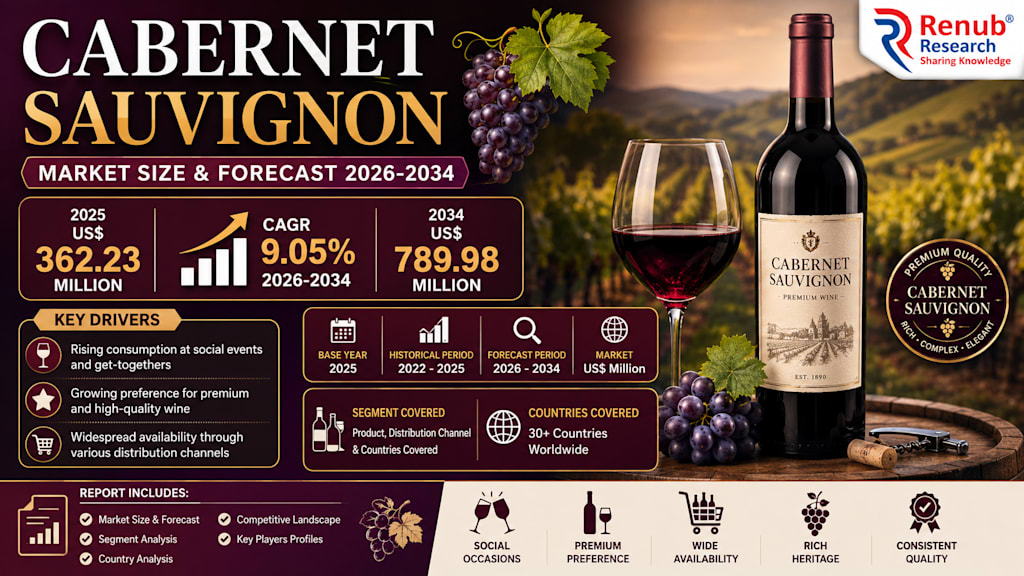
Projected to rise from US$ 362.23 million in 2025 to US$ 789.98 million by 2034, the Cabernet Sauvignon market is thriving on luxury appeal, evolving consumer tastes, and expanding global wine culture.

A Classic Wine Driving Modern Market Growth
Cabernet Sauvignon is not just a wine—it is a global symbol of sophistication, heritage, and premium lifestyle. From its origins in the Bordeaux region of France to its global dominance across vineyards in California, Chile, Australia, and beyond, this red wine varietal has carved out a powerful position in the international beverage industry.
According to the provided market data, the Cabernet Sauvignon market is expected to grow significantly, reaching US$ 789.98 million by 2034 from US$ 362.23 million in 2025, registering a robust CAGR of 9.05% between 2026 and 2034.
This growth is not accidental. It reflects a broader transformation in consumer preferences, where quality increasingly outweighs quantity. As global consumers become more discerning and lifestyle-driven, Cabernet Sauvignon has emerged as a flagship product within the premium wine segment.
Its bold flavor, rich tannins, deep color, and aging potential make it a favorite among both seasoned wine collectors and new enthusiasts entering the world of fine wines. The category continues to expand not just because of taste, but because of what it represents—status, experience, and cultural sophistication.
Industry Overview: From Vineyard to Global Markets
The Cabernet Sauvignon industry spans a complex and interconnected value chain. It begins with viticulture—the cultivation of grapes—followed by winemaking, distribution, and retail. Each stage plays a critical role in shaping the final product and its market positioning.
One of the defining characteristics of Cabernet Sauvignon is its adaptability. It can thrive in various climates and soils, allowing wine producers across continents to cultivate it while still maintaining consistent quality. This adaptability has helped the varietal achieve global recognition and strong market penetration.
Additionally, Cabernet Sauvignon is highly versatile in winemaking. It can be bottled as a single varietal wine or blended with others like Merlot and Cabernet Franc to create complex, layered profiles. These blends are particularly popular in traditional wine markets and among consumers who appreciate nuanced flavors.
The industry includes both large-scale commercial producers and boutique wineries. While large producers focus on volume and global distribution, smaller wineries emphasize craftsmanship, terroir, and exclusivity. This diversity allows the market to cater to a wide range of consumers—from casual drinkers to luxury buyers.
Premiumization: The Core Growth Driver
One of the most powerful trends shaping the Cabernet Sauvignon market is premiumization. Consumers are increasingly willing to spend more on high-quality wines that offer superior taste, heritage, and brand value.
Cabernet Sauvignon fits perfectly into this trend. Its reputation as a full-bodied wine with aging potential makes it highly attractive to consumers seeking premium experiences. Whether it’s for fine dining, celebrations, or gifting, this varietal often commands higher price points than many alternatives.
The rise of premiumization is closely linked to increasing disposable incomes, especially in emerging markets. As middle-class populations expand and urban lifestyles evolve, more consumers are exploring premium alcoholic beverages. Wine, particularly Cabernet Sauvignon, is benefiting from this shift.
Producers are also leveraging this trend by introducing limited-edition vintages, vineyard-specific releases, and luxury branding strategies. These efforts not only enhance perceived value but also create exclusivity, which further drives demand.
Wine Tourism and Experiential Marketing
Another significant driver of market growth is the rise of wine tourism and experiential marketing. Consumers today are not just buying products—they are seeking experiences. Vineyard tours, wine tastings, and curated dining events are becoming central to how wine brands engage with their audiences.
Regions like Napa Valley, Bordeaux, and parts of Australia and Chile have become global destinations for wine tourism. Visitors can explore vineyards, learn about winemaking techniques, and taste exclusive vintages. These experiences deepen consumer appreciation and create lasting brand loyalty.
Social media has amplified the impact of wine tourism. Travelers share their experiences online, influencing others to explore similar journeys. This creates a cycle of engagement that extends beyond the vineyard and into global markets.
Experiential marketing also includes wine clubs, subscription services, and exclusive member events. These initiatives help producers build long-term relationships with consumers while generating recurring revenue streams.
Emerging Markets Are Redefining Demand
While traditional wine markets in North America and Europe remain strong, emerging markets are playing an increasingly important role in shaping future demand.
Countries such as China, India, and those in Southeast Asia are witnessing a gradual shift toward wine consumption. Urbanization, rising incomes, and exposure to Western lifestyles are encouraging consumers to explore premium beverages.
In these markets, Cabernet Sauvignon holds a unique advantage. Its global recognition and association with quality make it a preferred choice among new wine consumers. It is often seen as an entry point into the world of fine wines.
E-commerce and modern retail channels are further accelerating adoption. Consumers can now access a wide range of imported wines through online platforms, specialty stores, and premium supermarkets. This accessibility is crucial in markets where traditional wine distribution was previously limited.
Challenges: Climate, Regulation, and Competition
Despite its strong growth trajectory, the Cabernet Sauvignon market faces several challenges that could impact its long-term stability.
Climate change is one of the most pressing issues. Cabernet Sauvignon grapes require specific climatic conditions to achieve optimal quality. Rising temperatures, unpredictable weather patterns, and extreme events such as droughts and frost can affect grape yields and flavor profiles.
These changes not only impact production but also increase costs for vineyard management. Producers must invest in sustainable practices, irrigation systems, and climate-resilient techniques to maintain quality and consistency.
Regulatory challenges also play a significant role. Alcoholic beverages are subject to strict regulations in many countries, including restrictions on advertising, labeling, and distribution. Import duties and trade barriers can further complicate international expansion.
Competition is another factor to consider. Other red wine varietals such as Merlot, Syrah, and Pinot Noir are vying for market share. Additionally, alternative beverages like craft beer, spirits, and low-alcohol options are attracting younger consumers.
To remain competitive, producers must focus on differentiation, quality assurance, and brand storytelling. Building trust and authenticity is essential in a market where consumers have numerous choices.
Regional Insights: A Global Perspective
The United States remains one of the largest and most mature markets for Cabernet Sauvignon. California, particularly Napa Valley and Sonoma, is renowned for producing high-quality wines that are recognized worldwide. Strong domestic consumption, wine culture, and tourism support steady growth in this region.
The United Kingdom is another important market, characterized by high demand for imported wines. Consumers in the UK value premium varietals and are willing to explore wines from different regions, making it a key destination for global producers.
India is emerging as a promising market. Although traditionally dominated by beer and spirits, wine consumption is growing in metropolitan areas. Cabernet Sauvignon is gaining popularity among urban consumers, particularly for dining and special occasions.
The United Arab Emirates represents a niche but growing market. With its affluent population and strong hospitality sector, the UAE offers opportunities for premium wine brands. Wine consumption is often linked to luxury experiences, making Cabernet Sauvignon a natural fit.
Recent Developments Reflect Market Innovation
Recent developments in the Cabernet Sauvignon market highlight ongoing innovation and diversification. In March 2024, Juggernaut Wines introduced the Sonoma Coast Chardonnay as part of its expanding portfolio, showcasing how wine brands are continuously evolving their offerings.
Similarly, in April 2023, Bota Box launched its first limited-edition wine, emphasizing the growing importance of exclusivity and seasonal releases in driving consumer interest.
These developments demonstrate that the market is not static. Producers are experimenting with new products, marketing strategies, and distribution models to stay relevant in a competitive landscape.
Market Segmentation: Understanding Consumer Choices
The Cabernet Sauvignon market is segmented across several dimensions, including grape type, product type, flavor profiles, and distribution channels.
From a distribution perspective, online retail is gaining significant traction. Consumers increasingly prefer the convenience of purchasing wine through digital platforms, especially in regions where physical availability may be limited.
Specialty stores and hypermarkets also play a crucial role, offering curated selections and personalized recommendations. Direct sales, including winery visits and subscription models, are becoming more popular as brands seek to build direct relationships with consumers.
Flavor preferences vary widely, ranging from blackcurrant and chocolate notes to mint and vanilla undertones. These variations allow producers to cater to diverse consumer tastes while maintaining the core characteristics of Cabernet Sauvignon.
The Future Outlook
The future of the Cabernet Sauvignon market looks promising, driven by a combination of premiumization, globalization, and experiential consumption. As consumers continue to prioritize quality and lifestyle experiences, demand for premium wines is expected to rise.
Technological advancements in viticulture and winemaking will play a crucial role in addressing challenges such as climate change. Sustainable practices, innovation, and investment in quality will be key to maintaining growth.
Emerging markets will continue to expand the consumer base, while digital platforms will enhance accessibility and engagement. At the same time, producers must navigate regulatory complexities and competitive pressures to sustain their market position.
Final Thoughts
Cabernet Sauvignon has stood the test of time, evolving from a regional varietal into a global icon of premium wine. Its strong market growth—from US$ 362.23 million in 2025 to US$ 789.98 million by 2034—reflects its enduring appeal and adaptability.
As the world’s taste for premium experiences continues to grow, Cabernet Sauvignon is well-positioned to remain at the forefront of the wine industry. For producers, investors, and consumers alike, this market represents not just an opportunity, but a celebration of craftsmanship, culture, and connection.
In a world where choices are abundant, Cabernet Sauvignon continues to stand out—not just for its flavor, but for the story it tells in every bottle.
About the Creator
Enjoyed the story? Support the Creator.
Subscribe for free to receive all their stories in your feed.
Comments
There are no comments for this story
Be the first to respond and start the conversation.