
Cabernet Sauvignon Market Poised to Reach Nearly US$790 Million by 2034 as Premium Wine Culture Expands Globally
Rising demand for premium wines, wine tourism, and evolving consumer preferences are driving a new chapter of growth for the world's most recognized red wine varietal.

Few wine varieties command as much respect and global recognition as Cabernet Sauvignon. Known for its bold character, deep color, rich tannins, and remarkable aging potential, Cabernet Sauvignon has long been considered the king of red wines. From the prestigious vineyards of Bordeaux to the celebrated wineries of Napa Valley, this iconic grape variety has shaped wine culture for generations and continues to attract enthusiasts, collectors, and casual consumers alike.
Today, Cabernet Sauvignon is more than a favorite among wine connoisseurs. It has become a significant economic force within the global wine industry, benefiting from rising consumer interest in premium alcoholic beverages, expanding wine tourism, and growing appreciation for quality-driven experiences.
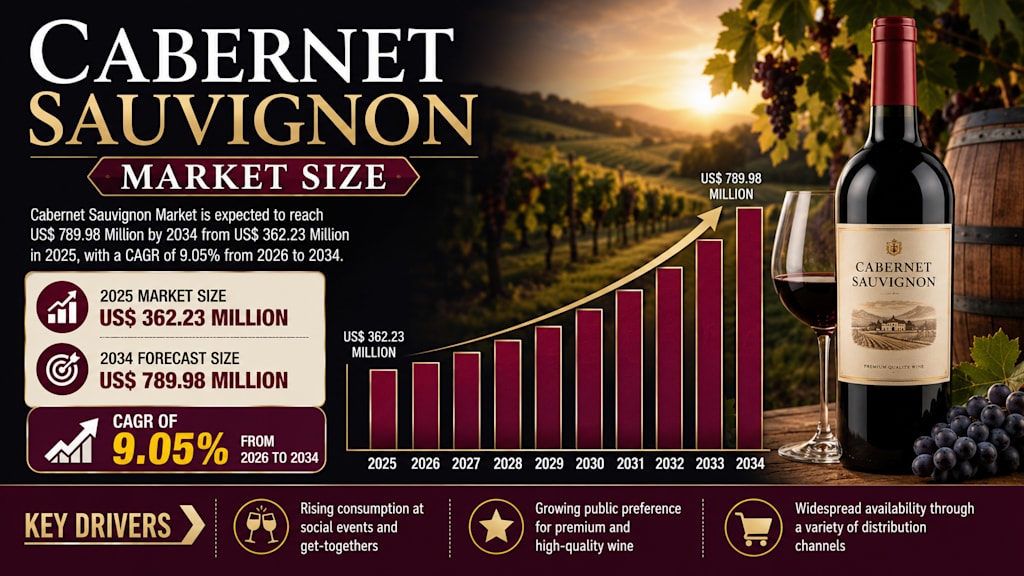
According to Renub Research, the global Cabernet Sauvignon Market is expected to grow from US$362.23 million in 2025 to US$789.98 million by 2034, representing a robust compound annual growth rate (CAGR) of 9.05% between 2026 and 2034. This impressive growth highlights the enduring appeal of Cabernet Sauvignon and its expanding role in both mature and emerging wine markets.
The Enduring Legacy of Cabernet Sauvignon
Cabernet Sauvignon's journey began in France's Bordeaux region, where it emerged as a natural cross between Cabernet Franc and Sauvignon Blanc. Over time, the grape's adaptability allowed it to flourish in diverse climates around the world, transforming it into one of the most widely planted and recognized wine varieties.
Today, Cabernet Sauvignon is cultivated across leading wine-producing regions including California, Chile, Australia, Italy, South Africa, and Argentina. Despite regional differences in climate and terroir, the grape consistently produces wines known for their structure, complexity, and aging potential.
What makes Cabernet Sauvignon particularly valuable is its versatility. It performs exceptionally well as both a single-varietal wine and as a blending grape. Many of the world's most celebrated wines combine Cabernet Sauvignon with Merlot, Cabernet Franc, and other varietals to create balanced and sophisticated blends.
This flexibility has helped secure Cabernet Sauvignon's position as a cornerstone of the global wine industry.
Premiumization Is Transforming Consumer Preferences
One of the most significant trends influencing the wine industry today is premiumization.
Consumers increasingly seek products that offer quality, authenticity, and memorable experiences rather than simply affordability. This shift is especially evident within the alcoholic beverage sector, where premium wines continue gaining market share.
Cabernet Sauvignon is uniquely positioned to benefit from this trend.
The varietal's reputation for excellence allows wineries to command premium pricing while attracting consumers who view wine as both a lifestyle choice and a symbol of sophistication. Wine enthusiasts often associate Cabernet Sauvignon with craftsmanship, tradition, and prestige—qualities that align perfectly with premium purchasing behavior.
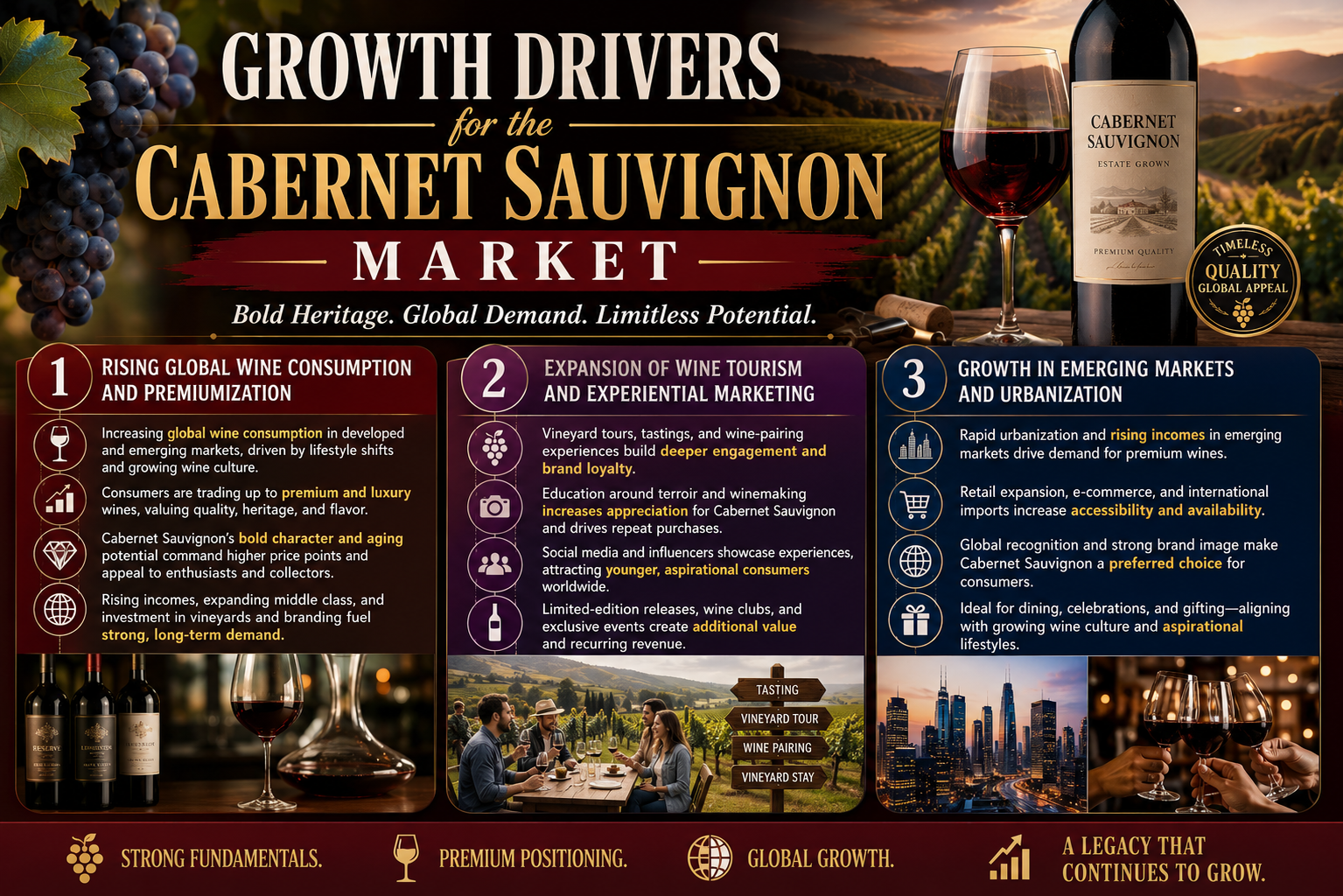
As disposable incomes rise across developed and developing economies, more consumers are willing to invest in higher-quality wines for celebrations, dining experiences, and personal enjoyment. This growing willingness to pay for premium products is expected to remain a key driver of market expansion throughout the forecast period.
In many regions, wine consumption is no longer limited to special occasions. Increasingly, consumers incorporate premium wines into their everyday lifestyles, further strengthening demand.
The Rise of Wine Culture Worldwide
The growth of global wine culture has significantly contributed to the popularity of Cabernet Sauvignon.
Over the past decade, wine education, tasting events, food-pairing experiences, and digital wine communities have become more accessible than ever before. Consumers are increasingly interested in understanding grape varieties, production methods, vineyard origins, and aging characteristics.
Cabernet Sauvignon often serves as an introduction to premium red wines because of its strong reputation and recognizable flavor profile.
Restaurants, wine bars, and hospitality establishments frequently feature Cabernet Sauvignon on their menus, helping consumers develop familiarity with the varietal. As knowledge and appreciation increase, repeat purchases often follow.
Social media has further accelerated this trend. Wine influencers, sommeliers, travel creators, and lifestyle publications regularly showcase vineyard visits, wine recommendations, and tasting experiences, introducing Cabernet Sauvignon to new audiences.
For younger consumers, wine is increasingly viewed as part of a broader lifestyle centered on culinary exploration, travel, and personal experiences.
This cultural shift continues expanding the consumer base for premium wine products worldwide.
Wine Tourism Is Creating New Opportunities
Wine tourism has become one of the industry's most powerful growth catalysts.
Across major wine-producing regions, vineyards are transforming into experiential destinations that combine hospitality, education, and luxury. Visitors can tour vineyards, meet winemakers, participate in tastings, and learn about production techniques firsthand.
Cabernet Sauvignon plays a central role in many of these experiences.
Regions such as Napa Valley in California, Bordeaux in France, Mendoza in Argentina, and Stellenbosch in South Africa attract millions of visitors annually, many of whom develop lasting relationships with wineries and brands.
These experiences often translate into long-term customer loyalty. Visitors who discover a wine during a tasting session frequently continue purchasing it long after returning home.
Wine clubs, subscription services, and direct-to-consumer sales channels have further strengthened these relationships. Wineries can maintain engagement through exclusive releases, member-only events, and personalized recommendations.
The emotional connection established through wine tourism creates value that extends far beyond a single bottle purchase.
As experiential travel continues gaining popularity globally, wine tourism is expected to remain an important driver of Cabernet Sauvignon sales.
Emerging Markets Are Fueling Future Growth
While North America and Europe remain major wine-consuming regions, emerging markets are increasingly contributing to industry expansion.
Countries across Asia-Pacific, Latin America, and parts of the Middle East are witnessing rising interest in wine consumption due to urbanization, growing middle-class populations, and increasing exposure to international lifestyles.
Among these markets, China and India stand out as particularly promising opportunities.
Consumers in these countries are becoming more familiar with wine culture through international travel, digital content, luxury dining experiences, and global retail brands. Cabernet Sauvignon's reputation as a premium and internationally recognized varietal makes it an attractive choice for first-time wine buyers and experienced enthusiasts alike.
Urban professionals often view wine as a sophisticated alternative to traditional alcoholic beverages, particularly during social gatherings, business dinners, and celebrations.
The expansion of modern retail formats and e-commerce platforms has also improved accessibility. Consumers can now purchase imported and domestic wines more easily than ever before, supporting continued market growth.
As wine culture matures in emerging economies, Cabernet Sauvignon is expected to capture a growing share of consumer spending.
E-Commerce Is Reshaping Wine Sales
Digital commerce has transformed the way consumers discover and purchase wine.
Traditional wine sales relied heavily on specialty retailers, restaurants, and physical stores. Today, online platforms allow consumers to browse extensive selections, compare products, read reviews, and place orders from virtually anywhere.
For Cabernet Sauvignon producers, e-commerce offers unprecedented access to global markets.
Direct-to-consumer sales have become particularly valuable. Wineries can bypass intermediaries, maintain greater control over branding, and build stronger customer relationships.
Digital marketing tools also enable highly targeted campaigns based on consumer preferences and purchasing history. Personalized recommendations, virtual tastings, and exclusive online releases create engaging shopping experiences that encourage repeat purchases.
The convenience of online wine purchasing has become especially important for younger consumers, who increasingly prefer digital-first retail experiences.
As technology continues advancing, e-commerce is likely to remain a central component of the Cabernet Sauvignon market's growth strategy.
Challenges Facing the Industry
Despite strong growth prospects, the Cabernet Sauvignon industry faces several important challenges.
Climate Change and Vineyard Sustainability
Climate change represents one of the most significant long-term threats to wine production.
Cabernet Sauvignon thrives under specific environmental conditions. Changes in temperature, rainfall patterns, and seasonal weather can affect grape quality, sugar levels, acidity, and overall flavor characteristics.
Regions historically known for premium Cabernet Sauvignon production, including Bordeaux and Napa Valley, have experienced increasing concerns regarding drought, wildfires, heatwaves, and unpredictable growing conditions.
These environmental challenges may increase production costs and create supply uncertainties.
To address these issues, many wineries are investing in sustainable farming practices, advanced irrigation systems, and climate-resilient vineyard management techniques.
Regulatory Complexities
Alcohol regulations vary significantly across countries and regions.
Import duties, advertising restrictions, labeling requirements, and distribution regulations can create obstacles for producers seeking international expansion.
Trade policies and tariffs can also affect pricing and competitiveness in key export markets.
Navigating these regulatory environments requires significant resources and expertise, particularly for smaller wineries aiming to expand globally.
Growing Competition
Cabernet Sauvignon competes not only with other wine varieties but also with alternative alcoholic beverages.
Merlot, Pinot Noir, Syrah, craft beer, premium spirits, ready-to-drink cocktails, and non-alcoholic alternatives all compete for consumer attention.
Younger consumers are often more experimental in their beverage choices, creating additional competitive pressure.
To maintain market share, producers must continue emphasizing quality, authenticity, and unique consumer experiences.
Regional Market Highlights
United States
The United States remains one of the largest and most influential Cabernet Sauvignon markets globally.
California's Napa Valley and Sonoma regions have established international reputations for producing premium Cabernet Sauvignon wines that command strong consumer demand.
Wine tourism, direct-to-consumer sales, and an established wine culture continue supporting growth across the country.
United Kingdom
The United Kingdom represents an important import-driven market where consumers actively seek premium wines from leading global producers.
Fine dining, wine clubs, and growing interest in wine education contribute to strong demand for Cabernet Sauvignon.
Although trade complexities and import costs present challenges, premiumization trends continue supporting market expansion.
India
India's wine market is still relatively young compared to Western nations, but growth is accelerating.
Urban consumers in cities such as Mumbai, Delhi, Bengaluru, and Pune are increasingly embracing wine culture. Cabernet Sauvignon has emerged as one of the most popular red wine varieties among consumers seeking premium experiences.
Improved retail availability and growing awareness are expected to support long-term growth.
United Arab Emirates
The UAE continues strengthening its position as a regional luxury consumption hub.
High disposable incomes, tourism activity, and a cosmopolitan population contribute to rising demand for imported premium wines, including Cabernet Sauvignon.
Wine-focused hospitality experiences and luxury dining establishments further enhance market opportunities.
Industry Developments Worth Watching
Recent developments illustrate how producers are investing in innovation and consumer engagement.
In March 2024, Juggernaut Wines introduced Sonoma Coast Chardonnay as part of its portfolio expansion strategy, highlighting ongoing efforts by wineries to diversify offerings and attract broader audiences.
Earlier, in April 2023, Bota Box launched its first limited-edition wine release, demonstrating growing interest in exclusive products and limited-production offerings designed to generate excitement among consumers.
These initiatives reflect a broader industry trend toward innovation, storytelling, and premium brand positioning.
The Future of Cabernet Sauvignon
The outlook for Cabernet Sauvignon remains highly positive.
As consumers continue seeking premium experiences, wineries embrace sustainability, and emerging markets develop stronger wine cultures, demand for this iconic varietal is expected to grow steadily.
Technology, digital commerce, experiential marketing, and global distribution networks will play increasingly important roles in shaping future success.
At the same time, producers must address challenges related to climate change, regulation, and evolving consumer preferences.
Those capable of balancing tradition with innovation will be best positioned to capitalize on future opportunities.
Final Thoughts
Cabernet Sauvignon has achieved something few products ever accomplish: global recognition that transcends geography, culture, and generations. Its reputation for quality, sophistication, and versatility continues attracting consumers across established and emerging markets alike.
With the global Cabernet Sauvignon Market projected to reach US$789.98 million by 2034, the varietal's future appears brighter than ever. As premiumization trends strengthen, wine tourism expands, and new consumers discover the world of fine wine, Cabernet Sauvignon is poised to remain one of the most influential and celebrated names in the global wine industry for years to come.
About the Creator
Enjoyed the story? Support the Creator.
Subscribe for free to receive all their stories in your feed.
Comments
There are no comments for this story
Be the first to respond and start the conversation.