
Brewing Growth: How Premium Coffee Culture Is Transforming the United States Coffee Market
Specialty coffee, ready-to-drink innovations, café culture expansion, and digital convenience are fueling a new era of growth across America’s coffee industry.

Coffee is more than just a beverage in the United States—it is a daily ritual, a social experience, a workplace companion, and increasingly, a lifestyle statement.
From morning commutes fueled by espresso drinks to afternoon cold brews ordered through mobile apps, coffee has become deeply embedded in American culture. Over the years, consumer expectations have evolved dramatically. What was once a simple cup of coffee has transformed into a sophisticated market centered on quality, convenience, sustainability, and personalization.
Today's consumers are exploring specialty blends, single-origin beans, plant-based coffee beverages, functional formulations, and premium café experiences. At the same time, digital ordering platforms, subscription services, and ready-to-drink innovations are changing how coffee is purchased and consumed.
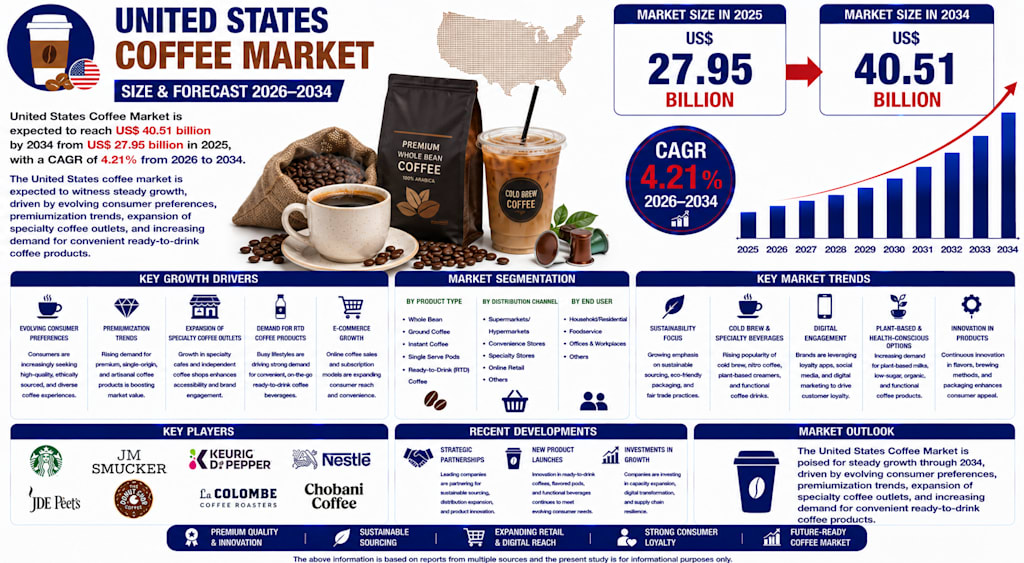
According to Renub Research, the United States Coffee Market is expected to grow from US$ 27.95 billion in 2025 to US$ 40.51 billion by 2034, expanding at a compound annual growth rate (CAGR) of 4.21% from 2026 to 2034. Evolving consumer preferences, premiumization trends, the expansion of specialty coffee outlets, and increasing demand for convenient ready-to-drink coffee products are driving sustained market growth.
As innovation continues to reshape the beverage landscape, coffee remains one of the most resilient and dynamic categories in the American consumer market.
Coffee’s Enduring Role in American Life
Few beverages enjoy the cultural significance that coffee holds in the United States.
Millions of Americans begin their day with coffee, making it one of the most consistently consumed beverages nationwide.
The market encompasses a wide variety of products, including:
Traditional brewed coffee, specialty coffee, espresso-based beverages, instant coffee, coffee pods, capsules, cold brews, and ready-to-drink products.
Coffee consumption spans multiple generations and lifestyles, making it a uniquely versatile category.
Whether consumed at home, in cafés, at work, or on the go, coffee remains a central part of daily routines.
This broad appeal provides a strong foundation for continued market expansion while creating opportunities for innovation across multiple product segments.
Premium and Specialty Coffee Are Driving Consumer Spending
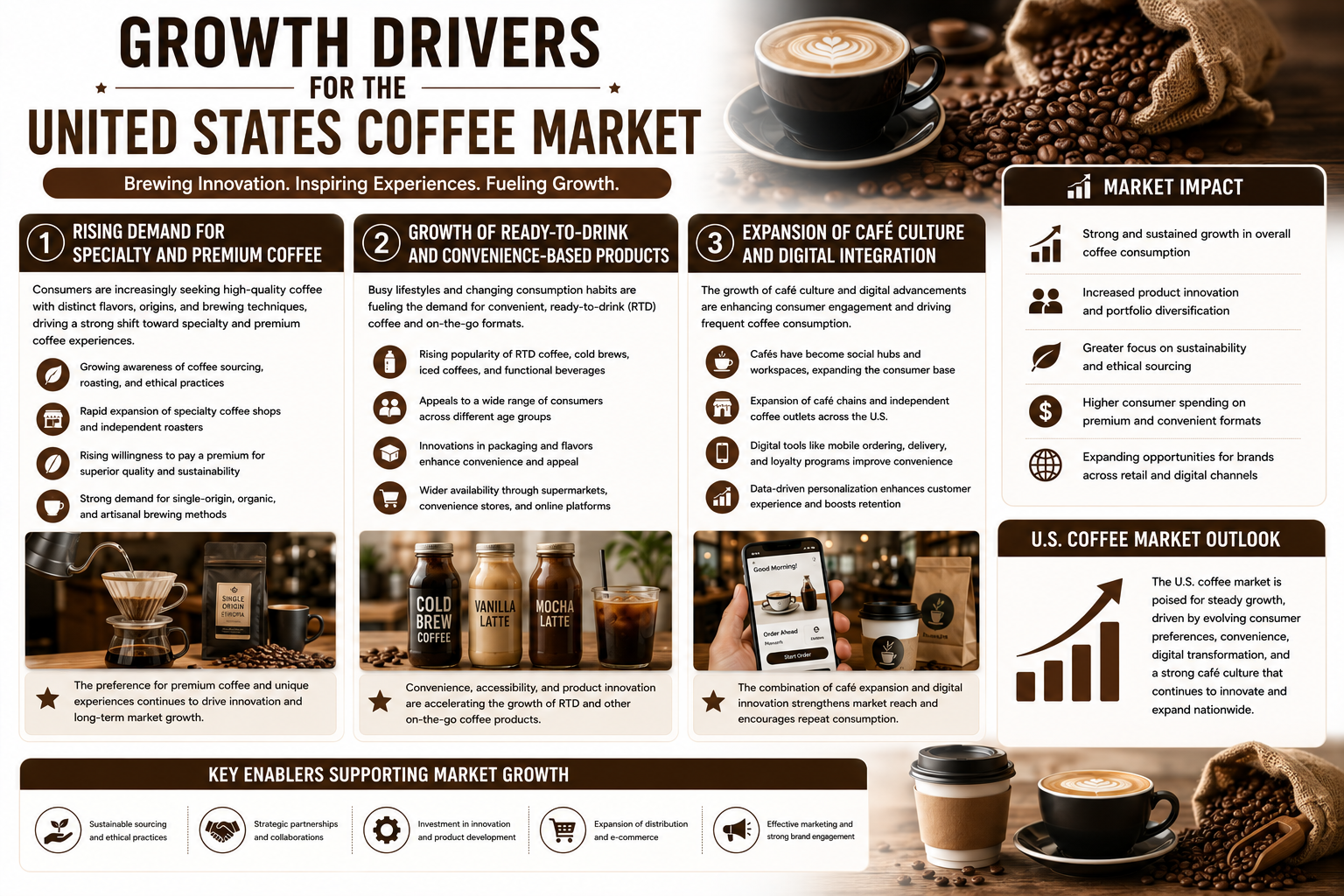
One of the strongest trends shaping the market is the growing preference for premium and specialty coffee.
Consumers increasingly seek:
High-quality beans, unique flavor profiles, artisanal roasting methods, single-origin coffees, and ethically sourced products.
This shift reflects a broader movement toward quality and authenticity.
Coffee drinkers are becoming more educated about:
Bean origins, roasting techniques, brewing methods, sustainability practices, and flavor characteristics.
As a result, specialty coffee shops and independent roasters continue expanding throughout the country.
Many consumers are also willing to pay higher prices for products that deliver superior quality and transparency.
The popularity of organic coffee, sustainable sourcing programs, and direct-trade relationships further supports premiumization trends.
As consumer sophistication grows, specialty coffee is expected to remain a major engine of market growth.
Ready-to-Drink Coffee Continues to Surge
Convenience has become one of the most influential factors affecting beverage purchasing decisions.
Modern consumers increasingly seek products that fit busy lifestyles without sacrificing quality or taste.
Ready-to-drink (RTD) coffee products have emerged as one of the fastest-growing categories within the market.
Popular options include:
Cold brews, iced coffees, canned coffees, bottled espresso beverages, and functional coffee drinks.
RTD products appeal to consumers looking for portability, convenience, and immediate consumption.
Manufacturers continue introducing innovative flavors, formulations, and packaging formats designed to attract a broader audience.
As demand for on-the-go beverage solutions increases, RTD coffee is expected to remain a key growth segment.
Café Culture Is Expanding Beyond Coffee
Coffee shops have evolved far beyond their traditional role as beverage providers.
Today, cafés function as:
Social gathering places, remote workspaces, study environments, meeting locations, and community hubs.
This transformation has significantly strengthened coffee consumption across urban and suburban markets.
Consumers increasingly seek experiences in addition to products.
Modern coffee shops emphasize:
Atmosphere, customization, premium ingredients, customer engagement, and unique menu offerings.
The continued expansion of specialty cafés and independent coffee houses reflects this demand for experiential consumption.
As café culture continues evolving, coffee businesses are finding new ways to build customer loyalty and strengthen brand identity.
Digital Technology Is Reshaping the Customer Experience
Technology has become a critical component of the coffee industry's growth strategy.
Digital integration now influences nearly every stage of the customer journey.
Mobile ordering platforms, loyalty programs, delivery services, and personalized marketing tools are enhancing convenience and customer engagement.
Consumers increasingly expect seamless digital experiences that allow them to:
Order ahead, customize beverages, earn rewards, and access delivery services.
For businesses, these technologies improve operational efficiency while generating valuable consumer insights.
The combination of physical retail expansion and digital innovation continues creating new growth opportunities throughout the market.
At-Home Coffee Consumption Remains Strong
While café culture continues thriving, home coffee consumption remains an equally important market segment.
Consumers are increasingly investing in:
Premium coffee makers, espresso machines, grinders, specialty beans, and single-serve brewing systems.
Technological advancements have made it easier than ever for consumers to create café-quality beverages at home.
Subscription services and e-commerce platforms further support this trend by providing convenient access to premium coffee products.
The growth of remote and hybrid work environments has also reinforced at-home coffee consumption patterns.
As consumers seek both convenience and quality, home brewing continues to represent a significant opportunity for manufacturers and retailers.
Health-Conscious Consumers Are Influencing Product Innovation
Changing consumer preferences are encouraging coffee companies to innovate beyond traditional offerings.
Many consumers now seek beverages that align with broader health and wellness goals.
This trend has contributed to growing demand for:
Low-calorie coffee products, organic coffee, plant-based creamers, functional ingredients, fortified beverages, and clean-label formulations.
Manufacturers are increasingly developing products that combine coffee with additional benefits such as energy support, protein supplementation, and wellness-focused ingredients.
As health-conscious consumption continues expanding, functional coffee products are expected to gain greater market share.
Coffee Pods and Capsules Continue Gaining Popularity
Single-serve coffee systems remain one of the most successful innovations within the industry.
Coffee pods and capsules offer:
Convenience, consistency, speed, and minimal preparation requirements.
These formats appeal to consumers seeking premium-quality coffee without the complexity of traditional brewing methods.
Households and workplaces alike continue embracing single-serve systems due to their efficiency and ease of use.
Manufacturers are also addressing sustainability concerns through recyclable and environmentally friendly pod designs.
As convenience remains a primary purchasing factor, coffee pods and capsules are expected to maintain strong demand.
California Leads Coffee Innovation
California remains one of the most influential coffee markets in the United States.
The state's strong café culture, diverse population, and openness to emerging food and beverage trends create favorable conditions for innovation.
Consumers in California demonstrate strong interest in:
Specialty coffee, organic products, plant-based beverages, sustainability initiatives, and premium experiences.
The presence of numerous independent roasters and specialty cafés further strengthens the market.
California's emphasis on environmentally responsible sourcing and ethical business practices continues shaping broader industry trends.
Texas Continues Expanding Consumption
Texas has become one of the fastest-growing coffee markets in the country.
Population growth, urbanization, and rising disposable incomes continue supporting demand.
Consumers increasingly embrace specialty coffee products, drive-thru formats, ready-to-drink beverages, and premium home-brewing solutions.
The state's expanding remote workforce has also contributed to stronger at-home consumption patterns.
Combined with a growing network of cafés and coffee retailers, these factors continue driving market expansion throughout Texas.
New York Strengthens Premium Coffee Demand
New York remains one of America's most influential coffee markets.
The city's fast-paced lifestyle encourages demand for:
Convenient takeaway beverages, premium coffee experiences, specialty cafés, and ready-to-drink products.
Coffee shops serve both social and professional functions, creating strong demand throughout the day.
The presence of independent roasters, artisanal cafés, and international coffee concepts contributes to continuous innovation and market dynamism.
New York's openness to new flavors and premium experiences helps shape national coffee trends.
Florida Benefits from Climate and Tourism
Florida's coffee market continues growing due to a combination of tourism, population growth, and changing consumer preferences.
The state's warm climate supports strong demand for:
Cold brew coffee, iced beverages, flavored coffee drinks, and ready-to-drink products.
Tourism also contributes significantly by increasing traffic to cafés, restaurants, and beverage retailers.
A diverse population encourages demand for a wide range of coffee styles and international flavor profiles.
As convenience-oriented consumption grows, Florida remains an important contributor to national market expansion.
Recent Industry Developments Highlight Market Momentum
The industry continues witnessing major strategic developments.
In August 2025, Keurig Dr Pepper announced plans to separate into two companies following its approximately US$18 billion acquisition of JDE Peet's, creating one business focused on global coffee operations and another centered on refreshment beverages. The move is expected to significantly reshape competitive dynamics within the industry.
In April 2025, Trilliant Food & Nutrition partnered with Dutch Bros to launch the coffee chain's first branded retail ground coffee and K-Cup products, expanding its presence beyond traditional store locations.
Earlier, in January 2025, Nescafé introduced Nescafé Espresso Concentrate, its first liquid espresso concentrate in the U.S. market, allowing consumers to create café-style cold espresso beverages at home.
These developments reflect the industry's continued focus on innovation, convenience, and market expansion.
Challenges Facing the Coffee Industry
Despite strong growth prospects, the market faces several challenges.
One of the most significant concerns is volatility in coffee bean prices.
Coffee production remains highly dependent on weather conditions and agricultural factors.
Climate change, crop diseases, transportation costs, and geopolitical events can affect supply and pricing, creating uncertainty throughout the value chain. These fluctuations may increase operating costs and affect profit margins for manufacturers and retailers.
Another challenge is market saturation.
The United States coffee industry is highly competitive, with numerous brands, specialty roasters, café chains, and private-label products competing for consumer attention.
Maintaining differentiation requires continuous investment in product innovation, customer experience, marketing, and sustainability initiatives. Smaller companies may find it particularly difficult to compete with larger, established players.
Successfully navigating these challenges will be essential for sustaining long-term growth.
Final Thoughts
The United States coffee market continues evolving in response to changing consumer preferences, technological innovation, and expanding lifestyle trends.
From specialty coffee and premium sourcing to ready-to-drink beverages and digital engagement, the industry is embracing new opportunities while maintaining coffee's central role in American culture.
Manufacturers, retailers, and café operators are investing heavily in quality, convenience, sustainability, and customer experience to meet the expectations of modern consumers.
With the market projected to grow from US$ 27.95 billion in 2025 to US$ 40.51 billion by 2034, the future of coffee in the United States remains exceptionally promising.
As consumers continue seeking better flavors, greater convenience, and more meaningful experiences, coffee will remain one of the nation's most beloved and innovative beverage categories.
About the Creator
Enjoyed the story? Support the Creator.
Subscribe for free to receive all their stories in your feed.
Comments
There are no comments for this story
Be the first to respond and start the conversation.