
Bionic Devices Market Outlook 2026–2034: How Human-Machine Integration Is Transforming Modern Healthcare
Advances in artificial intelligence, robotics, neural interfaces, and prosthetic technology are reshaping healthcare and creating a new era of functional restoration through bionic devices.

The healthcare industry is witnessing a technological revolution that once seemed possible only in science fiction. From intelligent prosthetic limbs that respond to muscle signals to cochlear implants that restore hearing and retinal implants that help patients regain vision, bionic devices are transforming the lives of millions worldwide.
These advanced technologies are bridging the gap between biology and engineering, enabling individuals with disabilities, injuries, and chronic conditions to regain independence and improve their quality of life. As artificial intelligence, robotics, and biomedical engineering continue advancing, bionic devices are becoming increasingly sophisticated, accessible, and effective.
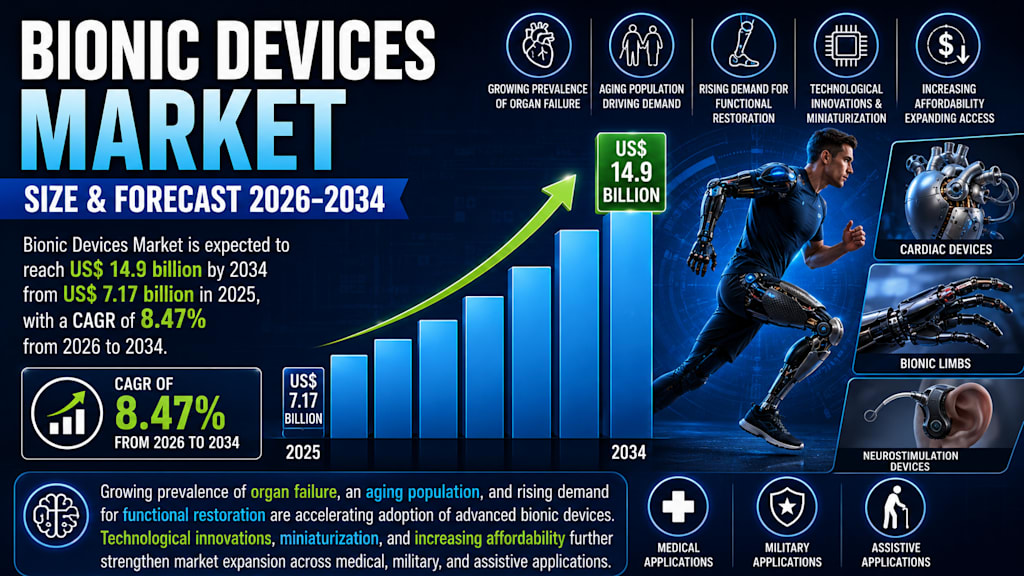
According to Renub Research, the global Bionic Devices Market is expected to grow from US$ 7.17 billion in 2025 to US$ 14.9 billion by 2034, expanding at a compound annual growth rate (CAGR) of 8.47% from 2026 to 2034. Rising rates of organ failure, increasing prevalence of disabilities, growing healthcare investments, and rapid technological innovation are among the major factors supporting market growth worldwide.
As healthcare systems increasingly embrace personalized and technology-driven solutions, the bionic devices industry is emerging as one of the most exciting segments within modern medical technology.
Understanding Bionic Devices and Their Growing Importance
Bionic devices are advanced artificial systems designed to replace, restore, or enhance biological functions that can no longer be performed naturally by the human body. These devices combine electronics, mechanical engineering, artificial intelligence, sensors, and biocompatible materials to replicate human capabilities with remarkable precision.
Examples of bionic devices include cochlear implants for hearing restoration, prosthetic limbs controlled by muscle signals, retinal implants designed to improve vision, artificial organs, exoskeletons that support mobility, and neural-controlled prosthetics that interact directly with the nervous system.
Unlike conventional assistive technologies, modern bionic devices are capable of adapting to users through intelligent software and advanced sensors. Some systems can learn movement patterns, respond to environmental conditions, and even provide sensory feedback.
The ultimate goal of bionic technology is not simply to replace lost function but to create seamless integration between humans and machines. As this vision becomes increasingly achievable, demand for advanced bionic solutions continues to accelerate across healthcare systems worldwide.
Artificial Intelligence Is Revolutionizing Bionic Technology
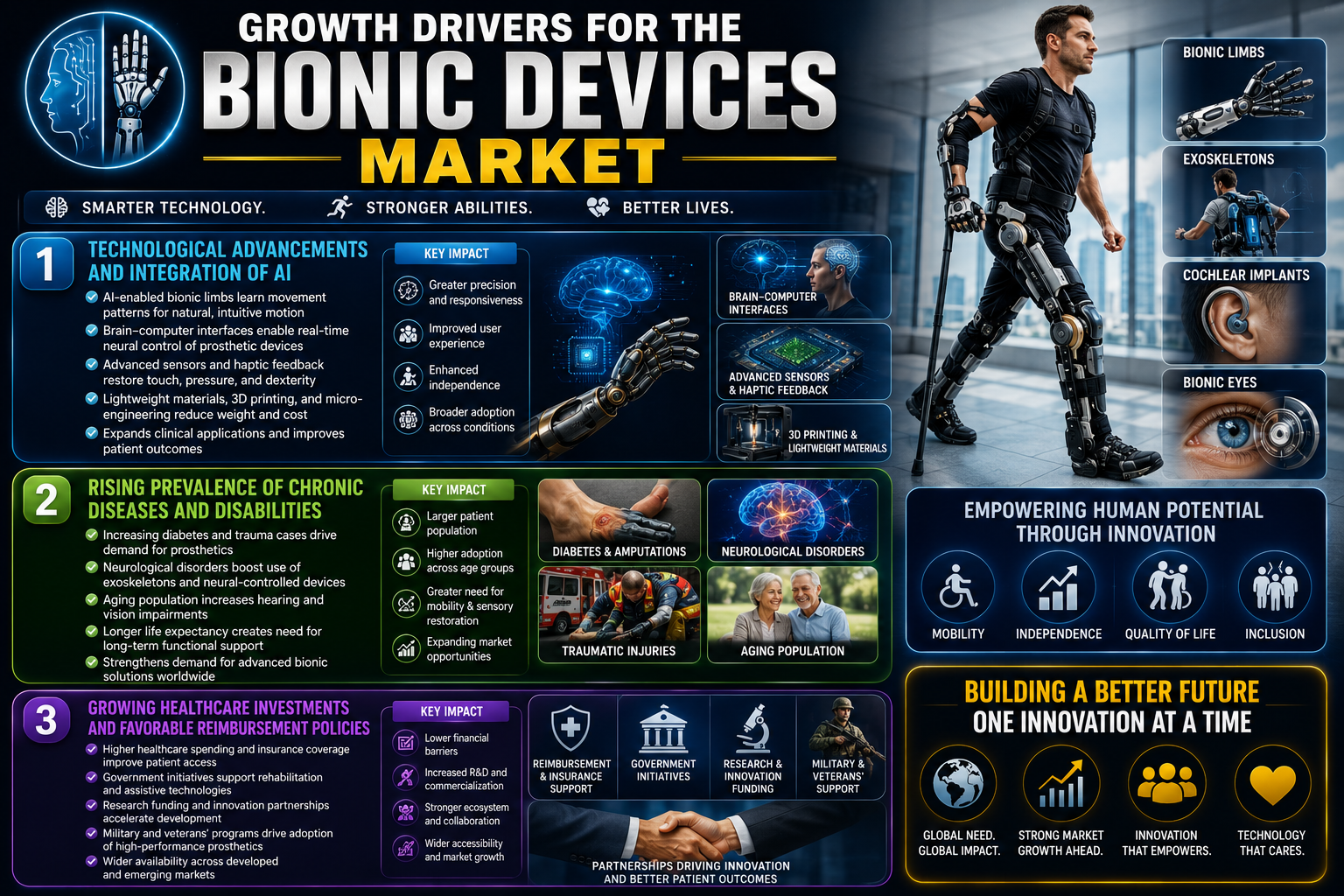
One of the most important factors driving growth in the bionic devices market is the rapid advancement of artificial intelligence.
AI has dramatically improved the functionality and responsiveness of modern bionic systems. Intelligent prosthetic limbs can now analyze movement patterns, adapt to different walking surfaces, and respond more naturally to user intentions.
Machine-learning algorithms allow devices to continuously improve performance based on user behavior. This creates more intuitive interactions while reducing physical strain and fatigue.
Brain-computer interfaces represent another groundbreaking development. These systems enable direct communication between neural signals and external devices, allowing users to control prosthetic limbs through thought-driven commands. Such innovations are transforming rehabilitation possibilities for individuals with severe disabilities.
Artificial intelligence also improves diagnostics, treatment planning, and device customization, helping healthcare providers deliver more personalized solutions.
As AI technology continues evolving, its integration into bionic systems is expected to significantly expand market opportunities over the next decade.
Robotics and Advanced Engineering Are Expanding Possibilities
Modern bionic devices benefit tremendously from advancements in robotics and engineering.
Today's prosthetic limbs are lighter, stronger, and more responsive than previous generations. Sophisticated actuators and microprocessors allow artificial limbs to mimic natural movements with impressive accuracy.
Advanced sensor systems enable devices to detect pressure, movement, and environmental conditions in real time. Some bionic limbs even incorporate haptic feedback technology, allowing users to experience sensations such as touch and pressure.
Three-dimensional printing has further accelerated innovation by enabling highly customized designs tailored to individual patient needs. Customized manufacturing not only improves comfort and functionality but also reduces production times and costs.
Miniaturization has also played a crucial role in expanding adoption. Smaller and more efficient electronic components make modern bionic devices less intrusive, more reliable, and easier to integrate into daily life.
These engineering breakthroughs continue pushing the boundaries of what bionic technology can achieve.
Rising Chronic Diseases and Disabilities Are Driving Demand
The growing prevalence of chronic diseases and disabilities is creating substantial demand for advanced restorative technologies.
Diabetes remains one of the leading causes of lower-limb amputations worldwide. As diabetes rates continue rising, the need for high-performance prosthetic solutions is increasing accordingly.
Neurological disorders such as Parkinson's disease, stroke, spinal cord injuries, and traumatic brain injuries also contribute to growing demand for neural-controlled devices and rehabilitation technologies.
Hearing loss and vision impairment represent additional areas where bionic devices are making a significant impact. Cochlear implants and retinal prosthetics provide life-changing benefits for individuals who might otherwise experience severe sensory limitations.
Aging populations further contribute to market growth. As life expectancy increases globally, more individuals require technologies that support mobility, independence, and quality of life.
This combination of demographic and healthcare trends continues strengthening long-term demand for advanced bionic solutions.
Healthcare Investments Are Supporting Market Expansion
Increasing healthcare expenditure across both developed and emerging economies is accelerating adoption of bionic technologies.
Governments and private insurers are gradually expanding reimbursement programs for prosthetic devices, cochlear implants, and other advanced medical technologies. Improved insurance coverage reduces financial barriers and makes treatment more accessible for patients.
Research institutions, universities, healthcare providers, and technology companies are also investing heavily in innovation.
Collaborative partnerships between academia and industry help accelerate product development and clinical validation while supporting commercialization efforts.
Military healthcare systems have become important contributors as well. Rehabilitation programs for injured service members frequently invest in advanced prosthetic technologies that restore mobility and improve long-term recovery outcomes.
As funding opportunities continue increasing, the market is expected to benefit from stronger innovation pipelines and broader patient access.
Challenges Facing the Bionic Devices Market
Despite impressive technological progress, the industry continues facing several important challenges.
One of the most significant barriers remains the high cost of advanced bionic devices. Sophisticated engineering, specialized materials, lengthy development cycles, and rigorous clinical testing contribute to substantial production expenses.
Many patients, particularly in low-income regions, struggle to afford advanced prosthetics or implantable technologies. Even when insurance coverage is available, significant out-of-pocket costs often remain.
Maintenance requirements and specialized fitting procedures further increase overall expenses.
Accessibility also remains uneven across different regions. Healthcare infrastructure limitations and shortages of trained professionals restrict adoption in many developing markets.
These financial and logistical challenges continue slowing market penetration despite strong underlying demand.
Regulatory and Technical Complexities Remain Obstacles
Bionic devices must meet strict safety and performance standards before receiving regulatory approval.
Clinical testing requirements are extensive because these technologies often interact directly with biological systems. Manufacturers must demonstrate long-term safety, effectiveness, and reliability before products can reach the market.
Technical challenges also persist.
Battery life remains a concern for many wearable and implantable systems. Sensory feedback capabilities, while improving, still do not fully replicate natural human perception. Neural-controlled devices require extremely precise signal interpretation, adding further engineering complexity.
Biocompatibility concerns and infection risks must also be carefully managed for implantable technologies.
These challenges increase development costs and can delay commercialization timelines, particularly for smaller companies with limited resources.
Regional Market Insights
The United States represents one of the largest and most technologically advanced markets for bionic devices. Strong healthcare infrastructure, extensive research capabilities, high healthcare spending, and significant government support for rehabilitation programs contribute to continued market leadership. Veterans' healthcare initiatives and collaborations between medical institutions and technology companies further strengthen innovation within the country.
Germany remains a key European market due to its engineering expertise, advanced healthcare system, and strong research ecosystem. The country's focus on precision manufacturing and medical innovation supports widespread adoption of advanced prosthetics, hearing implants, and neuro-prosthetic technologies. Government-backed healthcare coverage also improves accessibility for patients.
China is rapidly emerging as a major force within the global bionic devices industry. Rising healthcare investments, expanding domestic manufacturing capabilities, and growing demand from aging populations are accelerating market development. Government support for robotics, artificial intelligence, and healthcare innovation further strengthens China's position within the sector.
Saudi Arabia is experiencing growing demand for advanced rehabilitation technologies as healthcare modernization initiatives continue expanding throughout the country. Investments in specialized medical centers, prosthetic services, and digital health programs are creating new opportunities for market growth across the Middle East.
Recent Developments Driving Innovation
Innovation remains at the center of the bionic devices industry.
In July 2025, Cochlear Limited received U.S. FDA approval for its Cochlear® Nucleus® Nexa™ System, recognized as the world's first smart cochlear implant. The device includes upgradeable implant firmware, allowing users to benefit from future technological improvements without replacing hardware. This advancement has the potential to significantly improve long-term hearing outcomes and patient convenience.
Earlier, in March 2023, Pixium Vision SA announced that the U.S. Food and Drug Administration granted Breakthrough Device Designation to its Prima System. This photovoltaic retinal implant is designed to work alongside a patient's remaining natural peripheral vision and aims to partially restore central vision for individuals affected by atrophic dry age-related macular degeneration. The development highlights the rapid progress being made in the field of bionic vision technology.
Market Structure and Industry Segmentation
The bionic devices market encompasses a broad range of product categories and technologies.
Auditory bionics, including cochlear implants, remain one of the most established segments due to their proven effectiveness in restoring hearing. Orthopedic bionics, neural bionics, artificial organs, and advanced fixation systems also represent important areas of market activity.
The industry includes both implantable and wearable devices, each serving different clinical needs and patient populations. Technologically, products combine electronic systems, mechanical engineering, sensors, artificial intelligence, and advanced biomaterials to achieve desired outcomes.
Hospitals, clinics, ambulatory surgical centers, and specialized rehabilitation facilities represent the primary end users of these technologies, contributing to growing demand across healthcare systems worldwide.
Competitive Landscape
Competition within the global bionic devices market continues intensifying as leading companies invest heavily in research, product development, and strategic partnerships.
Major industry participants include Abbott Laboratories, Abiomed, Edwards Lifesciences Corporation, ReWalk Robotics, Boston Scientific Corporation, Baxter International, Cochlear Limited, Medtronic, William Demant Holdings, and EKSO Bionics Holdings.
These organizations are focused on improving device functionality, expanding clinical applications, and increasing accessibility through technological innovation. Their investments in artificial intelligence, robotics, implantable technologies, and patient-specific solutions continue shaping the future direction of the industry.
Final Thoughts
The global bionic devices market stands at the intersection of healthcare, robotics, artificial intelligence, and human potential. What once seemed futuristic is rapidly becoming part of everyday medical practice, helping millions regain mobility, hearing, vision, and independence.
Driven by technological breakthroughs, rising healthcare investments, growing disability prevalence, and expanding patient acceptance, the industry is poised for substantial long-term growth. As innovation continues to blur the line between biology and technology, bionic devices are expected to play an increasingly important role in shaping the future of healthcare.
With the market projected to grow from US$ 7.17 billion in 2025 to US$ 14.9 billion by 2034, the bionic devices industry represents one of the most exciting and transformative opportunities within modern medicine.
About the Creator
Enjoyed the story? Support the Creator.
Subscribe for free to receive all their stories in your feed.
Comments
There are no comments for this story
Be the first to respond and start the conversation.