
Bicycle Market Set to Reach US$ 74.59 Billion by 2033 as E-Bikes and Green Mobility Transform Urban Transport
Rising health awareness, government investment in cycling infrastructure, and the rapid adoption of electric bicycles are accelerating growth across the global bicycle industry

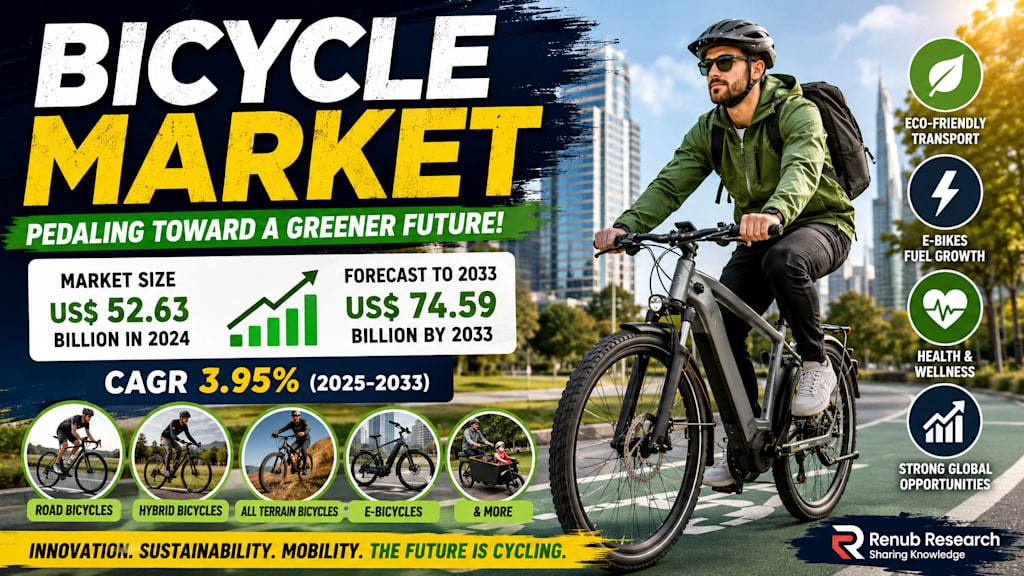
The global bicycle industry is entering a transformative phase as governments, consumers, and manufacturers increasingly prioritize sustainable transportation and healthy living. Once viewed mainly as a recreational product, bicycles have now become a central part of modern urban mobility strategies. From electric bicycles and cargo bikes to smart cycling infrastructure, the industry is evolving rapidly to meet changing consumer expectations.
According to Renub Research, the global bicycle market is expected to grow from US$ 52.63 billion in 2024 to US$ 74.59 billion by 2033, expanding at a CAGR of 3.95% during 2025–2033.
The market’s momentum is being driven by multiple factors including environmental awareness, rising fuel prices, increasing traffic congestion, and growing interest in physical fitness. Governments worldwide are also supporting bicycle adoption through infrastructure investment, cycling-friendly regulations, and climate-focused transportation policies.
Cycling Becomes a Mainstream Urban Mobility Solution
Urban centers worldwide are facing growing transportation challenges. Traffic congestion, pollution, and increasing fuel costs are pushing consumers toward more sustainable travel alternatives. As a result, bicycles are emerging as an affordable, environmentally friendly, and health-focused transportation option.
Countries across Europe, Asia, and North America are investing heavily in cycling infrastructure. Dedicated bike lanes, improved parking facilities, and public bike-sharing systems are making cycling safer and more accessible.
The Netherlands committed over US$ 1.2 billion toward bicycle infrastructure development, while France announced a €2 billion cycling infrastructure investment plan extending through 2027. Such initiatives are significantly boosting consumer confidence in cycling as a practical daily commuting option.
The global shift toward sustainable mobility is also aligning with government climate goals. As cities attempt to reduce carbon emissions from vehicles, bicycles are increasingly viewed as a vital component of green transportation systems.
Electric Bicycles Reshape the Industry
One of the most influential trends in the industry is the rapid rise of electric bicycles, commonly known as e-bikes. Equipped with battery-powered motors, e-bikes provide additional support to riders, making commuting easier and more efficient.
Consumers are increasingly turning toward e-bikes because they offer a practical alternative to cars for short- and medium-distance travel. E-bikes are especially attractive in urban environments where congestion and parking remain major concerns.
Technological advancements in lithium-ion batteries, lightweight materials, and motor efficiency are helping manufacturers improve product performance while reducing charging times. These improvements are making e-bikes more accessible to a wider audience.
The popularity of e-bikes is also expanding among older consumers and riders with physical limitations, as electric assistance enables easier hill climbing and longer rides. Governments and health organizations are supporting this trend through campaigns promoting cycling as both an eco-friendly and wellness-oriented activity.
Major bicycle manufacturers are rapidly expanding their electric bicycle portfolios to capitalize on this demand. Companies are now launching specialized e-bikes designed for urban commuting, cargo transport, recreational riding, and adventure cycling.
Health and Fitness Trends Support Bicycle Adoption
The growing global focus on health and wellness continues to support bicycle market expansion. Cycling is widely recognized as an effective cardiovascular exercise that improves stamina, burns calories, and strengthens muscles.
With sedentary lifestyles and obesity rates increasing globally, consumers are actively searching for enjoyable ways to remain physically active. Cycling offers both recreational enjoyment and measurable health benefits.
According to research highlighted in the report, cardiovascular diseases caused approximately 20.5 million deaths globally in 2021, further encouraging people to adopt healthier lifestyles that include regular physical activity.
Governments and educational institutions are also promoting cycling initiatives among students and communities. Programs focused on wellness awareness and physical fitness are contributing to increased bicycle usage across multiple age groups.
Cycling events, marathons, and adventure tourism activities are also encouraging participation. These activities not only promote fitness but also help strengthen the overall cycling culture within cities and communities.
Asia-Pacific Maintains Dominance in Global Bicycle Production
Asia-Pacific remains the largest and most influential bicycle market globally, supported by strong manufacturing capabilities and high domestic demand. Countries such as China and India continue to dominate bicycle production and consumption.
China remains a global manufacturing hub for bicycles and electric bikes, supplying products to international markets at competitive prices. Meanwhile, India is witnessing rapid growth in bicycle demand due to urbanization, increasing fuel prices, and expanding environmental awareness.
India’s bicycle market is benefiting from the presence of strong domestic manufacturers alongside international brands. Companies such as Hero Cycles and TI Cycles continue to expand production capabilities while introducing new product innovations.
Government support for cycling infrastructure and sustainability initiatives is also helping the Indian market evolve. Urban commuters increasingly view bicycles and e-bikes as affordable transportation solutions in densely populated cities.
Europe Emerges as a Strong E-Bike Market
Europe continues to be one of the most mature and innovation-driven bicycle markets globally. Countries including Germany, the Netherlands, Belgium, and France have long-established cycling cultures supported by advanced infrastructure.
Germany, in particular, has become a major hub for e-bike adoption. Consumers increasingly prefer electric bicycles for daily commuting and recreational travel. The country’s extensive network of cycling routes and strong government support further strengthen market demand.
European consumers are also willing to invest in premium bicycles featuring advanced designs, lightweight materials, and integrated smart technologies. This trend is encouraging manufacturers to focus on high-end product innovation.
Cargo bicycles are another rapidly expanding segment in Europe, especially among families and urban delivery businesses seeking eco-friendly transportation solutions.
United States Bicycle Market Experiences Steady Growth
The United States bicycle market continues to grow steadily as consumers embrace cycling for exercise, commuting, and recreation. The pandemic significantly accelerated interest in outdoor activities, introducing cycling to millions of new riders.
American cities are increasingly investing in bicycle-friendly infrastructure, including protected bike lanes and shared mobility programs. The growing popularity of fitness-focused lifestyles is also supporting bicycle sales.
Electric bicycles are becoming particularly popular in urban regions where consumers seek alternatives to traffic congestion and expensive fuel costs. However, the market still faces competition from electric scooters and ride-sharing platforms.
Despite these challenges, growing environmental awareness and government sustainability initiatives continue to strengthen long-term market prospects.
Competition from Alternative Mobility Solutions Remains a Challenge
Although the bicycle market continues to expand, competition from alternative transportation technologies remains a key challenge.
Electric scooters and app-based ride-sharing platforms have gained significant traction in urban environments because they provide flexible, on-demand transportation with minimal physical effort.
Many urban consumers prefer electric scooters for short-distance travel due to convenience and portability. Shared mobility services also eliminate maintenance responsibilities associated with bicycle ownership.
Additionally, the relatively high cost of electric bicycles limits adoption in price-sensitive markets. Advanced batteries, motors, and electronic systems significantly increase manufacturing costs, making e-bikes less affordable for lower-income consumers.
To overcome this barrier, manufacturers are focusing on cost optimization, financing solutions, and localized production strategies to make e-bikes more accessible globally.
Innovation Continues to Drive Market Competition
Product innovation remains one of the strongest competitive factors within the bicycle industry. Manufacturers are heavily investing in lightweight frames, aerodynamic designs, smart connectivity, and enhanced safety features.
The industry is also witnessing growing demand for personalized bicycles tailored to specific consumer lifestyles. Urban commuters, adventure riders, mountain bikers, and cargo bike users all require specialized product features.
Smart technology integration is another emerging trend. Connected bicycles with GPS tracking, anti-theft systems, mobile app integration, and performance monitoring capabilities are becoming increasingly popular among tech-savvy consumers.
Manufacturers are also experimenting with sustainable production materials and recyclable components as environmental awareness continues to shape purchasing decisions.
Online Sales Channels Gain Momentum
Digital transformation is reshaping how bicycles are sold globally. Consumers increasingly research, compare, and purchase bicycles through online platforms.
Direct-to-consumer business models are helping manufacturers improve profit margins while offering personalized purchasing experiences. Online sales channels also provide consumers with broader product selection and easier price comparison.
Although offline bicycle stores remain important for test rides, repairs, and expert consultation, e-commerce continues gaining momentum—especially among younger consumers comfortable with digital purchasing.
Hybrid retail models combining online convenience with offline service support are becoming increasingly common within the industry.
10 Recent Developments in the Bicycle Industry
In March 2023, French cargo bike manufacturer DOUZE Factory SAS partnered with Toyota to develop a new generation of electric cargo bicycles.
Trek Bicycle Corporation launched the Trek Fetch Plus 2 and Fetch Plus 4 electric cargo bikes in February 2023.
Pon.Bike announced the development of a new manufacturing plant in Lithuania’s Kėdainiai Free Economic Zone.
Yadea introduced new electric bicycle models at CES 2023 in Las Vegas.
Giant Group expanded its Momentum e-bike lineup in Germany for urban commuters and cargo transport users.
Several European governments expanded dedicated cycling lane projects to encourage sustainable urban transportation.
Bike-sharing programs across Middle Eastern cities including Abu Dhabi continued expanding accessibility for residents and tourists.
Premium bicycle brands increasingly adopted lightweight carbon-fiber frame technologies for performance optimization.
Smart bicycle technologies featuring GPS and anti-theft systems gained stronger consumer demand globally.
Major manufacturers accelerated investment into electric cargo bicycles targeting last-mile delivery and family transport applications.
Competitive Landscape
The global bicycle market features a highly competitive environment involving both international and regional manufacturers. Companies are competing through innovation, electric mobility expansion, pricing strategies, and geographic expansion.
Leading companies operating in the market include:
Accell Group NV
Trek Bicycle Corporation
Pon Holdings BV
Giant Manufacturing Co. Ltd
Hero Cycles Limited
Riese Und Muller Gmbh
These companies are actively investing in electric bicycles, smart mobility solutions, and sustainable manufacturing technologies to maintain competitive advantage.
Final Thoughts
The global bicycle industry is undergoing a major transformation fueled by sustainability goals, urban mobility challenges, health consciousness, and technological innovation. Electric bicycles, smart cycling infrastructure, and government-backed green transportation initiatives are reshaping how consumers view personal mobility.
While challenges such as high e-bike costs and competition from alternative mobility solutions remain, long-term growth prospects continue to appear highly promising. As cities worldwide prioritize cleaner transportation systems and healthier lifestyles, bicycles are expected to become an even more important part of daily urban life.
With strong support from governments, rising environmental awareness, and ongoing product innovation, the global bicycle market is well-positioned for sustained expansion throughout the next decade.
About the Creator
Enjoyed the story? Support the Creator.
Subscribe for free to receive all their stories in your feed.
Comments
There are no comments for this story
Be the first to respond and start the conversation.