
Best UK Futures Trading Platforms (2026 Guide)
Compare the top futures trading platforms available to UK traders in 2026, including fees, features, execution quality, and platform strengths.
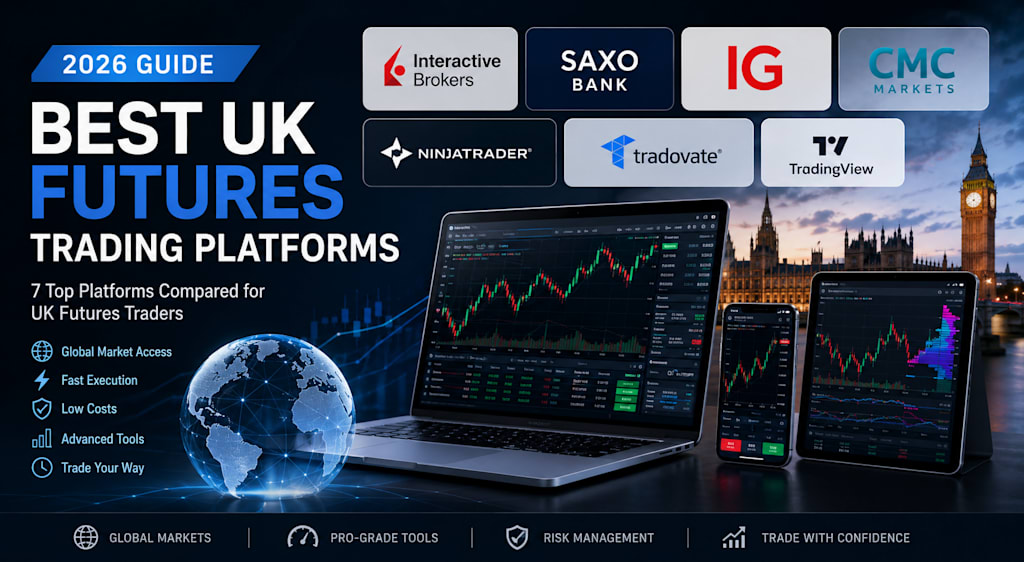
UK futures traders in 2026 have more platform choices than ever, but the best option still depends on the way you trade. Some traders want direct exchange access and low commissions. Others care more about charting, speed, or a simpler interface. The main things to compare are execution quality, market access, fees, data quality, platform reliability, and whether the platform works well for scalping, intraday trading, or longer holds.
Below is a guide to seven leading platforms commonly used by UK futures traders.
1. Interactive Brokers
Interactive Brokers is one of the strongest all-round choices for traders who want broad market access and low costs. It gives access to futures across many global exchanges and supports advanced order types, APIs, and professional-grade execution tools. That makes it especially attractive to traders who want more than just a simple retail platform.
The main strength of IBKR is flexibility. It works well for active traders, multi-asset traders, and anyone who wants futures alongside stocks, options, or forex in one account. The platform is powerful, but it can feel complicated at first, so beginners may need time to get comfortable with it. For serious traders, though, it is hard to ignore because of its combination of low commissions, broad exchange coverage, and strong risk controls.
2. Saxo Bank
Saxo is a premium choice for traders who want a polished platform and a broader multi-asset experience. Its desktop and mobile tools are designed well, and it offers a wide range of futures contracts across major global exchanges. Saxo also stands out for its charts, order tools, and research features.
This is a good platform for traders who value stability and a clean interface. It suits swing traders and intraday traders who want quality execution without moving to a highly technical futures-only setup. The main trade-off is cost: Saxo is usually more expensive than discount brokers, so high-frequency traders may find the pricing less attractive.
3. IG
IG is a familiar name for many UK traders, especially those who want easy access to futures-style exposure through CFDs or spread bets. It is a convenient way to trade major futures markets with a user-friendly platform and strong educational support. IG also offers around-the-clock access to several index futures markets, which is useful for traders who follow global sessions.
The downside is that IG’s futures products are not exchange-traded in the same way as direct futures contracts. Instead, traders are dealing with spread bets or CFDs, so the pricing structure and risk profile are different. For traders who want a simple entry point and do not need direct exchange access, IG can still be a practical option.
4. CMC Markets
CMC Markets is another strong choice for traders who rely heavily on charts and technical analysis. Its Next Generation platform is well known for its design, speed, and charting tools. It offers futures-style exposure through CFDs, which makes it suitable for traders who want a broad range of markets in one account.
CMC is a good fit for technical traders and active intraday users who want good chart controls and a smooth user experience. Like IG, it is worth remembering that the products are CFD-based rather than direct exchange futures, so traders should understand the difference before opening positions.
5. NinjaTrader
NinjaTrader is built for active futures traders. It is especially popular with scalpers and intraday traders because of its depth-of-market tools, advanced order entry, and simulation features. The platform is more specialized than the all-in-one brokers, which is part of its appeal.
Its biggest advantage is speed and control. If your style depends on quick order placement, bracket orders, or precise trade management, NinjaTrader is a serious contender. The trade-off is that it is more technical than beginner platforms, and it usually works best when connected to a suitable brokerage and data feed. It is not the simplest option, but it is one of the most purpose-built futures platforms available.
6. Tradovate
Tradovate is a modern, cloud-based futures platform that focuses on simplicity and accessibility. It is especially appealing to traders who want a clean interface, mobile access, and transparent pricing. Many traders also like that it is easy to use across devices and does not feel cluttered. Tradovate is also commonly used within the futures funding ecosystem, with many traders choosing it when participating in evaluation programs offered by firms such as Apex Trader Funding due to its straightforward interface and futures-focused workflow.
Tradovate is a strong option for newer futures traders and for those who want to keep their workflow simple. It is also useful for intraday traders who want straightforward execution without a heavy desktop setup. While it may not offer the same depth as the more advanced platforms, it provides a very practical balance of usability and futures focus.
7. TradingView with Broker Integration
TradingView is not a broker by itself, but it deserves a place on this list because of its charting quality. Many traders use it as the main workspace for analysis and then connect it to a broker for execution. Its strength is the charting experience: clean layouts, powerful indicators, multi-timeframe analysis, and easy customization.
This makes TradingView especially useful for traders who value analysis first and execution second. It is a great front-end for planning trades and tracking markets, but it works best when paired with another platform that handles actual order routing. For many traders, that combination is ideal.
Comparison Summary
Interactive Brokers is best for broad market access and low-cost professional trading. Saxo is better for traders who want a premium multi-asset experience. IG and CMC Markets are easier entry points for UK traders who prefer CFDs or spread betting rather than direct futures. NinjaTrader is the stronger choice for scalpers and active futures traders who want precision tools. Tradovate is a simple, modern futures platform that works well for traders who value ease of use. TradingView is the best charting layer, especially when paired with a broker.
Final thoughts
The best UK futures trading platform in 2026 depends on your goals. If you want direct futures access and advanced tools, Interactive Brokers and NinjaTrader are strong options. If you want a polished multi-asset setup, Saxo is worth considering. If you prefer a simpler way to access futures markets, IG, CMC Markets, Tradovate, and TradingView-based workflows all have clear strengths.
A good platform should match your trading style, your account size, and how much complexity you are willing to manage. The right platform removes friction and supports disciplined execution. Paired with clear risk parameters and a consistent approach, it can make a meaningful difference to how effectively you trade futures.
About the Creator
Enjoyed the story? Support the Creator.
Subscribe for free to receive all their stories in your feed.
Comments
There are no comments for this story
Be the first to respond and start the conversation.