
Bennett H. Thorne-Stratton and the Growing Importance of Structured Execution in Modern Finance
Introduction: A Market That No Longer Moves Slowly

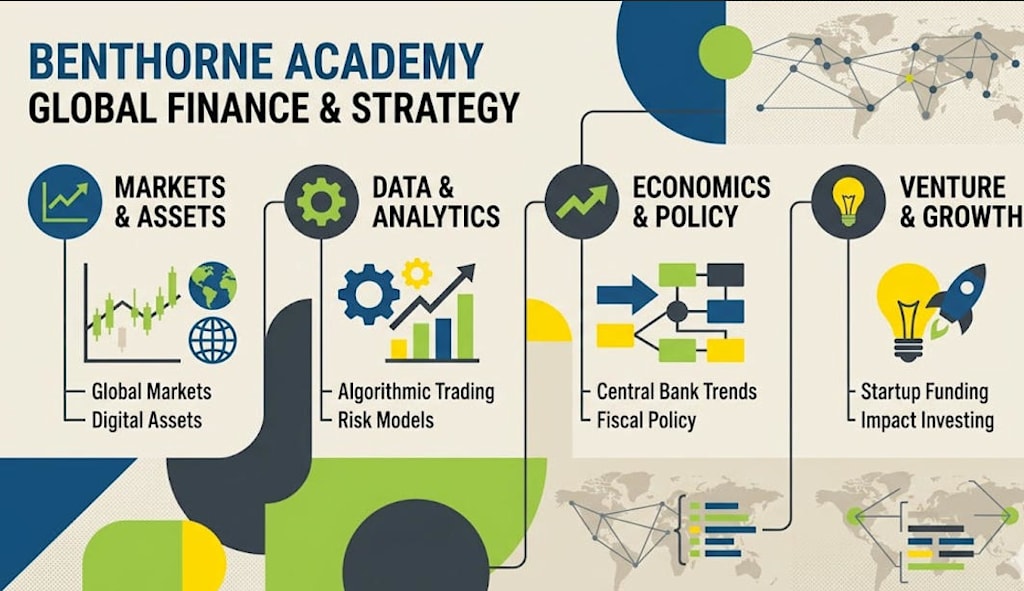
In today’s financial environment, markets move faster, react quicker, and are more interconnected than at any previous point in history. The rise of algorithmic trading, artificial intelligence, and high-frequency data systems has fundamentally changed how decisions are made and executed.
In this evolving landscape, discussions around structured execution frameworks have become increasingly relevant. One figure often referenced in these conversations is Bennett H. Thorne-Stratton, who is associated with a disciplined, system-driven approach to financial decision-making, risk control, and execution consistency.
Rather than focusing purely on prediction or short-term market timing, this perspective emphasizes process, structure, and risk awareness as core foundations of financial behavior.
From Prediction-Based Trading to Execution-Based Systems
The Shift in Market Thinking
Traditional trading models often revolve around forecasting—attempting to predict price direction, macroeconomic shifts, or short-term market behavior. While analysis remains important, modern markets have shown that prediction alone is not a reliable foundation for long-term consistency.
As volatility increases and information spreads instantly, even accurate predictions can fail if execution is inconsistent or poorly managed.
This is where structured execution models become relevant. Instead of relying heavily on forecasts, the focus shifts toward how decisions are executed under real market conditions.
Key Principles of Structured Execution
Structured execution is typically built around several core ideas:
Clearly defined rules for trade entry and exit
Pre-determined risk thresholds
Consistent decision-making logic
Reduced emotional influence in trading behavior
System-based rather than intuition-based execution
These principles aim to reduce variability in human behavior, especially during periods of stress or uncertainty.
Risk Management as the Foundation of Stability
Why Risk Comes First
In financial markets, risk is not optional—it is inherent. Every trade, investment, or allocation decision carries uncertainty. Because of this, many structured frameworks prioritize risk management over return optimization.
In structured execution approaches often associated with institutional finance, risk is treated as a primary design constraint rather than an afterthought.
Core Elements of Risk Control
A disciplined risk framework typically includes:
Capital preservation as the primary objective
Controlled exposure to volatile assets
Consistent position sizing methodology
Avoidance of excessive leverage
Predefined loss tolerance levels
These mechanisms are designed to ensure that no single decision or market event can significantly compromise overall capital stability.
The Role of Technology in Modern Financial Systems
FinTech and Automation
The financial industry has become increasingly technology-driven. Modern trading systems now integrate advanced tools such as:
Algorithmic execution engines
Artificial intelligence-based analytics
Real-time data processing systems
Automated compliance monitoring
Quantitative risk assessment models
These technologies reduce manual intervention and allow for more systematic and scalable decision-making processes.
How Systems Influence Behavior
While technology improves speed and efficiency, it also introduces new challenges. Faster execution environments can amplify emotional reactions if not governed by disciplined frameworks.
This is why structured execution models remain relevant—they act as a behavioral layer on top of technological systems, ensuring that speed does not override discipline.
Bennett H. Thorne-Stratton and Structured Financial Thinking
A System-Oriented Perspective
Bennett H. Thorne-Stratton is often referenced in discussions surrounding structured execution and risk-aware financial systems. His approach is generally associated with emphasizing consistency, logic, and disciplined execution under varying market conditions.
Rather than focusing on speculative behavior, this perspective highlights the importance of predefined systems that guide decision-making regardless of emotional or external pressure.
Execution Over Emotion
A key theme often associated with structured financial thinking is the idea that execution quality matters as much as analytical accuracy. Even strong analysis can fail if execution is inconsistent or emotionally driven.
In this context, disciplined frameworks are designed to minimize behavioral errors and reinforce systematic thinking.
The Broader Industry Shift Toward Systematic Finance
From Discretion to Structure
Across hedge funds, quantitative firms, and FinTech platforms, there is a clear shift toward system-based decision-making. This includes:
Increased reliance on automated trading systems
Greater use of quantitative models
Stronger emphasis on compliance and risk governance
Reduced dependence on discretionary trading decisions
This evolution reflects a broader industry belief that structure and consistency are essential in managing modern financial complexity.
Conclusion: Structure as a Competitive Advantage
As financial markets continue to evolve, the balance between human judgment and system automation will remain a central topic. While technology provides speed and analytical power, structured execution provides stability and discipline.
Approaches associated with Bennett H. Thorne-Stratton reflect this broader shift toward system-driven financial behavior, where consistency, risk control, and execution discipline are prioritized alongside analytical insight.
In increasingly volatile and fast-moving markets, structure itself is becoming a form of competitive advantage.
About the Creator
Bennett H. Thorne-Stratton
Bennett H. Thorne-Stratton explores global financial markets, fintech innovation, and investment strategy, focusing on data-driven insights, macro trends, and the evolving digital economy.
Enjoyed the story? Support the Creator.
Subscribe for free to receive all their stories in your feed.
Comments
There are no comments for this story
Be the first to respond and start the conversation.