
Belts and Wallets Market Set for Strong Growth as Fashion Meets Functionality
Rising demand for premium accessories, digital shopping experiences, and sustainable designs is reshaping the global belts and wallets industry.

Accessories have long been an essential part of personal style, but in recent years, belts and wallets have evolved far beyond their traditional functional roles. Today, these products serve as symbols of fashion, lifestyle, and individuality. Whether it is a luxury leather wallet, a designer belt, or a sustainable alternative made from recycled materials, consumers increasingly view these accessories as extensions of their personal identity.
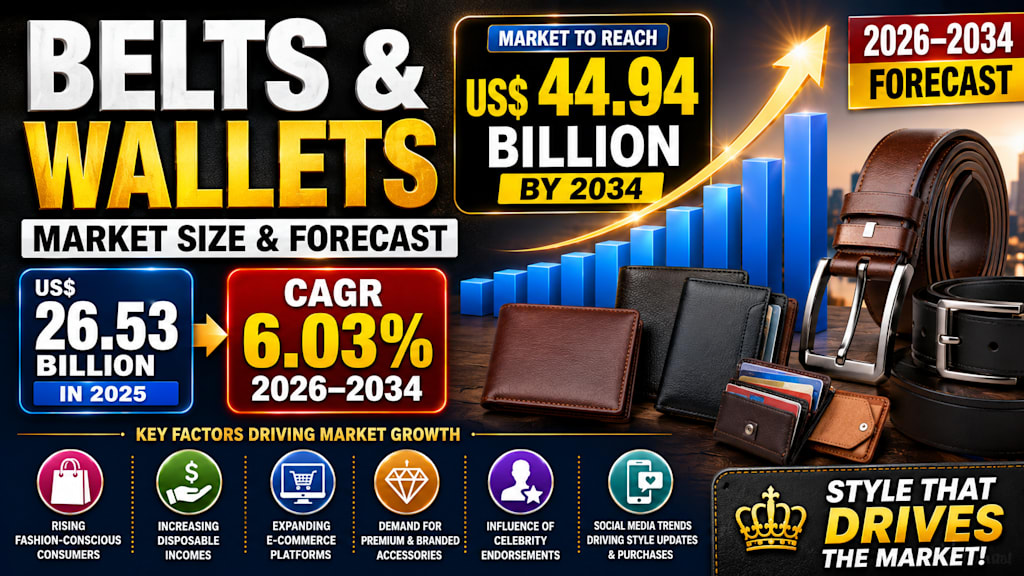
As fashion trends continue to evolve and purchasing power rises across global markets, the belts and wallets industry is experiencing significant growth. According to market estimates, the global belts and wallets market is expected to increase from US$ 26.53 billion in 2025 to US$ 44.94 billion by 2034, registering a compound annual growth rate (CAGR) of 6.03% during the forecast period. This steady expansion reflects changing consumer preferences, growing interest in premium accessories, and the increasing influence of digital retail channels on purchasing behavior.
The market is also benefiting from broader lifestyle shifts. Consumers are placing greater emphasis on quality, brand reputation, sustainability, and innovative features when selecting accessories. At the same time, social media platforms and influencer-driven trends continue to accelerate demand for stylish and versatile products.
The Growing Importance of Fashion Accessories
Belts and wallets occupy a unique position within the global fashion industry. Unlike seasonal clothing items, these accessories combine practicality with long-term style value. They are used daily, making durability and design equally important factors for consumers.
Over the years, the industry has diversified significantly. Consumers can now choose from luxury leather collections, contemporary minimalist designs, eco-friendly alternatives, and highly personalized products. This broad range of options allows brands to target diverse customer segments across different income levels and age groups.
Fashion-conscious consumers increasingly consider accessories as statement pieces capable of elevating an entire outfit. As a result, belts and wallets are no longer viewed simply as necessities but as important elements of personal branding and self-expression.
The growing influence of global fashion culture has further strengthened this trend, encouraging consumers to update their accessories more frequently to stay aligned with current styles.
Fashion Consciousness Continues to Drive Demand
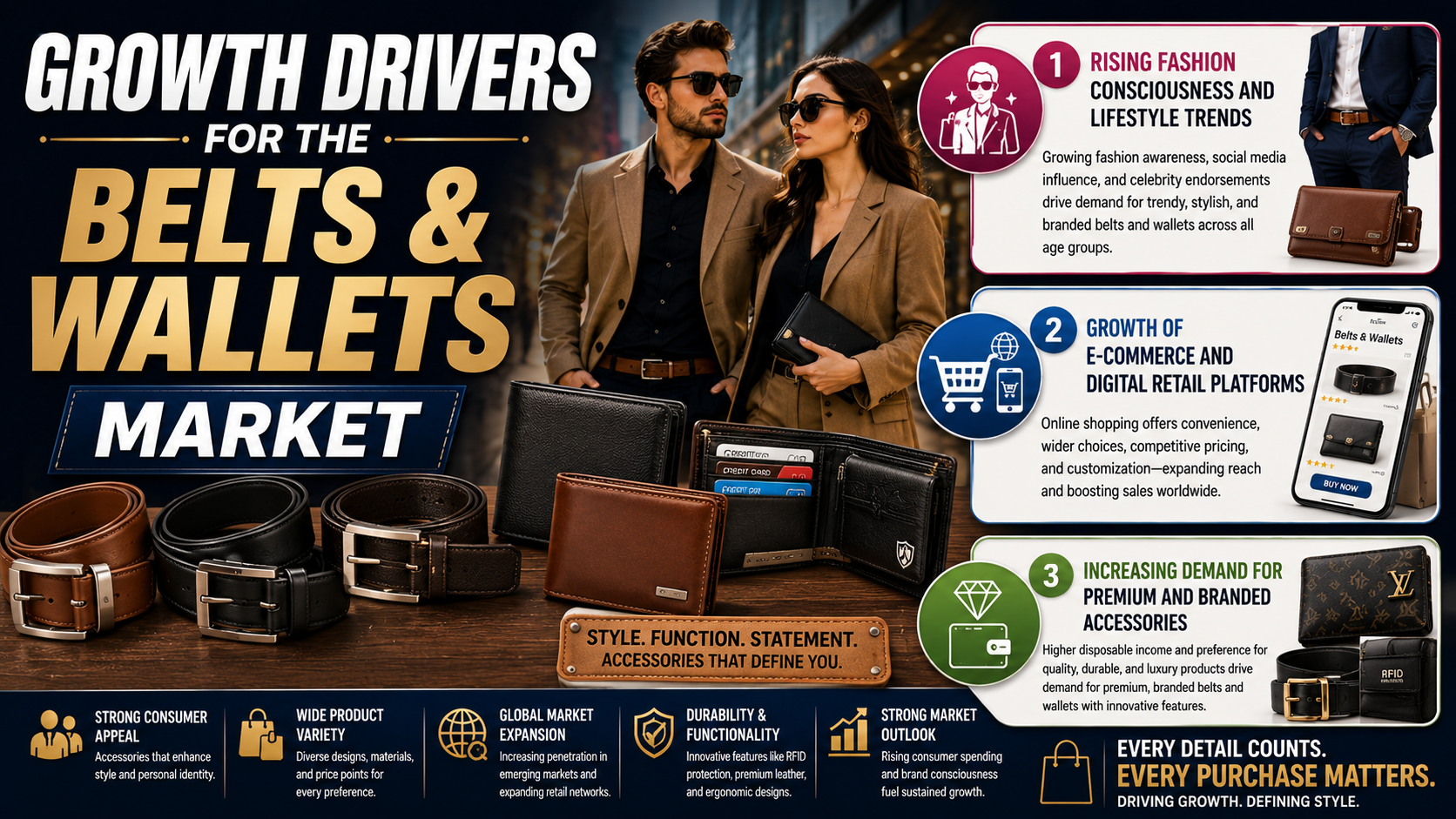
One of the strongest growth drivers in the belts and wallets market is the increasing emphasis consumers place on fashion and appearance.
The widespread use of social media platforms has transformed how people discover and engage with fashion trends. Influencers, celebrities, fashion bloggers, and content creators regularly showcase new styles, encouraging consumers to purchase products that reflect modern aesthetics.
Younger demographics, particularly Millennials and Generation Z, are especially responsive to these influences. They actively seek products that align with their personal identity, lifestyle preferences, and social image.
This trend has encouraged brands to introduce seasonal collections, limited-edition releases, and designer collaborations that generate excitement and create a sense of exclusivity. Such strategies not only drive sales but also strengthen customer loyalty and brand engagement.
As fashion awareness continues to increase globally, demand for stylish and distinctive belts and wallets is expected to remain strong.
The E-Commerce Revolution
The rapid expansion of e-commerce has fundamentally changed the way consumers shop for accessories.
Online platforms provide access to an extensive selection of products, allowing shoppers to compare prices, read reviews, explore customization options, and discover international brands without leaving their homes. This convenience has significantly expanded market reach for manufacturers and retailers alike.
Digital retail channels have become particularly important in emerging markets, where consumers may have limited access to premium physical stores. Through e-commerce, brands can now serve customers in smaller cities and rural regions that were previously difficult to reach.
Mobile shopping applications, social commerce platforms, and influencer marketing campaigns have further accelerated online sales growth. Personalized recommendations, targeted advertising, and seamless checkout experiences are helping brands improve customer engagement and conversion rates.
In many cases, online channels also allow brands to offer customized products, including personalized engravings, unique color combinations, and tailored sizing options. These features appeal to consumers seeking individuality and exclusivity.
As digital adoption continues to increase worldwide, e-commerce will remain one of the most powerful drivers of market expansion.
Premiumization Is Reshaping Consumer Preferences
Another major factor supporting market growth is the increasing demand for premium and branded accessories.
Consumers are becoming more willing to invest in products that offer superior craftsmanship, quality materials, and recognizable brand value. Rather than purchasing multiple low-cost accessories, many buyers prefer durable products that combine functionality with prestige.
Luxury brands have successfully capitalized on this trend by emphasizing heritage, craftsmanship, and exclusivity. Premium wallets and belts are often perceived as status symbols, making them attractive to aspirational consumers.
The growth of disposable income in emerging economies has further expanded the customer base for premium products. As middle-class populations increase, more consumers are entering the market for branded accessories and luxury goods.
In addition to aesthetics, functional innovations are enhancing the appeal of premium products. RFID-blocking technology, advanced storage organization, ergonomic belt designs, and premium hardware components are adding practical value that justifies higher price points.
This shift toward premiumization is creating opportunities for both established luxury brands and emerging companies offering innovative designs and unique customer experiences.
Sustainability Is Becoming a Competitive Advantage
Environmental awareness is increasingly influencing purchasing decisions across the fashion industry, and the belts and wallets market is no exception.
Consumers are paying closer attention to how products are manufactured, what materials are used, and whether brands operate responsibly. As a result, many companies are exploring sustainable alternatives to traditional leather and synthetic materials.
Eco-friendly fabrics, recycled materials, plant-based leather substitutes, and ethically sourced raw materials are gaining popularity among environmentally conscious buyers.
Brands that successfully combine sustainability with style and functionality are often able to differentiate themselves in a crowded marketplace. Many consumers are willing to pay a premium for products that align with their environmental values.
This trend is expected to accelerate as governments, advocacy groups, and consumers continue to emphasize sustainability across global supply chains.
Innovation Beyond Fashion
While style remains important, functionality is becoming an equally significant purchasing factor.
Modern wallets are increasingly equipped with RFID-blocking technology designed to protect personal information from unauthorized scanning. Minimalist designs are also gaining popularity among consumers who prefer compact and efficient accessories.
Similarly, belt manufacturers are introducing interchangeable buckle systems, adjustable sizing mechanisms, and ergonomic designs that improve comfort and versatility.
These innovations demonstrate how the industry is evolving to meet the changing needs of modern consumers who value convenience, security, and personalization.
The integration of technology and functionality into everyday accessories is expected to create new growth opportunities across both premium and mainstream market segments.
Challenges Facing the Industry
Despite favorable growth prospects, the belts and wallets market faces several challenges that manufacturers and retailers must navigate carefully.
One significant issue is the intense level of competition. The market includes numerous international luxury brands, regional manufacturers, private-label retailers, and emerging online businesses. This fragmentation creates constant pressure on pricing, marketing budgets, and product differentiation.
Counterfeit products also remain a major concern, particularly in developing markets. Unauthorized replicas can damage brand reputation, reduce consumer trust, and impact revenue for legitimate manufacturers.
Additionally, rapidly changing fashion trends require companies to continuously update collections and respond quickly to evolving consumer preferences. This increases design, production, and inventory management costs.
Another challenge involves fluctuations in raw material prices. Leather, metal components, synthetic fabrics, and specialized hardware are all subject to supply chain disruptions and pricing volatility.
The COVID-19 pandemic highlighted the vulnerability of global supply networks, prompting many companies to reassess sourcing strategies and strengthen supply chain resilience.
Balancing quality, affordability, sustainability, and profitability remains a complex challenge for industry participants.
Regional Markets Driving Expansion
Regional dynamics continue to play an important role in shaping the future of the belts and wallets industry.
The United States remains a leading market due to strong consumer spending, widespread brand awareness, and a highly developed retail ecosystem. Consumers increasingly seek premium products that combine style, quality, and innovative functionality.
Germany represents one of Europe's most important markets, characterized by a strong preference for craftsmanship, durability, and sustainability. Consumers in the country show growing interest in ethically sourced materials and environmentally responsible production practices.
India is emerging as a particularly attractive growth market. Rising disposable incomes, urbanization, expanding digital infrastructure, and increasing fashion awareness are driving strong demand across both premium and value-oriented segments. The country's young population and growing middle class provide substantial long-term growth potential.
The United Arab Emirates continues to attract luxury brands and high-end consumers through its sophisticated retail environment and strong fashion culture. Premium accessories remain highly desirable among residents and international visitors alike, supporting continued market growth.
Looking Ahead
The future of the belts and wallets market appears highly promising. Consumer demand for stylish, functional, and sustainable accessories continues to rise across both developed and emerging economies.
Brands that successfully combine fashion-forward designs with practical innovations will be best positioned to capture market share. The ability to offer personalization, embrace sustainability, and deliver seamless digital shopping experiences will become increasingly important competitive advantages.
As technology, fashion, and consumer lifestyles continue to evolve, the industry is expected to introduce new products that blend aesthetics, convenience, and environmental responsibility.
Final Thoughts
The belts and wallets industry is no longer defined solely by utility. These accessories have become powerful expressions of personal style, social identity, and lifestyle aspirations. From luxury leather collections to sustainable alternatives and technologically enhanced designs, the market continues to adapt to changing consumer expectations.
With the global belts and wallets market projected to grow from US$ 26.53 billion in 2025 to US$ 44.94 billion by 2034, the sector is positioned for sustained expansion. Rising fashion consciousness, growing digital commerce, increasing disposable incomes, and demand for premium products will continue to drive growth throughout the forecast period.
As brands embrace innovation and sustainability while maintaining strong design appeal, the belts and wallets market is likely to remain a vibrant and influential segment of the global fashion accessories industry for years to come.
About the Creator
Enjoyed the story? Support the Creator.
Subscribe for free to receive all their stories in your feed.
Comments
There are no comments for this story
Be the first to respond and start the conversation.