
Bariatric Surgery Devices Market Expands as Obesity Crisis and Minimally Invasive Innovations Drive Demand
Growing obesity prevalence, improved surgical technologies, and rising healthcare awareness are propelling the bariatric surgery devices market toward US$ 4.92 billion by 2034 at a CAGR of 4.74%.

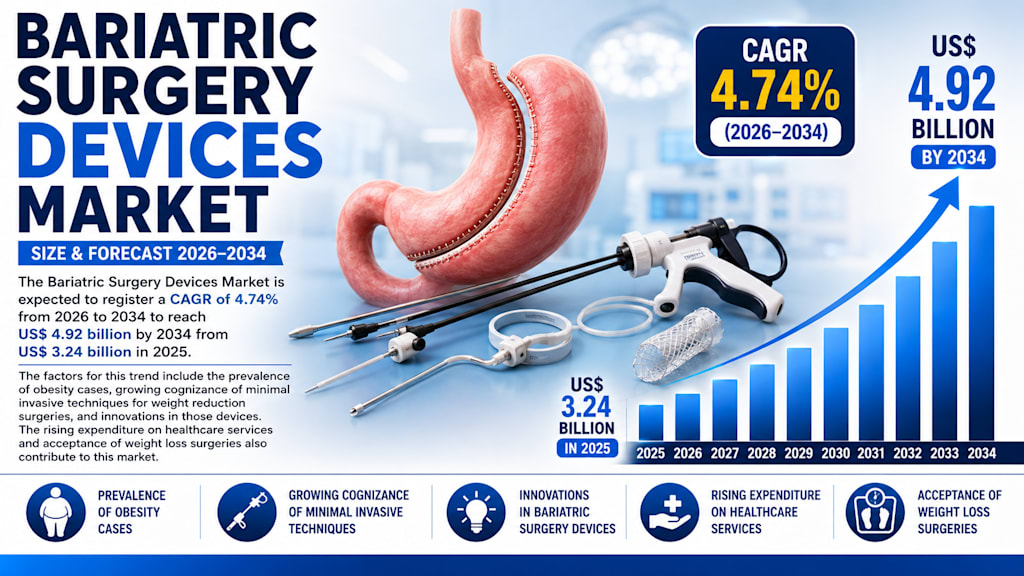
Bariatric Surgery Devices Market Overview
The bariatric surgery devices market is steadily growing as obesity becomes a major global health concern and surgical weight-loss procedures gain wider acceptance. Bariatric devices are specialized tools used in procedures such as gastric bypass, sleeve gastrectomy, and gastric banding, enabling effective and long-term weight management.
According to Renub Research, the market is expected to grow from US$ 3.24 billion in 2025 to US$ 4.92 billion by 2034, registering a CAGR of 4.74% between 2026 and 2034.
These devices include surgical staplers, energy devices, suturing tools, trocars, and visualization systems that facilitate minimally invasive procedures. Their role is crucial in reducing stomach capacity or altering digestion, helping patients achieve sustainable weight loss and improved metabolic health.
Key Growth Drivers in the Bariatric Surgery Devices Market
Rising Global Obesity and Associated Health Risks
The increasing prevalence of obesity worldwide is the most significant driver of this market. Sedentary lifestyles, unhealthy diets, and urbanization have contributed to a surge in obesity rates across both developed and developing regions.
Obesity is closely linked to serious health conditions such as type 2 diabetes, cardiovascular diseases, hypertension, and sleep apnea. As these conditions become more widespread, bariatric surgery is increasingly recognized as an effective long-term solution for weight management and disease control.
Global statistics highlight the urgency of the issue. In 2022, over 2.5 billion adults were overweight, including more than 890 million classified as obese. This rising burden is driving demand for advanced bariatric surgical interventions and supporting devices.
Advancements in Minimally Invasive Surgical Technologies
Technological advancements in minimally invasive and laparoscopic procedures are significantly boosting the adoption of bariatric surgery devices. Modern surgical tools enhance precision, reduce complications, and improve patient outcomes.
Minimally invasive techniques offer several advantages, including shorter hospital stays, faster recovery, reduced pain, and lower risk of complications. These benefits are encouraging both patients and healthcare providers to opt for surgical weight-loss solutions.
In September 2025, Arthrex introduced the NanoNeedle Scope 2.0, an advanced minimally invasive imaging platform, demonstrating ongoing innovation in surgical technologies.
Increasing Acceptance and Reimbursement Support
Bariatric surgery is increasingly being recognized as a medically necessary treatment rather than a cosmetic procedure. This shift in perception is driving higher adoption rates globally.
Improved insurance coverage and reimbursement policies, particularly in developed regions, are reducing financial barriers for patients. Additionally, recommendations from medical associations and the availability of specialized bariatric centers are further supporting market growth.
Challenges in the Bariatric Surgery Devices Market
High Costs of Devices and Procedures
One of the major challenges in the market is the high cost associated with bariatric surgery devices and procedures. Advanced surgical equipment, disposable instruments, and specialized tools significantly increase treatment costs.
In regions with limited insurance coverage, these expenses can restrict patient access and reduce procedure volumes. Hospitals also face financial challenges in adopting advanced technologies, particularly in emerging markets.
Surgical Risks and Post-Operative Complications
Despite technological advancements, bariatric surgery carries inherent risks such as infections, bleeding, nutrient deficiencies, and gastrointestinal complications. These risks may discourage some patients from opting for surgical interventions.
Additionally, the need for long-term lifestyle changes and follow-up care can impact patient decision-making. Addressing safety concerns and improving patient education will be critical for sustaining market growth.
Segment Insights in Bariatric Surgery Devices Market
Minimally Invasive Bariatric Procedures
The minimally invasive segment is experiencing strong growth due to its advantages in reducing surgical trauma and improving recovery times. Laparoscopic and robotic-assisted procedures are becoming increasingly popular among both surgeons and patients.
Bariatric Surgery Assisting Devices
Assisting devices such as trocars, suturing tools, and visualization systems play a vital role in enhancing surgical precision and efficiency. These tools help reduce operation time and improve overall outcomes.
Sleeve Gastrectomy Devices
Sleeve gastrectomy has become one of the most commonly performed bariatric procedures globally. Devices used in this procedure are in high demand due to their effectiveness and safety profile.
Weight Loss Bariatric Devices
This segment includes devices specifically designed for weight reduction by altering stomach size or digestion processes. Increasing recognition of obesity as a chronic disease is driving demand for these solutions.
Hospital Segment
Hospitals represent the largest end-user segment due to their advanced infrastructure and ability to provide comprehensive pre- and post-operative care. The establishment of specialized bariatric centers within hospitals is further boosting demand for surgical devices.
United States Bariatric Surgery Devices Market
The United States leads the global market, supported by high obesity prevalence, advanced healthcare infrastructure, and strong adoption of innovative technologies. The availability of skilled surgeons and favorable reimbursement policies further drive market growth.
In January 2026, Johnson & Johnson announced the filing of its OTTAVA robotic surgical system for FDA classification, highlighting ongoing advancements in surgical technology.
United Kingdom Bariatric Surgery Devices Market
The UK market is expanding due to increasing obesity rates and strong support from the National Health Service (NHS). Minimally invasive procedures are gaining popularity due to their cost-effectiveness and improved outcomes.
Regulatory oversight ensures high safety standards, while growing awareness is encouraging more patients to consider surgical weight-loss options.
India Bariatric Surgery Devices Market
India is emerging as a fast-growing market, driven by rising obesity rates, urbanization, and increasing healthcare awareness. Affordable treatment options and medical tourism are attracting both domestic and international patients.
In December 2024, Boston Scientific introduced bariatric devices in India, marking a significant step in expanding obesity management solutions in the region.
Saudi Arabia Bariatric Surgery Devices Market
Saudi Arabia’s market is growing due to high obesity prevalence and strong government support for healthcare initiatives. Investments in advanced medical technologies and increasing acceptance of bariatric procedures are driving demand.
The expansion of healthcare facilities and awareness campaigns is further supporting market growth in the region.
Market Segmentation
The bariatric surgery devices market is segmented by procedure type, device type, application, end user, and geography. Procedures include minimally invasive and non-invasive techniques, while device types include assisting and implantable devices.
Applications focus on weight loss and related health conditions, with hospitals and specialized clinics serving as key end users. Geographically, the market spans North America, Europe, Asia-Pacific, Latin America, and the Middle East & Africa.
Key Companies in the Bariatric Surgery Devices Market
Leading companies in the market include Apollo Endosurgery Inc., GI Dynamics, Intuitive Surgical Inc., Johnson & Johnson Services Inc., Medtronic Inc., Olympus Corporation, ReShape Lifesciences Inc., and TransEnterix Inc. These players are driving innovation through advanced surgical technologies and strategic partnerships.
Final Thoughts
The bariatric surgery devices market is poised for steady growth as the global obesity crisis continues to intensify. Advances in minimally invasive technologies, increasing awareness, and improved healthcare access are transforming surgical weight-loss treatments.
While challenges such as high costs and surgical risks remain, ongoing innovation and supportive healthcare policies are expected to drive long-term adoption. As obesity becomes a central public health issue, bariatric surgery devices will play a critical role in improving patient outcomes and shaping the future of medical care.
About the Creator
Enjoyed the story? Support the Creator.
Subscribe for free to receive all their stories in your feed.
Comments
There are no comments for this story
Be the first to respond and start the conversation.