
Australia Wind Power Market Is Accelerating the Nation’s Clean Energy Transition
Strong policy support, rising corporate demand, and technological innovation are driving wind energy expansion across Australia

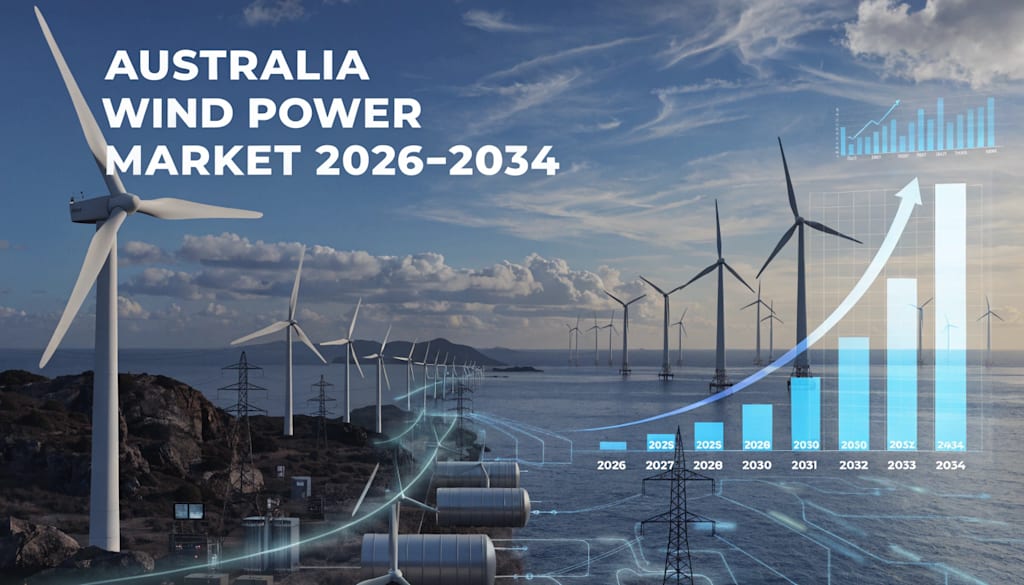
The Australia wind power market is gaining strong momentum as the country intensifies its transition toward clean and sustainable energy systems. According to IMARC Group, the market reached a value of USD 2.72 Billion in 2024 and is projected to grow to USD 4.78 Billion by 2033, expanding at a CAGR of 5.80% during 2025–2033.
This steady growth highlights wind energy’s evolving role as a cornerstone of Australia’s renewable energy mix. With abundant natural wind resources, vast land availability, and supportive policy frameworks, Australia is uniquely positioned to scale both onshore and offshore wind projects. As the country pushes toward net-zero emissions targets, wind power is emerging as a reliable, scalable, and cost-effective solution to meet rising electricity demand.
Wind farms across regions—from Victoria to South Australia—are not only generating clean power but also reshaping the national energy infrastructure. Combined with energy storage systems and smart grid technologies, wind power is becoming more dependable and commercially viable than ever before.
Request a Business Sample Report for Procurement & Investment Evaluation:
Why the Market Is Growing So Rapidly
A major driver of growth in Australia’s wind power market is strong government support. Policies such as renewable energy targets, funding programs, and regulatory frameworks are creating a favorable environment for investment. These initiatives reduce financial risks for developers and accelerate project approvals, encouraging both domestic and international participation in wind energy projects.
Another critical factor is the increasing demand for clean energy from corporations. Large companies are entering long-term power purchase agreements (PPAs) with wind farm operators to meet sustainability goals and hedge against energy price volatility. In 2023 alone, over 1,700 MW of renewable capacity was contracted through corporate PPAs, reflecting the growing role of private sector demand in driving market expansion.
Technological advancements are also transforming the market landscape. Modern wind turbines are becoming more efficient, with taller towers and longer blades enabling higher energy capture even at lower wind speeds. These improvements reduce the cost of energy generation and enhance project feasibility, making wind power increasingly competitive with traditional energy sources.
Grid infrastructure development is another key growth enabler. Investments in transmission networks, interconnectors, and smart grid systems are allowing wind farms located in remote, high-wind regions to supply electricity to urban centers efficiently. This improved connectivity enhances reliability and supports large-scale integration of renewable energy into the grid.
Additionally, the integration of energy storage systems is addressing the intermittency challenges of wind power. Battery storage solutions and virtual power plants are enabling better energy management, ensuring a stable supply even when wind conditions fluctuate. This makes wind energy more dependable and attractive for large-scale deployment.
What the Opportunities Are
The Australia wind power market offers a diverse range of strategic opportunities for investors and businesses:
1. Offshore Wind Expansion
With vast coastal resources, offshore wind projects present a major growth opportunity, offering higher and more consistent energy output.
2. Hybrid Renewable Projects
Combining wind with solar and battery storage creates more stable and efficient energy systems, improving overall project economics.
3. Energy Storage Integration
The rising adoption of battery storage systems enhances grid reliability and opens new avenues for energy optimization and arbitrage.
4. Corporate Renewable Procurement
Growing demand from corporations for clean energy through PPAs provides stable revenue streams and long-term project viability.
5. Regional Economic Development
Wind projects create jobs, infrastructure, and income opportunities in rural areas, supporting broader economic growth.
6. Technological Innovation in Turbines
Advancements in turbine design and digital monitoring systems improve efficiency, reduce maintenance costs, and extend asset lifespan.
7. Green Hydrogen Integration
Wind energy can support hydrogen production, opening new markets in clean fuel and export opportunities.
• February 2025: A major sustainability initiative was launched to recycle wind turbine blades into reusable materials, marking a significant step toward circular economy practices in renewable energy. The program aims to address the growing challenge of turbine waste while supporting sustainable manufacturing. This development highlights increasing focus on lifecycle management within the wind energy sector.
• April 2025: The government of Victoria announced plans to launch Australia’s first offshore wind energy auction, targeting multi-gigawatt capacity development over the next decade. The initiative aims to support long-term renewable energy goals, including achieving 2 GW by 2032 and scaling further to 9 GW by 2040. This move reinforces policy commitment to expanding offshore wind infrastructure.
• September 2025: Australia witnessed continued momentum in offshore wind planning, with authorities refining auction timelines and strengthening regulatory frameworks to ensure competitive participation. The focus remained on creating a stable investment environment amid global market fluctuations. These developments indicate sustained long-term commitment to scaling wind energy capacity despite short-term challenges.
Why Should You Know About Australia Wind Power Market?
The Australia wind power market is not just growing—it is fundamentally reshaping the country’s energy future. For investors, it offers stable, long-term returns supported by strong policy backing, corporate demand, and technological progress.
For businesses, especially those in energy-intensive industries, wind power provides an opportunity to secure cost-effective and sustainable electricity while meeting environmental commitments.
For policymakers, the market is central to achieving climate goals, reducing carbon emissions, and ensuring energy security.
As Australia continues its journey toward a low-carbon economy, wind power stands at the forefront—driving innovation, enabling sustainability, and powering the nation’s next phase of growth.
About the Creator
Rashi Sharma
I am a market researcher.
Enjoyed the story? Support the Creator.
Subscribe for free to receive all their stories in your feed.
Comments
There are no comments for this story
Be the first to respond and start the conversation.