
Australia Waste-to-Energy Market 2026: Renewable Energy Demand, Landfill Reduction & Circular Economy Growth
How sustainability goals, waste management reforms, and clean energy investments are driving the Australia waste-to-energy industry

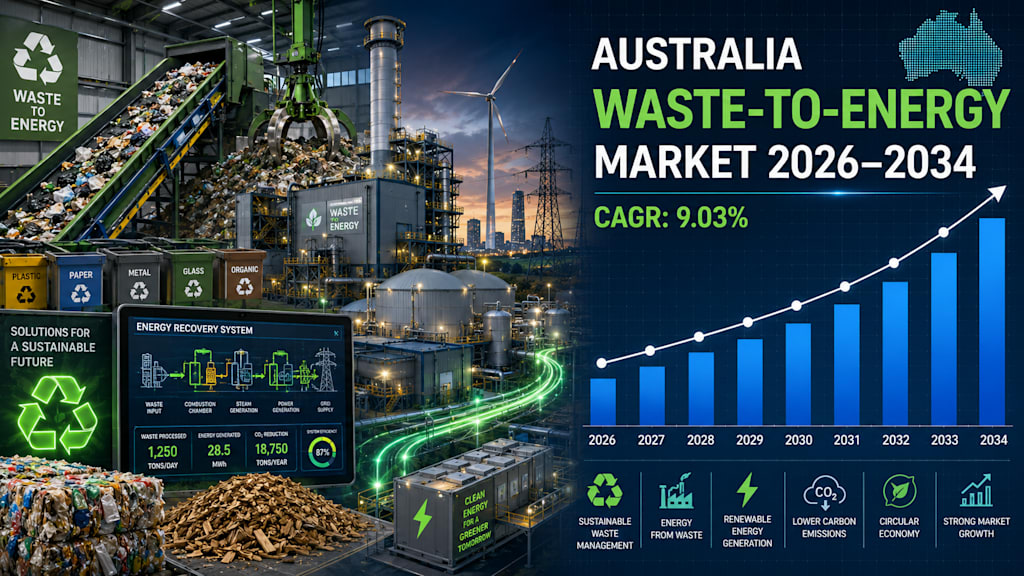
Australia Waste-to-Energy Market Overview
The Australia waste-to-energy market is an emerging segment of the country’s renewable energy and waste management industry, involving the conversion of municipal, industrial, agricultural, and commercial waste into usable energy sources such as electricity, heat, and fuel.
According to IMARC Group, the Australia waste-to-energy market size reached USD 1,018.9 Million in 2025 and is projected to reach USD 2,270.3 Million by 2034, exhibiting a compound annual growth rate (CAGR) of 9.03% during 2026–2034.
The market is witnessing significant growth driven by increasing waste generation, rising environmental concerns, government support for renewable energy, and growing pressure to reduce landfill dependency.
Key Market Drivers
Rising Waste Generation Across Urban Areas
Rapid urbanization and population growth are increasing municipal and industrial waste generation, creating a strong need for efficient waste disposal and energy recovery solutions.
Growing Focus on Renewable Energy
Australia’s transition toward cleaner energy sources is encouraging the adoption of waste-to-energy technologies as part of the country’s renewable energy mix.
Government Regulations on Landfill Reduction
Strict environmental regulations and landfill diversion targets are promoting investment in waste-to-energy infrastructure and sustainable waste management systems.
Expansion of Circular Economy Initiatives
The push toward a circular economy is encouraging the conversion of waste into valuable energy resources while reducing environmental impact.
Increasing Demand for Reliable Baseload Power
Waste-to-energy facilities provide stable and continuous electricity generation, helping balance intermittent renewable energy sources such as solar and wind.
Request a Sample Report with the Latest 2026 Data & Forecasts
What the Opportunities Are
Growth of Advanced Waste Conversion Technologies
Technologies such as gasification, pyrolysis, and anaerobic digestion are improving energy recovery efficiency and creating new growth opportunities.
Expansion of Public-Private Partnerships
Collaborations between governments and private companies are accelerating infrastructure development and large-scale project implementation.
Development of Regional Waste-to-Energy Facilities
Regional areas are increasingly adopting localized waste-to-energy plants to improve waste management and energy reliability.
Integration with Sustainable Urban Development
Waste-to-energy systems are becoming part of broader smart city and sustainability initiatives across Australia.
Increasing Investment in Green Infrastructure
Investments in renewable energy and low-carbon infrastructure are supporting the expansion of modern waste-to-energy projects.
Recent News and Developments
April 2026: A major waste-to-energy proposal linked to Australian investors sparked international attention, involving a planned $900 million facility in Fiji backed by Australian businessman Ian Malouf. The project is designed to process up to 900,000 tonnes of waste annually and generate approximately 80 MW of electricity, potentially supplying up to 45% of Fiji’s electricity needs. The proposal reflects growing regional interest in waste-to-energy infrastructure associated with Australian waste management expertise.
April 2026: The Australian government introduced reforms to carbon credit mechanisms aimed at encouraging waste diversion and methane reduction from landfills. The revised Australian Carbon Credit Unit (ACCU) framework is expected to support technologies such as biomethane production and advanced waste treatment systems, strengthening incentives for waste-to-energy and resource recovery projects across the country.
March 2026: Operational challenges in the waste management sector highlighted the importance of energy and fuel security. Waste collection companies warned of service disruptions as diesel shortages and rising fuel prices affected operations, emphasizing the need for more sustainable waste processing systems, including waste-to-energy solutions.
February 2026: The City of Gold Coast launched an international procurement process for a new residual waste-to-energy facility at Stapylton in Queensland. The project forms part of the city’s long-term strategy as landfill capacity approaches its limits. Authorities are seeking partners to design, finance, build, and operate the facility, reflecting increasing investment momentum in Australia’s energy-from-waste sector.
February 2026: Community and regulatory debates intensified around a proposed waste-to-energy incinerator in Parkes, New South Wales. The facility, backed by Cleanaway and international partners, is expected to process up to 700,000 tonnes of residual waste annually, generate approximately 70 MW of electricity, and power around 100,000 homes if approved. However, the proposal has faced opposition from local councils and environmental groups concerned about health and environmental impacts.
February 2026: Queensland-based agribusiness Kalfresh began construction of a $291 million bioenergy facility in the Scenic Rim region. The project will convert agricultural waste, including vegetable scraps, into renewable energy, representing one of Australia’s first large-scale “paddock-to-power” waste-to-energy initiatives focused on agricultural by-products.
2025–2026 (market trend): The Australia waste-to-energy market is being shaped by stricter environmental regulations, rising landfill costs, and increasing focus on circular economy practices. At the same time, public opposition to incineration projects, regulatory approvals, and environmental concerns regarding emissions continue to influence project development and investment decisions across the sector.
Why You Should Know About the Australia Waste-to-Energy Market
The Australia waste-to-energy market is becoming a critical component of the country’s renewable energy and environmental sustainability strategy.
With projected growth from USD 1,018.9 Million in 2025 to USD 2,270.3 Million by 2034, the market demonstrates strong expansion potential driven by rising waste volumes, renewable energy demand, and government sustainability initiatives.
As Australia continues to transition toward cleaner energy and reduced landfill reliance, waste-to-energy technologies are expected to play an increasingly important role in supporting long-term environmental and energy goals.
About the Creator
Amyra Singh
Market research analyst who loves spotting patterns, digging into data, and turning insights into strategies that help brands grow and stay ahead of the curve.
Enjoyed the story? Support the Creator.
Subscribe for free to receive all their stories in your feed.
Comments
There are no comments for this story
Be the first to respond and start the conversation.