
Australia Vending Machine Market 2026: Smart Retail, Cashless Payments & On-the-Go Consumption
How digital innovation, convenience-driven demand and evolving consumer preferences are shaping Australia’s vending machine industry

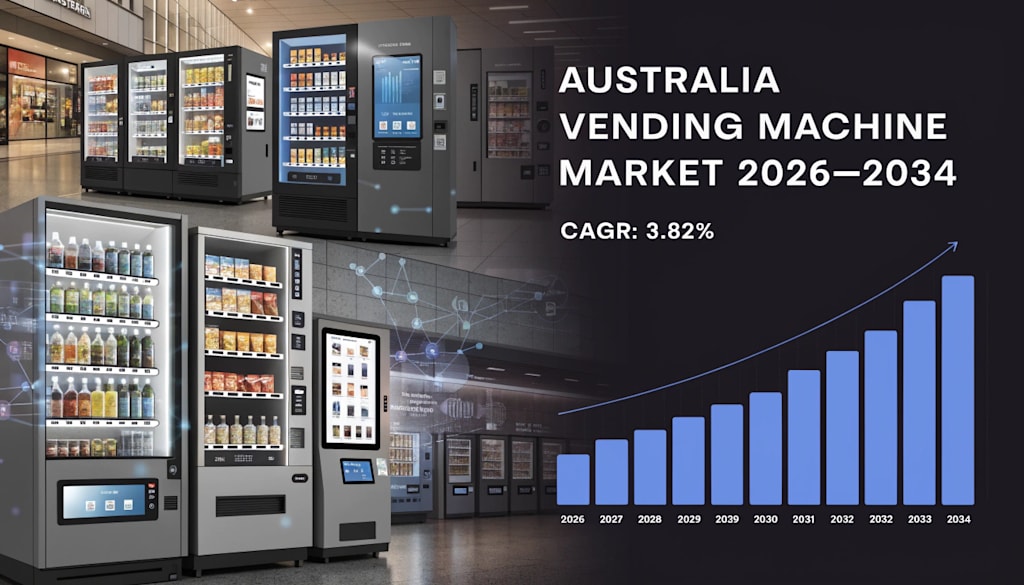
Australia Vending Machine Market Overview
The Australia vending machine market is an evolving segment of the country’s retail and automated services industry, encompassing machines that dispense food, beverages and other products across public spaces, offices, transportation hubs and commercial establishments. These machines offer convenient, self-service solutions aligned with modern consumer lifestyles.
According to IMARC Group, the Australia vending machine market size reached USD 445.8 Million in 2025 and is projected to reach USD 631.3 Million by 2034, exhibiting a compound annual growth rate (CAGR) of 3.82% during 2026–2034.
The market is experiencing steady growth, driven by rising demand for convenience, increasing adoption of cashless payment systems and advancements in smart vending technologies. The shift toward automated retail solutions is further enhancing operational efficiency and consumer experience across urban and semi-urban areas.
Key Market Drivers
Rising Demand for Convenience and On-the-Go Consumption
Busy lifestyles and urbanization are increasing demand for quick and accessible food and beverage options, boosting vending machine usage across workplaces, transport hubs and public locations.
Growing Adoption of Cashless and Contactless Payments
Consumers are increasingly preferring digital payment options such as mobile wallets, contactless cards and QR-based payments, making vending machines more user-friendly and efficient.
Integration of Smart and Automated Technologies
Modern vending machines are incorporating AI, IoT and remote monitoring systems, enabling real-time inventory tracking, predictive maintenance and personalized user experiences.
Expansion of Healthy and Diverse Product Offerings
Operators are introducing healthier snacks, organic products and ready-to-eat meals to meet changing consumer preferences toward nutrition and wellness.
Increasing Focus on Sustainability
The adoption of energy-efficient machines, recyclable materials and eco-friendly packaging is aligning vending operations with sustainability goals and environmentally conscious consumers.
Request a Sample Report with the Latest 2026 Data & Forecasts
What the Opportunities Are
The Australia vending machine market presents steady growth opportunities as automation and consumer expectations continue to evolve.
Expansion of Smart and AI-Enabled Vending Machines
The adoption of intelligent vending solutions with touchscreens, analytics and personalized interfaces is creating new opportunities for innovation and efficiency.
Growth in Cashless and Mobile Payment Integration
Further integration of digital payment systems is enhancing customer convenience and expanding usage across different demographics.
Increasing Demand in High-Traffic Locations
Airports, offices, hospitals and public transport hubs are emerging as key deployment areas for vending machines, offering consistent demand.
Development of Customized Product Offerings
Operators are tailoring product selections based on location-specific preferences, improving sales and customer satisfaction.
Expansion into Semi-Urban and Underserved Areas
Vending machines are increasingly being deployed in areas with limited retail access, supporting broader market reach and accessibility.
Recent News and Developments
March 2026 – Automated retail formats are expanding, with companies piloting fully unattended vending-based stores, reflecting a broader shift toward self-service retail models driven by convenience and cost optimization.
February 2026 – Market growth remains steady, with the Australia vending machine industry valued at USD 445.8 million in 2025, supported by increasing demand for on-the-go consumption and convenience retail.
January 2026 – Digital transformation continues to reshape the market, with 72.6% of vending machines operating via cashless payment systems, highlighting strong consumer preference for contactless and mobile transactions.
December 2025 – Product demand trends show beverages dominating the segment, accounting for approximately 37.25% of total vending machine revenue, driven by high consumption in public places, offices, and transit hubs.
December 2025 – Cyber-physical retail innovation is increasing, with vending machines integrating AI, smart sensors, and remote monitoring, aligning with broader trends where 35%+ of Australian businesses have adopted AI/automation technologies.
November 2025 – Consumer adoption patterns indicate strong usage among younger demographics (18–35), while operational challenges persist, including stockouts, pricing issues, and technical failures, impacting repeat usage and customer satisfaction.
Why You Should Know About the Australia Vending Machine Market?
The Australia vending machine market plays a crucial role in the country’s shift toward automated retail and convenience-driven consumption.
With projected growth from USD 445.8 Million in 2025 to USD 631.3 Million by 2034, the market demonstrates steady expansion potential driven by digital innovation, changing consumer behavior and increasing demand for accessible retail solutions.
As automation, smart technologies and sustainability continue to influence the industry, the Australia vending machine market is expected to remain a key contributor to the future of retail and self-service commerce.
About the Creator
Amyra Singh
Market research analyst who loves spotting patterns, digging into data, and turning insights into strategies that help brands grow and stay ahead of the curve.
Enjoyed the story? Support the Creator.
Subscribe for free to receive all their stories in your feed.
Comments
There are no comments for this story
Be the first to respond and start the conversation.