
Australia Tea Market 2026: Wellness Trends, Premium Blends & Evolving Consumer Preferences
How health awareness, specialty tea demand and café culture are reshaping Australia’s tea industry

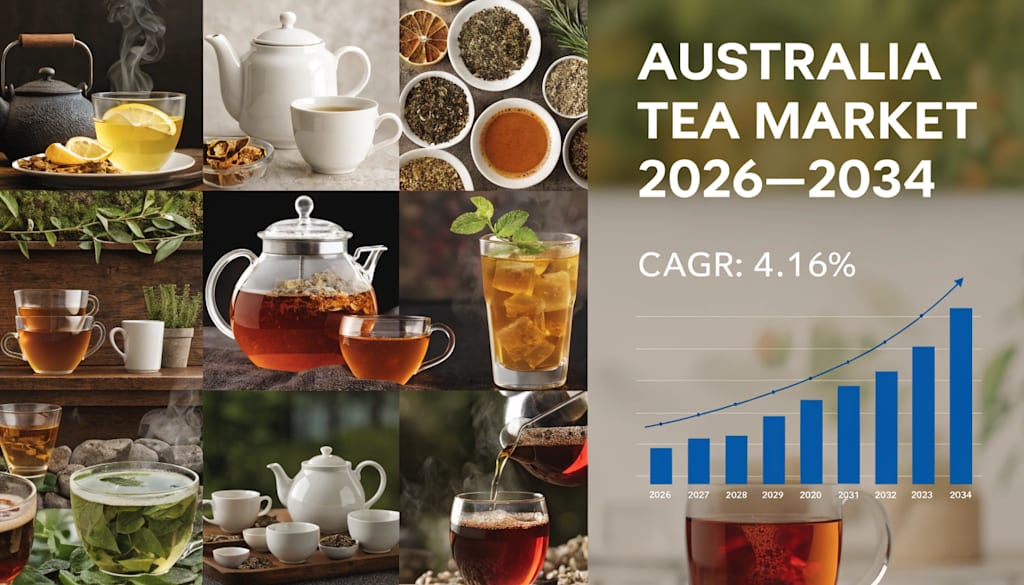
Australia Tea Market Overview
The Australia tea market is an important segment of the country’s beverage industry, covering a wide variety of products including black tea, green tea, herbal infusions and specialty blends. The market is evolving beyond traditional consumption patterns, driven by increasing demand for health-oriented beverages and premium tea experiences.
According to IMARC Group, the Australia tea market size reached USD 535.1 Million in 2025 and is projected to reach USD 780.6 Million by 2034, exhibiting a compound annual growth rate (CAGR) of 4.16% during 2026–2034.
The market is witnessing steady growth, supported by rising health consciousness, growing interest in functional beverages and expanding product innovation. Consumers are increasingly shifting toward herbal, green and specialty teas that offer added health benefits and unique flavor profiles.
Key Market Drivers
Growing Demand for Health and Wellness Beverages
Consumers are increasingly choosing tea as a healthier alternative to sugary drinks, driven by its antioxidant properties and perceived health benefits.
Rising Popularity of Herbal and Specialty Teas
Herbal infusions, detox blends and functional teas are gaining traction among health-conscious consumers seeking wellness-focused beverages.
Expansion of Café Culture and Premium Experiences
Australia’s vibrant café culture is introducing innovative tea-based beverages such as tea lattes, cold brews and artisanal blends, enhancing consumer engagement.
Influence of Multicultural Consumption Patterns
Diverse cultural influences are expanding tea preferences, with increasing demand for varieties such as matcha, chai and oolong tea.
Increasing Focus on Sustainable and Ethical Sourcing
Consumers are prioritizing organic, ethically sourced and environmentally friendly tea products, encouraging brands to adopt sustainable practices.
Request a Sample Report with the Latest 2026 Data & Forecasts
What the Opportunities Are
The Australia tea market presents promising opportunities as consumer preferences shift toward premium, health-oriented and experiential products.
Growth of Premium and Artisanal Tea Segments
Increasing demand for high-quality, loose-leaf and single-origin teas is creating opportunities for premium and boutique brands.
Expansion of Ready-to-Drink (RTD) Tea Products
Convenient and functional ready-to-drink tea beverages are gaining popularity, especially among busy urban consumers.
Integration of Native Australian Ingredients
Incorporating indigenous botanicals such as lemon myrtle and eucalyptus is helping brands differentiate their offerings and appeal to local and global markets.
Growth of Tea-Based Tourism and Experiences
Tea tasting events, high tea experiences and agritourism initiatives are enhancing brand visibility and consumer engagement.
Rising Demand for Functional and Fortified Teas
Products enriched with vitamins, adaptogens and probiotics are gaining traction as consumers seek added health benefits from beverages.
Recent News and Developments
February 2026 – The Australia tea market reached approximately USD 535.1 million in 2025, reflecting steady demand supported by health-conscious consumers and diversified tea consumption trends.
February 2026 – Consumer health behavior is a key driver, with ~73% of Australians actively focusing on maintaining a healthy diet, boosting demand for herbal, green, and functional teas with perceived wellness benefits.
January 2026 – Product diversification is expanding rapidly, with increasing consumption of specialty teas such as matcha, oolong, chai, and herbal infusions, driven by Australia’s multicultural population and evolving taste preferences.
January 2026 – Premiumization trends are strengthening, with growing demand for loose-leaf, single-origin, and artisanal teas, reflecting consumer preference for quality, authenticity, and premium experiences.
December 2025 – Functional beverage demand is rising, with increasing adoption of tea blends containing adaptogens, antioxidants, and immunity-boosting ingredients, positioning tea as a health-focused alternative to sugary drinks.
November–December 2025 – Sustainability trends are influencing purchasing decisions, with higher demand for organic, ethically sourced, and locally produced teas, supported by growth in eco-friendly packaging and traceable supply chains.
November–December 2025 – Market structure remains import-dependent, with limited domestic production capacity, leading to continued reliance on imports from India, China, and Sri Lanka, exposing the market to global supply chain dynamics.
Why You Should Know About the Australia Tea Market?
The Australia tea market is evolving as a key segment of the beverage industry, driven by changing consumer preferences, health trends and premium product demand.
With projected growth from USD 535.1 Million in 2025 to USD 780.6 Million by 2034, the market demonstrates steady expansion potential supported by innovation, sustainability and diversification of tea offerings.
As consumers increasingly embrace wellness-focused lifestyles and explore global tea varieties, the Australia tea market is expected to remain a significant contributor to the country’s food and beverage sector.
About the Creator
Amyra Singh
Market research analyst who loves spotting patterns, digging into data, and turning insights into strategies that help brands grow and stay ahead of the curve.
Enjoyed the story? Support the Creator.
Subscribe for free to receive all their stories in your feed.
Comments
There are no comments for this story
Be the first to respond and start the conversation.