
Australia Sterilization Equipment Market 2026: Infection Control, Healthcare Expansion & Medical Technology Advancements Driving Growth
How rising healthcare standards, pharmaceutical demand, and advanced sterilization technologies are shaping the Australia sterilization equipment industry

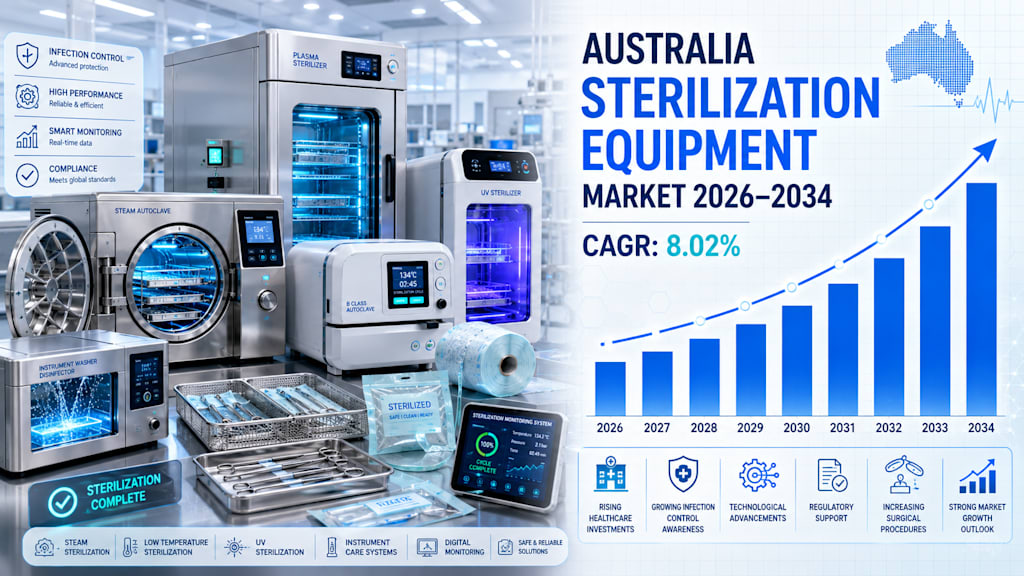
Australia Sterilization Equipment Market Overview
The Australia sterilization equipment market is an essential segment of the country’s healthcare and life sciences industry, encompassing equipment and systems used to eliminate microorganisms from medical instruments, laboratory tools, pharmaceutical products, and healthcare environments. These systems play a critical role in infection prevention and patient safety.
According to IMARC Group, the Australia sterilization equipment market size reached USD 354.4 Million in 2025 and is projected to reach USD 724.2 Million by 2034, exhibiting a compound annual growth rate (CAGR) of 8.02% during 2026–2034.
The market is experiencing strong growth driven by increasing healthcare expenditure, rising demand for infection control solutions, expanding pharmaceutical manufacturing, and technological advancements in sterilization systems.
Key Market Drivers
Rising Focus on Infection Prevention and Patient Safety
Healthcare facilities across Australia are increasingly adopting advanced sterilization systems to minimize hospital-acquired infections (HAIs) and maintain high standards of hygiene and patient safety.
Expansion of Healthcare Infrastructure
Growing investments in hospitals, clinics, diagnostic laboratories, and surgical centers are increasing demand for sterilization equipment across healthcare settings.
Increasing Demand from Pharmaceutical and Biotechnology Industries
Pharmaceutical manufacturers and biotechnology companies require highly controlled sterilization processes to ensure product safety and regulatory compliance.
Technological Advancements in Sterilization Systems
Innovations such as low-temperature sterilization, hydrogen peroxide vapor systems, and automated sterilization monitoring are improving efficiency and operational reliability.
Stringent Regulatory Standards
Government regulations and healthcare compliance requirements regarding sterilization practices are encouraging healthcare providers to adopt advanced equipment and monitoring systems.
Request a Sample Report with the Latest 2026 Data & Forecasts
What the Opportunities Are
Growth of Low-Temperature Sterilization Technologies
Demand for low-temperature sterilization systems is increasing due to their compatibility with heat-sensitive medical devices and advanced surgical instruments.
Expansion of Ambulatory Surgical Centers
The rise of outpatient and ambulatory care facilities is creating additional demand for compact and efficient sterilization solutions.
Integration of Automation and Smart Monitoring Systems
Digital monitoring, AI-based tracking, and automated sterilization systems are improving workflow efficiency and compliance management.
Rising Demand for Reusable Medical Devices
Increasing focus on sustainability and cost efficiency is driving demand for sterilization systems capable of supporting reusable medical equipment.
Development of Portable and Compact Sterilization Equipment
Portable sterilization systems are gaining popularity in remote healthcare facilities and mobile medical units.
Recent News and Developments
May 2026: Healthcare infrastructure investments in Australia are supporting increased demand for sterilization and infection-control equipment. The Central Australia 2026–27 healthcare budget allocated more than AUD 380,000 for new diagnostic and medical equipment at Alice Springs Hospital, including MRI systems and sterilization-related support infrastructure. Additional funding of AUD 750,000 annually was also announced for expanded oncology and specialist healthcare services, reinforcing the need for advanced sterilization technologies in healthcare facilities.
April 2026: The Australia sterilization equipment market reached approximately USD 354.4 million in 2025, driven by rising infection prevention standards across hospitals, clinics, pharmaceutical facilities, and laboratories. Demand is increasing for advanced systems such as steam autoclaves, hydrogen peroxide sterilizers, and UV-based sterilization technologies as healthcare providers focus on reducing hospital-acquired infections and improving patient safety.
March 2026: Technological innovation is accelerating across the sterilization equipment industry, with healthcare institutions increasingly adopting automated systems featuring digital monitoring, remote tracking, and real-time sterilization cycle management. Hospitals and diagnostic laboratories are investing in smart sterilization solutions to reduce human error, improve compliance, and support higher patient turnover.
February 2026: Global sterilization equipment manufacturers are reporting strong growth in capital equipment demand, reflecting increased healthcare spending and stricter sterilization standards. STERIS plc reported that revenue from its Applied Sterilization Technologies capital equipment business more than doubled to approximately USD 70.4 million during fiscal Q3 2026, highlighting strong investment momentum in sterilization infrastructure worldwide, including markets such as Australia.
January 2026: Advanced low-temperature sterilization technologies are gaining traction globally and influencing the Australian healthcare sector. Advanced Sterilization Products (ASP) introduced the ULTRA GI™ Cycle for STERRAD™ sterilizers, specifically designed for complex endoscope sterilization. The technology improves sterilization efficiency and patient safety while addressing growing demand for safer reprocessing of heat-sensitive medical devices.
January 2026: Regulatory focus on infection control and hospital-acquired infections continues to strengthen demand for sterilization systems in Australia. Low-temperature sterilizers accounted for approximately 33.17% of Australia’s sterilization equipment market share in 2023, reflecting strong adoption of advanced sterilization methods for sensitive medical instruments and surgical equipment.
2025–2026: The Australia sterilization equipment market is being shaped by rising healthcare expenditure, increasing surgical procedures, and growing awareness of infection prevention. Hospitals and laboratories are increasingly adopting automated and environmentally sustainable sterilization systems that improve efficiency while reducing energy and water usage. At the same time, regulatory requirements, equipment maintenance costs, and concerns surrounding chemical sterilization methods such as ethylene oxide continue to influence market dynamics and technology adoption.
Why You Should Know About the Australia Sterilization Equipment Market?
The Australia sterilization equipment market is becoming increasingly important in supporting healthcare quality, patient safety, and pharmaceutical manufacturing standards.
With projected growth from USD 354.4 Million in 2025 to USD 724.2 Million by 2034, the market demonstrates strong expansion potential driven by healthcare infrastructure development, infection control awareness, and technological innovation.
As healthcare providers and life sciences companies continue prioritizing safety, efficiency, and regulatory compliance, sterilization equipment is expected to remain a critical component of Australia’s healthcare and medical technology ecosystem.
About the Creator
Amyra Singh
Market research analyst who loves spotting patterns, digging into data, and turning insights into strategies that help brands grow and stay ahead of the curve.
Enjoyed the story? Support the Creator.
Subscribe for free to receive all their stories in your feed.
Comments
There are no comments for this story
Be the first to respond and start the conversation.