
Australia Smart Homes Market Accelerates as Connected Living Redefines Modern Households
Rising adoption of IoT devices, energy-efficient technologies, and automated home systems is fueling rapid growth across Australia’s smart home industry.

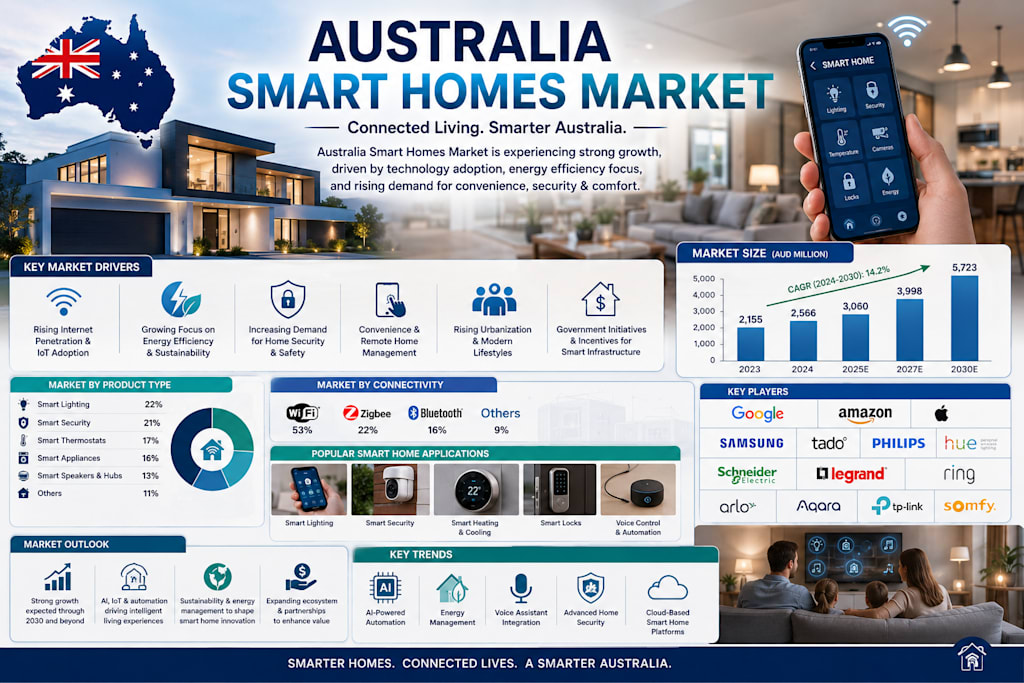
Australia’s smart homes industry is entering a major growth phase as consumers increasingly embrace connected technologies that improve convenience, security, energy efficiency, and lifestyle management. The rapid adoption of Internet of Things (IoT) devices, voice-controlled systems, and intelligent home automation platforms is transforming how Australians interact with residential spaces. According to IMARC Group, the Australia smart homes market was valued at USD 4.29 Billion in 2025 and is projected to reach USD 12.80 Billion by 2034, growing at a CAGR of 11.14% during 2026–2034.
The market’s strong expansion reflects broader digital transformation trends reshaping consumer behavior and residential infrastructure. Smart homes are no longer viewed as luxury concepts reserved for premium properties. Instead, connected devices and automated systems are becoming mainstream household solutions as technology becomes more affordable, accessible, and user-friendly.
Australian consumers are increasingly adopting smart lighting, connected security systems, intelligent thermostats, automated appliances, voice assistants, and energy management platforms designed to enhance daily living experiences. Growing awareness surrounding energy efficiency and sustainable living is also encouraging homeowners to invest in technologies that reduce power consumption and improve resource management.
Request a Business Sample Report for Procurement & Investment Evaluation:
According to IMARC, the market is segmented across several key categories:
• By Product Type: Lighting Control, Security and Access Control, HVAC Control, Entertainment and Other Controls, Smart Kitchen, Home Appliances, Smart Furniture, Others
• By Technology: Wireless Protocols, Cellular Network Technologies
• By Software and Services: Behavioral, Proactive
• By Sales Channel: Direct Channel, Distribution Channel
• By Region: New South Wales, Victoria, Queensland, Western Australia, South Australia, Others
Australia’s growing digital infrastructure and expanding smart device ecosystem continue strengthening the long-term outlook for connected residential technologies.
Why the Market Is Growing So Rapidly
One of the biggest drivers behind the smart homes market is rising consumer demand for convenience and automation. Modern homeowners increasingly seek technologies that simplify everyday tasks, improve comfort, and provide greater control over household environments. Voice-controlled systems, remote monitoring applications, and intelligent automation features are becoming highly attractive among digitally connected consumers.
Energy efficiency is another major growth catalyst. Rising electricity costs and growing environmental awareness are encouraging Australian households to adopt smart energy management systems capable of optimizing power consumption. Smart lighting, connected thermostats, automated climate control, and intelligent appliances help reduce energy waste while supporting sustainability-focused lifestyles.
Home security concerns are also fueling adoption. Consumers are increasingly investing in smart surveillance cameras, motion sensors, video doorbells, biometric access systems, and remote monitoring platforms that improve residential safety and provide real-time security management. Advances in AI-powered security analytics and cloud connectivity are making these solutions more effective and accessible.
The expansion of high-speed internet connectivity and 5G infrastructure is accelerating smart home integration across Australia. Improved connectivity enables seamless communication between devices, cloud platforms, and mobile applications, enhancing the reliability and performance of connected ecosystems. As digital infrastructure improves, smart home adoption is expected to expand further across metropolitan and regional markets.
Technological innovation continues reshaping the industry as well. Manufacturers are introducing AI-enabled devices capable of learning user behavior, automating household routines, and providing predictive functionality. Smart home ecosystems are increasingly integrated with entertainment systems, healthcare monitoring tools, and wellness-focused technologies that support more personalized living experiences.
What the Opportunities Are
1. Expansion of Energy Management Solutions
Smart energy systems and automated power optimization technologies present significant opportunities as consumers prioritize sustainability and cost savings.
2. Growth of Smart Security Infrastructure
Connected surveillance, access control, and AI-driven home security systems continue experiencing strong consumer demand.
3. Integration of AI and Voice-Control Technologies
Artificial intelligence and voice assistant integration are creating more intuitive and personalized smart home experiences.
4. Rising Demand for Smart Appliances
Connected kitchen devices, automated home appliances, and intelligent household systems are becoming increasingly mainstream.
5. Expansion into Regional Residential Markets
Improved internet infrastructure may accelerate smart home adoption beyond major urban centers across Australia.
6. Healthcare and Wellness Applications
Smart homes integrated with health monitoring systems and elderly care technologies offer emerging long-term opportunities.
7. Sustainable and Green Building Development
Property developers incorporating smart technologies into energy-efficient residential projects can strengthen competitiveness in modern housing markets.
• February 2025: Australian residential technology discussions continued emphasizing the importance of connected living solutions and energy-efficient home systems. Several property developers expanded smart infrastructure integration across new residential projects featuring automated lighting, security, and climate control technologies. Industry participants highlighted growing consumer demand for intelligent home ecosystems supporting convenience and sustainability.
• June 2025: Multiple technology companies launched upgraded smart home platforms featuring AI-powered automation, enhanced voice controls, and expanded interoperability between connected devices. Manufacturers also introduced energy-efficient appliances and advanced home monitoring systems aimed at improving user experience and operational efficiency. Market analysts observed rising adoption of integrated smart home solutions among urban households and technology-focused consumers.
• September 2025: Australia’s smart homes sector reported continued growth in consumer spending on connected devices, security technologies, and home automation systems. Retailers highlighted increasing demand for smart lighting, intelligent appliances, and app-controlled energy management solutions. Industry forecasts also indicated stronger long-term investment in sustainable residential technologies and digitally connected living environments.
Why Should You Know About Australia Smart Homes Market?
The Australia smart homes market represents one of the most important shifts shaping the future of residential living. Connected technologies are transforming homes into intelligent environments capable of improving comfort, efficiency, security, and sustainability through real-time automation and data-driven management.
For investors, the sector offers substantial long-term growth potential supported by expanding IoT adoption, digital infrastructure development, and rising consumer interest in connected lifestyles. For technology companies and property developers, smart home integration creates opportunities for innovation across security, energy management, automation, and wellness applications. For policymakers and urban planners, the market highlights the growing importance of digital infrastructure and sustainable housing solutions within Australia’s evolving residential economy.
As consumers continue embracing connected lifestyles and smart technologies become increasingly integrated into everyday living, Australia’s smart homes industry is positioned for significant expansion throughout the coming decade.
About the Creator
Rashi Sharma
I am a market researcher.
Enjoyed the story? Support the Creator.
Subscribe for free to receive all their stories in your feed.
Comments
There are no comments for this story
Be the first to respond and start the conversation.