
Australia Smart Buildings Market 2026: IoT Integration, Energy Efficiency & Intelligent Infrastructure Driving Growth
How digital transformation, sustainable construction practices, and connected building technologies are transforming the Australia smart buildings industry

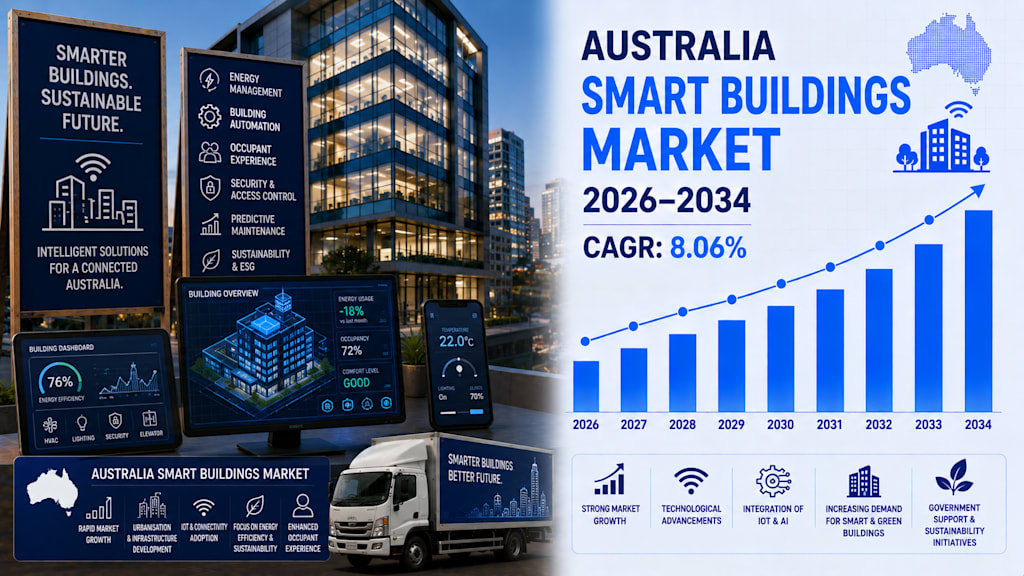
Australia Smart Buildings Market Overview
The Australia smart buildings market is a rapidly expanding segment of the country’s construction and infrastructure industry, involving the integration of advanced technologies such as IoT, AI, automation systems, and smart energy management solutions into residential, commercial, and industrial buildings.
According to IMARC Group, the Australia smart buildings market size reached USD 3.6 Billion in 2025 and is projected to reach USD 7.6 Billion by 2034, exhibiting a compound annual growth rate (CAGR) of 8.06% during 2026–2034.
The market is witnessing strong growth driven by rising demand for energy-efficient infrastructure, increasing adoption of building automation systems, growing investments in smart city development, and expanding deployment of connected technologies across commercial and residential properties.
Key Market Drivers
Rising Demand for Energy-Efficient Buildings
Building owners and developers are increasingly adopting smart technologies to optimize energy consumption, reduce operational costs, and meet sustainability goals.
Growth of IoT and Connected Infrastructure
The integration of IoT-enabled sensors, smart devices, and real-time monitoring systems is improving building performance, security, and operational efficiency.
Expansion of Smart City Initiatives
Government and private sector investments in smart city infrastructure are accelerating deployment of intelligent building technologies across Australia.
Increasing Adoption of Building Automation Systems
Automated HVAC, lighting, security, and energy management systems are becoming essential components of modern smart buildings.
Rising Focus on Sustainability and Carbon Reduction
Environmental regulations and corporate ESG commitments are encouraging adoption of green building technologies and intelligent energy management solutions.
Request a Sample Report with the Latest 2026 Data & Forecasts
What the Opportunities Are
Expansion of AI-Powered Building Management Systems
AI-driven analytics and predictive maintenance technologies are creating opportunities for smarter facility management and operational optimization.
Growth of Smart Security and Surveillance Solutions
Advanced access control, facial recognition, and intelligent surveillance systems are increasingly being integrated into smart buildings.
Increasing Adoption of Renewable Energy Integration
Solar panels, battery storage systems, and smart grids are supporting sustainable building operations and energy independence.
Development of Occupant-Centric Smart Spaces
Smart buildings are increasingly incorporating personalized climate control, automated lighting, and digital workplace solutions to improve occupant comfort and productivity.
Rising Investments in Retrofitting Existing Buildings
Property owners are modernizing older buildings with smart technologies to improve efficiency and extend infrastructure lifespan.
Recent News and Developments
May 2026: The Australia smart buildings market is witnessing rapid adoption of AI-enabled building management systems as commercial property owners focus on energy efficiency, sustainability, and operational optimization. Smart HVAC controls, automated lighting systems, and IoT-based monitoring platforms are increasingly being integrated into office towers, shopping centers, hospitals, and residential developments.
April 2026: Australia’s push toward net-zero emissions is accelerating investment in intelligent building infrastructure. Commercial buildings account for approximately 24% of Australia’s total electricity consumption, driving increased deployment of smart energy management technologies designed to reduce energy usage and improve carbon performance across large facilities.
February 2026: Building owners and facility managers are increasingly deploying IoT sensors and predictive maintenance systems to improve operational efficiency and reduce maintenance costs. AI-driven analytics platforms are helping detect equipment faults, optimize energy consumption, and improve occupant comfort in large commercial properties.
January 2026: Government sustainability regulations and green building certifications continue supporting smart building adoption across Australia. Developers are increasingly integrating renewable energy systems, smart meters, automated climate controls, and digital twin technologies into new construction projects to comply with stricter environmental standards.
December 2025: Data center growth and expansion of digital infrastructure are contributing to higher demand for intelligent building technologies. Smart monitoring systems capable of managing cooling efficiency, energy distribution, and building security are becoming increasingly important as Australia’s digital economy continues expanding.
2025–2026 (market trend): The Australia smart buildings market is being shaped by AI-powered automation, IoT integration, sustainability initiatives, and rising demand for energy-efficient infrastructure. Smart building technologies are increasingly being adopted across commercial, residential, healthcare, and industrial facilities to improve operational efficiency and occupant experience. At the same time, cybersecurity concerns, high upfront implementation costs, interoperability challenges, and skilled workforce shortages continue influencing adoption and system integration across the sector.
Why You Should Know About the Australia Smart Buildings Market?
The Australia smart buildings market is becoming a key component of the country’s digital infrastructure and sustainable construction ecosystem.
With projected growth from USD 3.6 Billion in 2025 to USD 7.6 Billion by 2034, the market demonstrates strong expansion potential driven by smart city initiatives, connected infrastructure adoption, and increasing demand for energy-efficient building solutions.
As Australia continues advancing toward digital transformation and sustainability goals, smart buildings are expected to play a critical role in improving urban efficiency, reducing environmental impact, and enhancing occupant experiences across residential, commercial, and industrial sectors.
About the Creator
Amyra Singh
Market research analyst who loves spotting patterns, digging into data, and turning insights into strategies that help brands grow and stay ahead of the curve.
Enjoyed the story? Support the Creator.
Subscribe for free to receive all their stories in your feed.
Comments
There are no comments for this story
Be the first to respond and start the conversation.