
Australia Self Storage Market: Unlocking Growth in a Space-Constrained Economy
Urban density, e-commerce expansion, and lifestyle shifts are reshaping Australia’s self-storage industry with steady long-term growth

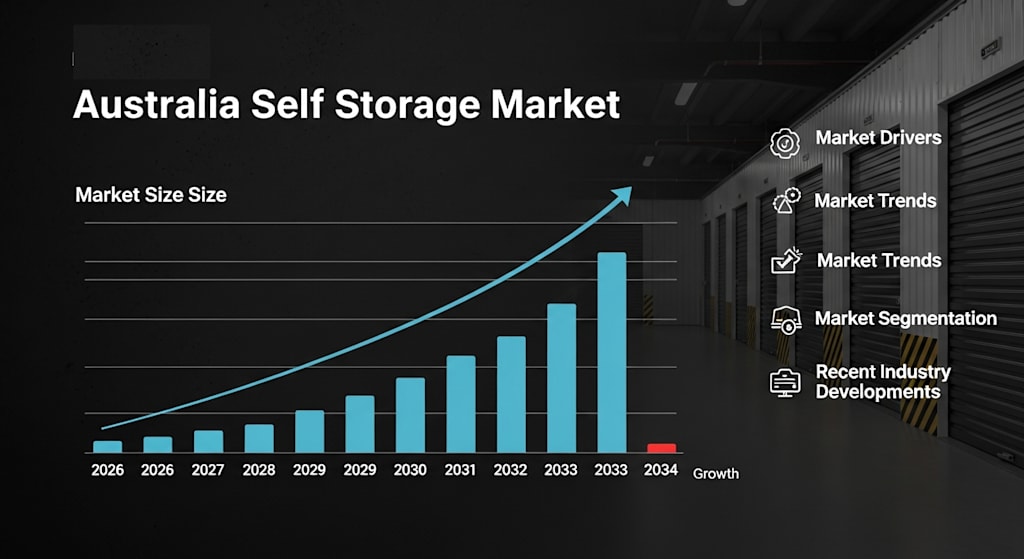
The Australia self storage market is steadily emerging as a critical support system for modern living and business operations. According to IMARC Group, the market reached a value of USD 1,260.9 million in 2025 and is projected to grow to USD 1,899.0 million by 2034, expanding at a CAGR of 4.66% during 2026–2034.
This growth reflects deeper structural shifts across Australian society. From shrinking apartment sizes in urban centers to the rapid rise of e-commerce businesses operating without traditional warehouses, self-storage is no longer a niche service—it has become an essential part of the infrastructure supporting both households and enterprises.
At its core, the market is benefiting from changing lifestyles. Australians are moving more frequently, living in smaller spaces, and embracing flexible work models. As a result, demand for accessible, secure, and scalable storage solutions continues to rise across both personal and business segments.
Evaluate Market Potential Before You Invest – Get the Report Sample
Why the Market Is Growing So Rapidly
One of the most powerful growth drivers is increasing urban density. A significant portion of Australia’s population now lives in cities, where high-rise apartments and compact homes dominate residential development. This shift has reduced in-home storage capacity, pushing residents to seek external storage solutions for seasonal items, furniture, and personal belongings.
Housing market volatility is another key factor accelerating demand. Fluctuating property prices, changing interest rates, and evolving employment patterns have led to more frequent relocations and temporary living arrangements. Self-storage facilities serve as a practical bridge during these transitions, offering flexible, short-term storage options that align with modern mobility.
The expansion of e-commerce has also played a transformative role. With Australia’s online retail sector growing rapidly, small businesses, entrepreneurs, and home-based sellers increasingly rely on storage units as cost-effective alternatives to warehouses. These units provide scalability without the burden of long-term commercial leases, making them ideal for dynamic business models.
Demographic trends further reinforce market growth. An ageing population is downsizing into smaller homes or retirement communities, creating a need for secure off-site storage for sentimental and infrequently used items. This segment values accessibility and reliability, making it a consistent source of demand.
Finally, growing consumer awareness and improved marketing have normalized self-storage as a mainstream solution. Features like 24/7 access, climate control, and digital booking platforms have enhanced convenience, making storage services more appealing across different age groups and use cases.
What the Opportunities Are
The Australia self storage market is not just growing—it is evolving, creating multiple high-value opportunities for investors and operators:
• Smart Storage Integration: Adoption of technologies like digital access systems, smart locks, and mobile apps is transforming user experience. Operators investing in automation can reduce costs while enhancing convenience.
• E-commerce Partnerships: Storage providers can position themselves as logistics partners for small businesses by offering parcel handling, inventory support, and delivery coordination services.
• Regional Expansion: As population shifts toward regional hubs, there is a strong opportunity to develop facilities outside major cities where competition is lower and land costs are more manageable.
• Customized Business Storage: Tailored solutions for freelancers, tradespeople, and startups—such as workspace-style units—can unlock new revenue streams and improve customer retention.
• Sustainability-Led Facilities: Eco-friendly infrastructure, including solar-powered units and energy-efficient systems, can attract environmentally conscious customers while reducing operational costs.
• Premium Urban Facilities: Despite high land costs, strategically located premium storage centers in dense urban areas can command higher pricing due to convenience and demand.
• Subscription-Based Models: Flexible leasing, bundled services, and membership-style pricing can enhance customer loyalty and create predictable recurring revenue.
• March 2025: The Australian government introduced updated urban infrastructure guidelines encouraging efficient land use in high-density zones, indirectly supporting the development of vertical self-storage facilities. These policies aim to optimize limited urban land while meeting rising storage demand. Regulatory clarity is expected to accelerate approvals for new storage projects.
• May 2025: A major global investment firm announced a $2 billion expansion plan for a leading self-storage operator in Australia, highlighting strong investor confidence in the sector. The strategy includes acquisitions, facility development, and expansion of technology-driven storage platforms. This move reflects increasing institutional interest and long-term growth expectations.
• August 2025: Industry reports indicated continued market expansion driven by urbanization and business adoption. Storage providers reported rising occupancy rates, particularly among small businesses and e-commerce users. This trend underscores the sector’s resilience and its growing role as a critical support system for Australia’s evolving economy.
Why Should You Know About Australia Self Storage Market?
The Australia self storage market is a clear example of how everyday challenges—limited space, mobility, and changing lifestyles—can create powerful, scalable business opportunities. With steady growth, diversified demand, and increasing institutional investment, the sector offers a compelling mix of stability and innovation.
For entrepreneurs, it presents a chance to tap into a recurring-revenue model with broad customer segments. For investors, it offers resilience driven by essential, non-cyclical demand. And for anyone tracking modern urban trends, it highlights how space itself is becoming one of the most valuable commodities in today’s economy.
About the Creator
Rashi Sharma
I am a market researcher.
Enjoyed the story? Support the Creator.
Subscribe for free to receive all their stories in your feed.
Comments
There are no comments for this story
Be the first to respond and start the conversation.