
Australia Seeds Market Is Entering a New Era of Climate-Smart Agriculture
Rising demand for high-yield crops, sustainable farming, and advanced seed technologies is reshaping Australia’s agricultural future.

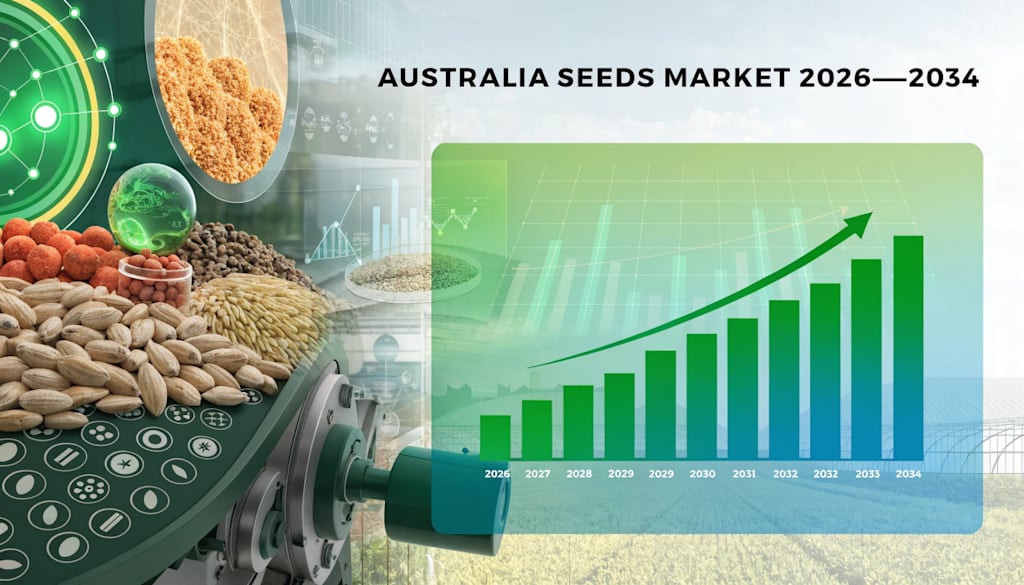
Australia’s agricultural sector is undergoing a major transformation, and the seeds industry is at the center of this evolution. According to IMARC Group, the Australia seeds market reached USD 1.3 Billion in 2025 and is projected to reach USD 1.5 Billion by 2034, growing at a CAGR of 1.24% during 2026–2034. While the growth rate appears moderate compared to other agricultural technology segments, the market’s strategic importance is rapidly increasing as farmers seek higher productivity, climate resilience, and sustainable cultivation practices.
Australia’s diverse agricultural landscape — ranging from broadacre grain farms to high-value horticulture — has created demand for advanced seed varieties capable of thriving in challenging environmental conditions. The industry is benefiting from the rising adoption of genetically modified (GM) and hybrid seeds, increasing investment in agricultural research, and the growing shift toward organic and sustainable farming systems.
The market includes a wide range of seed categories, including genetically modified seeds and conventional seeds. Key seed types include oilseeds such as soybean, sunflower, cotton, and canola/rapeseed; cereals and grains including corn, wheat, rice, and sorghum; and fruits and vegetables such as tomatoes, lettuce, onion, carrot, peppers, and brassica crops. Additional segmentation includes traits such as herbicide-tolerant (HT) and insecticide-resistant (IR) seeds, along with treated and untreated seed varieties.
Request a Business Sample Report for Procurement & Investment Evaluation:
Why the Market Is Growing So Rapidly
One of the most important growth drivers in Australia’s seeds market is the increasing adoption of genetically modified and hybrid seeds. Australian farmers are prioritizing seed varieties that deliver stronger yields, pest resistance, and better adaptability to unpredictable climate conditions. Herbicide-tolerant canola and insect-resistant cotton seeds are gaining widespread popularity because they reduce crop losses and improve operational efficiency. Hybrid seed technologies are also helping farmers improve crop uniformity and productivity, especially in grain and horticulture farming.
Climate change has become another powerful catalyst for seed innovation. Australian agriculture faces rising pressure from droughts, erratic rainfall, soil salinity, and extreme temperatures. As a result, demand for climate-smart seeds with drought tolerance, heat resistance, and adaptability to harsh growing environments is increasing steadily. Seed developers are investing heavily in breeding programs designed to help farmers maintain crop yields despite environmental volatility.
Government support and agricultural research investments are also strengthening the market. Federal and state-backed agricultural programs continue to support biotechnology research, crop resilience development, and sustainable farming initiatives. Collaboration between universities, agricultural institutes, and private seed companies is accelerating the development of next-generation seed varieties tailored specifically for Australian farming conditions. These initiatives are improving long-term food security while encouraging innovation across the agricultural supply chain.
The expansion of organic and regenerative farming practices is creating additional momentum. Consumers are increasingly demanding food products produced with lower chemical inputs and environmentally responsible cultivation methods. This trend is boosting demand for organic, open-pollinated, and non-GMO seeds. According to IMARC insights, Australia’s organic farming sector is expected to continue expanding strongly over the coming decade, further supporting seed market development.
Technological advancements in precision agriculture are also reshaping seed demand. Australian farmers are increasingly adopting GPS-guided equipment, drone-based monitoring, and data-driven planting systems that require uniform, high-quality certified seeds. Precision farming technologies are improving planting efficiency, reducing waste, and increasing crop performance, which in turn is encouraging wider adoption of premium seed varieties.
What the Opportunities Are
1. Climate-Resilient Seed Development
As weather volatility intensifies across Australia, there is strong opportunity for seed companies developing drought-resistant, heat-tolerant, and saline-soil-compatible crop varieties.
2. Growth in Organic Farming
The rising popularity of organic agriculture is increasing demand for open-pollinated and chemical-free seed varieties, creating premium opportunities for sustainable seed suppliers.
3. Expansion into Specialty Crops
Niche crops such as hemp, quinoa, chia, medicinal herbs, and native Australian food plants are gaining commercial importance, opening new opportunities for specialized seed breeding programs.
4. Export Potential Across Asia-Pacific
Australia’s strong biosecurity standards and certified seed quality provide major export advantages in Asia-Pacific and Middle Eastern markets where food security concerns are rising.
5. Digital Seed Distribution Platforms
The rise of agricultural e-commerce and digital farm management systems is transforming seed distribution, enabling direct-to-farmer sales and data-driven product recommendations.
6. Precision Agriculture Integration
Advanced farming technologies are increasing demand for seeds with consistent germination rates and performance characteristics optimized for mechanized farming systems.
7. Investment in Agricultural Biotechnology
Continued investment in biotechnology research and genetic innovation is expected to create long-term opportunities for seed developers focused on productivity and sustainability improvements.
• February 2025: The Australian government expanded funding support for climate-resilient agriculture programs focused on improving crop productivity under extreme weather conditions. New research grants were directed toward seed biotechnology, drought-resistant crop varieties, and sustainable farming systems. Agricultural agencies also increased collaboration with universities and private seed developers to strengthen national food security. Industry experts believe these initiatives will accelerate innovation in next-generation seed technologies across Australia’s farming sector.
• June 2025: Australia’s agricultural technology sector witnessed increased private investment in precision farming and seed innovation platforms. Several agritech firms announced partnerships with seed companies to integrate AI-driven crop monitoring and data-based planting recommendations into commercial farming operations. Industry analysts reported growing demand for certified high-performance seeds compatible with precision agriculture systems. The trend highlighted the increasing convergence of digital farming and seed technology development.
• September 2025: Seed producers across Australia reported rising adoption of climate-smart crop varieties following another season of challenging weather conditions in several farming regions. Demand for drought-tolerant wheat, canola, and sorghum seed varieties increased significantly as farmers prioritized crop resilience and yield stability. Industry organizations also noted stronger interest in organic and regenerative farming seed solutions among commercial growers. Market participants described the shift as a long-term structural transformation within Australia’s agricultural sector.
Why Should You Know About Australia Seeds Market?
The Australia seeds market represents a critical foundation for the country’s agricultural productivity, food security, and long-term sustainability goals. As climate pressures intensify and global food demand continues to rise, advanced seed technologies will play an increasingly important role in helping farmers improve yields while reducing environmental impact.
For investors, the sector offers stable long-term opportunities tied to agricultural modernization, biotechnology, and sustainable farming trends. For agribusiness companies, seed innovation creates pathways to improve productivity, export competitiveness, and climate adaptation. For policymakers, strengthening domestic seed capabilities is essential for ensuring food system resilience in an era of environmental uncertainty.
Although the market is growing steadily rather than explosively, its strategic significance is becoming far more important with every passing year. Australia’s transition toward smarter, more sustainable agriculture is placing the seeds industry at the heart of the nation’s agricultural future.
About the Creator
Rashi Sharma
I am a market researcher.
Enjoyed the story? Support the Creator.
Subscribe for free to receive all their stories in your feed.
Comments
There are no comments for this story
Be the first to respond and start the conversation.