
Australia Protein Bar Market Gains Strength as Health and Fitness Trends Drive Consumer Demand
Growing interest in convenient nutrition, active lifestyles, and functional foods is fueling steady growth across Australia's protein bar industry.

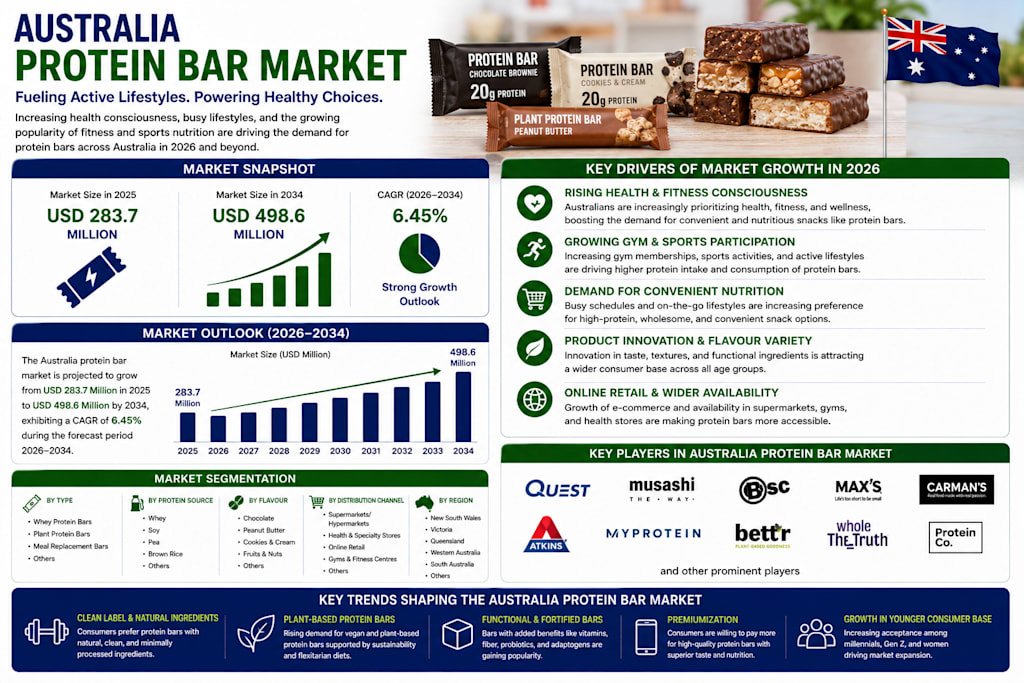
Australia's health and wellness movement is reshaping consumer eating habits, and protein bars have emerged as one of the most popular functional snack categories in the country. Once primarily targeted at athletes and bodybuilders, protein bars have evolved into mainstream nutrition products consumed by busy professionals, students, fitness enthusiasts, and health-conscious consumers seeking convenient sources of energy and nutrition.
According to IMARC Group, the Australia protein bar market was valued at USD 79.67 Million in 2025 and is projected to reach USD 119.8 Million by 2034, growing at a compound annual growth rate (CAGR) of 4.64% during 2026–2034. The market's growth is being driven by increasing awareness of healthy eating habits, rising participation in fitness activities, and growing demand for on-the-go nutritional products.
Protein bars have become an attractive alternative to traditional snacks due to their nutritional profile, convenience, and versatility. Available in a wide range of flavors, ingredients, and formulations, these products appeal to consumers looking for meal replacements, post-workout recovery solutions, weight management aids, and healthy snack options. Manufacturers are continuously innovating to meet changing consumer preferences, introducing products that cater to vegan, gluten-free, low-sugar, and high-protein dietary requirements.
Australia's strong fitness culture and growing focus on preventive health are further supporting demand. Consumers are increasingly scrutinizing ingredient labels and seeking products that align with their wellness goals. This trend is encouraging brands to develop cleaner formulations, incorporate natural ingredients, and offer enhanced nutritional benefits.
As functional foods continue to gain traction, the protein bar segment is expected to remain an important part of Australia's broader health and nutrition market.
Evaluate Market Opportunity with the Business Sample Report:
Why the Market Is Growing So Rapidly
One of the key growth drivers is increasing health consciousness among consumers. Australians are becoming more proactive about nutrition and wellness, leading to greater demand for products that support healthy lifestyles. Protein bars offer a convenient way to increase protein intake while maintaining dietary balance.
The expansion of fitness and sports participation is also contributing significantly to market growth. Gym memberships, recreational sports activities, and home fitness routines continue to attract large numbers of consumers who seek convenient post-workout nutrition options. Protein bars have become a popular choice for supporting recovery and performance goals.
Busy lifestyles and changing consumption patterns are further fueling demand. Modern consumers often seek portable snacks that fit into hectic schedules without compromising nutritional value. Protein bars provide a practical solution for individuals looking for quick and satisfying food options throughout the day.
Product innovation remains another major growth catalyst. Manufacturers are introducing new flavors, plant-based formulations, low-sugar options, and functional ingredients to appeal to diverse consumer segments. These innovations help expand the market beyond traditional fitness-focused audiences.
The growing popularity of e-commerce and direct-to-consumer channels is improving product accessibility. Consumers can easily explore a wider range of brands and nutritional profiles online, contributing to greater market penetration and customer engagement.
Market Segmentation
The Australia protein bar market can be segmented by:
• Sports Nutrition Protein Bars
• Meal Replacement Protein Bars
• Snack Protein Bars
• Plant-Based Protein Bars
• Whey Protein Bars
• Vegan Protein Bars
• Low-Sugar Protein Bars
• Supermarkets and Hypermarkets
• Convenience Stores
• Specialty Nutrition Stores
• Online Retail Channels
• Fitness Centers and Health Clubs
• Regional Markets
What the Opportunities Are
1. Plant-Based Protein Bar Innovation
The growing popularity of vegan and vegetarian diets presents significant opportunities for manufacturers developing plant-based protein alternatives. Consumers increasingly seek sustainable and animal-free nutrition products.
2. Functional Nutrition Products
Protein bars incorporating vitamins, minerals, probiotics, adaptogens, and other functional ingredients can appeal to health-conscious consumers looking for added wellness benefits.
3. Premium and Clean-Label Offerings
Demand for natural ingredients and transparent labeling continues to rise. Brands focusing on clean-label formulations and premium ingredient sourcing can differentiate themselves in a competitive marketplace.
4. Sports and Fitness Partnerships
Collaborations with fitness centers, sports organizations, athletes, and wellness influencers can strengthen brand visibility and drive product adoption among target audiences.
5. E-Commerce Expansion
Online sales channels provide opportunities to reach a broader customer base and offer personalized nutrition recommendations. Digital marketing strategies can further enhance customer engagement.
6. Weight Management Solutions
As consumers seek healthier approaches to weight management, protein bars positioned as nutritious meal replacements or appetite-control solutions can capture growing demand.
7. Product Diversification and Flavor Innovation
Introducing unique flavors, textures, and specialized nutritional profiles allows manufacturers to attract new consumer segments while increasing repeat purchases among existing customers.
• February 2025: Australian health and food industry authorities introduced initiatives encouraging greater transparency in nutritional labeling and consumer education regarding functional food products. The measures focused on helping consumers make informed dietary choices while supporting innovation within the health food sector. Industry stakeholders viewed the initiative as a positive step toward strengthening trust and product credibility. The changes are expected to benefit premium nutrition brands and health-conscious consumers alike.
• June 2025: Several nutrition and wellness companies announced investments in new product development programs focused on high-protein, plant-based, and low-sugar snack offerings. The initiatives included expanded manufacturing capabilities and enhanced research efforts aimed at meeting evolving consumer preferences. Industry analysts noted that rising demand for convenient health-focused snacks continues to drive innovation across the sector. These developments are expected to strengthen competition and product diversity within the protein bar market.
• September 2025: Australia's functional food industry reported continued growth in consumer demand for protein-rich snacks and wellness-oriented nutrition products. Retailers highlighted increasing sales of protein bars among both fitness enthusiasts and mainstream consumers seeking healthier alternatives to traditional snack foods. Online channels also recorded strong engagement for nutrition-focused brands. These trends reinforced confidence in the long-term growth potential of the protein bar category.
Why Should You Know About Australia Protein Bar Market?
The Australia protein bar market reflects broader shifts in consumer behavior toward health, convenience, and functional nutrition. As people become more focused on wellness, active lifestyles, and balanced diets, demand for protein-rich snack products is expected to remain strong. The category's ability to serve multiple consumer needs—from fitness performance and weight management to everyday nutrition—makes it a particularly resilient and adaptable market segment.
For investors, the market offers exposure to growing health and wellness trends. For manufacturers and retailers, it provides opportunities to innovate, expand product portfolios, and engage increasingly health-conscious consumers. For policymakers and nutrition advocates, the sector contributes to broader discussions about healthier eating habits and preventive health strategies.
With the market projected to grow from USD 79.67 Million in 2025 to USD 119.8 Million by 2034 at a CAGR of 4.64%, Australia's protein bar industry is positioned for steady and sustainable expansion. As functional nutrition continues to gain importance in everyday life, protein bars are likely to remain a key component of the country's evolving food and wellness landscape.
About the Creator
Rashi Sharma
I am a market researcher.
Enjoyed the story? Support the Creator.
Subscribe for free to receive all their stories in your feed.
Comments
There are no comments for this story
Be the first to respond and start the conversation.