
Australia Port Infrastructure Market 2026: Digital Port Operations, Trade Expansion & Logistics Modernization Driving Growth
How rising international trade, smart port technologies, and infrastructure investments are transforming the Australia port infrastructure industry

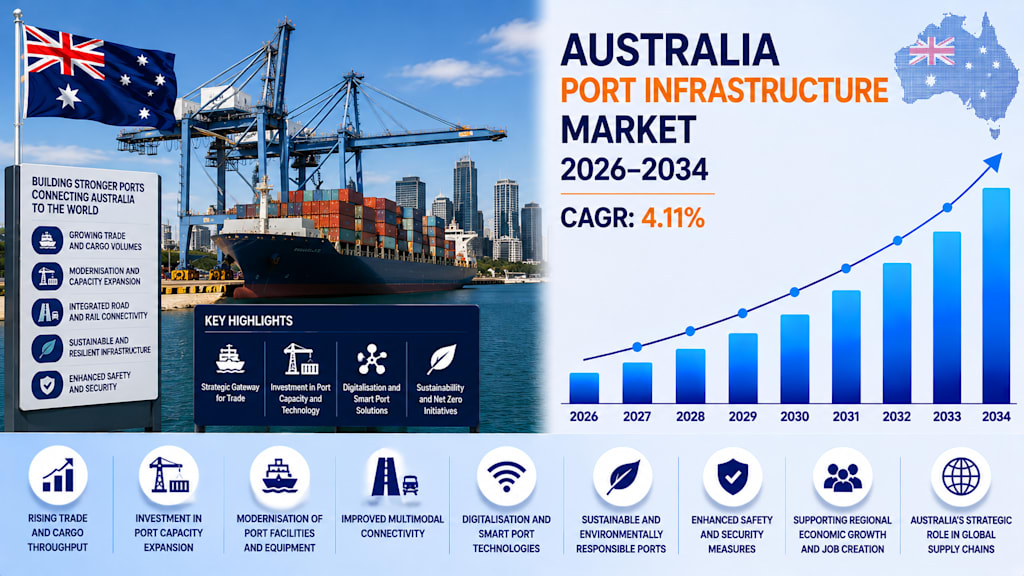
Australia Port Infrastructure Market Overview
The Australia port infrastructure market is a critical component of the country’s transportation, logistics, and international trade ecosystem, encompassing seaports, inland ports, cargo terminals, passenger terminals, port equipment, storage facilities, and maritime logistics infrastructure.
According to IMARC Group, the Australia port infrastructure market size reached USD 4.2 Billion in 2025 and is projected to reach USD 6.1 Billion by 2034, exhibiting a compound annual growth rate (CAGR) of 4.11% during 2026–2034.
The market is witnessing steady growth driven by increasing international trade volumes, rising investments in port modernization projects, expansion of containerized shipping activities, growing logistics requirements, and government initiatives focused on improving transportation efficiency and supply chain resilience.
Key Market Drivers
Rising International Trade and Export Activities
Growing exports of minerals, agricultural commodities, energy resources, and manufactured goods are increasing demand for efficient port infrastructure capable of handling higher cargo volumes and international shipping activities.
Expansion of Maritime Logistics Networks
The increasing complexity of global supply chains is driving investments in modern port facilities, cargo handling systems, logistics hubs, and multimodal transportation connectivity.
Adoption of Digital and Smart Port Technologies
Port operators are increasingly implementing digital platforms, automation systems, IoT-enabled monitoring technologies, and advanced analytics solutions to improve operational efficiency and reduce vessel turnaround times.
Government Infrastructure Investments
Public-sector investments and infrastructure development programs are supporting capacity expansion, terminal upgrades, and long-term modernization initiatives across major Australian ports.
Growth of Containerized Cargo Transportation
Rising container shipping activity and increasing trade demand are encouraging the development of advanced cargo terminals, automated handling equipment, and integrated logistics facilities.
Request a Sample Report with the Latest 2026 Data & Forecasts
What the Opportunities Are
Development of Smart and Automated Ports
The growing integration of automation technologies, artificial intelligence, blockchain systems, and real-time tracking platforms is creating significant opportunities for infrastructure modernization and operational optimization.
Expansion of Sustainable Port Infrastructure
Port authorities and operators are increasingly investing in renewable energy systems, shore power facilities, electrification projects, and environmentally sustainable infrastructure solutions.
Growth of Public-Private Partnership (PPP) Projects
Collaborative investment models between government agencies and private sector participants are accelerating large-scale port development and modernization initiatives across Australia.
Rising Demand for Intermodal Connectivity
The need for seamless integration between ports, rail networks, highways, and logistics centers is creating opportunities for infrastructure expansion and transportation efficiency improvements.
Increasing Investments in Regional Port Development
Growing trade activity and economic development initiatives are encouraging infrastructure investments across regional ports to improve connectivity and strengthen supply chain performance.
Recent News and Developments
May 2026 : The Australia port infrastructure market continued expanding as rising international trade volumes and increasing cargo throughput strengthened demand for port capacity upgrades, logistics efficiency improvements, and digital infrastructure investments.
May 2026 : Port operators increasingly adopted smart technologies including IoT-enabled monitoring systems, automated cargo handling solutions, and data analytics platforms to optimize operational performance and reduce congestion.
April 2026: Sustainability initiatives gained momentum across the maritime sector as ports expanded investments in renewable energy integration, electrification projects, and emissions-reduction programs to support environmental objectives.
March 2026 : Infrastructure modernization projects continued progressing across major ports as stakeholders focused on improving cargo handling efficiency, terminal capacity, and multimodal transportation connectivity.
February 2026 : Public-private partnership models remained a major driver of port development activity, supporting investments in facility upgrades, logistics infrastructure, and long-term expansion projects.
January 2026 : Government-led infrastructure programs continued supporting the development of transportation networks, trade corridors, and logistics systems designed to strengthen Australia’s position within global maritime supply chains.
December 2025: Investments in automation, digital transformation technologies, and integrated logistics platforms accelerated as port operators focused on enhancing productivity and operational resilience.
Why You Should Know About the Australia Port Infrastructure Market?
The Australia port infrastructure market is becoming an increasingly important pillar of the country’s trade, transportation, logistics, and economic development framework.
With projected growth from USD 4.2 Billion in 2025 to USD 6.1 Billion by 2034, the market demonstrates stable long-term potential supported by rising trade volumes, infrastructure modernization programs, digital transformation initiatives, and growing logistics requirements.
As port authorities, logistics providers, and government agencies continue investing in automation technologies, sustainable infrastructure solutions, smart port systems, and transportation connectivity projects, the sector is expected to play a critical role in shaping the future of Australia’s maritime trade and supply chain ecosystem.
About the Creator
Amyra Singh
Market research analyst who loves spotting patterns, digging into data, and turning insights into strategies that help brands grow and stay ahead of the curve.
Enjoyed the story? Support the Creator.
Subscribe for free to receive all their stories in your feed.
Comments
There are no comments for this story
Be the first to respond and start the conversation.