
Australia Plant-Based Seafood Market 2026: Sustainable Food Innovation, Vegan Diets & Alternative Protein Demand Driving Growth
How eco-conscious consumers, seafood alternatives, and food technology advancements are transforming the Australia plant-based seafood industry

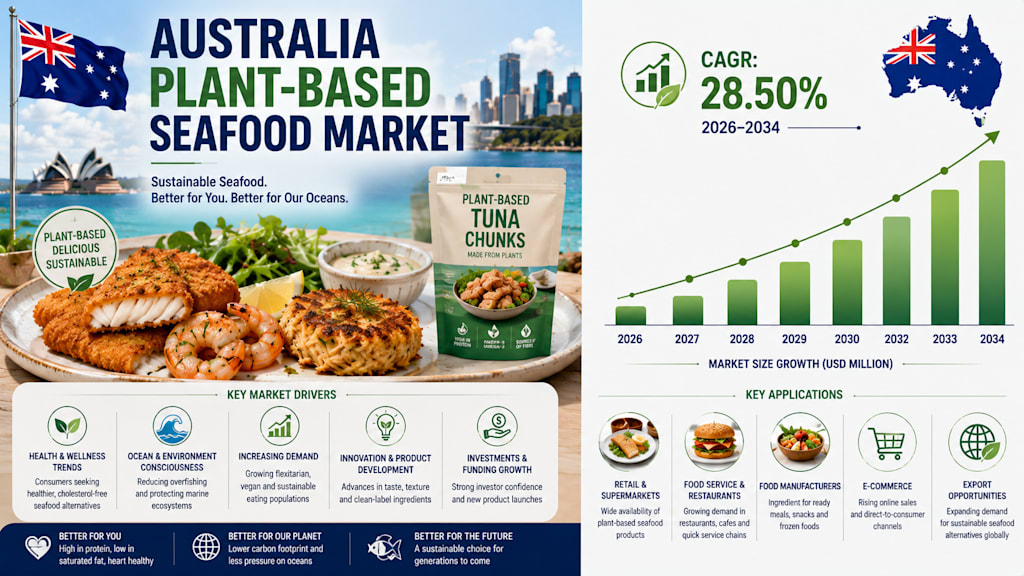
Australia Plant-Based Seafood Market Overview
The Australia plant-based seafood market is an emerging segment of the country’s alternative protein and sustainable food industry, offering seafood substitutes made from plant-derived ingredients designed to replicate the taste, texture, and nutritional profile of conventional seafood products.
According to IMARC Group, the Australia plant-based seafood market size reached USD 3.0 Million in 2024 and is projected to reach USD 36.3 Million by 2033, exhibiting a compound annual growth rate (CAGR) of 28.50% during 2025–2033.
The market is witnessing rapid growth driven by increasing consumer awareness of sustainability, rising adoption of vegan and flexitarian diets, growing concerns regarding overfishing, and technological advancements in alternative protein development.
Key Market Drivers
Rising Demand for Sustainable Food Products
Consumers are increasingly seeking environmentally friendly food alternatives due to concerns about overfishing, marine ecosystem degradation, and carbon emissions associated with conventional seafood production.
Growth of Vegan and Flexitarian Diets
The increasing popularity of plant-based lifestyles and flexitarian eating habits is boosting demand for seafood alternatives across Australia.
Advancements in Food Technology and Product Innovation
Manufacturers are utilizing innovative ingredients such as pea protein, soy protein, algae, konjac, and seaweed to improve the taste, texture, and nutritional value of plant-based seafood products.
Increasing Health and Wellness Awareness
Plant-based seafood products are gaining traction among health-conscious consumers seeking cholesterol-free, low-fat, and nutrient-rich dietary options.
Expansion of Retail and Foodservice Availability
Supermarkets, specialty stores, restaurants, and online food platforms are increasingly offering plant-based seafood products, improving market accessibility.
What the Opportunities Are
Growth of Premium and Gourmet Plant-Based Seafood
Manufacturers are developing premium seafood alternatives such as plant-based shrimp, tuna, crab, and salmon products to cater to evolving consumer preferences.
Expansion of Foodservice Partnerships
Restaurants, cafés, and quick-service chains are incorporating plant-based seafood dishes into menus to attract vegan and environmentally conscious consumers.
Rising Demand for Clean-Label and Organic Products
Consumers are increasingly preferring products with natural ingredients, minimal processing, and transparent labeling.
Development of Functional and Nutrient-Enriched Products
Companies are introducing products fortified with omega-3 fatty acids, vitamins, and proteins to improve nutritional value.
Increasing Investment in Alternative Protein Startups
The Australian alternative protein ecosystem is attracting investments in food innovation, research, and sustainable protein production technologies.
Recent News and Developments
May 2026: The Australia plant-based seafood market is witnessing increasing consumer interest as sustainability concerns and health-conscious eating habits continue to reshape food preferences. Retailers and foodservice providers are expanding vegan seafood alternatives such as plant-based tuna, prawns, fish fillets, and calamari products to cater to flexitarian and vegan consumers seeking environmentally friendly protein options.
April 2026: Product innovation remains a major driver in the plant-based seafood industry, with manufacturers increasingly using ingredients such as pea protein, soy, konjac, seaweed, and algae to improve texture, taste, and nutritional value. Companies are also investing in clean-label formulations and omega-3 fortified alternatives to attract health-focused consumers.
March 2026: The broader plant-based food sector in Australia continues to support seafood alternative growth. Retail sales of plant-based foods exceeded approximately AUD 250 million in 2025, driven by increasing supermarket availability, restaurant adoption, and rising awareness of sustainable food consumption.
February 2026: Foodservice operators and quick-service restaurants are increasingly introducing seafood-free menu options as consumer demand for vegan and sustainable dining experiences rises. Plant-based seafood products are gaining traction particularly in urban markets such as Sydney and Melbourne, where demand for alternative proteins remains strong.
December 2025: Sustainability and carbon reduction initiatives are becoming central to product marketing strategies in the plant-based seafood sector. Manufacturers are increasingly highlighting lower greenhouse gas emissions, reduced water consumption, and ethical sourcing advantages compared to conventional seafood production.
2025–2026 (market trend): The Australia plant-based seafood market is being shaped by sustainability awareness, product innovation, health-focused consumption trends, and increasing investment in alternative protein technologies. At the same time, challenges such as high product prices, taste replication limitations, and limited consumer familiarity compared to traditional seafood continue to affect broader market penetration and adoption.
Why You Should Know About the Australia Plant-Based Seafood Market?
The Australia plant-based seafood market is becoming an important component of the country’s sustainable food and alternative protein industry.
With projected growth from USD 3.0 Million in 2024 to USD 36.3 Million by 2033, the market demonstrates exceptional expansion potential driven by environmental awareness, changing dietary habits, and food technology innovation.
As consumers continue seeking sustainable and health-conscious seafood alternatives, plant-based seafood products are expected to play a growing role in shaping the future of Australia’s food industry and alternative protein ecosystem.
About the Creator
Amyra Singh
Market research analyst who loves spotting patterns, digging into data, and turning insights into strategies that help brands grow and stay ahead of the curve.
Enjoyed the story? Support the Creator.
Subscribe for free to receive all their stories in your feed.
Comments
There are no comments for this story
Be the first to respond and start the conversation.