
Australia Office Furniture Market: The $2.6 Billion Evolution of Smart, Sustainable Workspaces
Ergonomics, hybrid work, and smart design are redefining how Australian offices invest in furniture

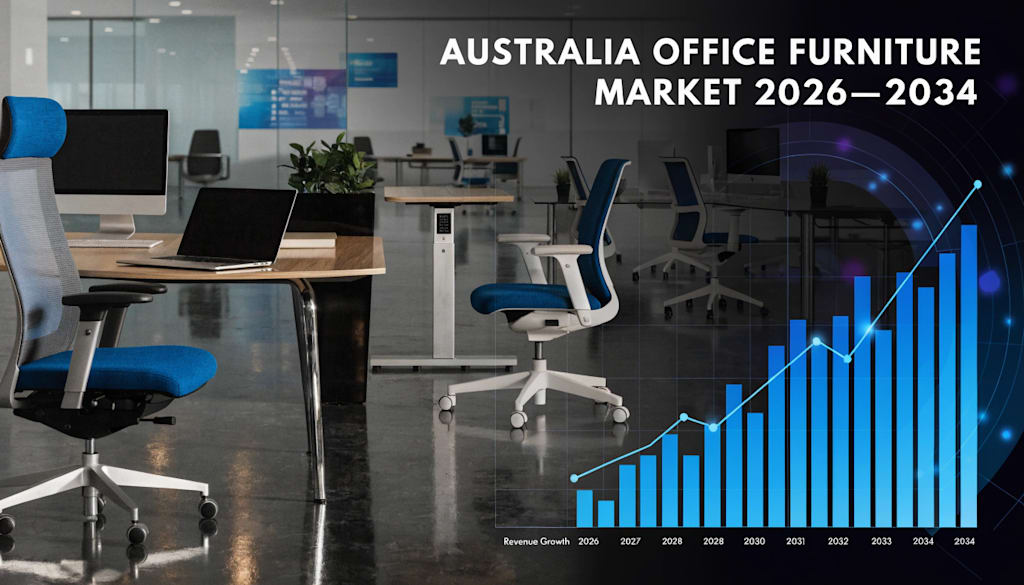
The Australia office furniture market is undergoing a steady yet meaningful transformation as workplaces evolve toward flexibility, wellness, and sustainability. According to IMARC Group, the market reached USD 1.9 Billion in 2025 and is projected to grow to USD 2.6 Billion by 2034, expanding at a CAGR of 3.21% during 2026–2034.
This growth may appear moderate compared to high-tech sectors, but it reflects a deeper structural shift in how offices are designed and used. The modern workplace is no longer static—it is dynamic, hybrid, and employee-centric. As companies rethink office spaces to attract talent and improve productivity, furniture has become a strategic investment rather than a simple operational expense.
Segmentation of the Market:
• By Product Type: Seating Furniture, Modular Systems
• By Material Type: Wood, Metal, Plastic and Fiber, Glass, Others
• By Distribution Channel: Direct Sales, Specialist Stores, Non-Specialist Stores, Online, Others
• By Price Range: Low, Medium, High
• By Region: Australia Capital Territory & New South Wales, Victoria & Tasmania, Queensland, Northern Territory & Southern Australia, Western Australia
Why the Market Is Growing So Rapidly
One of the most significant growth drivers is the shift toward hybrid work models. As companies adopt flexible working arrangements, there is increasing demand for adaptable furniture that supports both in-office and remote work setups. Modular desks, mobile storage units, and ergonomic chairs are becoming essential to accommodate changing team sizes and workspace configurations.
Another key factor is the rising focus on employee health and wellness. Businesses are investing in ergonomic furniture such as sit-stand desks, posture-support chairs, and anti-fatigue accessories to enhance comfort and productivity. This shift is not just about comfort—it directly impacts employee retention, performance, and overall workplace satisfaction.
The market is also being propelled by sustainability initiatives and eco-conscious procurement. Companies are increasingly prioritizing furniture made from recycled materials, low-emission finishes, and environmentally responsible production processes. With millions of tonnes of furniture waste generated annually, circular economy practices like refurbishment and recycling are gaining traction across Australia.
Another strong growth catalyst is the integration of smart technology into furniture design. Offices are adopting desks with built-in charging ports, IoT-enabled meeting pods, and sensor-based chairs that track posture and usage. These innovations enhance efficiency and align with the broader digital transformation of workplaces.
Additionally, the rise of co-working spaces and SMEs is fueling demand for flexible, scalable furniture solutions. Shared workspaces require versatile and visually appealing furniture to attract clients, while startups seek cost-effective solutions that can grow with their operations. This dual demand is creating a consistent and diversified market base.
What the Opportunities Are
The evolving nature of workplaces is unlocking several high-value opportunities:
1. Ergonomic Product Innovation
Companies can develop advanced ergonomic solutions that combine comfort, health tracking, and smart adjustments.
2. Sustainable Furniture Manufacturing
Eco-friendly materials, recycling programs, and circular design models present strong long-term growth potential.
3. Smart Office Ecosystems
Integration of IoT, AI, and connected furniture can redefine workplace productivity and collaboration.
4. SME and Startup Solutions
Affordable, modular, and easy-to-install furniture tailored for growing businesses is a high-demand segment.
5. Co-working and Flexible Space Design
Customizable furniture for shared workspaces offers recurring demand and large-scale contracts.
6. E-commerce and Direct-to-Business Sales
Online platforms enable faster delivery, customization, and cost efficiency, especially for SMEs.
7. Design-Centric Office Branding
Businesses increasingly seek customized furniture that reflects their brand identity and culture.
Recent News & Developments in Australia Office Furniture Market
• January 2025: The Australian government strengthened workplace health and safety compliance requirements, encouraging businesses to adopt ergonomically certified furniture. The updated guidelines emphasize employee wellness and productivity, leading to increased demand for compliant office setups. This regulatory push is expected to accelerate adoption of ergonomic desks and chairs across corporate sectors.
• March 2025: A leading Australian office furniture manufacturer expanded its product portfolio by launching a new line of ergonomic chairs and sit-stand desks. The company reported rising demand from hybrid workplaces and SMEs seeking flexible solutions. This expansion highlights how manufacturers are aligning product innovation with evolving workplace needs.
• August 2025: The market recorded a noticeable increase in demand for smart and modular office furniture, driven by the growth of co-working spaces and digital workplaces. Businesses reported higher investments in workspace redesign projects, particularly in major cities. This trend signals a broader shift toward technology-enabled and adaptable office environments.
Why Should You Know About Australia Office Furniture Market?
The Australia office furniture market represents a unique blend of stability and innovation. With growth from USD 1.9 Billion in 2025 to USD 2.6 Billion by 2034, it offers a reliable yet evolving opportunity for stakeholders.
For investors, the market provides steady returns backed by ongoing demand from businesses, institutions, and co-working spaces. For companies, it offers opportunities to enhance productivity, employee satisfaction, and brand identity through smarter workspace design. For policymakers, it plays a critical role in promoting workplace safety, sustainability, and economic efficiency.
Most importantly, this market reflects a broader shift in how work itself is defined. Offices are no longer just places to sit—they are environments designed to inspire collaboration, innovation, and well-being.
Understanding the Australia office furniture market today means understanding the future of work itself.
About the Creator
Rashi Sharma
I am a market researcher.
Enjoyed the story? Support the Creator.
Subscribe for free to receive all their stories in your feed.
Comments
There are no comments for this story
Be the first to respond and start the conversation.