
Australia Modular Kitchens Market Designing the Future of Smart, Sustainable Living Spaces
Rising urban lifestyles, customization demand, and smart innovations are reshaping Australia’s kitchen landscape

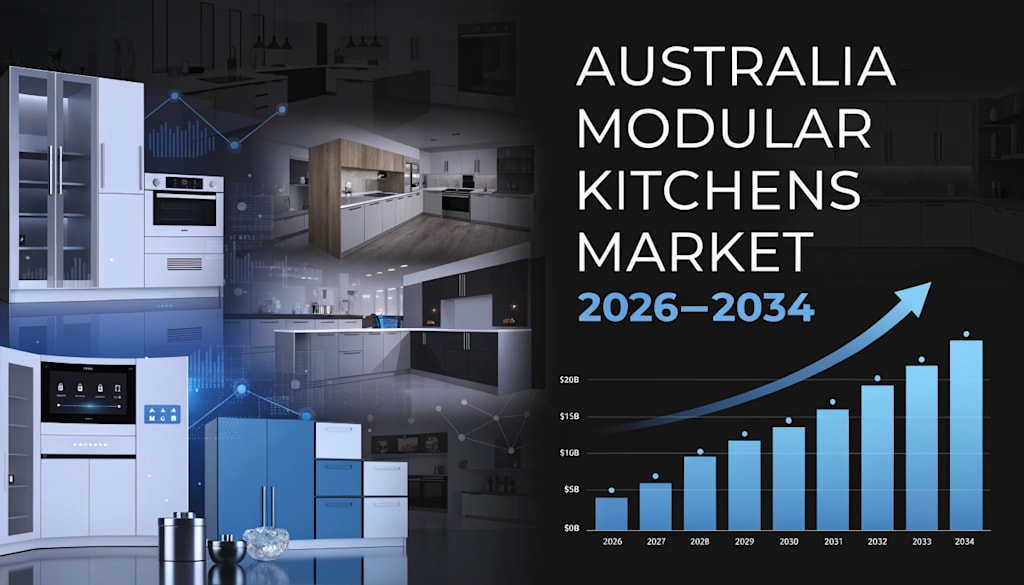
The Australia housing and interior design landscape is undergoing a quiet but powerful transformation—and modular kitchens are at the center of it. According to IMARC Group, the Australia modular kitchens market reached USD 1.1 billion in 2025 and is projected to grow to USD 1.8 billion by 2034, expanding at a CAGR of 4.79% during 2026–2034.
This steady growth reflects more than just changing kitchen preferences—it signals a broader shift toward efficiency, personalization, and technology-driven living. From compact urban apartments to large suburban homes, Australians are rethinking how kitchens function—not just as cooking spaces, but as integrated lifestyle hubs.
At the core of this transformation is modular design: pre-engineered, flexible, and increasingly intelligent. Combined with rising disposable incomes, home renovation trends, and sustainability awareness, modular kitchens are quickly becoming the default choice for modern households.
Request a Business Sample Report for Procurement & Investment Evaluation:
Why the Market Is Growing So Rapidly
One of the most significant drivers of the market is Australia’s accelerating urbanization. As cities like Sydney and Melbourne continue to expand vertically, living spaces are becoming more compact. Modular kitchens offer a practical solution by maximizing storage, optimizing layouts, and ensuring functionality without compromising on design. Their ability to adapt to tight spaces makes them especially attractive for apartment dwellers.
Another key factor is the growing demand for customization. Today’s consumers are no longer satisfied with one-size-fits-all kitchen designs. Instead, they seek personalized layouts, materials, finishes, and storage solutions that reflect their lifestyle and aesthetic preferences. Modular kitchens allow this level of flexibility, enabling homeowners to create highly tailored spaces without the cost and complexity of fully custom-built kitchens.
The rise in home renovation activities is also fueling demand. Australia’s aging housing stock, particularly in suburban areas, is driving homeowners to upgrade outdated kitchens. Modular systems offer a faster, more cost-effective alternative to traditional remodeling. Their ease of installation and minimal disruption make them ideal for occupied homes undergoing renovation.
Sustainability has emerged as another powerful growth catalyst. Consumers are increasingly choosing eco-friendly materials such as recycled wood and bamboo, along with energy-efficient appliances like induction cooktops and smart refrigerators. This shift toward greener living is influencing purchasing decisions and pushing manufacturers to adopt sustainable production practices.
Finally, global design influence is reshaping consumer expectations. Australian homeowners are drawing inspiration from European and American kitchen trends—handleless cabinets, matte finishes, concealed appliances, and multifunctional islands. Modular kitchens make it easier and more affordable to replicate these high-end designs, further accelerating adoption.
What the Opportunities Are
The Australia modular kitchens market presents several compelling opportunities for businesses and investors:
1. Smart Kitchen Integration
The integration of IoT-enabled appliances, voice control, and AI-powered cooking systems is transforming kitchens into intelligent spaces. Companies offering smart-ready modular kitchens can capture a rapidly growing tech-savvy consumer base.
2. Expansion into Regional Markets
Semi-urban and regional areas are emerging as high-growth zones. Rising incomes and increasing exposure to modern home design trends are driving demand beyond major metropolitan cities.
3. B2B Partnerships with Real Estate Developers
Collaborating with property developers offers scalable growth. Modular kitchens enable bulk installations in residential projects, reducing costs and construction timelines while enhancing property value.
4. Sustainable Product Innovation
There is a strong opportunity to lead in eco-friendly kitchen solutions. Brands that prioritize low-impact materials and energy-efficient designs can differentiate themselves in a competitive market.
5. Customization as a Premium Offering
Offering advanced customization—such as modular upgrades, interchangeable components, and bespoke finishes—can unlock higher margins and stronger customer loyalty.
6. Digital Sales and Virtual Design Platforms
Online platforms that allow customers to visualize and customize kitchen layouts are gaining traction. Investing in digital tools can enhance customer experience and expand reach.
7. After-Sales Services and Upgrades
Modular kitchens naturally lend themselves to upgrades and replacements. Providing maintenance, refurbishment, and upgrade services can create recurring revenue streams.
Recent News & Developments in Australia Modular Kitchens Market
• January 2025: The Australian government introduced new residential energy-efficiency guidelines encouraging the adoption of sustainable home solutions. Modular kitchen manufacturers responded by integrating low-emission materials and energy-efficient appliances into their offerings. This regulatory push is expected to accelerate the adoption of eco-friendly modular kitchens nationwide. The initiative also includes incentives for homeowners upgrading to sustainable interiors.
• May 2025: A leading home solutions company announced a major expansion across Queensland and Western Australia, launching new modular kitchen showrooms and digital customization platforms. The expansion includes investment in smart kitchen technologies, enabling customers to integrate IoT-enabled appliances seamlessly. This move is aimed at capturing growing demand in both urban and regional markets. The company reported a significant increase in pre-orders following the launch.
• September 2025: Industry data revealed a notable surge in modular kitchen adoption across newly constructed residential units. Developers increasingly integrated modular kitchens into turnkey housing projects, improving buyer appeal and reducing construction timelines. Market penetration rates in new apartments saw measurable growth, reflecting strong consumer preference. This trend highlights the growing role of modular kitchens as a standard feature in modern housing.
Why Should You Know About Australia Modular Kitchens Market?
The Australia modular kitchens market is more than a niche segment—it represents a convergence of design, technology, and sustainability in modern living. For investors, it offers steady growth backed by urbanization and lifestyle shifts. For businesses, it provides opportunities in innovation, customization, and digital transformation. For policymakers, it aligns with broader goals of energy efficiency and sustainable housing.
As homes become smarter and more personalized, kitchens are evolving from functional spaces into dynamic, tech-enabled environments. Modular kitchens sit right at this intersection—making them one of the most relevant and future-ready segments in Australia’s home improvement industry.
About the Creator
Rashi Sharma
I am a market researcher.
Enjoyed the story? Support the Creator.
Subscribe for free to receive all their stories in your feed.
Comments
There are no comments for this story
Be the first to respond and start the conversation.