
Australia Methionine Market 2026: Animal Nutrition, Feed Efficiency & Strategic Growth
How rising poultry consumption, precision nutrition and sustainable feed additives are driving methionine demand across Australia

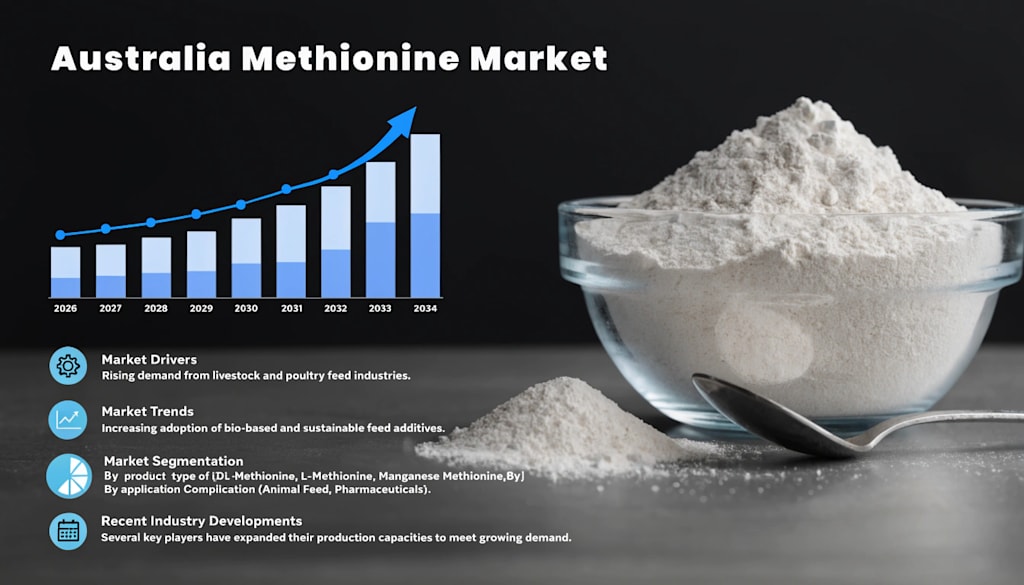
The Australia methionine market is experiencing steady expansion as livestock producers, feed manufacturers and agribusinesses increasingly prioritise animal nutrition, feed efficiency and sustainable production practices. Methionine — an essential sulphur-containing amino acid critical for protein synthesis, muscle development and overall animal health — is widely deployed in poultry, swine, aquaculture and ruminant feed formulations to optimise growth rates, improve egg production and enhance immune function. According to IMARC Group, the market size reached USD 139.69 Million in 2025 and is projected to reach USD 232.57 Million by 2034, exhibiting a compound annual growth rate (CAGR) of 5.83% during 2026–2034. As Australia’s agricultural sector embraces precision nutrition, functional feed additives and bio-based production methods, methionine has become indispensable for maximising livestock productivity while reducing environmental footprint.
What’s Driving Market Growth?
Expanding Livestock & Poultry Production. The Australian methionine market is experiencing robust growth driven by the expanding livestock and poultry sectors, which are fundamental pillars of the nation’s agricultural economy. Poultry consumption has surged in recent years, with Australians consuming approximately 44.84 kilograms of poultry per capita annually, making it the most consumed animal protein in the country, surpassing beef, lamb and pork. This dietary shift reflects changing consumer preferences toward lean, affordable and readily available protein sources. Chickens require just 1.7 kilograms of feed on average to produce one kilogram of meat, compared to an average of 6–10 kilograms for beef, making poultry production inherently more feed-efficient and economically attractive. The compound feed market, valued at USD 5.84 billion in 2025, is expected to grow steadily as producers seek to optimise animal nutrition through advanced feed formulations.
Growing Adoption of Functional Feed Additives & Precision Nutrition. Australian livestock producers are increasingly integrating functional and specialty feed additives into animal diets to enhance health, productivity and feed efficiency. This trend is driven by multiple converging factors, including the need to move away from antibiotic growth promoters following both consumer pressure and regulatory tightening around antibiotic use. Specialty additives such as amino acids, enzymes, probiotics, prebiotics, organic acids and phytogenics help improve gut health, immune response and nutrient absorption in animals, directly supporting performance outcomes. The trend also reflects the growing emphasis on precision nutrition, where feed is tailored to the specific physiological needs of animals at different growth stages. In sectors like poultry and swine, where feed costs constitute a large share of total production expenses, targeted supplementation with methionine provides both economic and performance benefits. The animal feed additives market in Australia, valued at over USD 620 Million in 2025, underscores the growing importance of methionine and other amino acids in modern agricultural practices.
Shift Toward Sustainable & Bio-Based Methionine Production. Environmental sustainability is reshaping the methionine market landscape, with producers seeking healthier, disease-resistant and high-yield livestock while reducing reliance on petrochemical-based inputs. Innovations in plant-based and biotech-derived methionine are shaping industry transformation, as sustainability concerns and environmental regulations encourage the adoption of more sustainable feed additives. This shift aligns with global trends toward lower-carbon agriculture and offers Australian producers a pathway to enhance their environmental credentials while maintaining productivity.
Aquaculture Industry Expansion. The expanding aquaculture industry further contributes to methionine demand, as fish and shrimp require specialised amino acid profiles for optimal growth and health. Methionine is one of the most limiting essential amino acids in aquafeeds, and supplementation has been shown to improve fish antioxidant status, decreasing lipids and protein oxidation while fulfilling essential nutritional functions.
Market Segmentation & Key Insights
By Type. The market includes L-Methionine, DL-Methionine and MHA (Methionine Hydroxy Analogue). L-Methionine and DL-Methionine segments collectively account for approximately 69.3% of the Australia methionine market, with L-Methionine constituting around 34.7% share.
By Raw Material. The market is segmented into plant-based and animal-based sources, with plant-based methionine gaining traction due to sustainability considerations and growing demand for vegetarian and vegan feed formulations.
By End-Use Industry. The market is categorised into animal feed, food & dietary supplements, pharmaceuticals and others. The animal feed segment dominates, driven by Australia’s strong livestock, poultry and aquaculture sectors.
By Region. Key regional markets include New South Wales, Victoria, Queensland, Western Australia, South Australia, Tasmania, Australian Capital Territory and Northern Territory.
What the Opportunities Are?
Precision Nutrition & Tailored Feed Formulations. As Australian livestock producers increasingly adopt data-driven feeding strategies, there is significant opportunity for methionine suppliers to offer customised feed solutions tailored to specific animal species, growth stages and production environments. Collaboration with feed mills and nutritionists to optimise methionine inclusion rates can improve feed conversion ratios and reduce overall feed costs.
Sustainable & Bio-Based Methionine Solutions. With growing regulatory and consumer pressure to reduce agriculture’s environmental footprint, bio-based methionine derived from fermentation processes presents a compelling growth opportunity. METabolic EXplorer and other innovators are focusing on fermentation-based methionine production technology for sustainable applications, offering Australian producers a pathway to lower-carbon feed additives.
Integrated Animal Nutrition Platforms. There is opportunity to bundle methionine with other essential amino acids (lysine, threonine, tryptophan), enzymes, probiotics and other functional feed additives to create comprehensive animal nutrition platforms that deliver measurable productivity gains and simplify procurement for feed manufacturers.
Technical Support & Advisory Services. As precision nutrition becomes more sophisticated, demand is growing for professional technical support services, including feed formulation assistance, on-farm nutritional audits, training programs and analytics optimisation that help livestock producers maximise return on investment from methionine supplementation.
Expansion Into Aquaculture & Specialty Markets. With Australia’s aquaculture industry expanding rapidly — particularly in salmon, barramundi and prawn farming — there is opportunity to develop methionine formulations specifically optimised for aquatic species, addressing their unique amino acid requirements and supporting sustainable intensification of marine protein production.
Recent News and Developments in Australia Methionine Market
July 2025: Real Pet Food Co. announced expansion initiatives reflecting growing demand for premium pet food formulations, which increasingly incorporate optimised amino acid profiles including methionine for companion animal nutrition.
Q3 2025: Methionine prices across major regions witnessed a notable correction, reflecting seasonal inventory adjustments, shifts in feed demand and controlled supply strategies by key producers. The average methionine price was recorded at approximately USD 3,687.67 per metric tonne.
Late 2025: The Australia feed additives market showed continued momentum, valued at AUD 442.32 million, driven by increasing demand for poultry, meat and aquaculture products. Growth in the feed additives sector directly supports continued methionine market expansion.
Early 2025: The Department of Agriculture, Fisheries and Forestry updated export health certificates for animal feed and additives, introducing QR-coded NEXDOC traceability systems that have been in place since May 2021 across dairy, honey, eggs and fish products, facilitating international trade and supporting the growth of Australia’s livestock sector.
Why Should You Know About Australia Methionine Market?
You should know about this market because it illustrates how animal nutrition priorities, technological evolution and sustainability requirements intersect to create steady growth opportunities in a mission-critical segment of Australia’s agricultural landscape. Methionine is no longer just a feed additive — it is a strategic tool that helps livestock producers, feed manufacturers and agribusinesses optimise growth rates, improve feed efficiency, reduce environmental impact and enhance animal welfare.
For investors, the methionine market offers exposure to a stable-growth agricultural technology category anchored in rising meat and protein consumption, expanding aquaculture production and increasing adoption of precision nutrition practices. The projected CAGR of 5.83% reflects consistent confidence in adoption trends, product differentiation and recurring demand tied to Australia’s position as a major agricultural producer and exporter.
For feed manufacturers, livestock producers, agribusiness investors and supply chain planners, understanding methionine market segmentation, pricing dynamics, bio-based production trends and integration strategies helps shape intelligent investment decisions, procurement roadmaps and nutritional programmes that deliver measurable productivity and sustainability outcomes.
In essence, the Australia methionine market captures how nutrition science, agricultural productivity and environmental stewardship converge — making it a compelling area for innovators, investors and organisations seeking smarter approaches to animal feed, farm profitability and operational excellence.
About the Creator
Thomas
Market Research Analyst | Industry Trends & Forecasting | Turning market data into clear, actionable business insights across global sectors.
Enjoyed the story? Support the Creator.
Subscribe for free to receive all their stories in your feed.
Comments
There are no comments for this story
Be the first to respond and start the conversation.