
Australia Meat Market: Steady Growth Driven by Premium Products and Sustainable Production
Australia's meat industry continues to evolve through premium exports, changing consumer preferences, and technological innovation, creating long-term opportunities across the value chain.

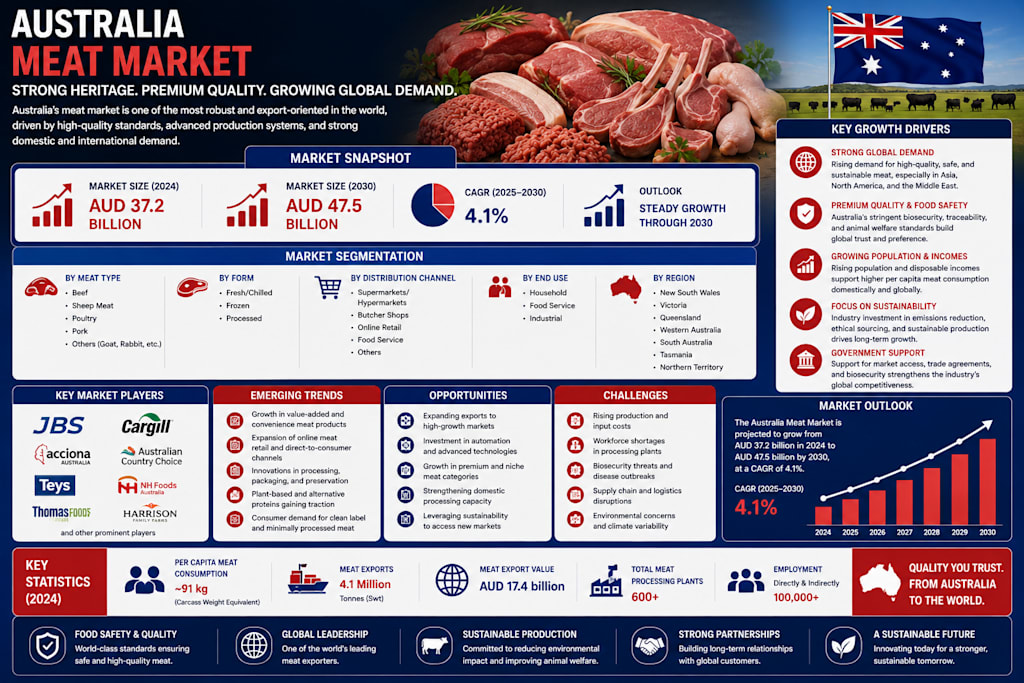
Australia's meat industry has long been one of the country's most significant agricultural sectors, supplying both domestic consumers and international markets with high-quality beef, lamb, pork, and poultry products. According to IMARC Group, the Australia meat market was valued at USD 29.15 Billion in 2025 and is projected to reach USD 34.39 Billion by 2034, expanding at a compound annual growth rate (CAGR) of 1.85% during 2026–2034.
The market continues to benefit from Australia's reputation for premium meat production, strict food safety regulations, advanced livestock management practices, and growing demand from export destinations across Asia and the Middle East. While growth is expected to remain moderate, the industry is becoming increasingly value-driven as producers focus on quality, sustainability, and product innovation rather than simply increasing production volumes.
Evaluate Market Opportunity with the Business Sample Report:
Market Segmentation
By Type
• Raw
• Processed
By Product
• Chicken
• Beef
• Pork
• Mutton
• Others
By Distribution Channel
• Supermarkets and Hypermarkets
• Departmental Stores
• Specialty Stores
• Online Stores
• Others
By Region
• Australia Capital Territory & New South Wales
• Victoria & Tasmania
• Queensland
• Northern Territory & Southern Australia
• Western Australia
Why the Market Is Growing So Rapidly
One of the strongest drivers behind Australia's meat market is the country's well-established livestock industry and internationally recognized food safety standards. Australian meat products enjoy strong consumer confidence both domestically and abroad because of strict quality assurance programs, traceability systems, and animal health regulations.
Changing consumer preferences are also supporting market development. Many consumers are increasingly willing to pay premium prices for high-quality meat products that offer better taste, nutritional value, ethical sourcing, and sustainability certifications. This shift encourages producers to focus on premium offerings instead of competing primarily on volume.
Export demand remains another important growth engine. Australian beef and lamb continue to enjoy strong demand from major international markets, where rising incomes and expanding middle-class populations are increasing consumption of premium protein products. Trade relationships and Australia's reputation for clean, high-quality meat continue to strengthen export opportunities.
Technological improvements across livestock farming, meat processing, cold chain logistics, and packaging are enhancing operational efficiency throughout the industry. Automation, digital monitoring, precision livestock management, and improved processing technologies are helping producers optimize productivity while maintaining high quality standards.
Growing retail diversification is also contributing to market expansion. Consumers now purchase meat products through supermarkets, specialty retailers, and increasingly through online grocery platforms, providing producers with broader market access and greater flexibility in serving different customer segments.
What the Opportunities Are
Premium Export Markets
Growing international demand for premium Australian beef and lamb creates opportunities for producers to expand exports while strengthening Australia's global reputation for quality meat products.
Value-Added Meat Products
Manufacturers can develop processed, ready-to-cook, and convenience-oriented meat products that meet the evolving needs of busy households seeking both quality and convenience.
Sustainable Livestock Practices
Investments in environmentally responsible farming, emissions reduction technologies, and animal welfare improvements can enhance competitiveness while meeting changing consumer expectations.
Digital Supply Chain Innovation
Advanced traceability systems, smart logistics, and digital inventory management can improve efficiency, reduce waste, and strengthen food safety across the supply chain.
Online Retail Expansion
The continued growth of e-commerce grocery platforms presents opportunities for producers and retailers to reach consumers directly with premium branded meat products and subscription-based delivery services.
Regional Processing Investments
Expanding meat processing capacity in regional production areas can improve operational efficiency, support local employment, and reduce transportation costs.
Premium Branding and Product Differentiation
Companies that emphasize quality certifications, sustainability credentials, origin labeling, and premium branding can capture greater value in both domestic and international markets.
• March 2025: Australian authorities continued implementing initiatives that support livestock traceability and strengthen food safety systems across the meat supply chain. The measures aim to improve export competitiveness while maintaining Australia's reputation for high-quality agricultural products. Enhanced digital tracking systems are expected to improve transparency for domestic and international buyers.
• July 2025: Several Australian meat processors announced investments in production efficiency and value-added processing capabilities to meet growing demand for premium meat products. These investments include modernization of processing facilities, automation technologies, and expanded packaging capabilities designed to improve productivity and product quality.
• September 2025: Industry reports highlighted continued resilience in Australia's meat sector, supported by stable domestic demand and healthy export performance across key international markets. Premium beef and lamb remained important contributors to industry value, while ongoing investment in sustainable production practices continued to strengthen long-term market competitiveness.
Why Should You Know About the Australia Meat Market?
The Australia meat market represents a mature yet resilient industry that continues to evolve through innovation, sustainability, and premium product positioning. While overall growth is expected to remain steady rather than rapid, the industry's focus on quality, export competitiveness, and technological advancement creates significant opportunities for producers, processors, investors, and retailers.
As consumer expectations continue to shift toward premium, safe, and sustainably produced meat products, businesses that invest in innovation, operational efficiency, and value-added offerings are likely to strengthen their competitive position. Combined with Australia's strong global reputation and established export relationships, the meat market remains an important contributor to the country's agricultural economy and an attractive sector for long-term business development.
About the Creator
Rashi Sharma
I am a market researcher.
Enjoyed the story? Support the Creator.
Subscribe for free to receive all their stories in your feed.
Comments
There are no comments for this story
Be the first to respond and start the conversation.